

Why Pork Is So Much Cheaper Than Beef
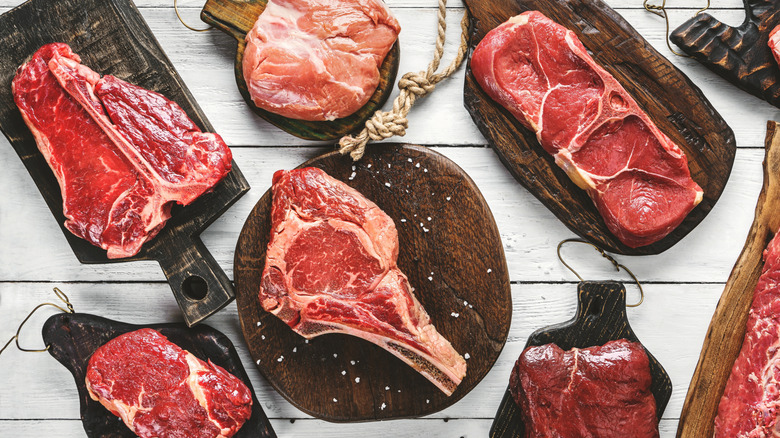
As much as we all might enjoy eating a premium filet mignon steak every night, it wouldn't exactly be a smart financial decision to do so. If you cook meat at home, you've probably taken note of how common proteins typically compare cost-wise — only to realize that beef is often one of the most expensive options. Not only that, but many cuts of beef are regularly priced much higher than certain cuts of pork that can yield just as tasty a steak. In fact, the overall price difference is so stark that economists have even observed that Argentinians, who typically consume the most beef, are increasingly switching to pork.
So, what's the logic behind this price difference? Essentially, pigs are considered more cost-effective livestock. Speaking exclusively to Chowhound, Nathan Abeyta, founder of Deep Cuts Dallas Custom Butcher Shop, says: "There are many factors which contribute to pork being cheaper than beef: feed efficiency, reproduction rates, space requirements, meat yield, growth time, and global demand."
Abeyta also explains that, since pigs convert feed to muscle more efficiently than cattle, they require less of it per pound. Additionally, pigs also reproduce more frequently and have more piglets per litter than cows, who can only birth a single calf per year. They're also usually slaughtered younger, making turnaround quicker. "Pork production requires less infrastructure all-around for growth and for slaughter," Abeyta explains.
Buy these cuts to maximize bang for your buck
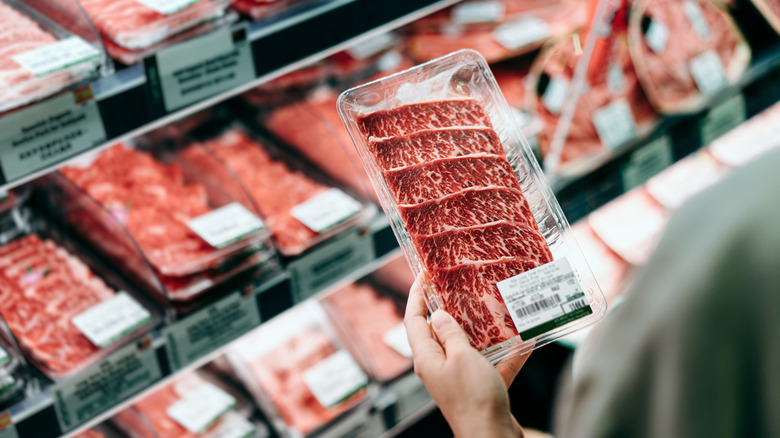
While pork is generally cheaper than beef, not all cuts are created (or priced) equal. The taste, quality, and price of beef cuts are especially known to differ widely, which is why beef chuck is so inexpensive compared to filet mignon or tenderloin, even though grilled chuck steaks can rival ribeye in quality.
Thankfully, though, if budget is your main concern, you don't have to automatically rule out all beef forever; you just need to concentrate on cooking creatively to bring out the best flavor and texture in cheaper cuts. For example, Nathan Abeyta recommends slow-cooking tougher cuts to maximize their potential. "If you give yourself enough time for a long slow cook, my favorite [cut] lately has been beef shank. It is a fairly inexpensive cut that when slow braised in beef stock with onions and garlic has some of the best flavor on the animal."
Pork also offers a variety of delicious cuts that can fit any budget. The best cut of pork to buy for tasty steaks is generally thought to be loin chops, which come from the tenderloin and include a flavorful layer of fat. Although they are typically inexpensive, they're not the only cut to consider. "If I had to choose, I would probably pick the pork shoulder," Abeyta says. "It is a complex muscle with tons of flavor that can be cooked whole or separated into multiple braising, grilling, or smoking cuts." From grilling pork shoulder steaks to smoking it or barbecuing it for melt-in-your-mouth pulled pork, this versatile cut offers endless possibilities.