

10 Lesser-Known Tiki Cocktails To Order When You Want To Branch Out
We may receive a commission on purchases made from links.
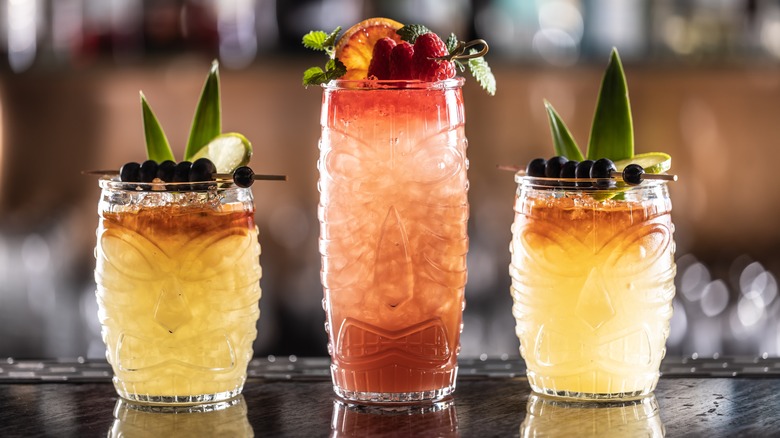
When most people think of tiki cocktails, they probably bring to mind popular drinks like the Mai Tai, Hurricane, and Zombie. They're definite crowd-pleasers because they're bright, boozy, and bursting with tropical flavors. But they're not the only island-inspired drinks that deserve a try. There are tons of tiki cocktails that are just as fun, creative, and sometimes even more delicious than the well-known staples.
Tiki culture can be traced back to the 19th century, when Americans became enthralled with tales of beguiling tropical islands and vibrant cultures in the South Pacific. That fascination eventually found its way into food, drink, and décor. In 1934, Ernest Raymond Beaumont Gantt (aka Donn Beach) opened Don the Beachcomber in Hollywood, where he served mainly rum-based cocktails with elaborate garnishes in a setting designed to transport guests to an island paradise. Others would follow suit, like Victor Bergeron, who created the legendary Trader Vic's. It wasn't long before tiki bars were popping up all over the country.
Tiki culture thrived for decades, but began to slowly fade away in the 1970s. However, it's seen somewhat of a resurgence in recent years, with many bartenders and enthusiasts breathing life back into the scene. Some have dug into old recipe books and uncovered cocktails that were once closely guarded secrets and known only to a handful of tiki legends. If you're looking to branch out from your usual tropical concoctions, these are 10 lesser-known tiki cocktails that are worth trying at a tiki bar or whipping up at home.
1. Cobra's Fang
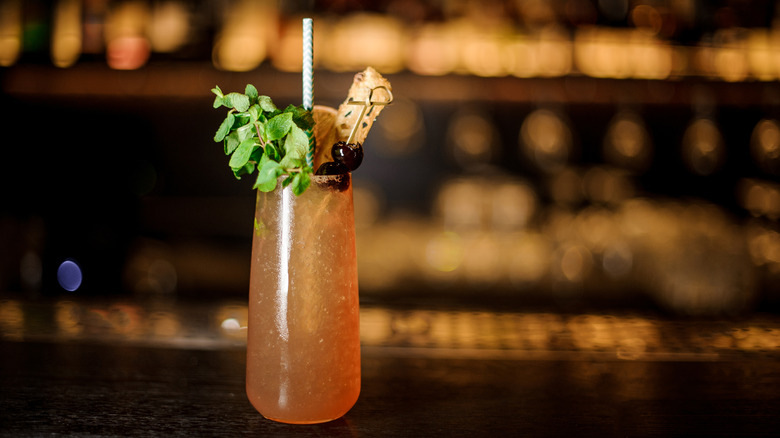
When Donn Beach opened Don the Beachcomber, he didn't want to serve one-note cocktails. Instead, he created elaborate concoctions that often featured a variety of rums, syrups, aromatic bitters, and tropical fruit juices. He kept his cocktail recipes top secret to ensure competitors couldn't recreate them, and even went so far as to make bartenders mix some cocktails behind a wall. However, many of Beach's recipes have come to light thanks to former Beachcomber bartenders and the archives of Beach's wife Phoebe. One creative cocktail that many say deserves more hype is the Cobra's Fang.
Most sources say that the Cobra's Fang was likely created around 1937, which makes it one of the first cocktails on the Don the Beachcomber's menu. It features a base of 151-proof Demerara rum and Jamaican rum. Next up are two ingredients that you don't see around much these days: fassionola and falernum. Fassionola is a syrup made with fruits like passionfruit, guava, and cherries. Falernum is a syrup or liqueur made with ingredients like clove, ginger, and lime. The Cobra's Fang also gets splashes of lime and orange juice with dashes of absinthe and Angostura bitters.
Some recipes for the Cobra's Fang suggest blending all the ingredients with crushed ice, while others recommend shaking them with ice in a cocktail shaker, then straining the cocktail into a glass with crushed ice. Most recipes call for a lime wheel and fresh mint for garnishes. The end result is a cocktail that's fresh and fruity with hints of spices and herbs.
2. Donga Punch
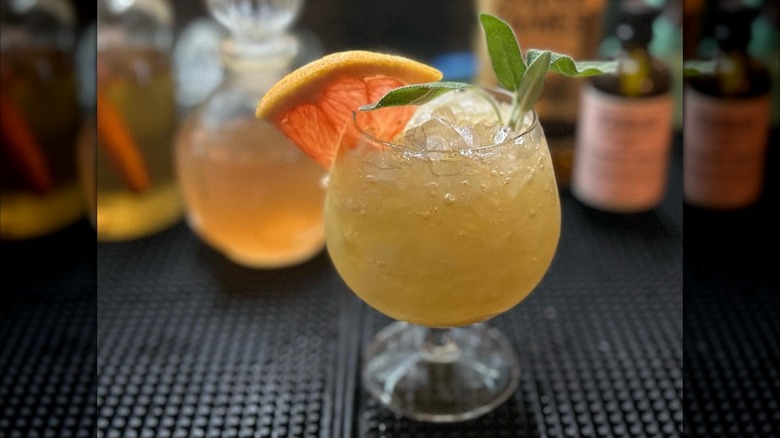
Jeff "Beachbum" Berry is often called "the Indiana Jones of Tiki drinks" because he's put so much work into uncovering lost tiki cocktail recipes that icons like Donn Beach took to their graves. Berry had a stroke of luck when the daughter of Beach's former bartender Dick Santiago reached out and offered him her father's handwritten notes of Don the Beachcomber's recipes. From there, Berry was able to resurrect many forgotten cocktails that were once classics like Beach's famous Donga Punch.
At first glance, the Donga Punch looks easy enough to make because it contains just three ingredients. The first is Martinique rum, which would have been a molasses-based rum in Donn Beach's days. The cocktail also gets tartness from lime juice. But then it calls for something called "Don's Mix," which was an ingredient that Beach crafted himself and even kept the recipe secret from his own bartenders. Fortunately, Berry was able to figure out the formula, which he published in his book "Sippin' Safari."
According to Berry, Don's Mix is made by boiling crushed cinnamon sticks and sugar in water until it turns into a syrup, then letting it cool. Then, you mix one part cinnamon syrup with two parts white grapefruit juice. To make the Donga Punch, you simply combine the rum, lime, juice, and Don's Mix in cocktail shaker, add crushed ice, shake vigorously, and pour the contents (including the ice) into a cocktail glass. Garnishes can include flowers, fruit, or fresh herbs.
3. Moonkist Coconut
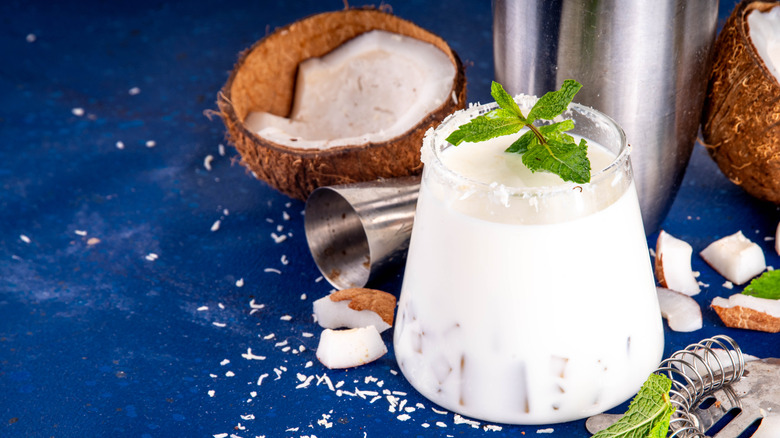
When Bob and Jack Thornton opened the Mai-Kai restaurant and lounge in Fort Lauderdale, Florida, in 1956, it was an elaborate affair. The venue was packed with authentic South Pacific artifacts, Polynesian dancers performed shows, and the kitchen put out sumptuous feasts. The brothers also had master mixologist Mariano Licudine behind the bar. Licudine had previously worked at Don the Beachcomber, but at Mai-Kai, he had the opportunity to branch out and create many of his own drinks. One of the most innovative was the Moonkist Coconut.
Creamy, frothy, and sweet, the Moonkist Coconut is a refreshing cocktail that's served in a young coconut. It's been on the Mai-Kai cocktail menu from day one and it's still served the same way to this day. However, some people note that you might receive the drink in an old-fashioned glass if coconuts aren't in season at the time of your visit. That shouldn't persuade you from going for it though because the cocktail tastes pretty much the same either way.
Mariano Licudine wasn't necessarily forthcoming with all of his cocktail recipes, but he did share the recipe for the Moonkist Coconut with Esquire magazine in 1959. It calls for three different rums from the West Indies, Barbados, and Puerto Rico. Those get mixed with lime juice, simple syrup, honey, falernum, coconut milk, and dashes of bitters. Everything gets shaken in a cocktail shaker with crushed ice, then the drink is strained into a coconut with the top cut off or glass.
4. Dr. Funk
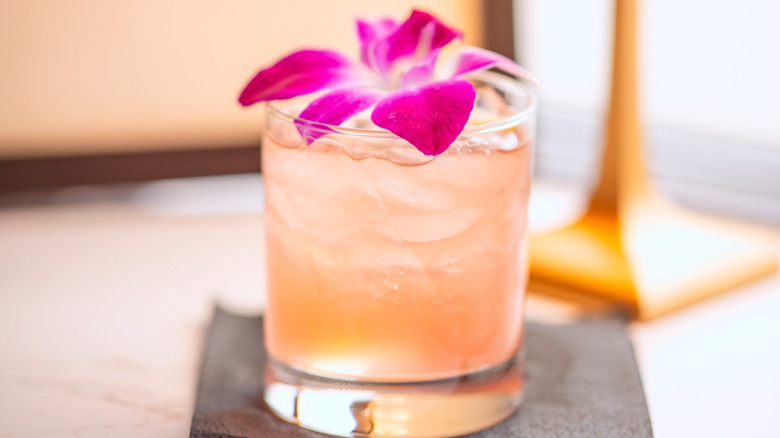
While many tiki cocktails were created by bartenders in America during the tiki craze, the Dr. Funk predates even Don the Beachcomber. To uncover its origins, we have to go back to 1879 when a surgeon named Dr. Bernhard Funk decided he'd had enough of Germany, so he set off on a trading ship destined for the South Pacific. He ended up in Apia, Samoa, where he established a hospital and lived out the rest of the days. Apia is also where he created the elixir that would come to bear his name.
Legend has it that Dr. Funk enjoyed the occasional tipple, and one that he shared with many people was a mixture of absinthe, grenadine, lime, and soda water. The drink earned somewhat of a reputation for its reviving properties that some said was like medicine. The drink made its way to other islands in the South Pacific, where it was called the Dr. Funk after its creator. Over time, rum was added to the equation.
Interestingly, Dr. Funk ended up becoming close friends with Robert Louis Stevenson when the author resided in Apia. Little did the two know that they would both have a huge impact on tiki culture. Stevenson sparked many imaginations with his book "Treasure Island" and its tale of tropical island adventures, while Dr. Funk likely sparked just as many conversations with his eponymous cocktail that you can still find on tiki bar menus today.
5. Kona Coffee Grog
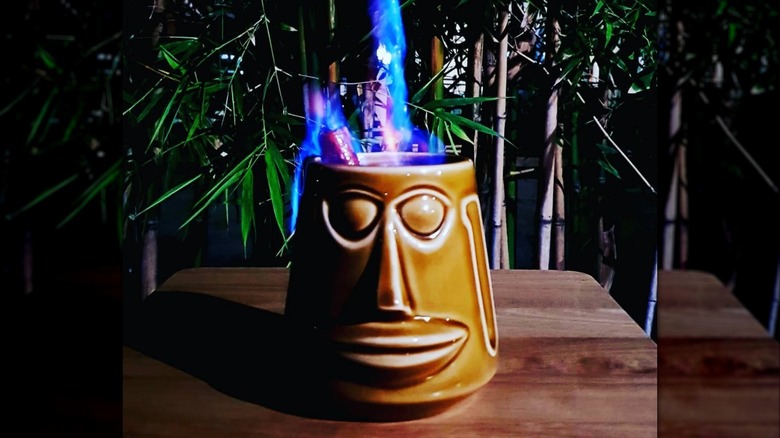
There are countless coffee drinks around the world, but few are as theatrical or elaborate as the Kona Coffee Grog. The drink was created by Donn Beach and it was on the menu at Don the Beachcomber as early as 1941. It features a heady mix of hot coffee seasoned with citrus and spices, then topped with flaming rum. It's definitely a head-turner when it's ordered at a tiki bar. Plus, it will wake you up with its boozy caffeine kick.
Like many of Beach's cocktails, the Kona Coffee Grog involves several steps. For one, you'll have to create an ingredient called "Don's Coffee Grog Batter." Jeff Berry managed to decode the recipe, which he revealed in his book "Sippin' Safari." It consists of an ounce each of unsalted butter and honey mixed with vanilla syrup, cinnamon syrup, and allspice dram (an allspice liqueur). Once you have that ready to go, you can concoct the rest of the grog.
The first step for Beach's Kona Coffee Grog is to add orange and grapefruit peels, nutmeg, cloves, cinnamon, and his signature batter to a mug or glass made for hot drinks. Freshly brewed Kona coffee gets poured over that and the mixture is stirred to make sure everything is incorporated well. The final step is to pour Jamaican rum and 151-proof Demerara rum into a ladle or spoon, light the rums on fire, and (carefully) pour the fiery mixture into the mug. Some people like to garnish the drink with a cinnamon stick.
6. Demerara Dry Float
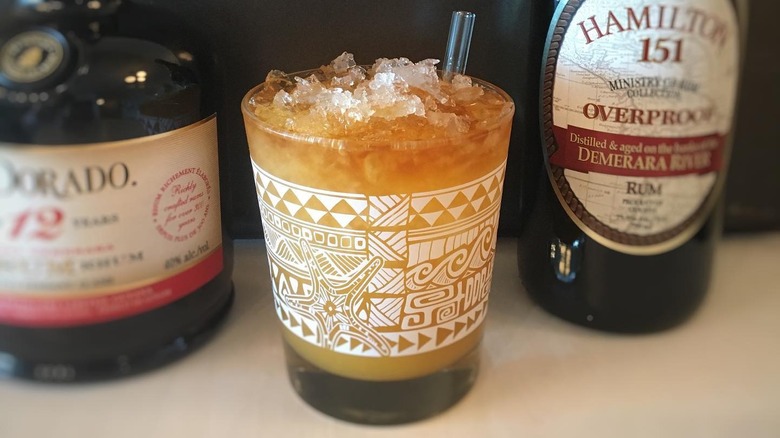
The Demerara Dry Float is another Donn Beach creation that dates back to around 1941. Like the name suggests, Demerara rum is the key ingredient in this pale orange cocktail that's both tart and sweet. The high-proof rum featured in many of the cocktails at Don the Beachcomber and other legendary tiki bars because of its rich, smoky notes that can add complexity to cocktails and balance out the sweetness of syrups and sourness of citrus juices.
Beach concocted his Demerara Dry Float by combining Demerara rum, lime juice, lemon juice, passionfruit syrup, sugar syrup, and maraschino liqueur in a cocktail shaker with crushed ice. The drink was shaken until chilled, then strained into a glass filled with crushed ice. The final step was to float 151-proof Demerara rum on top of the drink. Back in the day, it would most likely have been served in a ringed, streamline tumbler.
Today, you'll find numerous variations of the Demerara Dry Float. Some versions include Puerto Rican or Jamaican rum. Many omit the maraschino liqueur or the sugar syrup. Yet others call for blending the drink with ice instead of shaking it in a cocktail shaker or including the 151-proof rum directly into the drink instead of using it as a float. However, the core ingredients of the 151-proof Demerara, lime juice, lemon juice, and passionfruit syrup tend to stay the same.
7. Mahukona
Victor Bergeron was another pioneer of tiki culture. In 1934 (the same year that Don the Beachcomber opened), Bergeron opened a saloon in Oakland, California, called Hinky Dinks. At first, it focused mainly on burgers and beer. However, in 1937, Bergeron switched to a tiki theme and eventually renamed the bar Trader Vic's. The bar would become wildly successful and expand to multiple locations across the country. Fun fact: Trader Vic's inspired the name of the Trader Joe's grocery store chain.
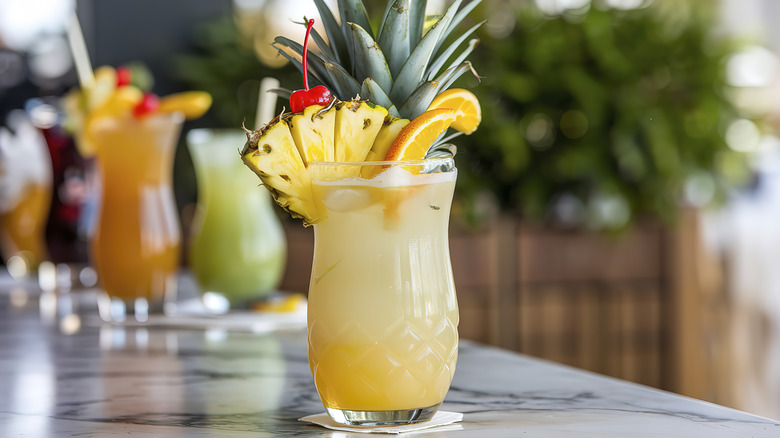
Trader Vic's may have included a few of Don the Beachcomber's drinks on its menu, but Bergeron also created plenty of his own cocktails that were just as fun and flavorful as his competitor's. One of those was the Mahukona, a fruit-forward cocktail with notes of sugar and spice. And unlike Donn Beach, he wasn't afraid to share his recipes, so we know exactly how he crafted it.
Bergeron wrote many books on cocktails and bartending, including "Trader Vic's Book of Food and Drink" that dates back to 1946 and includes a recipe for the Mahukona. It starts with Puerto Rican rum (preferably Ron Merito or Brugal) and Triple Sec (preferably De Kuyper or Nuyens). Those get added to a shaker along with crushed pineapple, lemon juice, and sugar. The cocktail is shaken and poured into a glass with bitters and shaved ice, then is garnished with a maraschino cherry. Bergeron noted that the bitters should not be completely mixed in.
8. Penang Afrididi
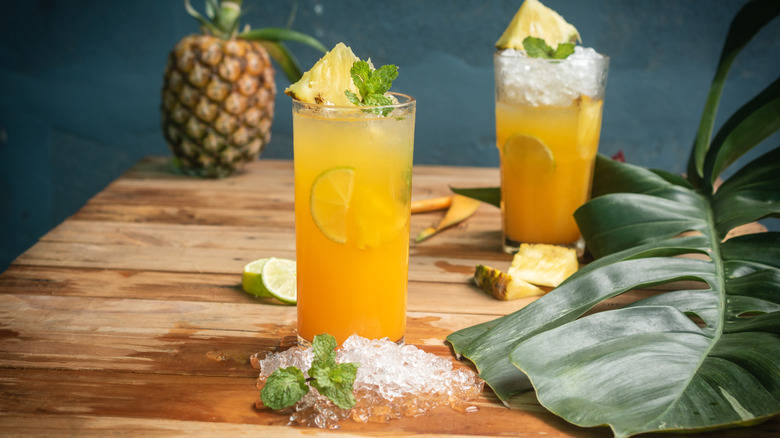
Also called the Penang Punch, the Penang Afrididi was created by Donn Beach in the late 1930s. Its name alludes to the island of Penang in Malaysia, which has long been a Southeast Asian trading hub. Like many of Beach's cocktails, it features multiple rums and fruit juices, as well as an interesting ingredient that you don't often see in tiki cocktails to give the drink grassy notes and a slight hint of anise.
Jeff Berry tracked down the recipe for the Penang Afrididi based on former Don the Beachcomber bartender Dick Santiago's notes, and he published it in his book "Sippin' Safari." The drink includes a base of Puerto Rican rum and Virgin Islands rum shaken with lime juice, pineapple juice, orange juice, passionfruit syrup, Pernod, and crushed ice. The result is a drink that's fruity, but not overly sweet, and has interesting undertones of licorice and herbs from the Pernod.
There are several variations of the Penang Afrididi out there. Even Donn Beach had two versions: the #1 as described above and the #2, which included all the same ingredients just cut in half. You might see some versions that include absinthe instead of Pernod and different types of rum. Then there is the Zula from the Mai-Kai, which is essentially a Penang Afrididi with a different name. The Tiki-Ti bar, which opened in 1961, also has a similar drink on its menu called the Penang.
9. Three Dots and a Dash
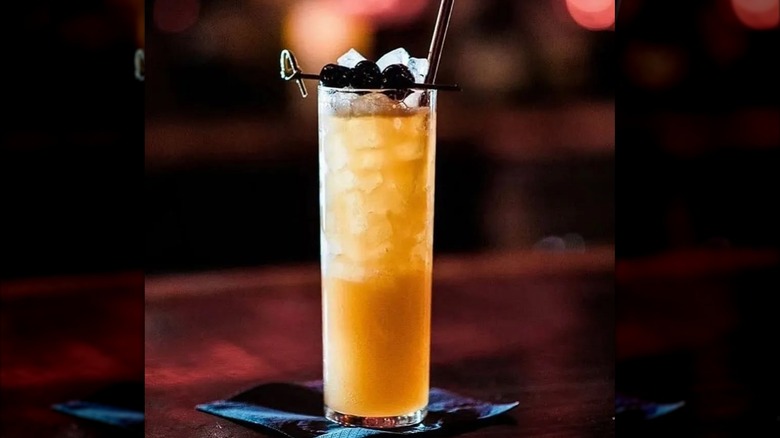
Tiki bars were popular from the 1930s onward, but they really took off after World War II. That's because people were in a celebratory mood after the Allies defeated the Axis forces, and many soldiers returning from overseas felt nostalgic for the South Pacific islands they had visited on their leaves. Donn Beach dialed into that energy with a drink that he called Three Dots and a Dash. The name is a reference to the Morse code for "victory." It's slightly tart and fruity with a nice boozy kick.
Bartenders may play around with the ingredients slightly, but at its essence, the Three Dots and a Dash includes a base of Martinique rum and aged rum from the Caribbean. Then it gets sweetness and herbal notes from falernum liqueur and allspice dram. The spirits get shaken or blended with lime juice, orange juice, honey syrup, and Angostura bitters. Finally, the cocktail is poured into a tall cocktail glass and garnished with cherries and perhaps a slice of pineapple.
The Three Dots and a Dash has been adapted by many people and even modernized. For example, Martin and Rebecca Cate, who are the founders of Smuggler's Cove in San Francisco, suggest flash blending the cocktail in a stand-up blender to give the ice a crushed consistency. They also recommend using a dark Martinique rhum agricole, which is made from cane sugar and offers slight grassy notes.
10. Nui Nui (Pupule)
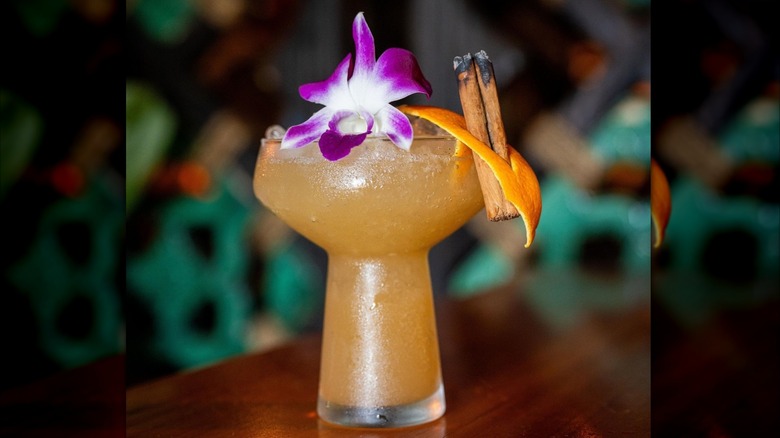
Jeff Berry certainly had his work cut out for him when started deciphering the Don the Beachcomber cocktail recipes that were scribbled in former bartender Dick Santiago's notebook. That's because Donn Beach often used codes in his recipes to prevent people from discovering his complex combinations of ingredients. Take for example the Nui Nui (also called the Pupule) that featured ingredients like Don's Spices #4 and Don's Dashes #8. Berry managed to figure it out though, which is why we can now make many of those original cocktails.
At first glance, the Nui Nui looks like many other tiki cocktails with its reddish-orange hue. However, take a sip and you'll find an incredibly complex cocktail. That's because it contains a mix of Virgin Islands rum, Demerara rum, allspice dram, lime juice, orange juice, cinnamon syrup, vanilla-infused sugar syrup, and Angostura bitters. It also gets extra aromas and flavors from its orange peel and cinnamon stick garnishes.
Unless you're an avid home bartender, the Nui Nui is probably a drink you want to order at a tiki bar rather than make at home. That's because the process can be a bit complicated, considering you'll likely have to make the syrups from scratch and measure out each liquor, syrup, and juice to get the proportions just right before shaking or blending the drink. If you're up for the challenge, though, it can be ultra rewarding. The cocktail has layers of sweet and sour flavors, as well as some smokiness and lovely baking spice notes.