

What Exactly Is Mushroom Powder?

We may receive a commission on purchases made from links.
Among the most widely consumed foods, mushrooms are a highly diverse class of flora. Though there are roughly 14,000 species of fungi that have been identified, only 2,200 species are safe to consume, and about 650 are routinely utilized for medicinal and culinary purposes.
Not only do mushrooms impart a distinctive, savory flavor, but they are also a nutrient-dense food source. Packed with a broad cross-section of vitamins and minerals, mushrooms can purportedly be used to address a number of physical and mental health concerns, from boosting immunity to bolstering cognitive health.
Each species of mushroom has unique characteristics that make it more or less suitable for different types of recipes and culinary applications. While you can obtain them in fresh and dried formats, one way of using fungi that fewer cooks are aware of is mushroom powder. This addition to your dishes can be magical (not in the psychedelic sense), so we dug in to find out what mushroom powder is and how to use it.
What is mushroom powder?
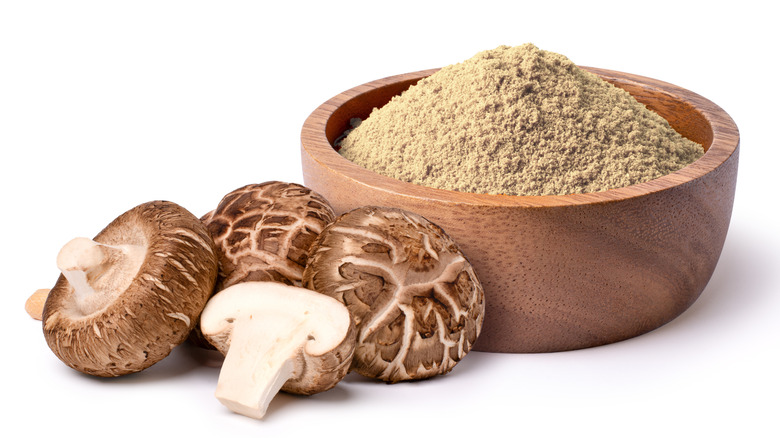
At its most basic, mushroom powder is exactly what it sounds like — dehydrated mushrooms that have been ground up into a powder. That said, this is a rather simplistic description for something so complex. It is an ingredient that can be a secret weapon for home cooks and award-winning restaurant chefs alike.
Mushroom powders come in two varieties: those used for medicinal purposes and those intended for culinary use. They can also be obtained in various degrees of coarseness, with some being more roughly ground and others being ultra-fine in texture. These lend themselves to different tasks in the kitchen depending on the taste and mouthfeel you are searching for.
As mushrooms are dehydrated, their flavor becomes concentrated. When these dehydrated mushrooms are pulverized, the umami-rich taste is intensified even further. Most mushroom powders are made using a variety of different species of mushrooms, giving the blend even more of a nuanced flavor profile.
How is mushroom powder made?
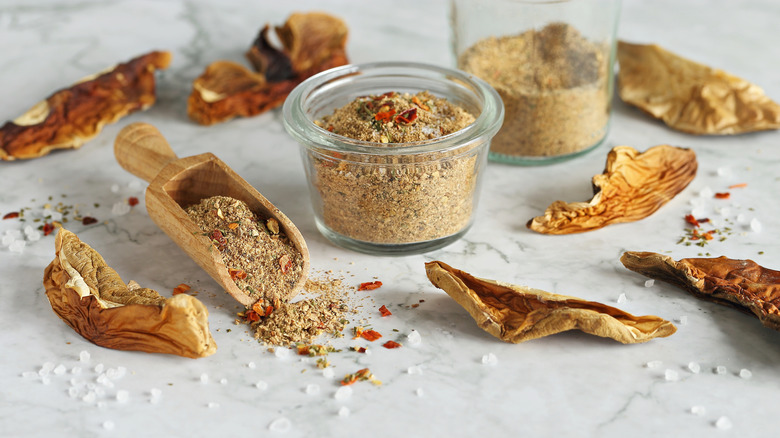
Though you can obtain commercially-produced mushroom powders, making it from scratch is simple and produces a higher quality product that is generally more potent in flavor and aroma. There are a couple of ways to produce mushroom powder at home. You can obtain pre-dehydrated mushrooms, or you can dry fresh ones yourself.
The best way to dehydrate fresh mushrooms is either to use a home dehydrator or in an oven set on low for several hours. The advantage of dehydrating fresh mushrooms is two-fold. First, it enables you to select the exact combination of mushrooms you desire, which can help you target the precise flavors you enjoy. Second, it eliminates waste. You can use every part of the mushroom, even ones you may not generally toss into a recipe, like the stems and skin, in making mushroom powder.
To pulverize mushroom powder, you can either use a food processor or a coffee grinder. The former produces a rougher texture, while the latter makes a very finely ground powder. Just keep in mind that if you plan to use a coffee grinder, you may want to use one that has been designated for this purpose, not one you plan on using again for coffee. Even after cleaning the grinder, you may find that the aromas and flavor of the mushrooms were absorbed.
Dried mushrooms versus mushroom powder
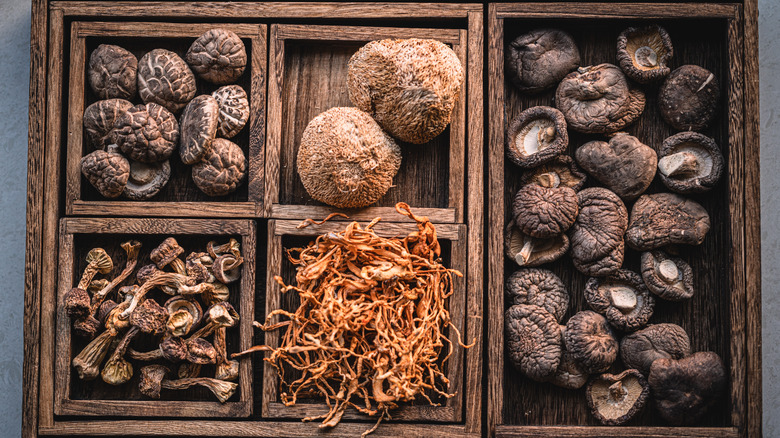
Since mushroom powder is made from dried mushrooms, you may wonder what the difference is between them. Though they are essentially the same ingredient, their particle size and the way you use them are vastly different, yielding completely distinctive aromas and flavor profiles.
Dried mushrooms (which belong in your pantry) are indispensable for augmenting fresh mushrooms or as a replacement for them in many dishes; they are more concentrated in taste and smell than their fresh counterparts. To use them, dried mushrooms need to be rehydrated with hot water to plump them up, or can be added directly into a soup or stew, where the stock in the recipe will resuscitate them.
By contrast, mushroom powder can be used as-is, without any preparation. It can be tossed directly into any recipe for a boost of mushroom taste without the added step of rehydration. Mushroom powder tends to be significantly more potent in terms of smell and flavor than dehydrated mushrooms. It can also have a more pleasant, less gritty texture in recipes, which may be a bonus if you want to supplement a sauce or umami-rich compound butter without compromising the velvety mouthfeel.
Functional mushrooms versus culinary mushroom powder
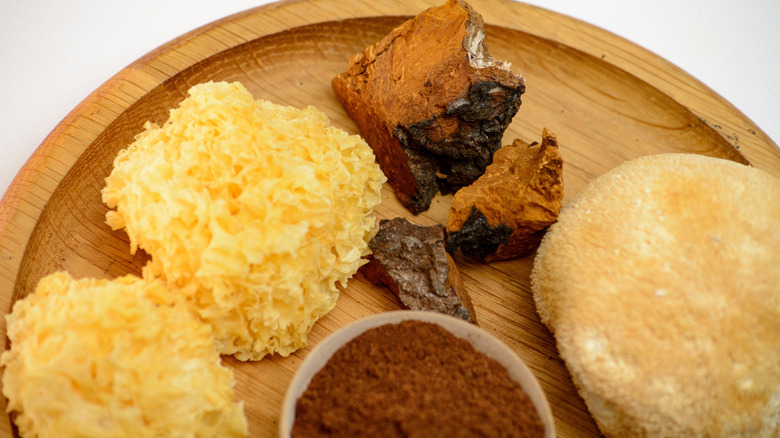
Functional mushrooms are all the rage of late. They are popping up everywhere, from supplements and tea to smoothie powders and a number of mushroom coffee brands. Functional mushrooms fall into two categories: medicinal and adaptogenic. The former are valued for their myriad of health benefits, while the latter are used to augment our body's natural stress responses, helping to boost immunity and enhance performance.
Many functional mushrooms are not used for culinary purposes, not because they are toxic, but because, generally speaking, they are unpalatable. Among the more well-known of these are reishi, chaga, lion's mane, turkey tail, and cordyceps. That said, a few, like shiitake and maitake, are suitable for both culinary and functional purposes.
Additionally, while the fruiting body, or the cap and stem, of a mushroom is what is most often used for culinary purposes, functional mushrooms often use the entire fungus, including the mycelium. This strand-like web extends deep into the ground and essentially feeds the fruiting body; it is the mycelium that is believed to be the key to harnessing the superpowers of these medicinal and adaptogenic mushrooms.
Mushroom extract versus mushroom powder
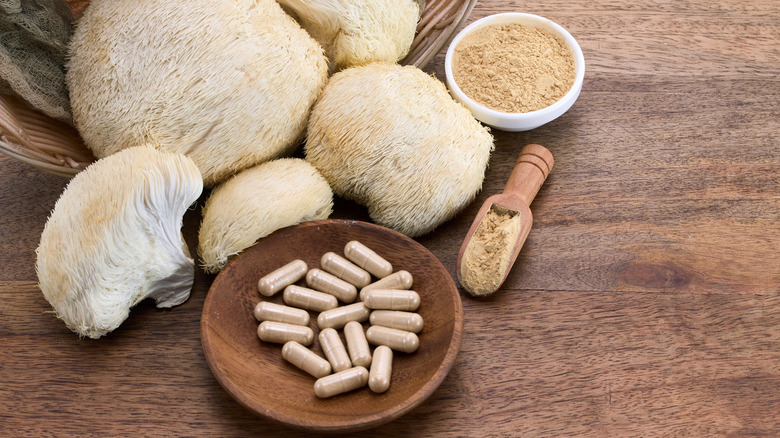
Though both culinary and functional mushrooms are available in powder form, higher-quality variations of the latter also come in both liquid and solid extracts. Extracts are produced by steeping the fruiting bodies and/or mycelium of functional fungi in solvent and heating these until the active compounds within the mushrooms, like beta-glucans, polysaccharides, triterpenoids, ergosterol, and other bioactive compounds, are isolated and concentrated.
Mushroom extracts are typically valued for their bioavailability and potency, which makes them ideal for supplements, including capsules, tinctures, teas, and even cosmetics, like the products from Lifecykel or North Spore Organic. Though the extraction process intensifies their flavor, this can actually make functional mushrooms even more unpalatable, which is why extracts aren't ideal for culinary purposes. Extracts also tend to be more expensive than powders, although the same active compounds are present in both, due to the added processing they undergo — making them something of a luxury item.
What does mushroom powder taste like?
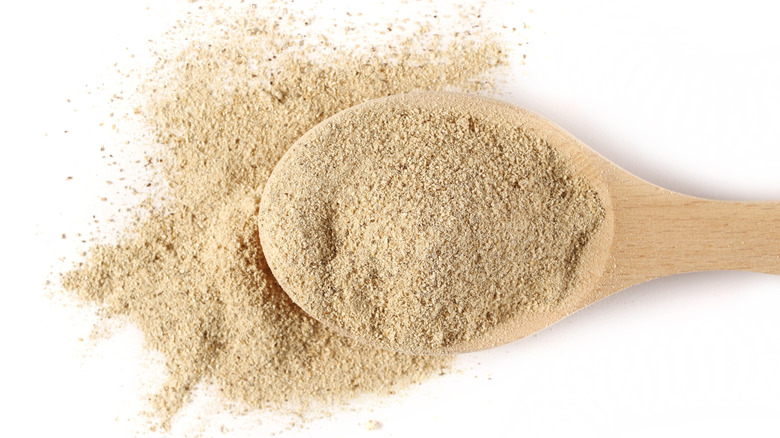
To say that mushroom powder has a single, definitive taste would be doing this ingredient a disservice. That said, some basic characteristics of mushroom powder can be applied across the board, regardless of which type you use. All mushroom powders share the distinctive quality of being intensely savory and rich in umami notes. They also have deep, earthy, often nutty, and floral qualities that make them intensely complex and sophisticated as an ingredient in any dish.
In addition to these basic flavor qualities, each type of mushroom powder can vary wildly in specific taste and aroma. For example, morel mushroom powder has an almost smoky quality and a funkiness that has been likened to aged or blue cheeses. Porcini mushroom powder, by contrast, is almost woodsy, with hints of sweetness permeating the meatiness. And, maitake mushroom powder often possesses an almost zesty or peppery quality that can really brighten up a dish.
Some of the best mushroom powders are made from a blend of different varieties. These capitalize on the uniqueness of each type of mushroom and allow their distinct flavor notes to complement one another, creating even more nuance in a dish.
How to cook with mushroom powder
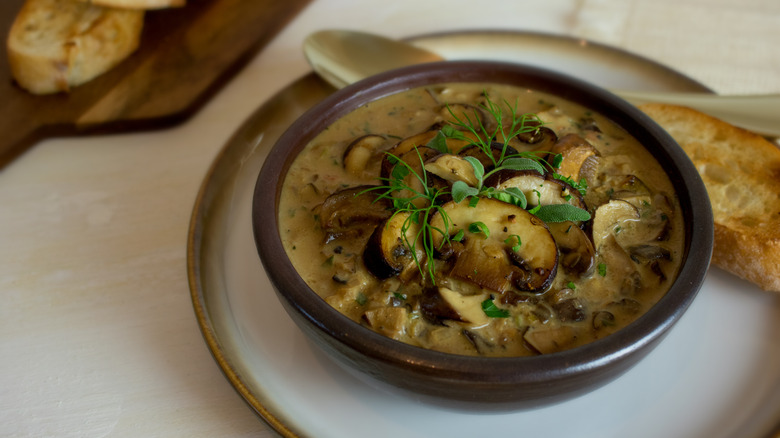
The culinary uses for mushroom powder are virtually limitless. This umami powerhouse can lend savoriness to almost any recipe that requires a bolster of sophistication and complexity. At its most basic, mushroom powder can be used as a seasoning to transform things like popcorn, vegetables, meat, and fish. It can also be added to soups, stews, and sauces to deepen their flavor and give them that cooked-all-day essence.
Mushroom powder is also a fantastic addition to liven up some of your favorite breakfast foods, notably eggs. Try adding it to your next omelet, frittata, or to augment hollandaise sauce for a next-level eggs Benedict. It can also be tossed onto homemade granola for a sweet and savory flavor that will revolutionize your next breakfast bowl.
Some more unusual applications for this ingredient include cocktail and dessert recipes. Mushroom powder can take your favorite Bloody Mary recipe to the next level by accentuating the spicy elements and mellowing out the acidity of the tomato juice. And, when it comes to cookies, brownies, or even cakes, just a dash of mushroom powder will help to balance out the sweetness of these while giving them an added layer of richness.
Where to buy mushroom powder
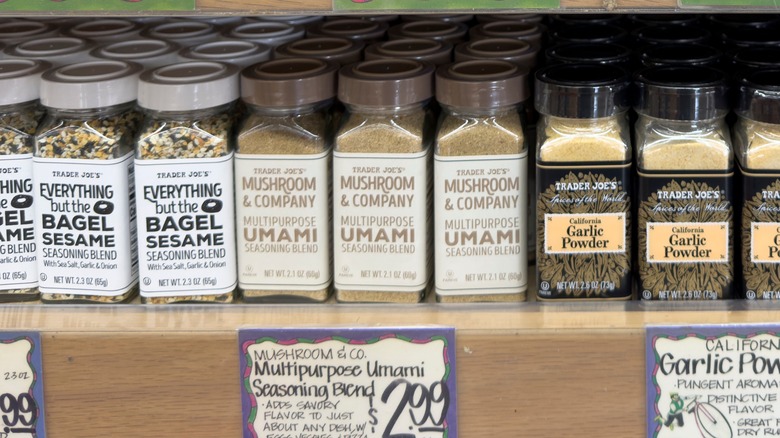
While making mushroom powder from scratch is easy, more affordable, and often of higher quality than anything you can purchase, there are commercially produced varieties that are worth taking a look at. Believe it or not, you can actually find mushroom powder at many nationwide retailers, including Walmart, Whole Foods, Trader Joe's, and more.
That said, it can be just as easy to purchase mushroom powder online, and the varieties available tend to be more diverse. A simple search for "mushroom powder for cooking" on Amazon will yield hundreds of search results, including Takii Umami Powder. Walmart offers bettergoods Mushroom Umami Seasoning, or try The Spice House's Porcini Mushroom Powder.
Sifting through the options to find the highest quality products can be a bit daunting. It is always best to search for products that include the mycelium, not just the fruiting body, are organic, do not contain fillers or additives, are third-party tested, and are dark in color. You can also search by a specific type of mushroom or for a blend of mushrooms you prefer.
Nutritional information about mushroom powder
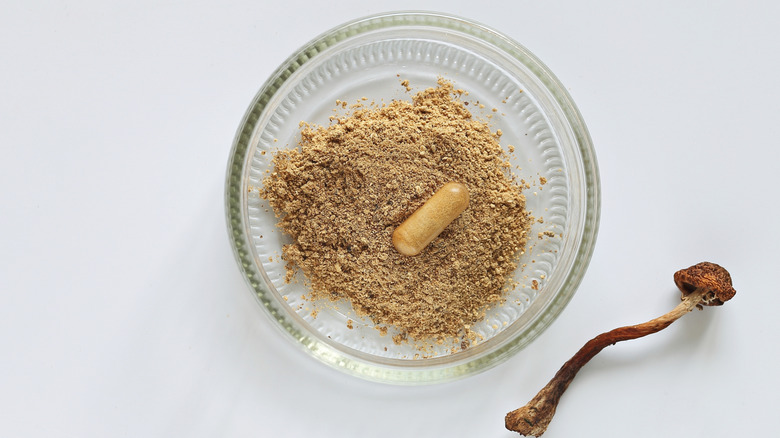
As a general rule, mushroom powders for culinary use possess a decent amount of protein and are high in fiber. Functional mushrooms that can also be used for culinary purposes, like shiitake and maitake, may have additional benefits. Not only are they high in beta-glucan, which can boost immunity, but they are also high in antioxidants, foster a healthy gut microbiome, and may assist with bolstering brain function.
In a study published in the Journal of Complementary Medicine, a number of culinary and functional mushrooms were researched for their potential impact on brain and nerve health. Several were identified as having positive neurotrophic properties, though more research needs to be done to isolate which might be the best candidates for further investigation.
That said, there are some things to keep in mind when incorporating mushroom powder into your regular cooking routine. Though this is more relevant to the use of functional mushrooms, even culinary mushroom powder may not be ideal for some individuals, especially those who live with chronic autoimmune diseases, if they are pregnant or breastfeeding, those receiving chemotherapy, or people with persistent kidney conditions.
How to store mushroom powder
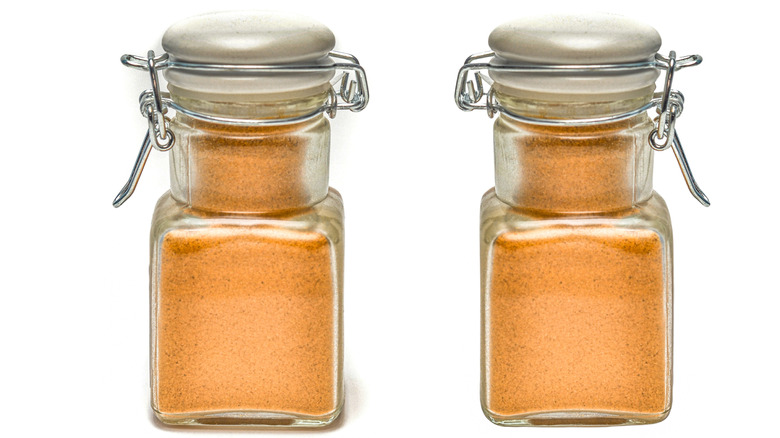
In many ways, mushroom powder can be stored similarly to other herbs and spices for long-lasting flavor. The biggest issue with mushroom powder is keeping it from absorbing moisture. Moisture can promote the growth of mold and cause it to harden, making it challenging to use. Mushroom powder is also sensitive to oxygen and light, both of which will diminish its flavor and aroma and negatively impact nutritional value.
Placing mushroom powder in an airtight container or ziploc bag will ensure it is kept dry and away from oxygen. The packaged mushroom powder should be stored in a cool, dry place that is away from sunlight and in a humidity-controlled environment. It can also be placed in the refrigerator for longer-term storage or if you reside in a region with excessive humidity.
Though hardened mushroom powder is safe to use, it can be hard to distribute evenly. If the powder shows signs of rancidity, which include moisture, a change in color, or a foul odor, it may not be safe to consume and should be discarded.