

7 Herbs And Veggies To Keep Far, Far Away From Your Garden's Basil
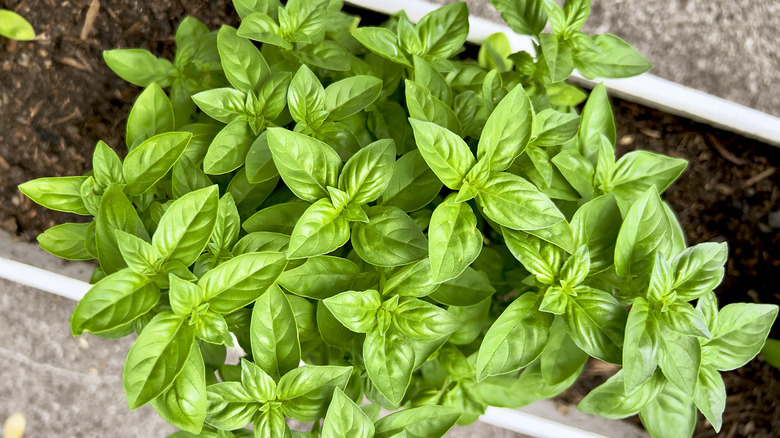
Planting herbs in your garden or containers is a great way to enhance your edible garden's offerings, and basil is a common favorite. For the most part, this beloved flavor enhancer is a pretty easy and straightforward plant to grow and harvest at home, but it does have a few specific requirements. Along with all the normal gardening elements such as water, fertilizer, and sunlight, it's also important to consider where you've placed your basil. As it turns out, basil can sometimes benefit from being carefully placed away from other herbs and vegetables.
To better understand why plant planning is so critical, we connected with Edwin Dysinger, the co-founder of Seedtime, a leading garden planning and management app. As Dysinger explains, it really comes down to the fact that every plant is unique and has individual requirements for healthy growth and success.
"Some need more sun, some less," says Dysinger. "Some need more water, some less. Some can take more or less cold or heat. Basically, it is best to group plants with similar growing requirements together." With this in mind, we asked Dysinger to share which plants counteract basil's needs.
1. Sage
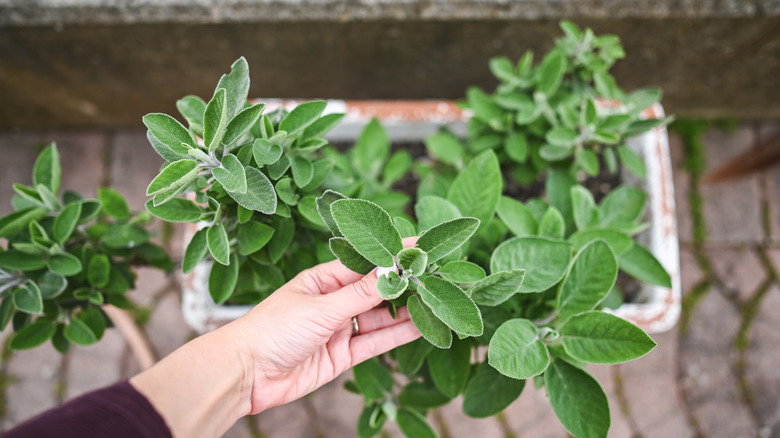
Much like basil, sage is another herb that people commonly plant in their home gardens. With its earthy, peppery flavor, it's not one you find paired with basil in most recipes — and Edwin Dysinger says they shouldn't be paired together in the garden, either. In fact, they're notoriously incompatible when planted close together. This comes down to different hydration needs, because, unlike sage, basil requires frequent watering.
"If you have planted sage and basil next to each other, as you give your basil the frequent watering it needs, you'll be inadvertently overwatering, and thus stressing, your sage," Dysinger explains. This can lead to a competition between the two herbs, and often, sage's needs win out — meaning it's basil that experiences the weaker growth. "Avoid planting closely together," he warns. Instead, plant sage near other herbs with similar properties, such as thyme, rosemary, and oregano.
2. Rue
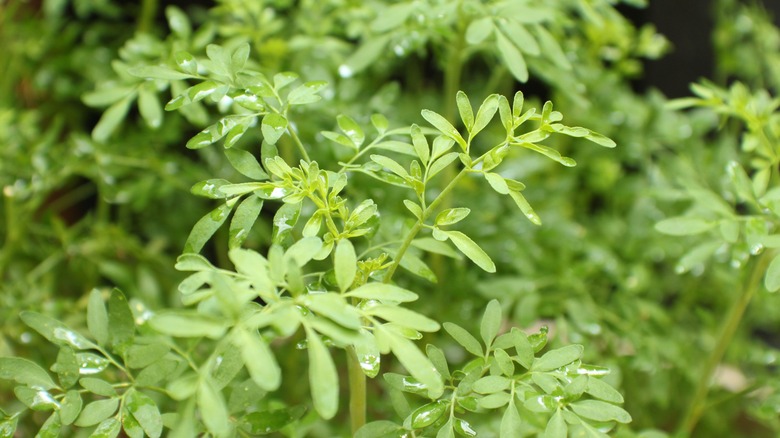
While rue isn't a particularly common herb in many home gardens, it has a complex flavor that works well in certain dishes, particularly in Ethiopian food. It's also sometimes used in small doses for certain teas and soups, often when someone is looking for herbs with medicinal benefits. Beyond its edible properties, rue is beloved for its aesthetic offerings, too, thanks to its vibrant color and delicate leaves. Unfortunately, Edwin Dysinger notes that none of these benefits extend to basil.
In fact, the two planted close together can be a significant problem for basil. Rue is more like sage, preferring drier, well-drained soil, but it also has something called allelopathic properties. This means it naturally releases chemicals into the soil as it grows. These can negatively impact neighboring plants, including, of course, basil.
"Rue can inhibit basil growth and may compete aggressively for soil resources, causing poor growth in both plants," Dysinger says. But this isn't true of all plants. In fact, rue can be quite helpful for roses, fig trees, and raspberry bushes, as it also serves as a handy pest deterrent.
3. Rosemary
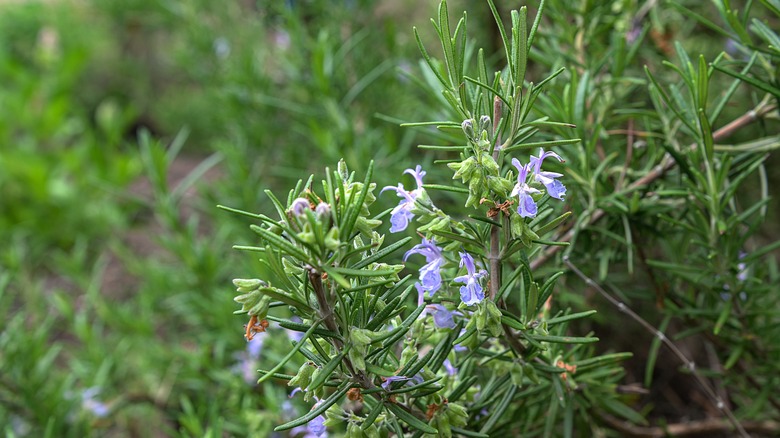
At first glance, rosemary and basil might seem like they would be compatible. Much like basil, rosemary is known to be a pretty easy herb to grow, and both require full sun, benefitting from about six to eight hours a day.
Unfortunately, their compatibility stops there, and this once again comes down to their differing watering needs. As a general rule of thumb, if a plant requires moderate to low water to thrive and survive, it's not a good companion for basil. "Growing them together can lead to under or overwatering of one plant," explains Edwin Dysinger. "[They're] better kept in separate pots or beds."
Instead, you'll often see rosemary planted along with lavender, as well as sage, oregano, and thyme. Of course, it also looks beautiful on its own in a container, or it can be beneficial to carrots or strawberries as a way to deter pests.
4. Cucumber
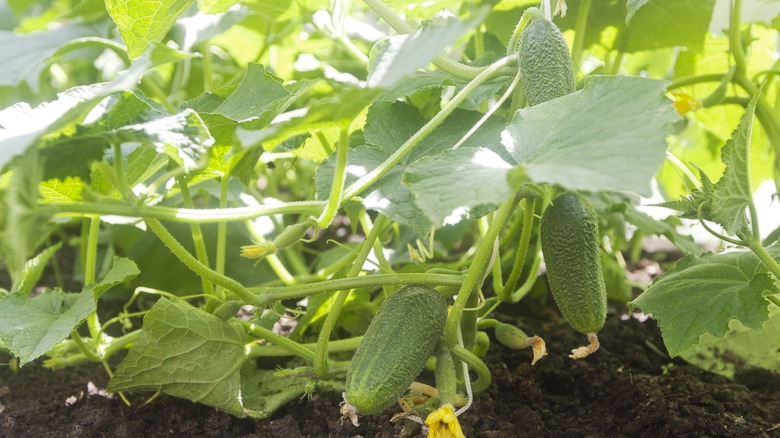
If you're looking for vegetable plants that can benefit from basil as a companion plant, you'll likely find that tomatoes are most commonly recommended. Pro gardeners say that this is because basil's strong aroma is a great pest deterrent for tomatoes, including aphids and whiteflies. Plus, just as in many recipes, basil is thought to naturally enhance the flavor of tomatoes as they grow and ripen. Garlic is another great companion plant for basil. Cucumbers, however, are one to avoid.
Edwin Dysinger says the reason basil works well alongside tomatoes is the same reason you should avoid planting it close to cucumbers. It can affect the flavor — but in the case of cucumbers, this is a bad thing. "Cucumbers can take on the aromatic flavor of basil when grown nearby and may see reduced yields due to competition and flavor contamination," Dysinger says.
Instead, cucumbers prefer companion plants that can enhance the soil with more nitrogen, such as peas and beans. Some flowers are also a great pick alongside cucumbers, including marigolds and nasturtiums. Both of these are said to repel pests that are commonly drawn to cucumber plants.
5. Fennel
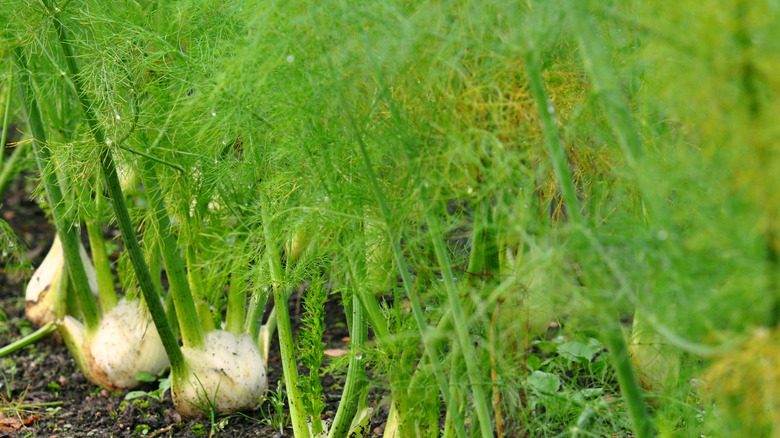
Along with being a diverse ingredient in the kitchen, fennel is considered a pretty easy vegetable to grow. This is generally thanks to its low-maintenance requirements and straightforward needs. Considering basil calls for similar elements, including full sun and well-draining soil, you'd think they might be a great pairing, but unfortunately, Edwin Dysinger says this is not the case.
In fact, fennel can have a majorly negative impact on basil, as well as other common vegetable garden mainstays. This includes members of the nightshade family, such as tomatoes and eggplants, and certain other herbs, like cilantro and dill.
"Fennel inhibits the growth of basil and other vegetables, potentially stunting or killing nearby plants," says Dysinger. This comes down to the fact that fennel is known to be allelopathic, and releases chemicals into the soil that these aforementioned plants can't handle. Fennel can also attract aphids, which is a major issue for many other plants — including aphids. Instead, keep fennel close to peas, sage, and some brassicas, such as cauliflower and broccoli.
6. Thyme
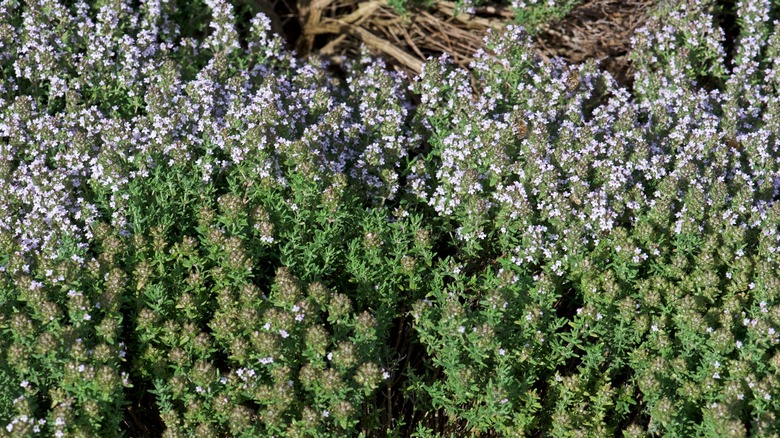
Thyme has already been mentioned as being a great companion plant for rosemary and sage, which means, of course, that it's not a great fit alongside basil. Like the other drought-friendly herbs, thyme requires less water than basil, meaning they're simply incompatible.
In order to consider which plants pair well together, Edwin Dysinger says it's helpful to remember that plants, much like people, interact with each other. "As with people, some plants bless each other in their interaction while others don't," he explains. "When plants don't get along well, one or both will be stressed, stunted, or just not do well."
However, when they do pair well together, the right combination can be mutually beneficial. As has been previously noted, thyme grows well alongside herbs like sage, rosemary, oregano, and lavender. It can also be well-suited for placement next to cabbages or tomatoes, as well as fruit like strawberries and blueberries. In these cases, thyme is an excellent pest-repellent.
7. Cabbage
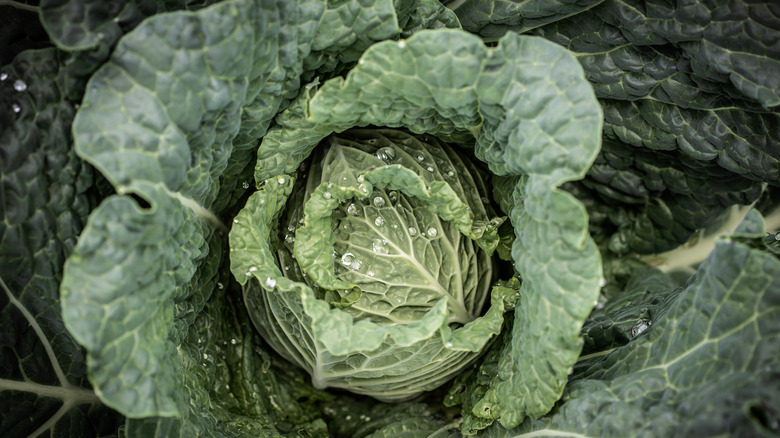
As a beloved Mediterranean herb that's most commonly associated with Italian food, it's probably not a surprise to know that growing basil requires a warmer climate. On the other hand, cabbage does best in cooler temperatures, which makes these two plants pretty incompatible. The same goes for kale, whose flavor can also be negatively affected by the aromatic nature of basil.
One common mistake Edwin Dysinger has noted is that people will place basil strategically next to certain crops, thinking it's a great deterrent for invasive pests like aphids, whiteflies, caterpillars, and spider mites. While this is true when basil is well-positioned in the garden, Dysinger says basil loses its efficacy when it's stressed.
"These same pests have been found eating basil [because] when it's stressed, it's susceptible to pest pressure," says Dysinger. "And what would stress basil? Not having the right growing conditions — too much or too little sun or water, too hot or too cold, or a soil imbalance." For this reason, placing basil near cabbage might lead to far more harm than good for the overall health of your garden.