

The Timing Mistake Everyone Makes That's Keeping Your Mushrooms From Getting That Perfect Sear
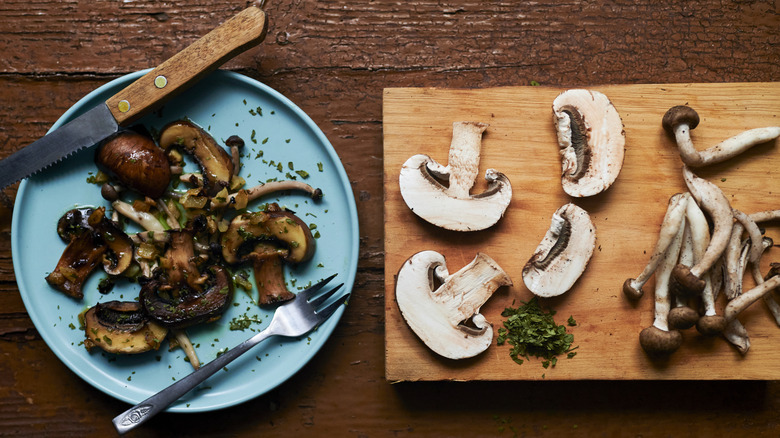
Mushrooms tend to have a love-hate relationship with those who eat them. The hate is likely one-sided (when it comes to edible mushrooms, that is), but given the diversity and versatility that the world of mushrooms has to offer in the kitchen, we think they deserve a second chance. There are a number of mistakes one can make when cooking mushrooms, which can be easily avoided to deliver a dish worth savoring. If the only thing that's putting you off mushrooms is their texture when cooked, there might be an easy fix to the problem, and it has to do with nailing the timing of when you add salt to season the mushrooms. Be it a simple stir fry or a hearty mushroom gravy to scoop over biscuits, mushrooms bring a deep, savory, umami to any recipe, and the success of the dish depends on how the mushrooms have been cooked and seasoned.
Mushrooms have a high water content, and when they are salted too early, this draws out the moisture onto the pan. As a result, you end up with the mushrooms being steamed rather than sautéed. The excess water on the pan delays the browning process that is responsible for the satisfying sear atop their surface and ruins the texture of the mushrooms. You're left with a rubbery mouthfeel as opposed to a tender and juicy one. Make sure the mushrooms are close to being completely cooked and succulent before adding the salt to enhance their flavors. Keep this handy tip in mind the next time you venture out to transform meaty lion's mane mushrooms into a juicy "steak," or perhaps assemble a delicious portobello mushroom burger and delve into the culinary diversity of mushrooms.
More tips for perfectly seared mushrooms
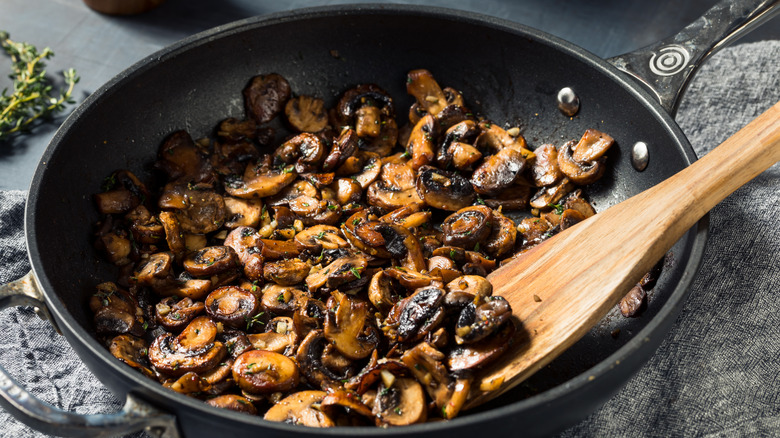
If you're starting to warm up to the idea of cooking with mushrooms more, you're in the right place. There's absolutely no reason that mushrooms should end up in a soggy mess on the plate, especially if you choose the right type for the task. The process might take some trial and error, playing around with different mushroom varieties, as some are better suited than others depending on what you're making. Regardless of your choice of mushroom, make sure that they are dry before they hit the pan. Minimizing the amount of moisture as much as possible and ensuring that the fat source for cooking is hot before tossing in the mushrooms is crucial for developing a visually appealing sear. Bear in mind, one of the biggest mistakes one can make when cooking mushrooms is overcrowding the pan. Because mushrooms have a high water content, they need enough space around them for the moisture to release. The more mushrooms there are in the pan, the more likely they're all going to be stewing in one another's released moisture.
You might be debating whether you should opt for a cast iron skillet or a non-stick pan to sear the mushrooms. For a simple sauté, a nonstick pan is sufficient for the job, but if you desire the dark, charred sear that imparts a complex smokiness to the flavor profile, you need a surface that can reach and maintain high heat like cast iron does. For added flavor, deglaze the pan to lift up the flavorful, charred bits called "fond." It's an easy technique to enhance every bite of your umami-packed mushrooms.