

15 Items Everyone Should Avoid Leaving On Their Kitchen Counters
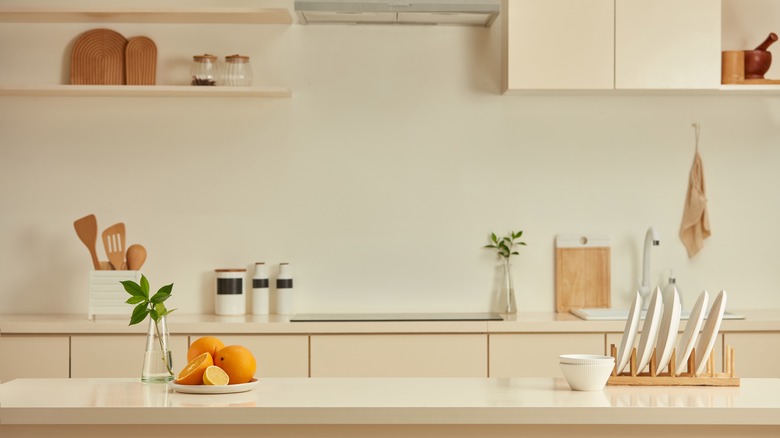
A tidy, well-organized kitchen is more than just nice to look at. What you see in your kitchen can actually affect how you feel and what you do. Not only can a well-organized kitchen makes it easier to cook, but it can also affect how much you eat. Meanwhile, a messy kitchen can make you snack more, especially if you're currently feeling overwhelmed. A tidy kitchen space can help you stay healthy as the space is easier to clean, reducing the chances of food poisoning. A clean kitchen is one you're not embarrassed for others to see, while a messy kitchen may actually make it harder for you to unwind and relax.
One of the spots that can quickly become disorganized is your kitchen counter. That space seems to become a default storage area for way too much that doesn't belong in the kitchen to begin with. However, a lot of clutter is due to keeping too many kitchen-related items out on the counter, too. So, what should you keep out on the counter, and what do you need to put away? Here's a list of 15 items that you may want to remove from your kitchen counters right now.
1. Cookbooks, except for the one that you're actively using
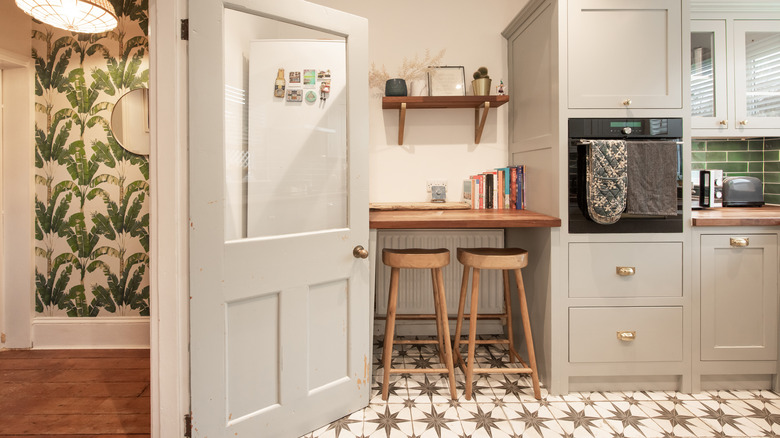
You'd think cookbooks belong in the kitchen, but there's a limit to what you want to keep in there. Really, the only cookbook that should be on your kitchen counter is the one you're actively using as you plan your meal or cook a recipe. Every other book should be away from the counter. As you cook, humidity and microscopic bits of grease can make surfaces like those on cabinet doors feel kind of greasy and sticky after a while. That can happen to your cookbooks, too. And if the books are on the counter where you're making food, one spill is all it takes to ruin several books. Plus, if you have a lot of cookbooks, they're just going to take up too much counter space.
Rather than risking beloved cookbooks, store them out of the way. One option is to keep them inside cabinets. In a large kitchen, you could store them on shelves far away from the cooking zone. And if you really have a lot of space, you can do what Ina Garten had to do when she had piles of cookbooks all over her home: create a cookbook library.
2. Random papers, mail, and receipts

This is something that happens to just about everyone: part of your kitchen counter becomes an unofficial storage space for papers, mail, receipts, and so on. Don't let those build up because those papers can serve as a hiding place for pests. Other pests like to chew on paper because some paper components are bug food, too. And overall, those papers make it harder to clean away dust and crumbs.
Try to set up specific storage areas away from the kitchen. For example, you may want to have a basket by the door for mail, or a two-tier tray for incoming and outgoing mail. If your kitchen has a workspace or built-in desk, make that the paperwork center where you can keep incoming mail, outgoing mail, receipts, and other papers organized. Remember that you can use shelving and wall-mounted organizers in that space, too, to keep the desk clear. If the desk is completely covered with baskets of paper, you're not going to want to touch anything there, and you'll end up only moving the paper problem, rather than actually getting it organized.
3. Loose knives, even if they're sheathed
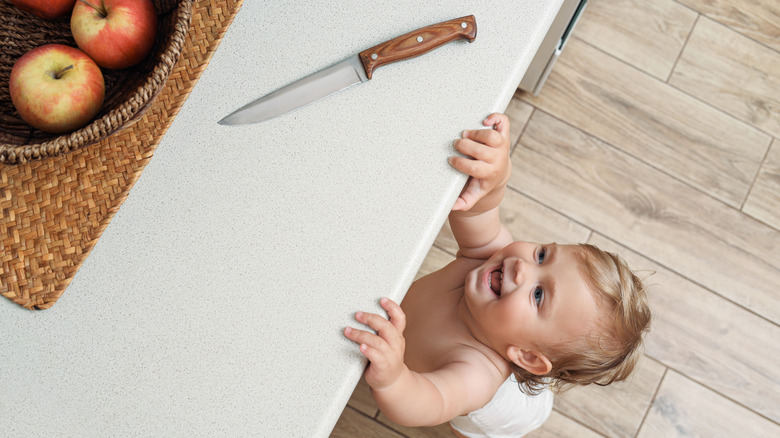
Loose knives are a no. Nope, absolutely not. Those things go either in a sturdy knife block on the counter or in a knife block in a drawer. Loose knives can fall and either sustain or cause damage, depending on what they hit. If the knives are piled together, even in a small container on the counter, the blades can nick the handles on other knives, and the blades can become damaged. And if you do have small kids, you especially want to lock those knives away in drawers with child-proof latches. Protective sheaths, which you can buy if they didn't come with the knives, can slip off very easily. It wouldn't take much effort for a child to remove one. If you don't have kids, a magnetic strip that holds knives in place and out of the way could be acceptable.
One thing to note about using a countertop knife block set is that they sometimes come with more tools than you need. That means they're bigger than you need, too, and take up more counter space. Look for blocks that hold only the knives you will actually use.
4. Dishes, both dirty and clean
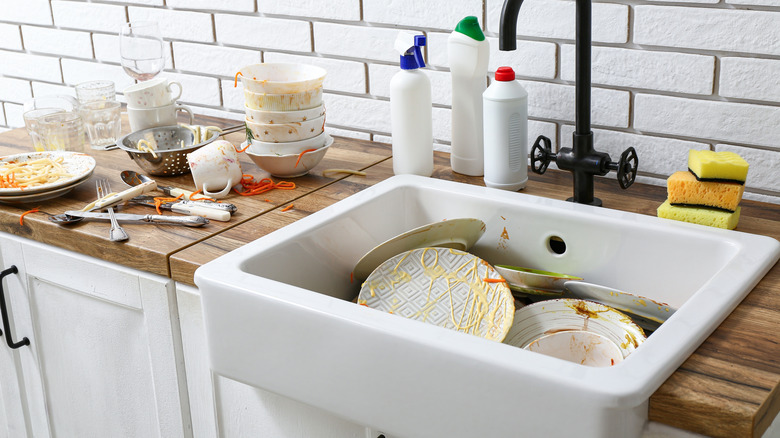
Dishes don't belong on your kitchen counter, regardless of whether they're dirty or clean. Obviously, you're going to have dishes on the counter occasionally, such as right before or after a meal. But you should wash dirty dishes as soon as you can. Don't let them sit because the food will either spoil and promote mold and bacterial growth, or the food will dry on the dishes and be even harder to remove. Plus, that food will smell until you wipe it off and wash the dishes.
Clean dishes really shouldn't be out, either. You know how many dislike the open-shelf look because that allows the dishes on the shelves to gather dust? The same thing happens when you store them on the kitchen counter. If, for whatever reason, you don't have the cabinet space for dishes, consider getting a portable cabinet or cart with an enclosed storage space, and keep the clean dishes in there. Dishes that you don't use often can go in padded dish cases.
5. Small appliances
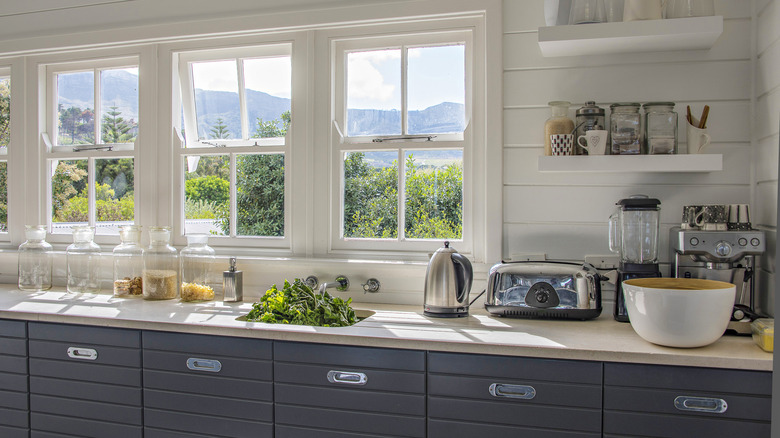
One thing you'll find in kitchen-organization advice is to store small appliances that you don't use often in a cabinet. That protects the appliances from dust, and it hides them from view so that they're not taking up valuable counter space. If you have the room, install pull-out shelves in base cabinets so that you can keep everything hidden while still being able to access each appliance quickly.
If you have a smaller kitchen, try to stack smaller appliances on modular storage shelves or on a rolling cart that you can tuck away, off to the side. Limit any small appliances on the counter only to those that you use often. You may even consider keeping only those you use almost daily on the counter, with everything else in a cabinet. This is a great way to find out exactly which appliances you really use, by the way; if you notice you haven't used one in a while, that could be a sign that you don't really need it.
6. Cleaning products that aren't associated with food
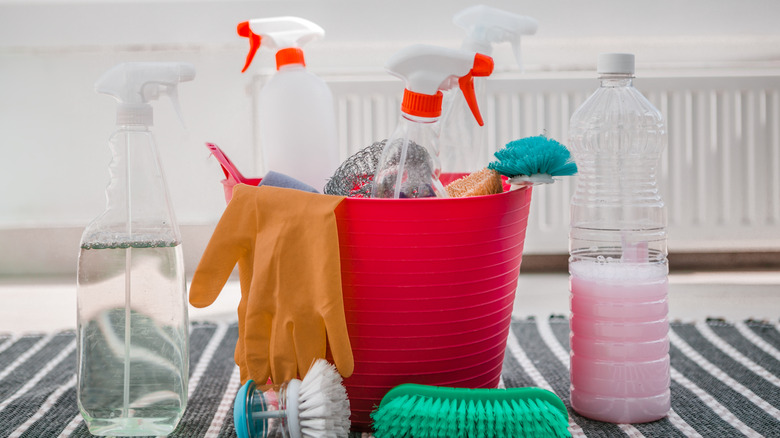
If you store cleaning products in your kitchen, only certain ones should be on your counter. Anything associated with daily dish or food use makes sense; after all, you don't want to have to dig into a cabinet every time you need to wash dishes. Some dish soap and vegetable wash or baking soda, if you use it, are totally normal items to have on the counter at your sink.
But non-food cleaning items are another matter. Bleach, all-purpose cleaners, and glass cleaner have no business living on your kitchen counter. Keep these in a cabinet away from food items and dishes, as well as paper towels and similar items. If there's a spill, these cleaners are not food-safe, and you don't want them getting onto anything that you use with food. Keep these in secure cabinets or on shelves where kids and pets can't access them, and don't store them near heat sources, like in a cabinet next to the oven.
7. Cooking oils and spices, maybe
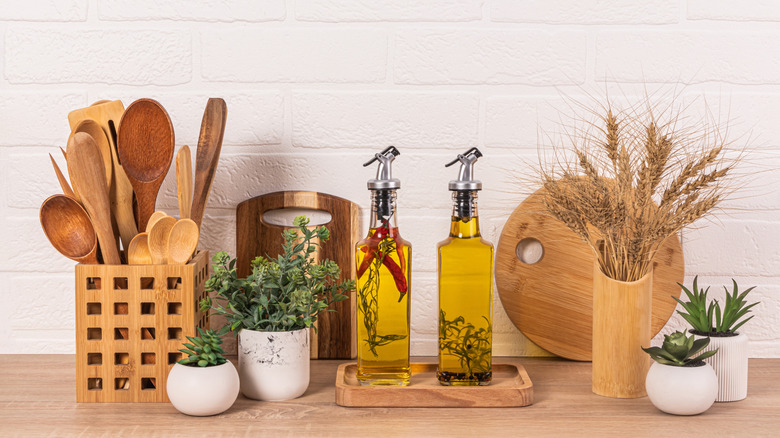
Many people store spices and cooking oils on the counter. It makes sense, right? These are items you use almost daily, so keeping them right by the food-prep area is efficient. But there are those who don't think this is a good idea. On one hand, keeping these on the counter keeps them in your sight and within easy reach. You use them more, and they don't end up becoming that jar you pull out years from now only to marvel at the long-gone best-by date.
On the other hand, there are those who think storing these on the counter is not good because of heat exposure from the stove and oven, or because of light exposure, which is supposed to make the spices and oils deteriorate faster. They advocate keeping these in spice drawers and in cabinets. If you go this route, clean out the drawers and cabinets every year at a minimum to ensure you know what you have and don't end up having to make an archaeological expedition into the Valley of Lost Spice Bottles the next time you remodel or move.
8. Hot pans without a trivet
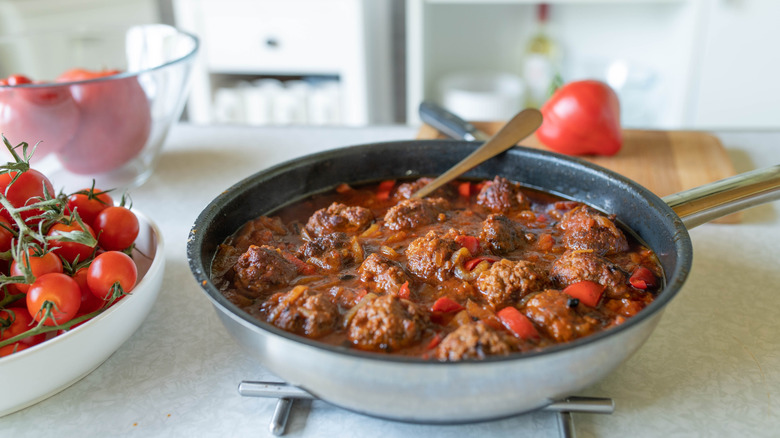
This is one of those things that most people learn early on, but not everyone does. Hot pans can damage just about any kitchen counter surface, so no matter what you have in your home, you'll need to set a heat-resistant trivet under the pan. For example, a hot pan can damage laminate, but while laminate can withstand a lot of heat, a very hot pan can leave a mark. Laminate can even burn.
What about stone? A hot pan can damage the sealant on granite countertops even though the granite itself might not be harmed. Quartz can discolor, and marble can even chip. And if any stone countertops have microscopic fractures, the heat can make those expand. Artificial stone can crack, and even stainless steel can discolor. Tile countertops, which are usually ceramic, can discolor or even crack from thermal shock. Always place a trivet under a hot pan.
9. Cutting boards, if you can't store them out of the way
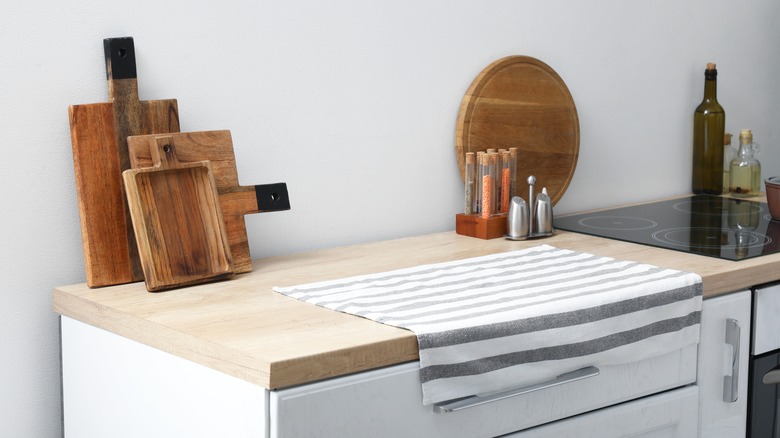
It's actually okay to store a cutting board on the counter. However, you don't want food or liquid splatters hitting the board, such as those that can fly when you're using a mixer. That just creates one more thing to wash, and if you don't realize food has splattered onto the board, then you end up with a dried and potentially smelly mess. It's better if you can store the cutting board away from wherever you tend to prepare food. If you don't have a good spot on your counter that's out of the way, consider storing the cutting board on a rolling cart that you can wheel over quickly when you want to cook.
Cutting boards do need to be stored vertically so that both sides get good airflow. When you wash and dry a board, some residual moisture can stick to the surface, and you want that to dry completely on both sides, not just one. If you're having issues with one or multiple cutting boards falling over, use a bookend or pot-lid rack to hold them in place.
10. Charging stations
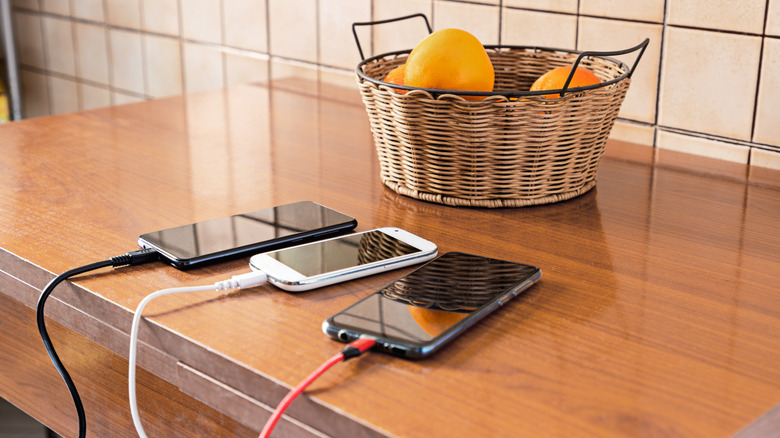
With the proliferation of electronic devices and the ever-expanding world of online recipes that you access via your phone or a tablet, having a charging station in the kitchen seems like a really good idea. However, that quickly leads to tangled cords, too many devices, and the threat of food spills and splatters ruining your charger. If you have the drawer space, dedicate one as storage for charging cables and devices. That way, when you're not using it, everything is neatly hidden from view.
Of course, sometimes things tucked away in drawers stay in those drawers because you just never think about them anymore. If you really need the charger to be visible, an option is to look for retractable chargers, with cords that rewind into compact bases. However, you'll need to keep that charger away from the stove and oven, as well as any space where you regularly prepare food to eliminate the risk of splatters.
11. Medications, supplements, and vitamins

In general, you don't want to leave any medications, vitamins, or supplements on the counter. For one thing, that's a safety issue if you have young children or pets that like to grab things off the counter and eat them. But the bottles can take up space, and they can quickly become disorganized. Many are sensitive to light and temperature, too, and a cool, dark cabinet is a better storage spot. Exposure to excessive cold or heat (e.g., from sitting next to a stove) can cause some medications and vitamins to deteriorate. If you do have kids or pets in the home, make sure the cabinet door is secure by adding a child-proof latch.
What if you have an "out of sight, out of mind" issue with items stored in cabinets? How do you remember to take your medications or vitamins? If you truly need to have the bottles visible, one option is to use a wall spice rack that's set away from the stove and oven. If the counter is the only place that will do, get a tiered spice rack to keep the bottles lined up and contained to one spot.
12. Shelf-stable food, of all things
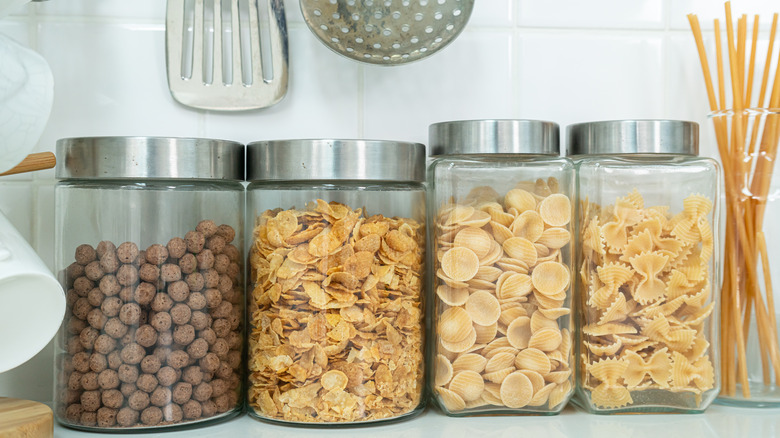
Boxes of crackers, cookie packages, bags of beef jerky, and even cereal can look messy. Store those neatly in the pantry or a cabinet that you designate as your pantry. Leaving out open boxes and bags of even dry crackers can also invite pests. Seal packages in zippered bags or place the contents in airtight containers that you keep in your pantry. Even fruit bowls can provide bugs with food if you let the fruit become overripe, or if some fruit-fly eggs hitched a ride in on the fruit from the grocery store.
Next, storing anything near the stove exposes it to heat, which can shorten its shelf life. And then there's accessibility; leaving junk food out increases the temptation to snack. Put all that away in a cool cabinet in airtight containers. But what about canisters of things like flour? If you use those items often and can keep them neatly out of the way when you're preparing other food — and keep them away from the heat of the stove — then that's not a problem as long as the canisters have airtight lids.
13. Raw meat and other perishable foods
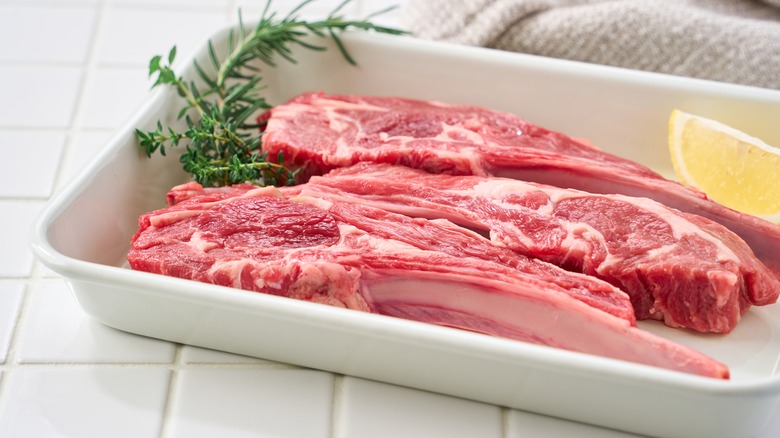
Defrosting frozen beef, chicken, and other meat by leaving it on the counter means that the surface of the meat, which will thaw first, could end up harboring a growing colony of bacteria by the time the center has thawed. Those bacteria can produce toxins that aren't destroyed by heat. Instead, defrost meat by letting it sit in the refrigerator. You can also use the cold-water method or your microwave's defrost setting.
Any perishable food needs to be put in the refrigerator or freezer, and it can't sit out for more than two hours. Eggs in the U.S. absolutely need to be refrigerated because they're washed before being packaged for sale, which removes a protective film from the surface of the shell. Cheese that's not in shelf-stable packaging needs refrigeration, too. And as for butter, which many people like to leave out for a couple of days, that actually needs to go in the refrigerator as well, according to Land O'Lakes, although you have a four-hour window instead of two. If you want soft butter, take a little bit out of the refrigerator about a half hour before you want to use it.
14. Too much kitchen decor
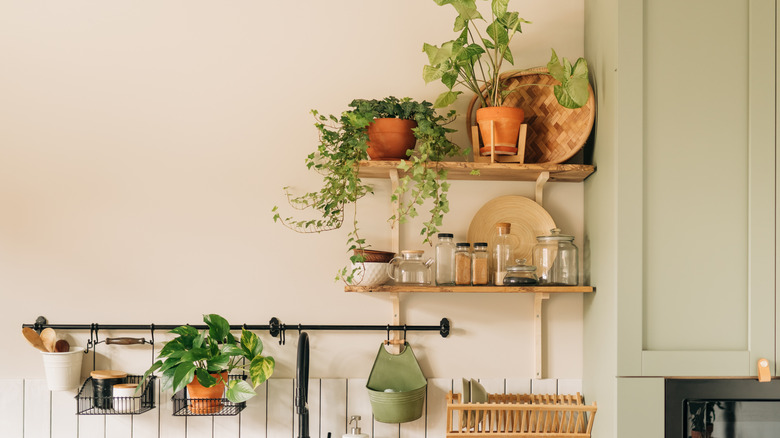
While one person may prefer a utilitarian kitchen where everything has a use related to cooking, others want to decorate. Kitchen decor can make the room look a little more put-together, like you really put thought into how the space should look. However, it's easy to go overboard. We're not talking about the extra ghost statuettes you pull out for Halloween or the garlands of foil stars you might have for the Fourth of July. We're talking so many decorative items jammed into the space that you're not sure how much decor you actually have.
If you like having a lot of decor, that's okay! You only need to organize it a little better, and the solutions are simple. If the items are small, get a large tray with raised sides or a lazy Susan and arrange everything on there. If there's too much for a tray, choose a corner where you can group the items without getting in the way of food preparation. If there's just way too much for even that, remove all decor. Take note of what you miss seeing and move those items back in; store or give away the rest.
15. Random items that aren't related to the kitchen
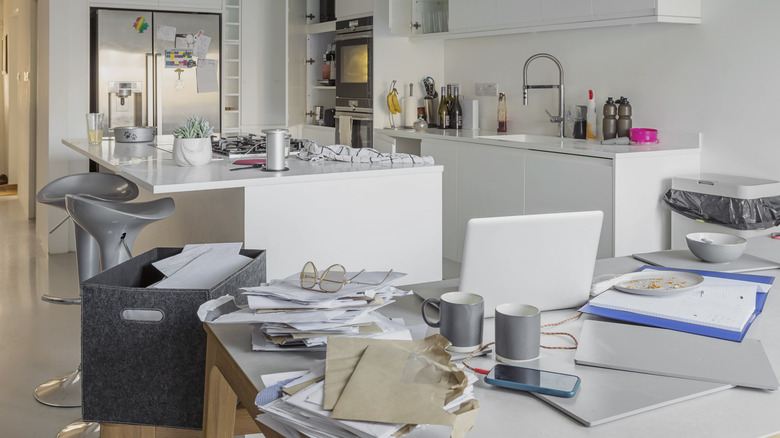
Last of all, don't leave items that have nothing to do with the kitchen on the counters. Of course, there will be times when you have to set something down temporarily. But that doesn't mean you have to leave them there. Kitchen counters often end up becoming the storage surface for books you started reading but put down when your kid needed help, random pens, a tool you were using, the pack of napkins that should go in the pantry but can't yet because you need to reorganize everything in there, and so on. The result is a cluttered kitchen that can wear you down and contribute to an inability to relax.
Items can build up so quickly, and you have to regularly put things away. Try taking something with you whenever you leave the kitchen, or you can make the rounds each evening to put away random clutter from earlier in the day. There's nothing inherently wrong with setting something down on the counter. You just can't let it build up because the bigger the pile gets, the more overwhelming it can seem.