

Cantaloupe And Honeydew Lovers Will Want To Add This Melon Into The Rotation
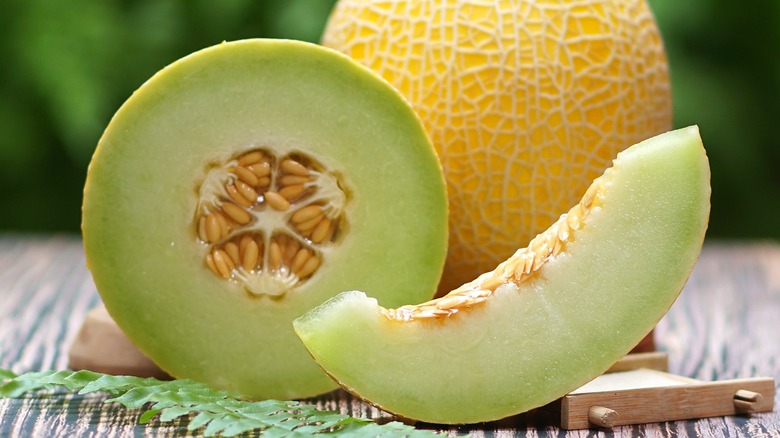
An abundance of melons is refreshing to have during hot weather. These water-heavy fruits are delicious by themselves or as part of another dish with foods like prosciutto. While watermelons, cantaloupes, and honeydews are mainstays at most United States grocery stores, even more melons are making their way into shoppers' carts. Many have been around for a while, like Crenshaw melons, but newer varieties have gradually become more common sights. Among these is the Galia melon (Cucumis melo 'Galia'; often also referred to simply as Cucumis melo var. reticulatus).
Galia melons are usually called a hybrid of cantaloupes and honeydews, but like a lot of agricultural origins, it's not that simple. Even the melon's scientific name has been the subject of debate. What is simple is the Galia's reputation; it's sweet and juicy, and if you live in an area with hotter, drier summers, it can be a great addition to your garden. Galias come in a few different varieties, and if your stores start carrying them, the melons are well worth a try. The next time you're trying to decide whether you want a cantaloupe or a honeydew, try a Galia and find out why this is a melon you'll want to add to your shopping list each year.
What is a Galia melon?
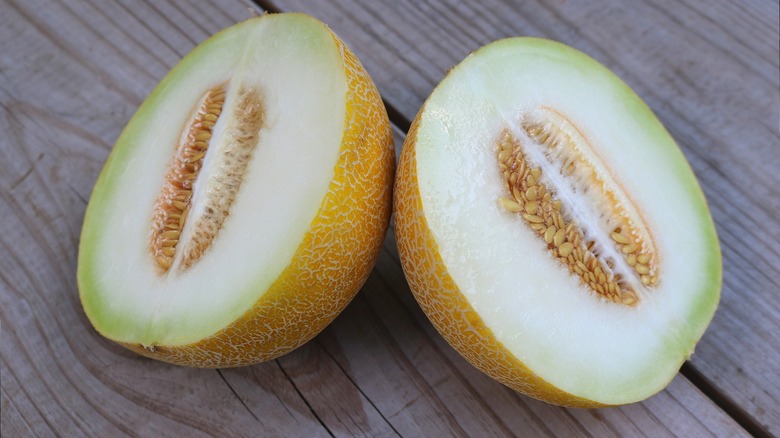
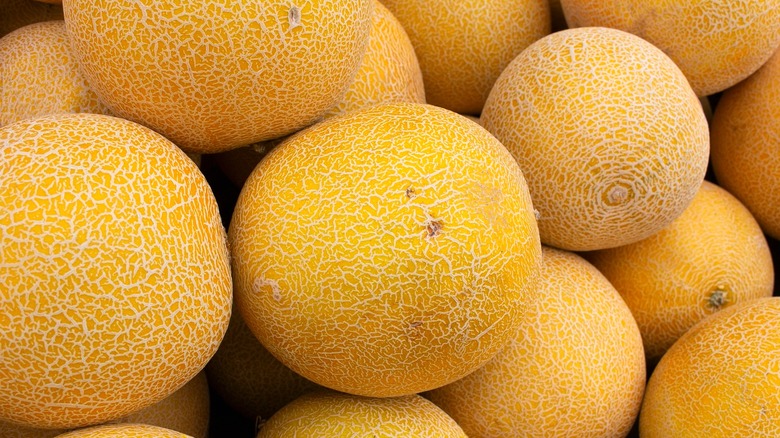
Galia melons are part of the muskmelon family, and they are related to cantaloupes and honeydews. They're generally small and weigh only a couple of pounds on average, although some cultivars do grow larger than that. The rind is a medium to darker yellow with netting that looks like that of a cantaloupe, only not as pronounced. The more intense the yellow color of the rind, the sweeter the melon is supposed to be. As with cantaloupes and honeydews, Galia melons can be eaten alone or as part of another dish.
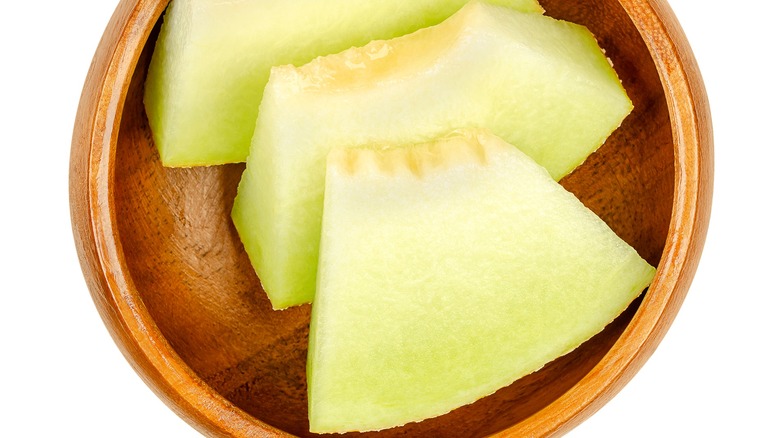
The interior of a Galia melon looks pretty much like other melons; sweet flesh surrounding a core with many little beige or tan seeds. The flesh can be white to a pale yellowish-green, similar to that of a honeydew melon, although the flesh of a Galia melon isn't quite as tender as that of a honeydew. Note that if the fruit you happen to get turns out to be bitter, that fruit could be toxic to pets.
How was the Galia melon created?
The Galia melon is a hybrid. Its "parents" are the Ha'Ogen melon (sometimes written as Ha-Ogen), which is a smooth-skinned variety of C. melo var. cantalupensis, and the Krymka or Krimka melon, a Russian reticulatus melon that gives the Galia its netted exterior appearance. This is where calling the Galia a cross between cantaloupes and honeydews gets dicey because, while the Ha'Ogen melon is in the same species as the European cantaloupe, the Krymka isn't exactly a honeydew. The Krymka is a reticulatus variety, but honeydew melons are C. melo var. inodorus. Still, the interior of many ripe Galias does look light green, similar to that of a tender honeydew.
The Galia melon was first created in the 1960s in Israel as a variety that could grow in harsher desert climates. The melon gets its name from the daughter of the researcher who created the variety. The seeds were released for commercial use in 1973, and the melon quickly grew in popularity. Some home gardeners in California began growing Galia melons after receiving seeds as gifts in the 1980s, and the melons gradually made their way into markets. In 2002, the University of Florida developed a way to grow the arid-climate melons in greenhouses in Florida's humid climate. Currently, only California and Florida grow the melons for commercial sales, and most are still imported from South America.
What does a Galia melon taste and smell like?
Galias are known to be sweet, although that sweetness can vary. Some have said the sweetness is sort of in the middle, while others extol the melon's intense flavor and note that it's sweeter than some other melons, like cantaloupes. It is definitely sweet enough to be eaten on its own, be it for a snack or as an actual dessert. According to posts online from people who've had the melon, it tastes better as it gets softer, with one person comparing the flavor to vanilla.
Galia melons have a perfume-y fragrance that ranges from floral to tropical, with some comparing it to honey. Some even claim it can smell (and taste) a bit like a banana. The melon's fragrance is actually one of its indicators of ripeness, and no matter what you think it smells like, any Galia melon you choose should smell sweet overall.
How to prepare and eat Galia melons
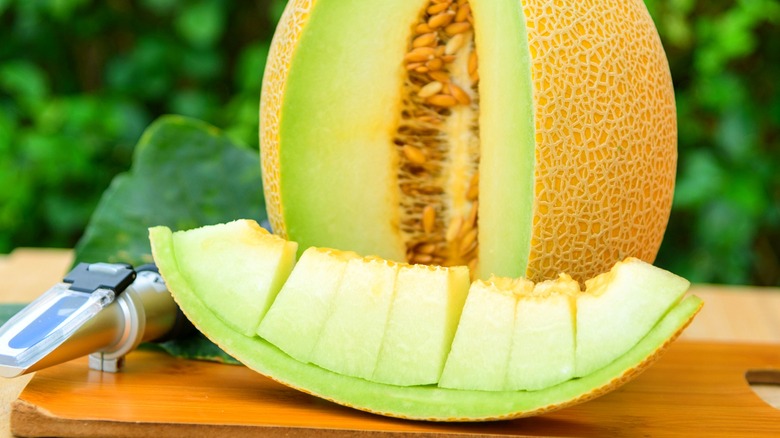
Prepare Galia melons like you would a cantaloupe; wash the netted rind very well before cutting into it because the crevices in the netting can trap Salmonella bacteria. Cut the melon into halves, quarters, or slices, and scoop out the seeds and the stringy center flesh with a spoon. Either cut the flesh into cubes or use a melon baller. (Or just eat it straight off the rind with that spoon.)
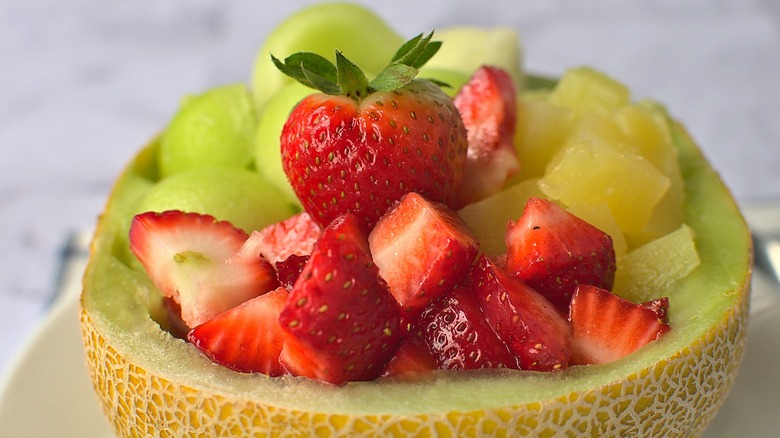
While you can definitely eat the melon on its own or in fruit salad, you might also want to try it with ginger, chili powder, salt, or pepper. Sprinkling chunks of the melon with lemon or lime juice is another option. You can also blend the melon into smoothies and shakes just as you would something like honeydew, or dice the melon and mix it into yogurt. Try pureeing softer, sweeter melons and mixing them into homemade popsicles or granita, too. Pretty much anything you can do with cantaloupe or honeydew is something you can do with Galia melons.
Can you eat Galia melon seeds?
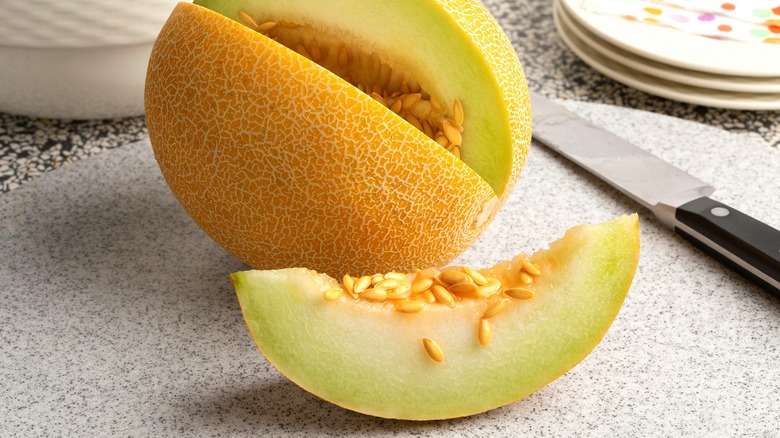
While some might tell you to toss the seeds from a Galia melon once you've sliced it open, you don't have to throw them away. Yes, definitely remove them before eating the melon, but save the seeds. Wash them off, discard the stringy membranes that were holding them inside the melon, and roast those seeds for a tasty snack.
Just like watermelon and cantaloupe seeds, Galia seeds are edible when cooked. Once you've washed them, pat them dry and toss them with a little olive oil and spices of your choice. You can then pan-fry them, or you can roast them in the oven like you would pumpkin seeds. If you pan-fry them, remove them from the heat once they turn a golden color and crisp up. If you roast them, set the oven to between 300 and 325 degrees Fahrenheit (you may have to do some experimenting to find the right temperature, given how well your specific oven heats up). It should take at least 20 minutes for the seeds to cook at 325 degrees Fahrenheit, and it can take upwards of 40 minutes for the seeds to cook at 300 degrees Fahrenheit. Be aware that roasted melon seeds do go rancid after a while, so store the roasted seeds in the refrigerator for up to one month or in the freezer.
Where and when can you buy Galia melons?
Because Galia melons are grown in both the northern and southern hemispheres and then shipped around the world, they're usually available all year long. Technically, however, the season for Galia melons is in spring, summer, and the first half of fall.
Where you can buy them is another matter. You should be able to pick them up at many grocery stores, but which specific stores sell them depends on customer demand and what the store's managers think will sell well enough to deserve shelf space. Farmers markets in California and Florida may have some in areas where the melons are grown, although that's not guaranteed. Also check fruit stands, organic stores, and produce markets, and don't forget that Asian, Hispanic, and Middle Eastern/Mediterranean markets may have them as well. Remember that you can also ask stores if they would consider carrying Galia melons if they don't already do so.
Nutritional information about Galia melons
Galia melons are very nutritious, just like other melons. With Galias specifically, you'll get a good dose of vitamin A and vitamin C, and the melons have no fat or cholesterol. They have some fiber — 1.4 grams per cup of melon — and they have some potassium, too, approximately 8% of the daily recommended intake. That same cup of melon has only 61 calories, so Galia is a great choice if you need a low-calorie snack.
Those nutrients aren't just numbers. Vitamin A helps with eyesight and your immune system. Vitamin C also helps with the immune system, and fiber helps your digestion and potentially helps your cholesterol levels. Potassium benefits your cardiovascular health, as well as contributing towards your body's need for electrolytes. The melon does contain some sugar, but it's naturally occurring. There are 14 grams in one cup of melon, and that sugar is what helps make the melon so sweet and enticing to eat.
Galia melon types
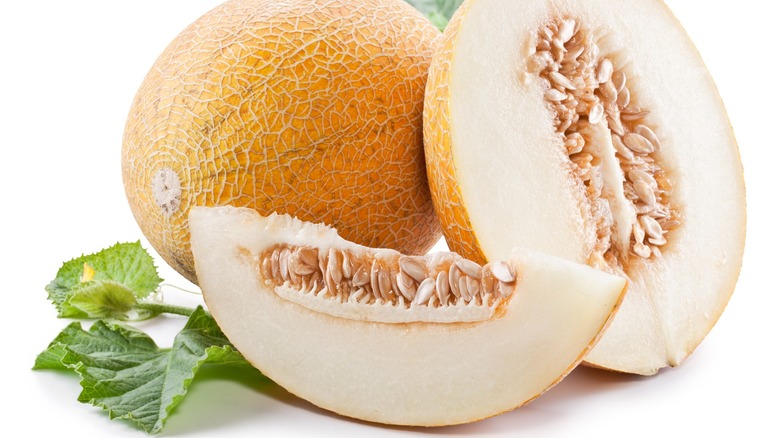
Galia melons are a hybrid cultivar of muskmelon, meaning that they were deliberately bred and not a natural variation. There are several specific Galia cultivars that differ in size and disease resistance, as well as growing requirements. Some common cultivars include 'Gallicum', 'Passport', and 'Visa', but there are several others, such as 'Glory', 'Inbar', and 'Royal'.
Each cultivar has its own characteristics. 'Arava' takes 77 days to reach maturity and produces 3 to 4-pound fruit that tends to be resistant to powdery mildew. 'Galia Max', however, produces fruit that's 5 ½ pounds and that takes about 85 days to reach maturity. 'Diplomat' melons can reach 6 pounds, but 'Regalia' reaches only 2 ½ to 3 pounds. 'Crete' reaches 3 pounds but takes as many as 88 days to mature despite the small size. 'Sigal' produces 4 to 5-pound fruit but needs only 60 days to mature. If you're planning on buying Galia seeds, keep all that in mind because the fruit has a short life span, and you don't want to harvest a quick-growing cultivar too late.
How to store Galia melons
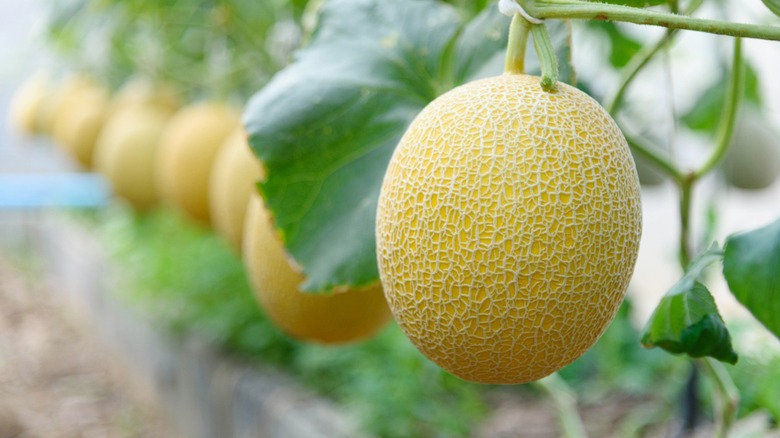
As mentioned, the fruit actually doesn't last that long; Galia melons can't sit on your counter for weeks before you decide to eat them. Even the refrigerated fruit doesn't have that long a life, and once the melon is ripe, you have to act fast. Wait too long, and you'll have an overripe melon that might not taste as good.
Unripe Galia melons can stay out at room temperature on your counter. But once they've ripened, you've got to use them, especially if you live in a home with no air conditioning that gets hot in summer. The melons really don't last more than a couple of weeks after being harvested (not after being sold — after being picked). So, when you buy one, if it's not ripe, keep a close eye on it because it won't be long before it reaches peak sweetness. Once it's ripe, cut it open and eat it. The cut melon flesh can last up to three days, but not more, in the refrigerator if it's kept in an airtight container.
Can you grow Galia melons at home?
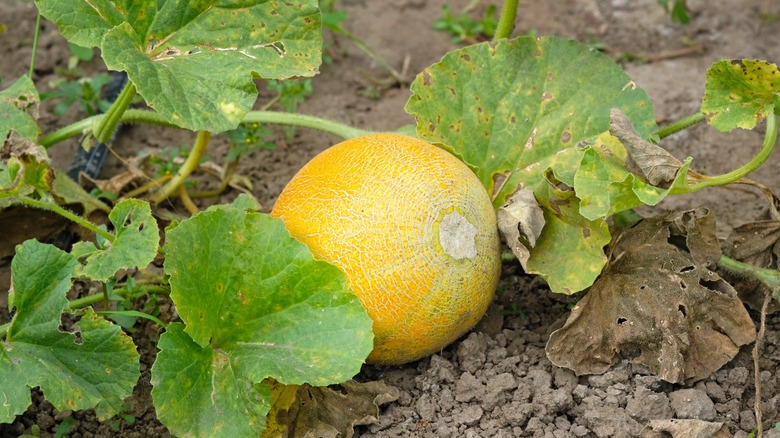
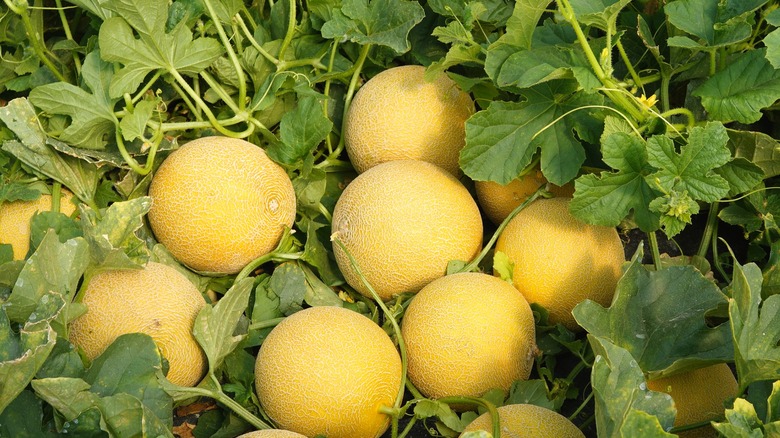
Yes, you can grow Galia melons at home. Remember, it was through people growing the melons in their home gardens at first that led to the Galia becoming better known in the U.S. When you get the seeds, wait to plant them until the soil temperature is at least 60 degrees Fahrenheit. The soil needs to be well-draining and very nutritious, so preparing the soil with compost before planting is a good idea.
Galia melons aren't self-pollinating, but you can do the pollination for them by hand. Watering them can be tricky. At first, it's fairly simple because you just want to keep the soil moist but not soggy. However, just before harvesting the melons, you need to cut back on watering. (You'll still water them; just not as much.) That slight dehydration helps make the melons sweeter. If you live in a region that's fairly humid and rainy, grow the melon in a greenhouse where you can control the environmental conditions.
How to tell if a Galia melon is ripe
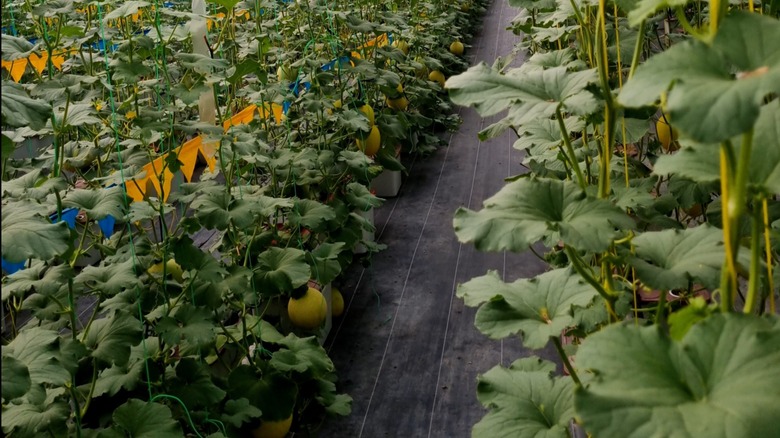
Galia melon ripeness doesn't depend on tapping or hollow sounds, or anything like that. Instead, the color of the rind and the fruit's aroma are the keys to determining ripeness. The rind should be a darker or richer gold-yellow; some say the rind should be more toward the orange side of things. The melons should be firm with just a little give if you press on the rind, but not much. Don't rely on tenderness at the stem end to indicate ripeness. The melon should also be fairly heavy for its size.
The melon should smell sweet. Again, it may have a faint banana-like scent, or it could smell a bit like honey; these are subjective. But no matter what you think it smells like, if it smells sweet, that's a great sign. If you're lucky enough to be able to grow the melons, Galias will slip off the vine when ready.
Why Galia melons are sometimes called muskmelons
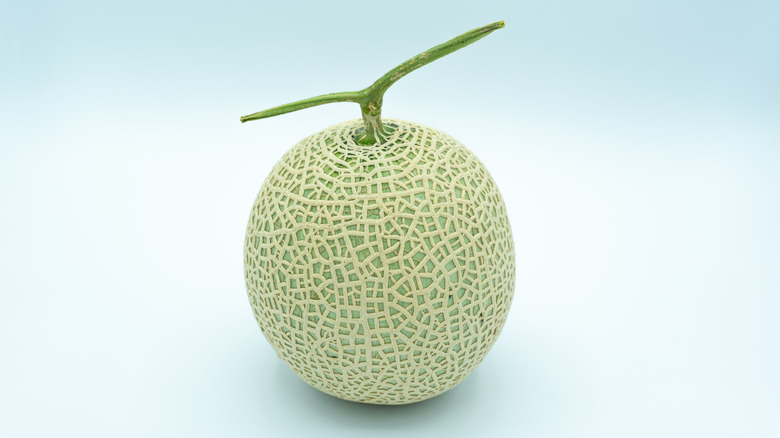
Occasionally, when you look up information about melons, you'll find Galias listed as muskmelons. You may also see information about how what the U.S. calls a cantaloupe is not actually a cantaloupe, but a muskmelon. You'll also see both Galias and cantaloupes given the scientific name C. melo var. reticulatus. But Galias aren't cantaloupes, so the use of the same scientific name and the same "muskmelon" label can be confusing.
The term "muskmelon" refers to a subgroup of melons in the species Cucumis melo, which is the scientific name for all melons outside of the watermelon group. (Watermelons are all part of Citrullus lanatus.) Both cantaloupe and Galia melons are in the muskmelon category, so that's why both are called muskmelons. The scientific name for netted muskmelons, which includes both cantaloupe and Galia melons, is C. melo var. reticulatus. You differentiate between the different types using cultivar names, such as C. melo 'Galia' or C. melo 'Athena' (this is a newer cultivar of orange cantaloupe that more stores have started carrying).
Finally, the C. melo var. reticulatus cantaloupe you buy in the U.S. is actually not considered to be a "true" cantaloupe. That moniker belongs to C. melo var. cantalupensis, also known as the European cantaloupe. The Galia melon is a hybrid of reticulatus and cantalupensis melons, technically making it a relative, however distant, of both types of cantaloupe.