

16 Cold Noodle Dishes From Around The World
We may receive a commission on purchases made from links.
When the weather's too hot to even think about turning on the oven, cold noodles come to the rescue. While we often associate noodles with warm and comforting dishes like soups, stir-fries, and casseroles, many cultures around the world have concocted chilled variations designed specifically to eat on hot, humid days. Cool and refreshing, these noodle dishes are perfect for picnics and potlucks, and make for a satisfying meal or snack when you want to eat well without breaking a sweat.
Cold noodle dishes come in all kinds of textures and flavors, from chewy buckwheat noodles to slippery rice vermicelli and chunky macaroni. Some are simple affairs with noodles and just a few ingredients in an icy broth or plain noodles dipped in a savory sauce. Others feature an array of vibrant herbs and veggies, as well as proteins like seafood and meat. There are even some sweet noodle-based desserts. If you're looking to shake up your pasta salad game, these are some tasty cold noodle dishes from around the globe that are worth trying.
1. Liangpi (China)
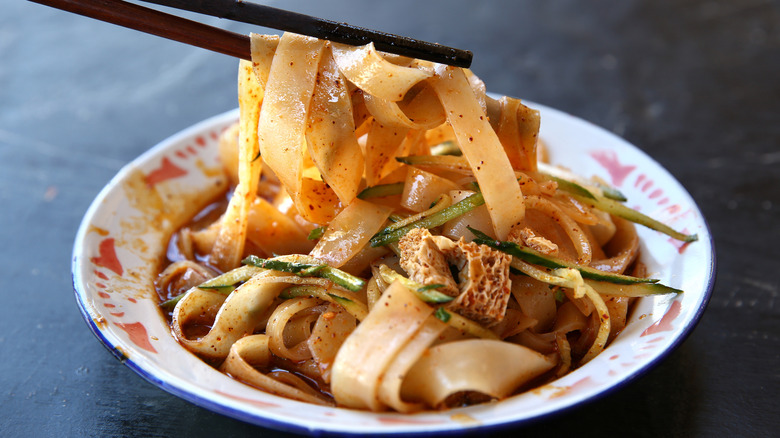
Chewy, refreshing, and with a slight kick of heat, liangpi originated in Shaanxi province, China. Legend has it that the "cold skin" noodles were created over 2,000 years ago during a period of drought. Someone came up with the idea to soak rice and grind it into a thin batter that could be steamed and then cut into noodles. The noodles were tossed with simple ingredients like vinegar and sesame oil and served cold. The dish was such a hit that even Emperor Qin Shi Huang loved it.
Today, you can find liangpi noodles made with either rice flour or wheat flour. The noodles are steamed until springy, then tossed in a savory, spicy sauce that can include sesame oil, soy sauce, black vinegar, chili oil, and tongue-tingling Sichuan peppercorns. Some people also add ingredients like cucumbers and sesame seeds for some crunch and cilantro for extra freshness. The noodles can be served warm, but many people say cold is the only way to go.
2. Kerrie noedelslaai (South Africa)
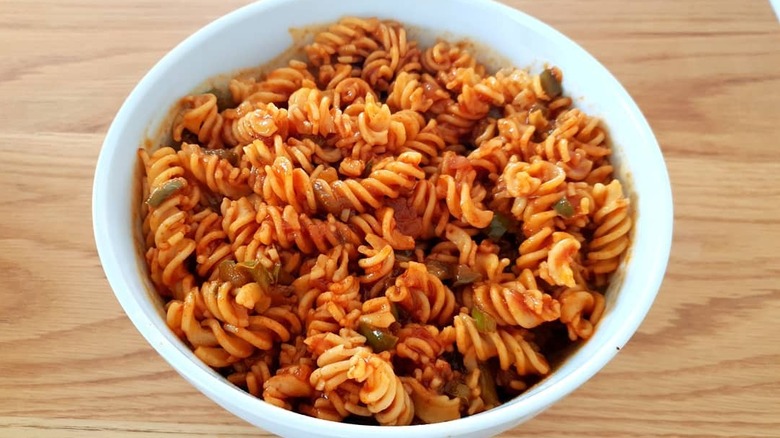
Kerrie noedelslaai translates to "curry noodle salad," which gives you a pretty good idea of what this South African dish is all about. It features a range of influences from different cultures, including European, Indian, and South African flavors. You often see the dish popping up at braais, which are South African barbecues and social gatherings. Because it's an easy dish to put together, it's also great for quick lunches and dinners.
While many people put their own twist on kerrie noedelslaai, it typically features a few key ingredients. Short pasta like shells or fusilli is cooked, drained, and tossed in tomato sauce, curry powder, vinegar, and oil. Diced onions and bell peppers often go into the mix. Seasonings can include salt, pepper, sugar, and hot sauce. The result is a cold pasta dish that's slightly sweet and tangy with a kick of earthy curry flavor. Some say it's best to let the salad rest for some time so that the flavors meld together.
3. Bibim guksu (Korea)
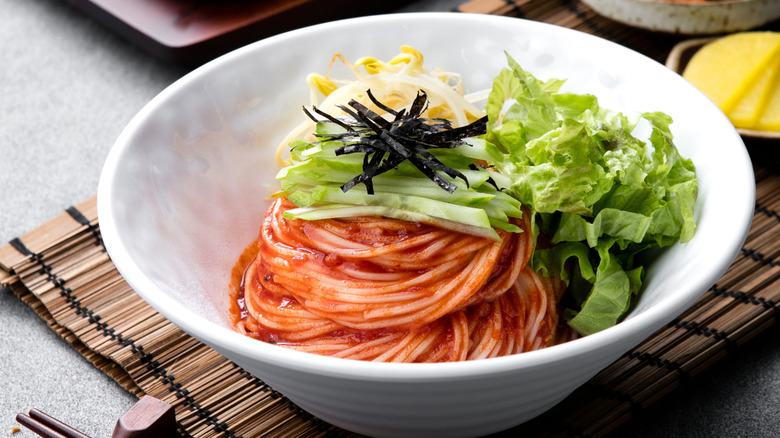
If you've ever had Korean bibimbap, you'll recognize the flavors of bibim guksu. But while bibimbap is a hot and hearty dish that typically features marinated meat like steak stir-fried with veggies in a spicy sauce and served over rice, bibim guksu consists of cold noodles tossed in a spicy sauce and topped with crunchy raw vegetables. It's great for a hot day because the ingredients are cool and refreshing, and the spicy sauce triggers your body to sweat, which also cools you down.
Bibim guksu is traditionally made with thin noodles like wheat somen noodles or buckwheat soba noodles. The noodles are cooked and cooled down, then tossed in a tangy sauce made with ingredients like soy sauce, rice vinegar, sesame oil, honey, and gochujang (a fermented Korean chili paste). Then, the noodles are topped with veggies like thinly sliced cucumber, carrot, cabbage, lettuce, and green onions. The only protein is usually a hard-boiled egg, although you can also add meats like sliced chicken or top the dish with tofu.
4. Bún thịt nướng (Vietnam)
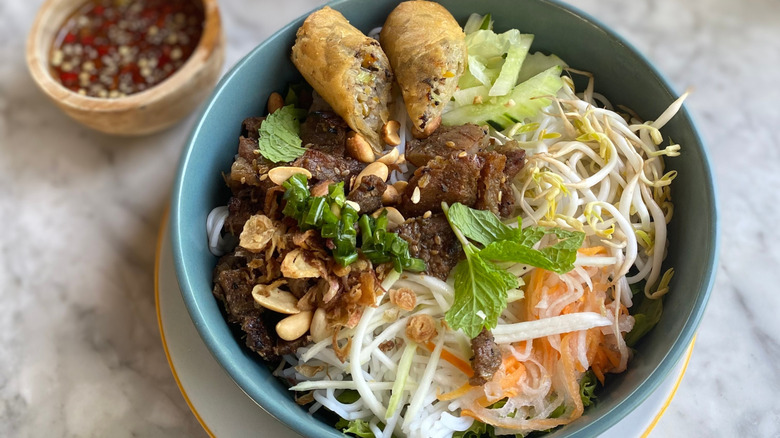
Hailing from South Vietnam, bún thịt nướng is a cold noodle dish that packs a ton of textures and flavors. It starts with rice vermicelli noodles that are cooked and cooled. These get topped with marinated, char-grilled pork and fresh ingredients like Thai basil, mint, lettuce, cucumber, pickled daikon, and pickled carrots. Some versions also have crushed peanuts and sliced spring rolls. The final touch is a drizzling of nước mấm chấm, a dipping sauce featuring tangy fish sauce, lime juice, sugar, and sometimes chilis.
There are several variations of bún thịt nướng that swap out some of the ingredients for different proteins. For example, bún gà nướng includes chicken instead of pork, while bún bò xào features beef. Then you have bún chả Hanoi, a Northern Vietnamese dish where the cold noodles and veggies are served on a platter with pork patties and a bowl of dipping sauce.
5. Faloodeh (Iran)
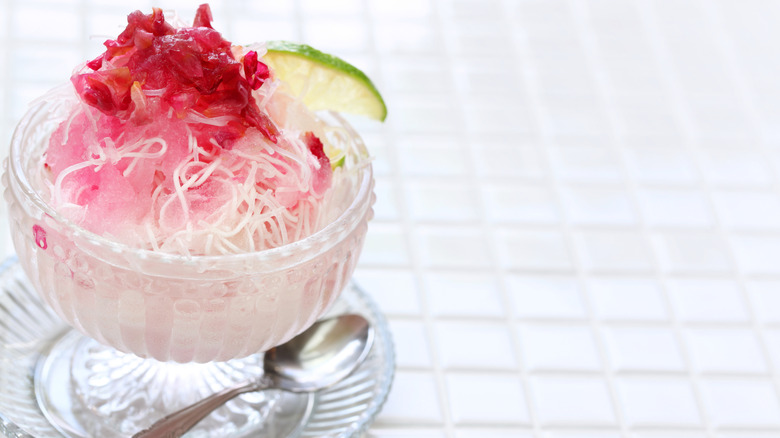
Visit any ice cream shop in Iran and there's a good chance you'll find faloodeh on the menu. The Persian dessert dates back centuries, and some say it was one of the first frozen desserts ever created. The earliest versions featured wispy rice vermicelli noodles cooked and then frozen with sugar and rosewater. A simple squeeze of lime juice added freshness and a tart contrast to the sweetness and sorbet-like texture of the frozen noodles.
Making faloodeh at home is pretty simple. All you have to do is dissolve sugar in rosewater and lime juice, cool it down in the freezer, then add your cooked and strained rice vermicelli noodles. Leave it to freeze, stirring every so often until everything is slushy like a granita. Many people serve faloodeh with sour cherries and sour cherry syrup. Nuts like pistachios and almonds can also add extra crunch. The slushy dish is often eaten alongside Iranian ice cream called bastani that can feature honey, saffron, and pistachios.
6. Zaru soba (Japan)
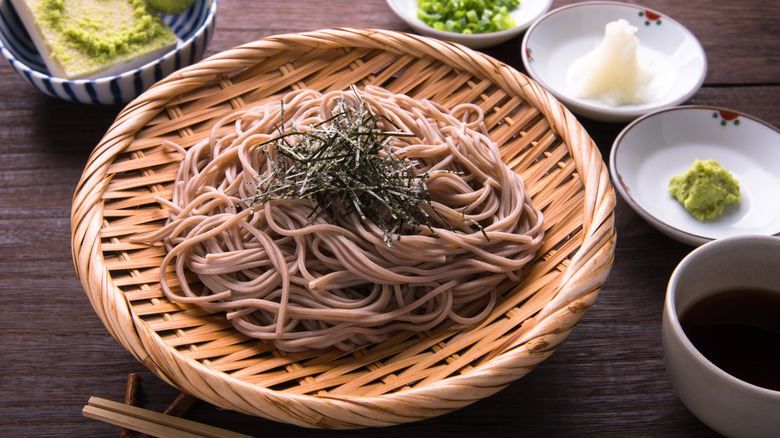
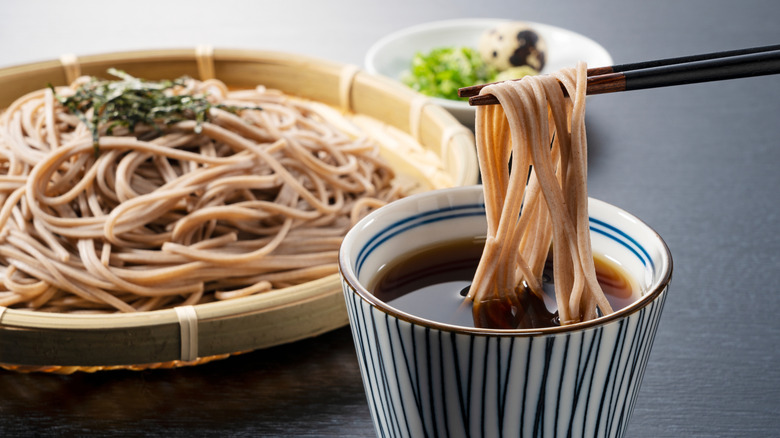
Japanese zaru soba is a simple dish, and that's precisely what so many people love about it. Cold buckwheat soba noodles are served either plain (called mori soba) or with minimal garnishes like grated radish, sliced green onions, or chopped nori (seaweed). The only other element is a light dipping sauce called tsuyu that consists of sake, soy sauce, mirin, and sometimes other umami-boosting ingredients like kombu and bonito flakes. The dish is light, cooling, and ultra-slurpable.
Although zaru soba seems pretty basic, there is an art that goes into making and serving it. Soba noodles are often made by hand using traditions that date back to the Edo period between the 17th and 19th centuries. The noodles are cooked until just tender and then served on a bamboo strainer called a zaru that ensures they don't get soggy. And although you can find tsuyu sauce at many Asian grocery stores or on Amazon, many say nothing beats a homemade version.
7. Yum woon sen (Thailand)
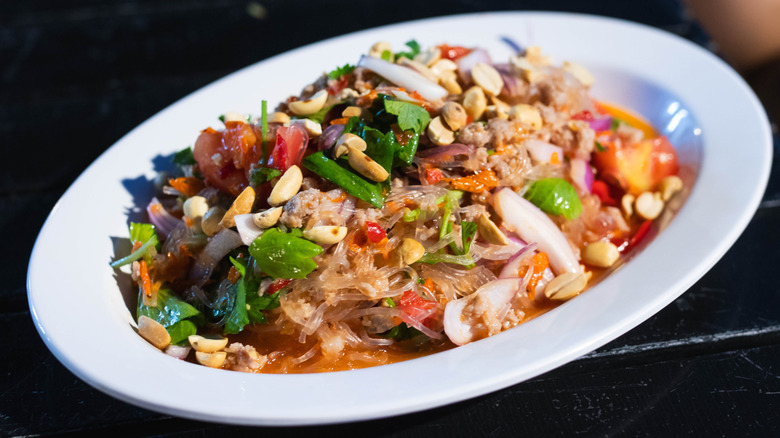
Also called glass noodle salad, yum woon sen is a Thai dish that's fresh, healthy, and packs in tons of vibrant flavors. It starts with a base of thin glass noodles made from mung bean starch. These get tossed with a tangy, spicy sauce, along with an array of ingredients like ground pork, shrimp, tomatoes, onions, fresh herbs, and crushed peanuts. It's typically served cold or at room temperature.
Thai food is all about balancing sweet, salty, sour, spicy, and bitter flavors, so yum woon sen has a variety of ingredients that complement one another. The sauce features a mix of tart lime juice, spicy chilis, sweet palm sugar, garlic, and umami-rich fish sauce. You also get freshness from the herbs, and more umami flavor from the meat and seafood. The great thing about the dish is that it's very versatile, so you can amp up any one element to your liking, switch up the proteins, or make it vegetarian.
8. Pasta fredda (Italy)
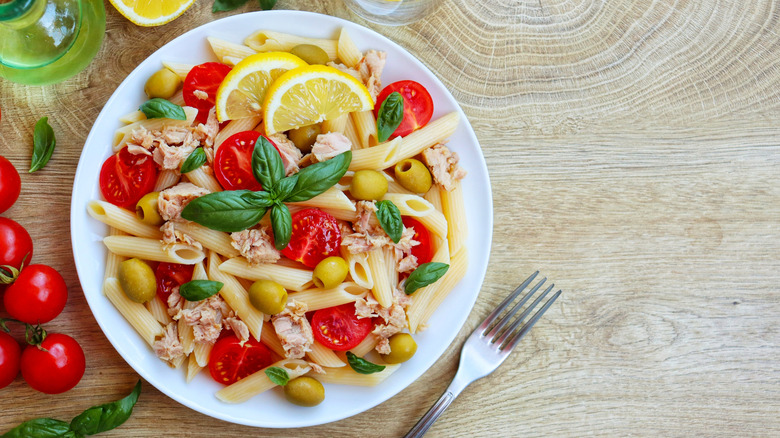
Pasta may not have been invented in Italy (archaeologists point to China as its birthplace), but no country has embraced it quite like the Italians. From a quick and simple weeknight fettuccine to elaborate Sunday feasts that require hours of simmering rich ragus or stuffing shells, pasta is a part of everyday life for many in the country. With that in mind, it's not surprising that Italians have a go-to cold pasta dish for summer as well.
Pasta fredda is a chilled, no-fuss salad that's perfect for hot days and lazy lunches. Although it comes in countless variations, it typically includes short pastas like fusilli or penne that are cooked al dente, cooled, and tossed with fresh veggies. The sauce could be a simple vinaigrette or pesto. Seasonal ingredients are often added, including summer-ripe tomatoes, roasted red peppers, and olives. Some people also add Italian cheeses like soft mozzarella and Asiago, as well as proteins like tuna or sliced salami.
9. Let thoke sone (Myanmar)
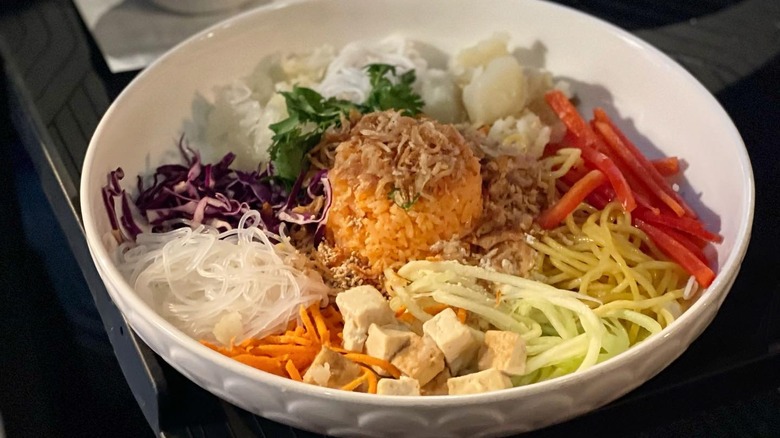
Let thoke sone is a popular street food in Myanmar that's often sold at roadside stalls and by vendors on foot who carry the ingredients in large baskets. The name translates to "hand-tossed salad," and it's also called rainbow salad because it features an abundance of ingredients that vary in color, taste, and texture. The salad may be served already mixed or with the ingredients separated so that you can grab your preferred items and combine them just the way you like.
Some common ingredients you find in let thoke sone include thin mung bean vermicelli noodles, boiled and sliced potatoes, shredded cabbage, sliced green papaya, carrots, dried shrimps, sliced onion, roasted peanuts, and chickpea flour. The sauce usually features tangy and salty tamarind paste and fish sauce. Garnishes like fried garlic, dried chili flakes, and cilantro add extra flavor, crunch, and brightness. Optional add-ins can include fried tofu and hard-boiled eggs.
10. Bagged noodles (Hong Kong)
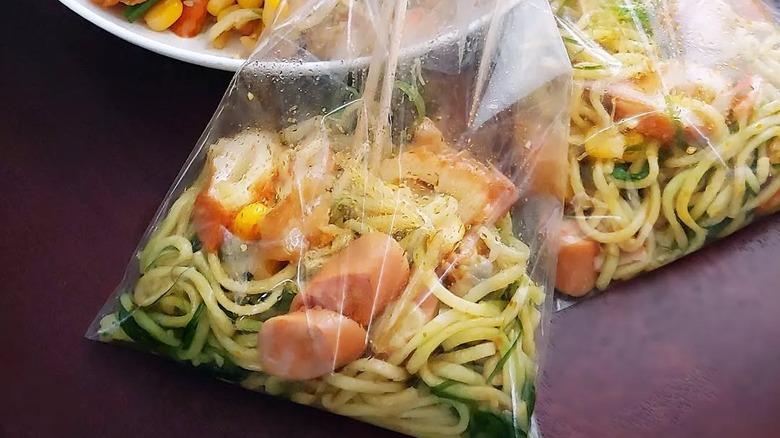
Among the multitude of street foods you can try in Hong Kong, one that's a favorite with locals is bagged noodles. Sold at food stalls, these handy chilled noodle snacks come in small bags that are easy to carry on the go. They come with your choice of add-ins that can include anything from crab sticks to corn kernels, cucumber, cockles, shrimp, bean sprouts, and cut-up sausages. Everything gets tossed in a zingy sauce and is eaten with bamboo skewers.
If you want to make bagged noodles at home, you'll need to start with long noodles like lo mein egg noodles or ramen noodles. Cook the noodles and let them cool, then toss in your preferred ingredients. You can whip up a sauce with sesame oil, oyster sauce, soy sauce, chili sauce, and minced garlic. Don't be afraid to get creative with your ingredients. After all, part of the fun of bagged noodles is the DIY aspect of mixing and matching different savory toppings.
11. Ma jiang mian (China and Taiwan)
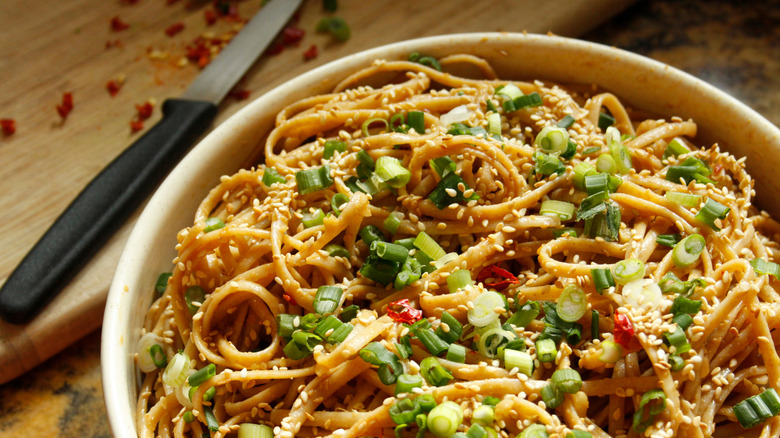
Popular across China and Taiwan, ma jiang mian is a cold sesame noodle dish that feels extra indulgent thanks to its creamy sauce that's sweet, salty, and nutty. It can be simple with just the noodles and sauce for easy slurping or jazzed up with crunchy vegetables and flavorful add-ins. It's also very easy to put together with just a few ingredients, making it perfect for a quick, low-maintenance meal.
Ma jiang mian usually features long, thin wheat noodles or egg noodles that are cooked and then cooled. While the noodles are cooling, you can make a sauce with sesame paste, soy sauce, garlic, rice vinegar, and sugar. If you want to make it even creamier and nuttier, you can add peanut butter. Hot water gets added to the sauce to help smooth it out, and then it's tossed with the noodles. Add-ins can include sliced green onions, julienned cucumber, sesame seeds, chili oil, dried chili flakes, or chili crisp.
12. Somen salad (Hawaii)
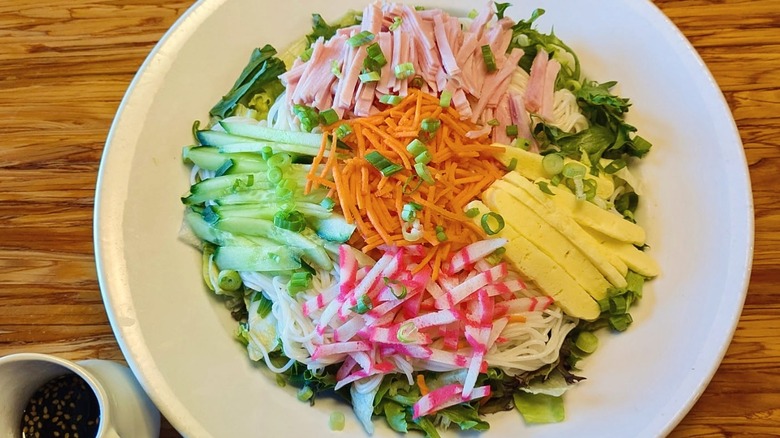
Hawaiian cuisine often features a range of flavors from around the world, thanks to centuries of cultural exchange. One of the biggest influences came from Japanese immigrants who arrived in the late 1800s and introduced various ingredients and cooking techniques. Today, you can see Japanese touches in Hawaiian raw fish dishes like ahi tuna poke, as well as noodle dishes. Somen salad is a uniquely Hawaiian dish that combines Japanese-style chilled noodles with local toppings and a tangy dressing.
Somen noodles are thin wheat noodles that have a bit of a chewy bite, which makes them a great base for a salad. In somen salad, they are typically served cold and layered with ingredients like sliced ham or Spam, char siu (barbecue pork), julienned cucumbers and carrots, sliced green onions, kamaboko (Japanese fish cakes), and sliced omelet. The salad is finished with a dressing that often features soy sauce, sesame oil, rice vinegar, and sometimes sesame seeds.
13. Naengmyeon (North Korea)
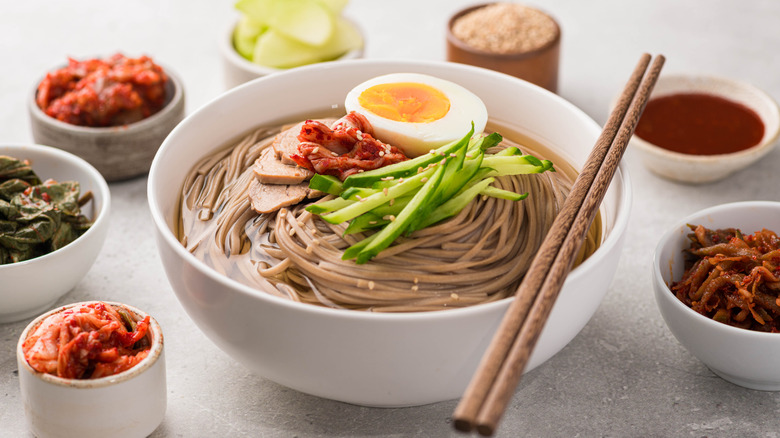
It's hard to find a more refreshing cold noodle dish than naengmyeon. It features thin noodles in a savory broth that's often served icy cold and even slushy sometimes. The dish originated in North Korea and became popular in South Korea after the Korean War. As you might imagine, it's often eaten in the summertime, although some people love it so much that they eat it in the colder months as well.
There are a few variations of naengmyeon. The most common is mul-naengmyeon, and it features buckwheat noodles in an icy broth made with beef stock and dongchimi, a fermented radish kimchi. It's often topped with sliced beef, a hard-boiled egg, and sometimes sliced cucumber, pickled radish, and Asian pears. Meanwhile, bibim-naengmyeon features cold noodles in a spicy sauce with similar toppings to its savory cousin. You can also find versions of naengmyeon that feature potato starch noodles, some that are topped with raw fish, and others that include a seafood broth.
14. Ensalada de coditos (Latin America)
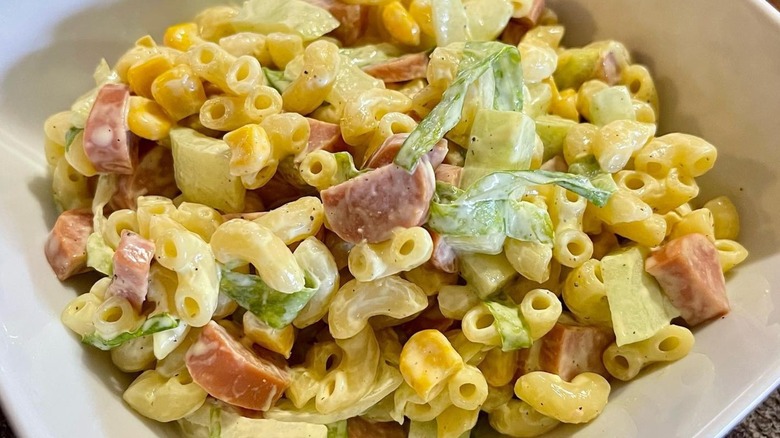
Macaroni salad is a staple at barbecues and potlucks, but let's be honest — it can be a bit bland and boring. If you're looking to turn your macaroni salad into a BBQ showstopper, consider making ensalada de coditos. It's a popular dish across Latin America, and it often features vibrant ingredients that go beyond simply mayo. Think crunchy vegetables, savory meats, and seasonings like fresh herbs.
Ensalada de coditos typically starts like macaroni salad with macaroni noodles that are cooked and drained, then tossed in a tangy dressing made with mayonnaise and sour cream or plain Greek yogurt. However, it also gets pops of color and texture from ingredients like diced red onions, bell peppers, celery, and corn kernels. Some people add proteins like ham, tuna, and hard-boiled eggs, as well as flavor enhancers like oregano and parsley. If you really want to lean into the Latin vibe, consider adding pickled jalapeños or a splash of hot sauce and serving it with tortilla chips or tostadas on the side.
15. Laphing (Tibet)
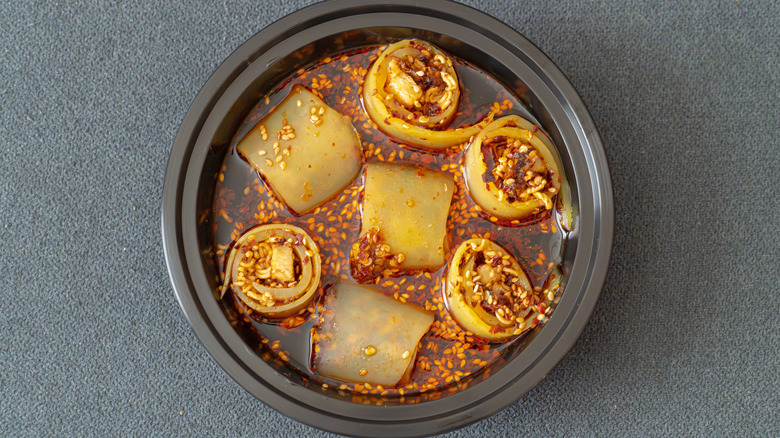
Laphing (also spelled laping) is a unique noodle dish that has its roots in another cold noodle recipe called liangfen from China. When it made its way to Tibet, the dish evolved into the laphing that many Tibetans know and love today. It's easily recognizable by its translucent, jelly-like noodles that are served either flat or rolled up and swimming in a spicy sauce. You might also find the dish garnished with crushed, dry ramen noodles or potato chips.
Laphing differs from many other cold noodle dishes in numerous ways. For one, the long, flat noodles are made with either mung bean flour, potato flour, or wheat flour that's cooked in water until the mixture is thick. It's left to cool and settle, and then it's cut into long, thin strips. The noodles on their own aren't very flavorful, but the sauce lifts the dish with its mix of ingredients like soy sauce, garlic, red chili paste, rice vinegar, sesame oil, and toasted sesame seeds.
16. Hiyashi chuka (Japan)
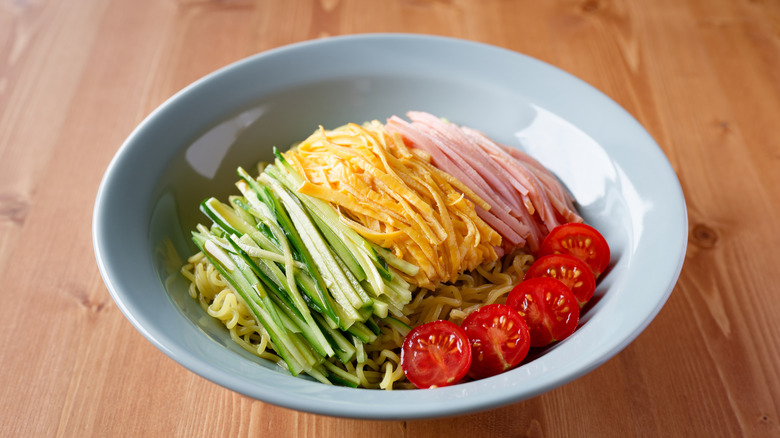
Ramen is one of the easiest things to make when you're in a rush or just don't feel like cooking. But when the temperature is soaring, the last thing you probably want to eat is a steaming hot noodle soup. Enter hiyashi chuka, a cold noodle dish that can instantly upgrade your instant ramen, turning it into a colorful and cooling dish that's ultra-satisfying on a hot summer day. Even better, you can throw it together with ingredients you already have in your fridge and pantry.
The great thing about hiyashi chuka is there is no set recipe. All you need is some cooked ramen noodles and fresh, crunchy vegetables like sliced cucumbers, corn, tomatoes, and green onions. You can throw some protein in there too — try shredded rotisserie chicken, ham, crab sticks, sliced omelet, hard-boiled eggs, or shrimp. The sauce is typically soy-based with additions like ginger, sesame oil, rice vinegar, and chili oil. Toss it all together and you're good to go.