

The Best Food Movies Of All Time
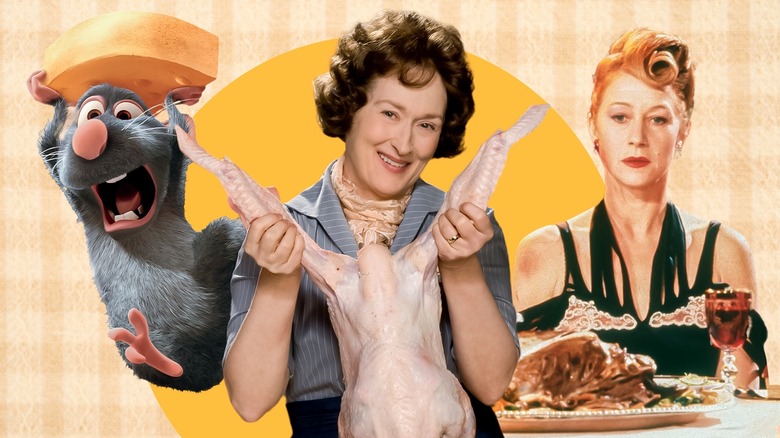
For foodies, films about food are a feast for the eyes, a legit substitute for the feast for the tummy that our favorite recipes give us. But they're more than eye candy. Many of these films make us think about our vittles in a new way. Willy Wonka's chocolate factory invites us to consider what unbridled access to chocolate rivers (and the corporate espionage that swims within those pools) might be like. Food as a conveyer of our emotions, like it is in "Like Water for Chocolate," reveals deep feelings when words cannot. And when it seems impossible to reach our aspirations, "Julie & Julia" reminds us that food can be a way out of a mundane life.
It is a love of all things food that made me watch the movies on this list initially. That life-through-a-food-lens kept me watching them long enough to learn to love, or at least, appreciate them. It broke down the barriers to subject matter that I might not think about otherwise. It was a will-watch-for-food sort of thing. And in the cases where I wasn't necessarily resistant to the film's theme, I found that using food as a lens made me think differently about some topics than I had before. For example, I didn't much consider food being a part of corporate espionage prior to seeing a few of these films, I'll be honest. Now, I can't unsee that.
However, even if these films didn't come with a whole passel of lessons, they'd still be just as delish to watch, an evening of entertainment for the price of a YouTube rental. From the forbidden and criminal to the sublime, these delicious food movies have something yummy to teach us about the way we eat and do life. And warning: Delicious spoilers ahead.
The Menu

To work in the restaurant business, you gotta be one tough cookie. This isn't something that patrons always see, but in the flick "The Menu," starring Ralph Fiennes, Anya Taylor-Joy, and Nicholas Hoult, the help strikes back in a way that's both satisfying and more than a little horrifying. Here's the scenario. An invite to dine at an exclusive and secluded island-based eatery draws society's elite for what the guests assume will be a night of dinner and conversation, punctuated by more than a few foodie photos with the star chef, Julian Slowik.
At the tables sit a food critic, a group of tech bros, a chef's groupie, a washed-up actor, and even a politician and his wife, all expecting the star treatment the restaurant is known for. However, the thousand-dollar-a-plate meal soon turns dark, indeed, when the sins of the guests are revealed in every course, with the tortilla scene being particularly funny and cringy at the same time. It's a commentary on how food is used as a tool to promote self-interest and power.
Chef Slowick's sadistic punishment for his patrons' crimes probably garners more than a few hoots and whistles from fans who have worked in the industry and who know only too well how the game goes. The wild card, however, is Taylor-Joy's character, Margot, who is an accidental guest, a last-minute replacement date for foodie fan, Tyler, and (spoiler alert) the only person who escapes the sadistic chef's fate. It's a yummy ending for anyone who's ever worked in the industry and been more than a little frustrated by the bold rudeness embodied by some restaurant guests.
Julie & Julia
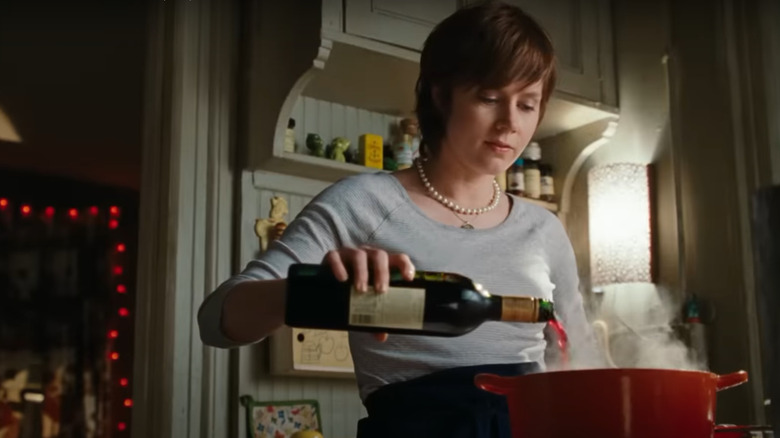
Most of us have heard of death by chocolate, but the bioflick "Julie & Julia" reminds us that a good chocolate recipe — especially if it comes from a French cookbook –– and a well-written blog can also bring you back to life. The story weaves together the lives of celebrity chef Julia Child and food blogger Julie Powell, as they discover the power of food. A love of food is the only thing that ties these two women together. They don't know each other. They are only bound together by the 524 recipes in Child's book "Mastering the Art of French Cooking."
Child released the book in 1961, during an era when women weren't chefs and reality TV, foodie edition wasn't a thing. Julie Powell didn't start writing her blog based on Child's book until 2002. It's through the highs and lows that both women experience as they navigate their lives as would-be foodies that we see ourselves in the struggle, and ultimately, that's what brings the movie so much heart and charm.
Because this is a Nora Ephron movie, it's light-hearted and filled with love, but instead of being a love affair between two people, it's two women's love affair with food. Of course, it doesn't hurt that the movie has a stellar cast to bring the characters to life. The inimitable Meryl Streep shows us yet again that she's a woman of many voices as she portrays Julia Child's artful life. Amy Adams stars as Julie Powell, the blogger who shared her thoughts with fans around the world. Rounding out the cast is Stanley Tucci, who plays Child's ever-patient husband, Paul Child.
Like Water for Chocolate
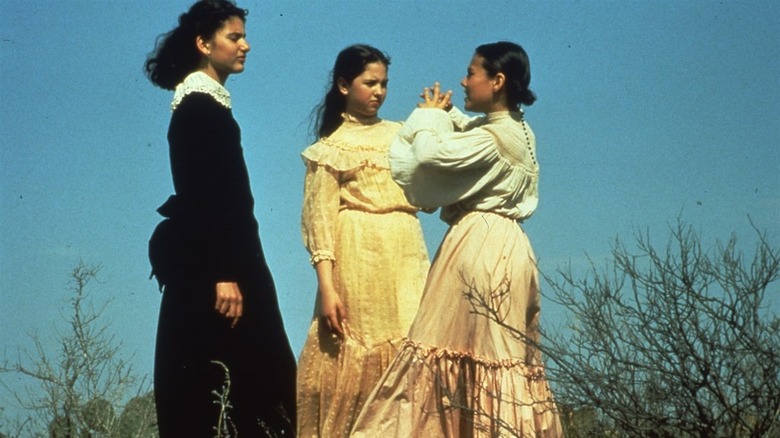
"Like Water for Chocolate" taps delicious food and magical realism to tell a story so heartbreaking, so delicious, you just want to consume it over and over and over again. The story centers around Tita, who loves Pedro, a boy she grew up with, but thanks to the cruelty of family tradition, she is forced to remain single and take care of her widowed mother, Elena De la Garza, instead of marrying her love. To add insult to injury, her beloved is promised to her sister, Rosaura, in her place.
Having spent time in the kitchen with the family cook, Nacha, as a child, Tita pours her heart into cooking, and in true magical realism form, her emotions become infused into whatever she's making. A white wedding cake filled with her tears makes everyone who eats it violently sick and filled with longing for lost loves. A cooked quail becomes the impetus behind erotic feelings exhibited by Tita's other sister, Gertrudis. In the end, Tita and Pedro spend many unhappy decades longing for one another until, finally, through a complicated turn of events, the family curse is broken and future generations of Tita's family are free to marry who they wish.
Lumi Cavazos and Marco Leonardi bring Tita and Pedro, respectively, to life. Mamá Elena is played by Regina Torné. The movie has a dreamlike, delicious quality that's hard to forget, and each chapter of the film is a foodie's dream, punctuated by recipes that are meant to move the story forward and reveal something deeper about the characters.
Ratatouille
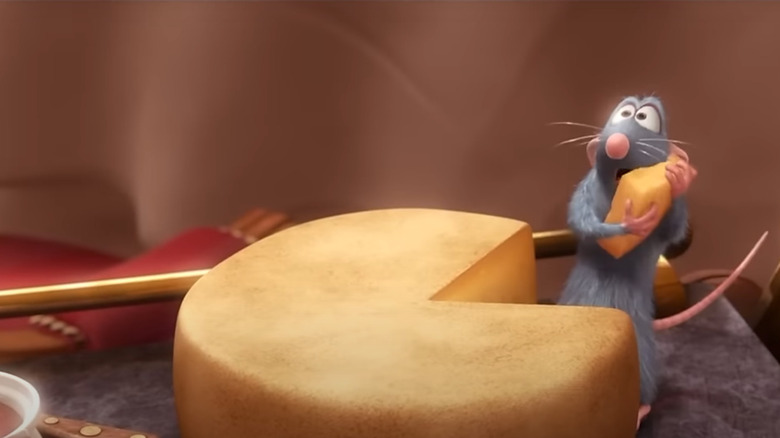
As if the yummy settings — Paris and the kitchen of a famous restaurant, Gusteau's – and the characters — a normal street rat with a proclivity for cooking fine food — weren't enough to make "Ratatouille" a delicious film to behold, you might be convinced to watch it once you learn that it got the highest praise from celeb chef, Anthony Bourdain. He called it "the best food movie ever made," per My Modern Met. Bourdain's assessment of the film and the subsequent 2007 Oscar it got for "Best Animated Feature" gives it some serious street cred amongst foodies, but it's the delicious details about Remy, a rat with dreams of becoming a gourmet chef in a Paris restaurant, that make you slide easily into the sweet story.
In the film, it's the rat, voiced by Patton Oswalt, who has the wisdom to know what sorts of ingredients to put into a dish. However, he needs help with the execution, and for that, he has a human friend, Linguini, played by Lou Romano. With Remy's help, Linguini becomes renowned as a chef, until it's discovered that the kitchen he works in has a rat infestation, courtesy of Remy and friends. The inevitable scandal closes the restaurant until restaurant critic Anton Ego, brought to life by Peter O'Toole, helps Remy and Linguini open a new place. "Ratatouille" offers tasty treats for everyone. Kids will love the animation and the slapstick humor. Adults will appreciate the story. And foodies will embrace all the amazing visual details in the food scenes. It's a great little film all in all.
The Cook, The Thief, His Wife and Her Lover
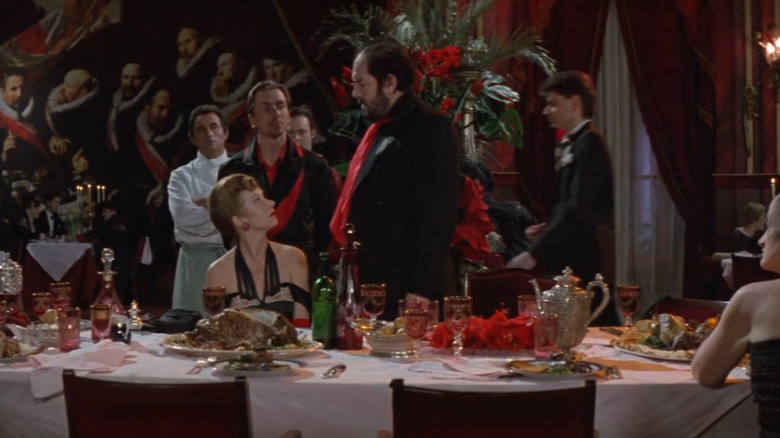
"The Cook, The Thief, His Wife and Her Lover" is like a mash-up between "The Menu" and "The Godfather," with food standing at the center and providing the audience with metaphors for the film's themes, including corruption, sensuality, and just desserts. Michael Gambon stars as a British gangster, Albert Spica, who owns a French restaurant called Le Hollandais. Helen Mirren, who plays Georgina, is his long-suffering, beaten-on wife who eventually has an affair with a bookshop owner, Michael, to cope with the abuse her gangster husband heaps upon her. Of course, all of this goes badly when Spica finds out about the affair and unalives Michael. However, Georgina has the last laugh when she convinces the restaurant's chef to cook up her former lover and feed the remains to her husband as dinner. Afterwards, she finishes the job by offing Albert with a shot to the skull.
It's an art film. Its unusual storyline may be too much for some. For others, food is a stand-in for all the baser things in life that most people don't want to think about. All of this set is inside carefully designed, classically-based movie sets. It can't help but be a feast for the eyes and food for thought. It's something you have to ease into instead of devouring all at once, kind of like the forbidden fruit that tastes delicious but ends up making your tummy ache nonetheless.
Off the Menu
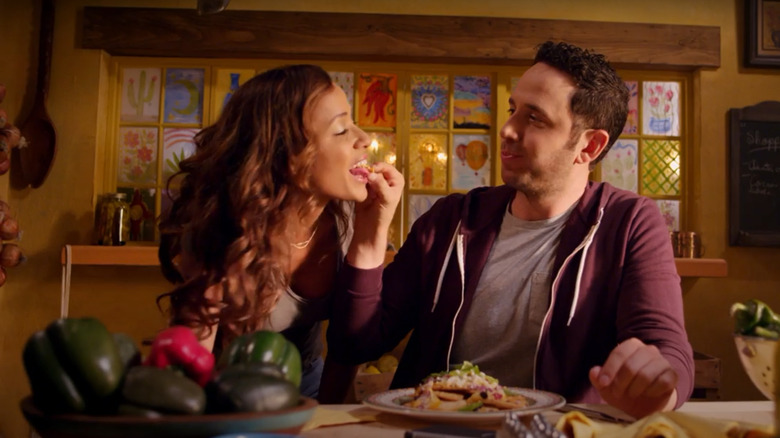
A little out-of-the-way eatery in Small Town, New Mexico, becomes the unlikely destination of food tourists and corporate food espionage thanks to the cooking skills of its owner, Javiera Torres, played by Dania Ramirez, and her secret ingredient – home-grown chiles that have been in the family for generations. Torres' restaurant also becomes the place where she falls in love with Joel Flanagan, brought to life by Santino Fontana. Flanagan happens to be heir to a Mexican fast food chain fortune, Tortilla Hut, and Torres' famous dishes become the basis for stolen recipes thanks to Flanagan's ties to corporate food.
The recipe and chile theft brought on by Flanagan was at the behest of his sister, who runs the fast food chain and who emphasizes that the company must introduce new menu items or be left in the dust by competitors. As for Flanagan himself, he gets pulled into the scheme when his sister threatens to cut him out of his inheritance due to his lack of involvement in the family business. That he ends up in the small New Mexico town where Torres' restaurant is located is thanks to unexpected legal troubles.
Compared to the warmth and connection of Torres' kitchen, Flanagan's world is cold and harsh. It's this juxtaposition that reminds audiences why food and its ability to bring people together should be at the heart of every person's dining experience. When Flanagan's use-food-only-as-fuel persona clashes with Torres' food-equals-love mentality, of course, romance ensues. It's a fun little character- and food-driven movie that offers up plenty of visual vittles in the process.
No Reservations
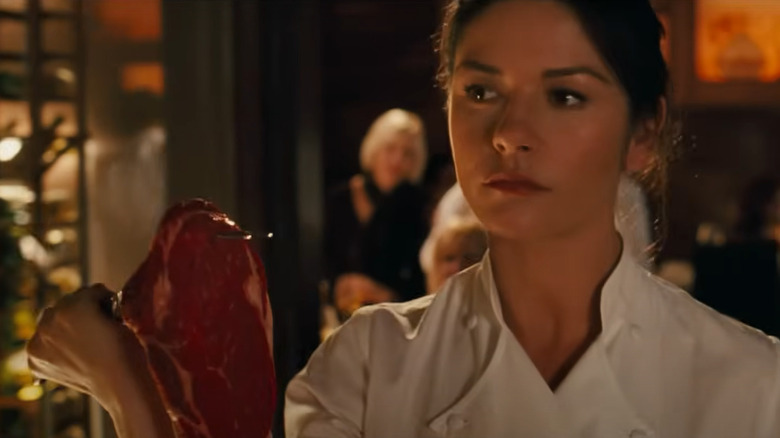
Based on the German-language film, "Mostly Martha," "No Reservations" tells the story of Kate Jones, a chef with a bent towards perfectionism and a life too filled up with food to invite anything else in. All of that changes when her sister, Christine, dies in a car accident and leaves her daughter, Zoe, in her charge. Given that Kate already has control issues and is forced to see a therapist to keep her job, having a kid unexpectedly thrown into the mix is enough to knock her into next week.
After some forced time off to deal with her newfound responsibilities, Kate comes back to her Greenwich Village restaurant only to discover that she's acquired someone else in her life, Nick, a sous-chef who wanted to work with her, despite her reputation for being difficult. Thanks to his easy-going nature and his ability to get Zoe to eat, a habit she gave up once her mother passed, Nick starts to warm Kate's heart. Kate stops seeing him as someone who's trying to steal her job and someone she might fall in love with instead.
This film has the benefit of a powerhouse cast and an amazing original film to build upon. Catherine Zeta-Jones and Aaron Eckhart star as Kate and Nick, respectively. Abigail Breslin embodies a young girl in grief with her portrayal of Zoe. And of course, all those delicious, perfectly coiffed dishes prepared by Kate create a stunning backdrop against which love, life, and family get re-imagined.
Charlie and the Chocolate Factory
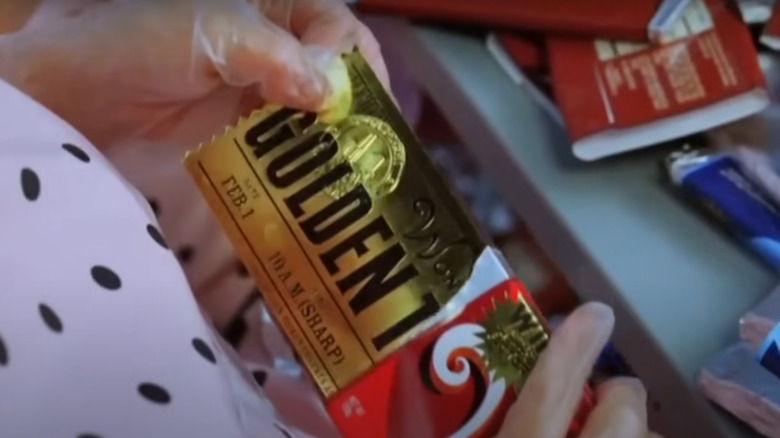
Based on the book by Roald Dahl, "Charlie and the Chocolate Factory" follows Charlie Bucket, a poor boy who has a chance to leave his impoverished life when he becomes one of five children to receive a golden ticket to tour Willy Wonka's chocolate factory. Meanwhile, the mysterious Mr. Wonka has a bit of an ulterior motive for passing out the golden tickets in his chocolate bars. He intends to pass his chocolate factory onto a worthy child, and the only way to know which child is worthy is to put them through a series of tests until only one child is left standing. Like clockwork, four of the five children – Augustus Gloop, Violet Beauregarde, Mike Teevee, and Veruca Salt — all fail their tests. It's only Charlie Bucket, in the end, who proves pure-hearted enough to earn Wonka's trust and the chocolate factory and a whole cadre of Oompa Loompas to sing him to sleep.
Many actors have played Willie Wonka over the years, including funnyman Gene Wilder. In the 2005 version of the story, actor Johnny Depp plays Wonka. Although the character shows signs of quirkiness, Depp's portrayal dives deeper into the isolation that Willie Wonka feels. That's why this is such an interesting version of the story and a must-see for fans of the actor. Freddie Highmore's portrayal of Charlie Bucket is sweet and sincere, and the whole film is filled with the kind of magical whimsy you'd expect from a chocolate factory headed by a magical chocolatier and run by an army of Oompa Loompas. It's made with kids (and kids at heart) in mind.
Fried Green Tomatoes
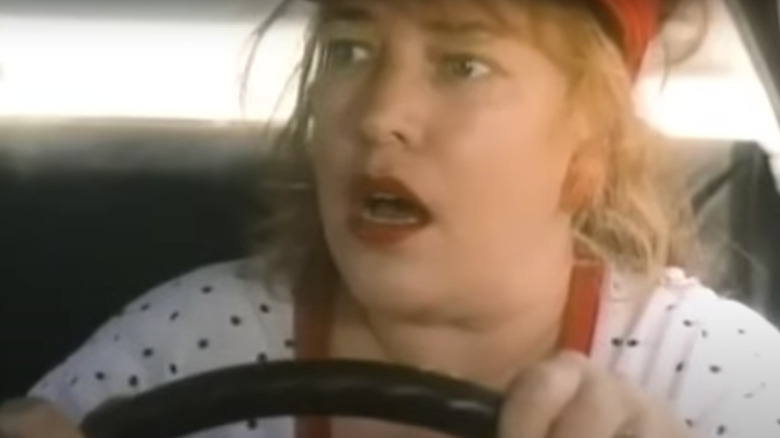
Food and friendship — an ideal pairing if there ever was one, and that pairing is in full force in "Fried Green Tomatoes," the 1991 film starring Kathy Bates as Evelyn Couch and Jessica Tandy as Ninny Threadgoode. Mary Stuart Masterson and Mary-Louise Parker also star as Idgie Threadgoode (Ninny's sister-in-law) and Ruth Jamison, respectively, in a separate but parallel story. Evelyn's and Ninny's story takes place in the present day, while the story between Idgie and Ruth happens during the 1920s.
Dissatisfying marriages, race relations, and the importance of friendship and food all get their due in this feel-good flick. While Ninny eventually gnaws on a plate of her favorite fried green tomatoes, audiences gnaw on the prospect of chowing down on Ruth's deadbeat, abusive husband, Frank, after he succumbs to a much-deserved dirt nap following his attempts to off Ruth fail. The movie is based on the book by Fannie Flagg and is the sort of flick that you should watch with four of your best girlfriends while enjoying your own recipe for a tasty plate of fried green tomatoes. It's a guaranteed tear-jerker, so be sure to include a box or two of hankies, too.