

Restaurant Secrets About Sonic Drive-In
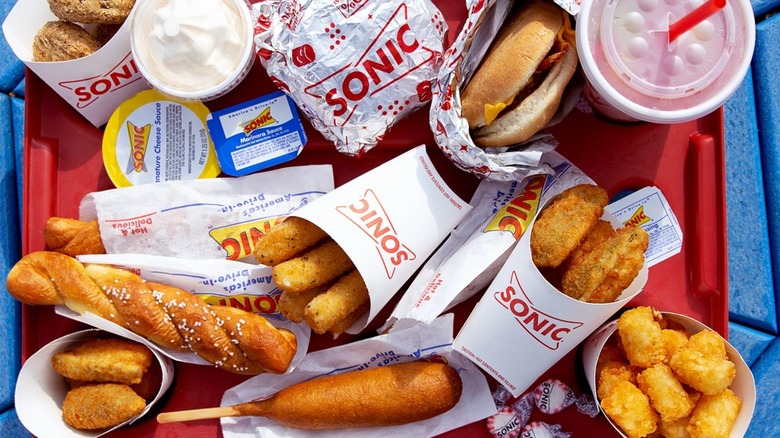
Sonic Drive-In is known for many things: burgers, Coney dogs, drinks, and slushes, all infused with a heavy dose of midcentury American nostalgia. Curiously, though, it's never been known for just one menu item. The through line is comfort foods, in all their fried, melted, and dippable glory — with a helping of cult-favorite Sonic ice crackling in the side cup holder.
What sets Sonic apart really might be just that: a sense of comfort in knowing you can get a shake, a handful of mozzarella sticks, a breakfast burrito, or a grilled cheese at any time of day. Sonic has leaned into its brand of casual convenience with its many ordering options. There's the drinks menu, with its dizzying mashup of add-ins, from syrups and sweet cream to fruit juices — and even pickles and Nerds candy. Customers can order ahead or in person, use the drive-thru, or park in a stall. They can eat in their car, lounge on a patio, or take food to go. Sonic's mobile app is chock-full of discounts, deals, and promotions, and its happy hour offers half-priced drinks and slushes every day. But dig a little deeper, and you'll find Sonic's easy-breezy vibe didn't appear out of nowhere — and these little-known details about the fast food chain show there's more than meets the eye.
Sonic's ice has a cult following
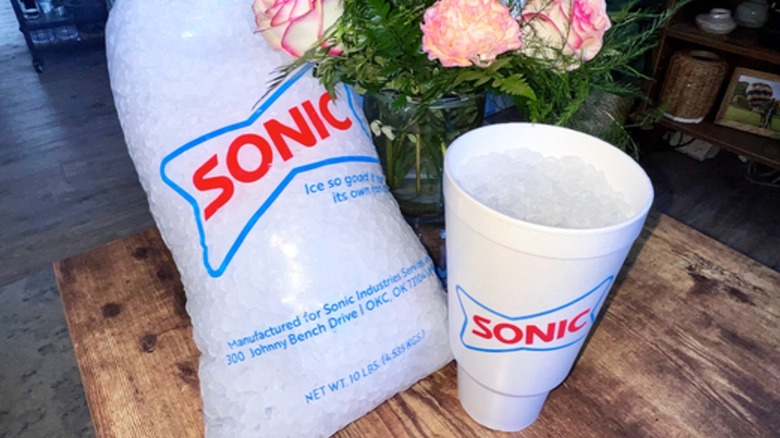
If you know, you know. Sonic's pellet ice has a cult following. It has a compact, pebble-like form that many customers swear melts slowly. And, because of the distinctive air pockets, the ice allegedly absorbs drinks and makes the crunchy pieces satisfying to chew on. Happily for its many fans, Sonic ice can be purchased in bulk in 10-pound bags for around $3, though prices may vary by location. That could come in handy, especially during summer at the beach, a pool, or a park — though maybe not in your fancy cocktail.
Online, Sonic's ice has sparked debates over everything from the cost-effectiveness of buying a countertop pellet ice machine to whether these ice fans are, in fact, anemic (some research has found a link between routinely chewing ice and having an iron deficiency). There are even tips on how to keep the precious pellets from melting together and freezing into a blob (consensus: buy your own machine). Somehow, this tracks. Sonic may be peak Americana, and truly, there is nothing more American than our love affair with ice.
Sonic's option to make drinks dirty has surprising roots
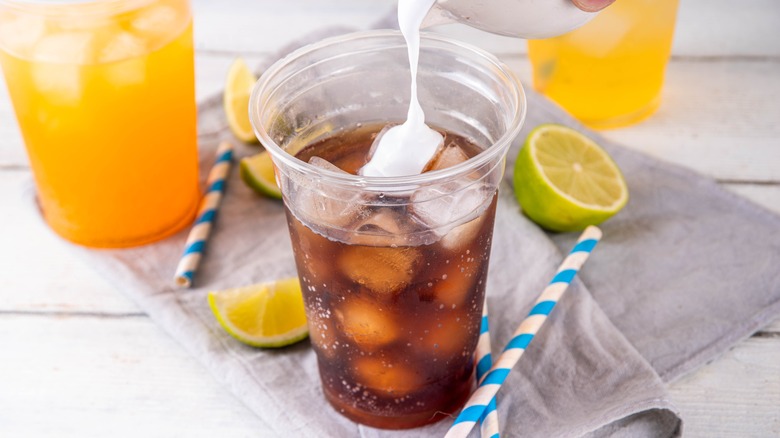
If you've ever ordered a drink with the "make it dirty" option at Sonic and wondered why it feels like sending an illicit text, we have answers. The add-on, which costs a little over a dollar and adds sweet cream, coconut flavor, and lime juice to your drinks, originated at Sonic in the winter of 2024. But the concept of "dirty sodas" has been around for years. Drive-thru drink shops, such as Swig and Sodalicious, that emerged in Utah in the 2010s, catered to a very specific market. Members of the Mormon church abstain from alcohol and hot drinks like coffee and tea, but are generally allowed soda. Accordingly, sodas were customized with creative add-ins, often featuring cream and flavored syrups, and were dubbed "dirty sodas."
Long before these chains emerged and their offerings infiltrated mainstream culture, banned drinks also played a role in giving birth to the classic American soda fountain, where the first iconic soda-ice-cream-syrup-fruit mashups were created during the Prohibition era. Soda jerks created milkshakes, floats, egg creams, Shirley Temples, Lime Rickeys, and even vanilla Cokes at the original alcohol-free gathering places. Think of dirty sodas as the second coming, if you will, of the original '50s soda fountain. Sonic, with its nods to '50s-era nostalgia, may have finally come full circle with the least wholesome-sounding of menu add-ons.
Sonic began with a completely different name
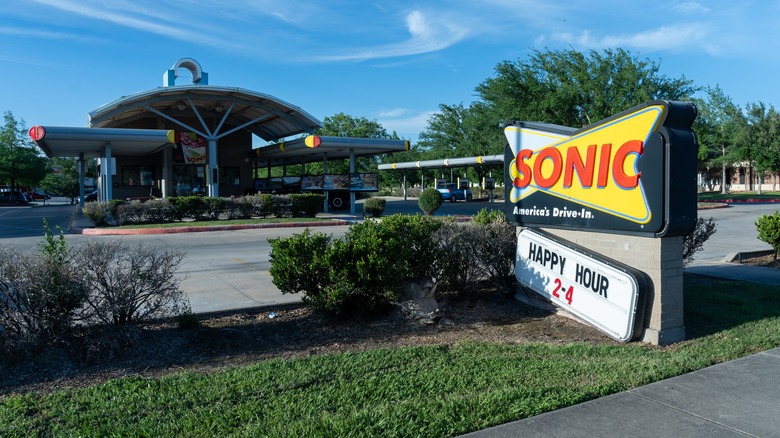
In 1953, Troy Smith purchased a log cabin that he renovated into a steakhouse. The site in Shawnee, Oklahoma, also held a little root beer stand called the Top Hat. Smith initially intended to tear down the stand to make space for the steakhouse. Instead, he decided to wait until he was ready to expand and turned his attention to making the stand more profitable.
After a trip to Louisiana, where Smith noticed a drive-in restaurant using a two-way intercom system to order, a light bulb went off. Smith arranged for an intercom system at Top Hat and succeeded in more than doubling the stand's monthly sales in a week. He also added a canopy for cars and carhops to increase efficiency. He and his business partner, Charlie Pappe, consulted with a lawyer to plan for franchising their small but growing chain of Top Hat drive-ins. Their lawyer informed them that the name "Top Hat" was already copyrighted, so they chose a new name. Because their slogan was "Service at the Speed of Sound," they changed the restaurant's name to Sonic.
Sonic skipped indoor seating on purpose
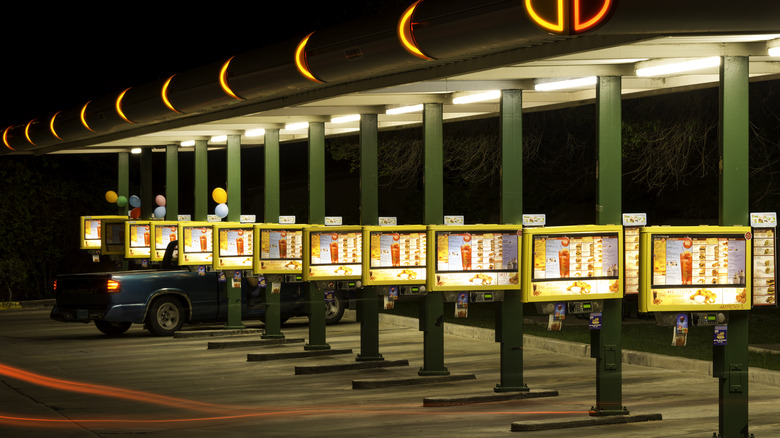
With Sonic's concept as a drive-in and drive-thru experience, its locations rarely include indoor seating. There are a few exceptions: places with extremely cold climates, or zoning that requires indoor dining space. But from the beginning, customers could drive up to an intercom, order, and be served at their cars. As a result, drive-thru or drive-up only Sonic locations allow the company and franchisees to save on real estate, labor, maintenance, insurance, and renovations.
When the pandemic hit, the decline of indoor dining at fast food chains plummeted. Dining rooms have since rebounded, but many chains have seen take-out and drive-thru orders overtake their sales and are phasing out indoor dining. Taco Bell even unveiled a concept right out of a Blade Runner-esque, retrofuturistic city: a four-lane drive-thru with proprietary vertical lifts that lower food from the kitchen on the second floor to the cars below, and Chik-Fil-A built something similar in Atlanta. Sonic, however, was ahead of the competition from the very start.
Sonic's skating carhops meet up once a year
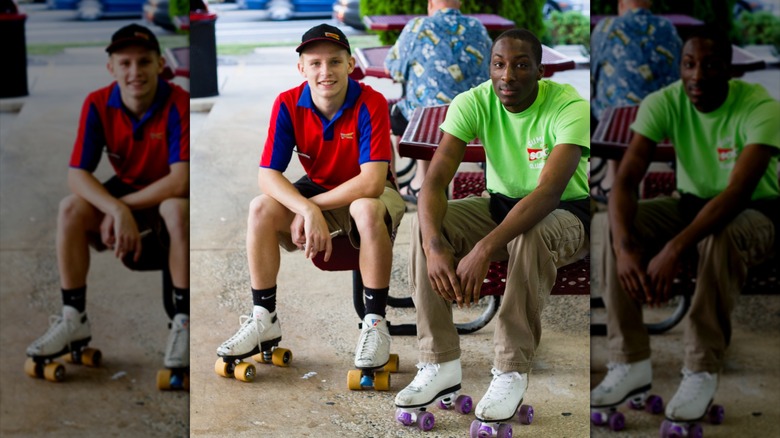
According to a job description from Sonic, "Skating Carhop servers are unique to the Sonic Drive-In restaurant brand and bring a special 'surprise and delight' element to the guest experience." Sonic carhops can often make a little more money in tips if they skate, wearing inline or roller skates to deliver food to cars. Remarkably, the company hosts an annual competition for carhops to showcase their skills. It's known as the Sonic Skate-off, and since 2011, skating carhops from Sonic locations all around the U.S. have competed to be crowned winner.
Skate-off finalists are selected by submitting videos of themselves at work in uniform, delivering food to customers. Their carhop skills are then put to the test in an in-person obstacle course that requires them to carry trays full of food and drinks, skate through doors and under hurdles to deliver orders, clean up messes, and wipe down tables — all on wheels. There are cash prizes, a new pair of skates, and, of course, the glory of holding the national title in it for them.
Sonic's ice cream might not be real
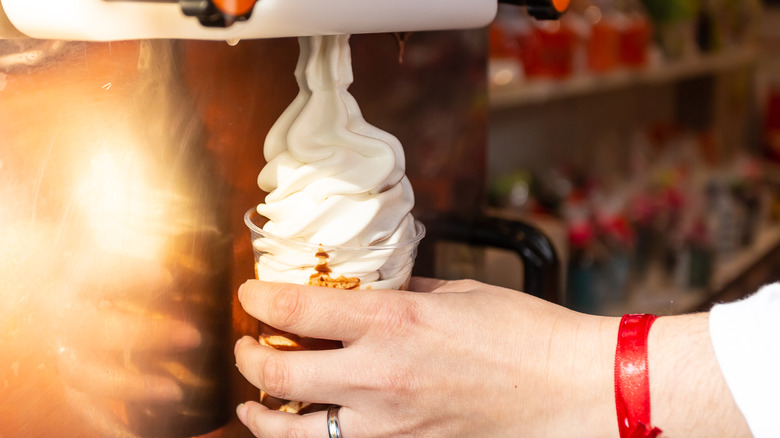
In 2010, Sonic began promoting its "Real Ice Cream" with coupons for free shakes. Before that point, Sonic's creamy desserts did not meet USDA standards for ice cream, which must "contain at least 1.6 pounds of total solids to the gallon, weigh not less than 4.5 pounds to the gallon, and contain not less than 20 percent total milk solids, constituted of not less than 10 percent milkfat." Frozen treats, such as soft serve and shakes, often use less milkfat, more air, and stabilizers and emulsifiers to achieve the desired soft, extrudable texture.
Nowadays, there is some degree of confusion about whether or not Sonic still serves "real" ice cream. The words "ice cream" do not appear on my local Sonic's version of the mobile menu — the company opts instead for the term "soft serve" in the menu category "Frozen Zone." And several Redditors who claim to have worked at Sonic say that real ice cream disappeared a couple of years back. But in other menu versions, Sonic does offer "Real Ice Cream" sundaes. Real ice cream or no, Sonic's frozen treats aren't known for standing out from the crowd; their ice cream lands solidly in the middle compared to other fast food chains' vanilla soft-serves.
The unexpected reason you can tip on Sonic's app
During the COVID-19 pandemic, when other restaurants and chains were struggling, Sonic built on the model it had already carved out for years: the option for customers to order food directly to their cars, contactless. Though Sonic saw a drop in sales during March of 2020, it doubled down on cleanliness and friendly service, but not necessarily on speed. More than other chain drive-thrus, Sonic provided a space for customers to take a break from home and dine in their cars. In the first five months of the pandemic, according to QSR, after a flood of compliments and requests from customers to be able to show their appreciation for employees, Sonic added a tipping option to its mobile app. The option has stuck.
Sonic leadership emphasizes a focus on using feedback from customers to influence their operations and menu lineup. Thanks to fans being vocal on social media and creating an online petition, Sonic is bringing back two slushes: Watermelon and Lemonberry Slushes, which had been removed from the menu in previous years.
Sonic's limited-time offers are strategic
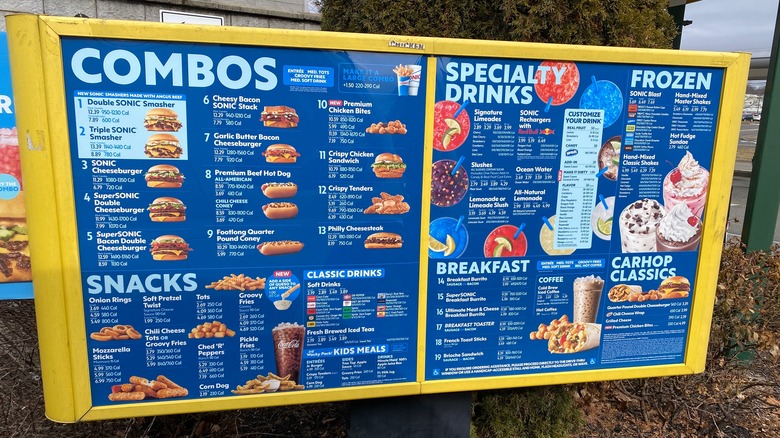
Limited-time offers, or "LTOs," in the restaurant biz remain a tried-and-true fast food marketing tool: they create a sense of scarcity and urgency. They can also gauge customer interest in new menu options, increase demand and engagement, and even create viral social media trends. Sonic is no stranger to the LTO, with an often-shifting lineup of new products and flavors that are then either phased out or retained on a long-term basis, depending on customer reaction.
However, according to Sonic leadership, limited-time burger offers rarely make it onto the permanent menu because they primarily serve as a tool to build interest. "We gain flavor attraction with consumers through burger LTOs, but they don't come on to the core menu because we want to keep building that attraction," Sonic's VP of culinary and menu innovation told Restaurant Business. "We do cheeseburgers really well and do flavor extensions really well."
And while many fast-food chains make effective use of LTOs, Sonic was particularly effective in promotions via text messages, which yielded higher redemption rates than emails or push notifications.