

Old-School Food Jingles You Forgot About Until Now

In the 1993 futuristic sci-fi movie "Demolition Man," audiences learn that the most popular songs on the radio are jingles from old commercials. And while we might not have admitted it out loud, there were probably more than a few of us who sang along with the actors as they belted out the lyrics to the Armour Hot Dogs song, even if we did it only in our heads. This is the power of a classic commercial ditty. It stays with you decades after the ad airs, not only leaving you with an earworm that transports you back in time but also makes you remember the foods that went along with the vintage jingles.
Some of the foods, like McDonald's Big Mac, have grown so big in popularity that it's difficult to remember a time when they didn't exist. However, when the first real Big Mac ad campaign came out, the now-famous burger had only been in existence less than 10 years. Others, like the '80s Dr Pepper commercials, were enough to catapult the actors who starred in them into the stratosphere of fame and fortune -– at least for a few years, anyway. In short, those old-school jingles offer not only a look into only what we were eating at the time, but even what was popular in terms of advertising, colors, and design. That these mini-movies came with catchy tunes was the icing on the proverbial Sara Lee pound cake. Although there are plenty of worthy candidates for most memorable vintage jingles, the following nine offer broad examples of why a good song and a good meal (or at least, a snack) should go together.
Oscar Mayer: Oh, I'd love to be an Oscar Mayer wiener
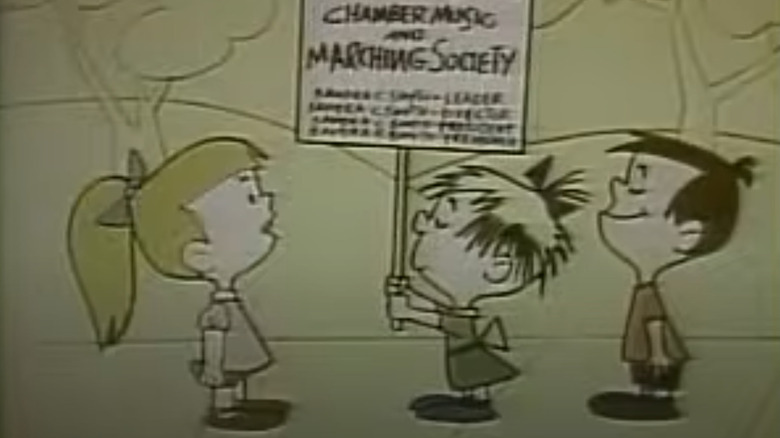
If only being the cool kid in school were as simple as becoming an Oscar Mayer hot dog. Of course, everyone being in love with you, as the jingle promises, isn't quite that simple, but the idea behind the short hot doggy jingle sure was. It came about as a result of something that Richard Trentlage's 11-year-old son had said about a friend with a dirt bike –- that he wished he were a dirt bike "hot dog" -– which was slang for the "cool kid" back in 1963 when the jingle first came out.
Trentlage was the man responsible for penning the now-famous ditty, and it was a good thing, too, that he overheard his son's wish when he did. The Oscar Mayer company had rolled out a contest to find the perfect song for a new hot dog ad it was creating. Trentlage had only heard about the jingle competition a day before the contest's deadline was to come to a close. Thanks to the inspiration the songwriter got from the dirt-bike-hot-dog line, Trentlage was able to pen the song in an hour's time. It was such a success that the refrain "Oh I'd love to be an Oscar Mayer wiener" backed up company commercials for the next 50 years.
The commercial with the song eventually made its way around the world, reaching 19 countries and an estimated 49 million households. As for the kids who performed in the original commercial? They were none other than Trentlage's own two kids who sang the lyrics while their father plucked the banjo-uke.
Coca-Cola: I'd Like to Teach the World to Sing
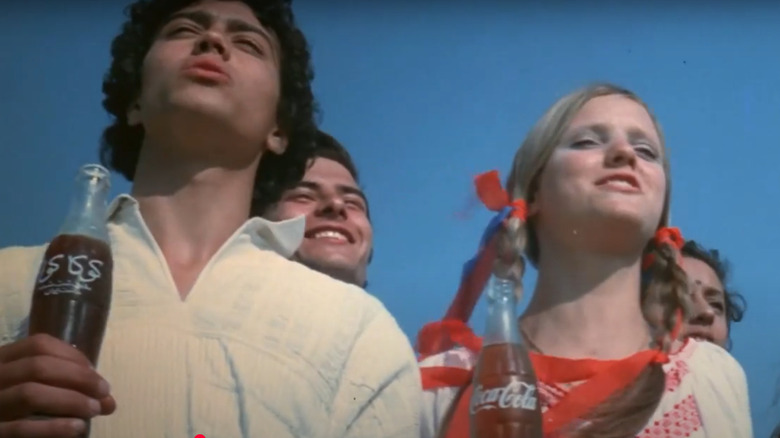
The jingle "I'd Like To Teach The World To Sing" was as much a soul quencher as it was a thirst quencher. The tune, which Coca-Cola unveiled in commercials in 1971, opens with a multitude of singers, crooning in perfect harmony on top of a hill in Italy. The jingle (and the ad behind it) was meant to promote community and to be a cure for the strife that plagued the world during that era. There was plenty of that. The Vietnam War. The conviction of Charles Manson and his gang of followers. The Kent State shootings by the Ohio National Guard. If any period needed some people handing out a cold Coke housed in one of those famous Coca-Cola bottles and a little harmony, 1971 was it.
The commercial campaign was a couple of years in the making. The idea for it originally started kicking around in 1969. There were lofty goals attached to it. In short, the Coca-Cola commercial's purpose was to "resonate with people of all cultures and backgrounds," per Brand Advertising. Despite the potential challenges that such a tall order faced, the song eventually topped the charts in 100 countries. It became a pop culture sensation and eventually went on to gain another layer of cool when it appeared in the final episode of the TV show "Mad Men," starring John Hamm as Mr. Cool himself, Don Draper, in 2015.
McDonald's: You deserve a break today
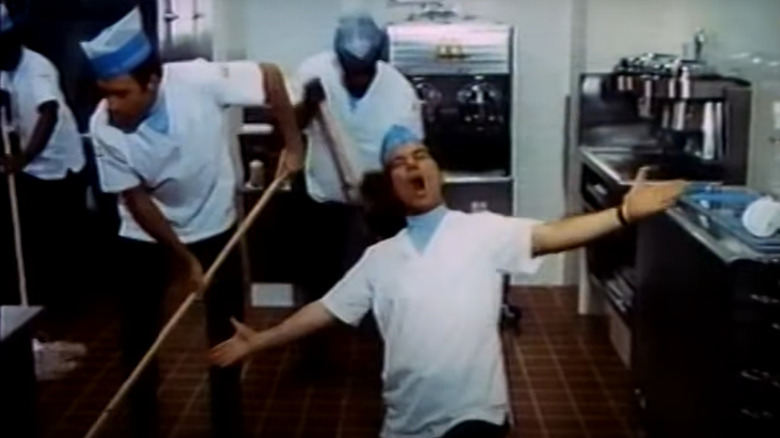
Long before the post-pandemic return-to-the-office orders became a thing, the "You deserve a break today" jingle from McDonald's encouraged people to leave the office and come to McDonald's for lunch. Created by Leo Burnett, the jingle came out in 1971, accompanied by fresh-faced singers dancing Broadway-style with brooms and mops as their dance partners. Although McDonald's had been in business since the late 1940s, it really wasn't until the jingle came out that a tagline –- "You deserve a break today" -– became attached to the brand.
The jingle created a wholesome, ah-shucks kind of image for the burger giant that stood the test of time. In fact, the snappy tune and its wholesome lyrics appeared in commercials throughout the 1970s and 1980s. In the mid-1990s, the slogan got a slight modification, becoming "Have you had your break today?" "You deserve a break today" proved to be so successful that it landed among the Top Five jingles for the 20th century, with AdAge even putting it at the top spot above all jingles for the century. It also landed a slot on the TV show "The Partridge Family." It was modified slightly, of course, to fit the show, which only upped the jingle's coolness factor even more.
Sara Lee: Nobody doesn't like Sara Lee
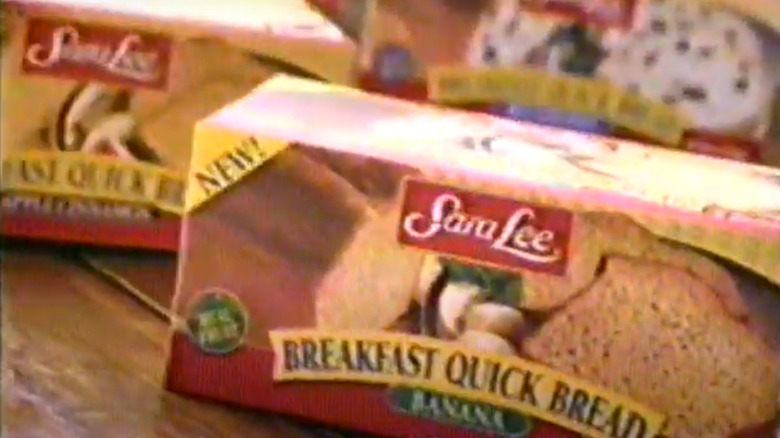
The premise for the 1985 Sara Lee jingle –- "Nobody doesn't like Sara Lee" -– was that if you bake something that everybody likes, such an item won't be on the kitchen counter for very long. And it wasn't just a coffee cake or some sweet rolls. It was everything Sara Lee. That '80s-era jingle also proved to be just what the brand needed to catapult it into the national spotlight, and a darn good thing, too, given that the brand itself had been around since the mid-1950s. A wait of 30 years is more than plenty for a brand to go from regional to national after all.
The double negative –- nobody doesn't -– is also an interesting feature of the jingle for a couple of reasons. For one, those of us who grew up with grandmothers who also happened to be English teachers are probably bristling at the improper grammatical combo. Why not just say "Everybody likes Sara Lee?" While this argument is logical, it overlooks the hook that the line becomes precisely because it ain't such good grammar. Aside from this, it's easy to hear the saying incorrectly. Instead of "Nobody doesn't like Sara Lee," it becomes "Nobody does it like Sara Lee." It's a play on words that's almost hypnotic, especially when it's sung while you're wandering down the grocery store aisles, rummaging through the quick breads and coffee cakes and other sweet goodies. In other words, it's hard not to buy because, well, everyone likes it.
B&G Foods: In the valley of the Jolly Green Giant
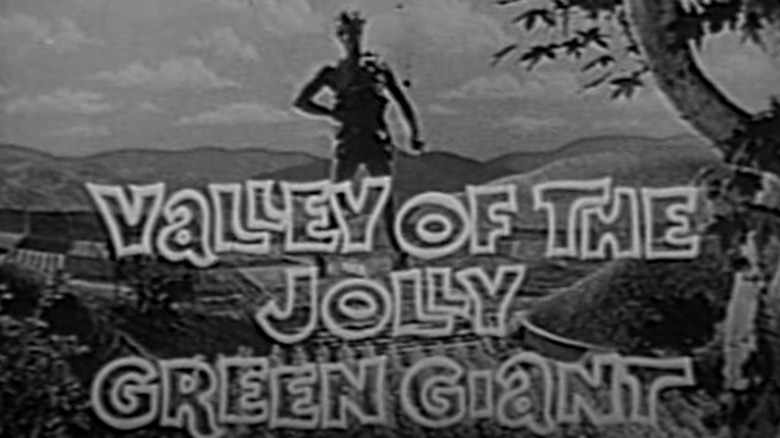
One of the most recognizable food icons, the Green Giant, first made his way into ads in 1928. He became a commercial mascot for what was then known as the Minnesota Valley Canning Company, (and later, B&G Foods), appearing in ads for Green Giant peas. The Green Giant got a professional makeover by none other than the famous Leo Burnett Company in 1935. A man by the name of Cleo Hovel, working under the umbrella of the ad agency, was responsible for the makeover.
The green man's first name became "Jolly," and his bearskin suit was replaced with an outfit constructed of leaves. The new look came from a pencil sketch that showed Jolly and the words "In the valley of the Jolly Green Giant." In 1954, Jolly started showing his green visage in TV commercials. By 1960, Jolly had a catchy jingle and a mighty shout of "Ho! Ho! Ho!" -– care of another Leo Burnett genius, Bob Noel –- to go with it. In the early 1970s, a little sidekick named "Sprout" joined the ho-ho-hoing team.
Surprisingly, the man that the company hired to play the giant stood only 5 feet, 8 inches tall. His stature might not have been that of a beanstalk-climbing giant, but he did have the right muscle tone for the job. The Jolly Green Giant he brought to life is now commemorated in a 55-foot-tall statue located at the Jolly Green Giant Museum on Giant Drive in Blue Earth, Minnesota.
Dr Pepper: I'm a Pepper
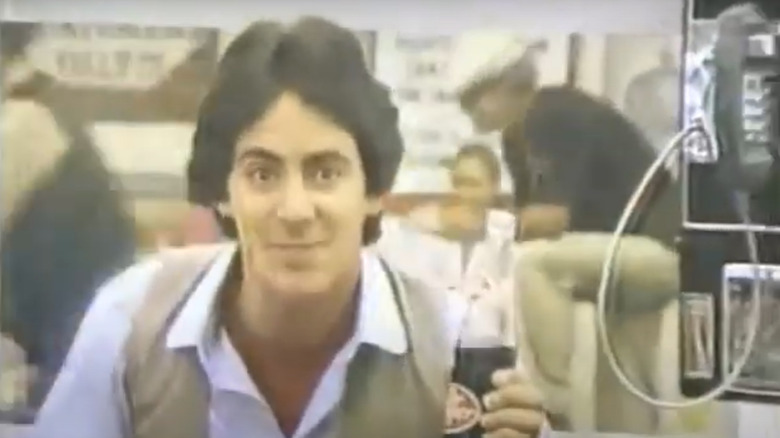
Pop quiz for you: If you could hire any storybook character to be the frontman for your soda commercial, who would it be? Well, if you're the Dr Pepper company (or one of the company's many incarnations since then), you might pick the Pied Piper, a rootin', tootin', singin', dancin' drink magnet that has all the mad skills you need to create ardent brand followers. At least, that's who David Naughton appeared to be. Before he became the star of "An American Werewolf in London" in 1981, he happily sang about being a Pepper and asking bystanders "Wouldn't you like to be a Pepper, too?"
The soft drink, with the help of its 23 fruit flavors (and Naughton), managed to stand out, at least from an advertising perspective, in a soft drink world dominated by Coke and Pepsi. It should have, all things considered. The ad campaign involved a 22-day video shoot that eventually put out a one-minute spot and two 30-second spots. As a result, the actor danced and sang his way through commercials from 1977 to 1981, and, in fact, by 1980, the many iterations of the Dr Pepper song made it the third-most popular campaign on the air. By the time things really got to rolling for the brand, it wasn't just a soon-to-be-famous American werewolf who turned themselves into dancing peppers. The Little River Band, Tanya Tucker, and even the gloved one himself, Michael Jackson, along with his brothers, spent some time promoting Dr Pepper's mysterious 23 flavors of fruity fun.
Oscar Mayer: My bologna has a first name
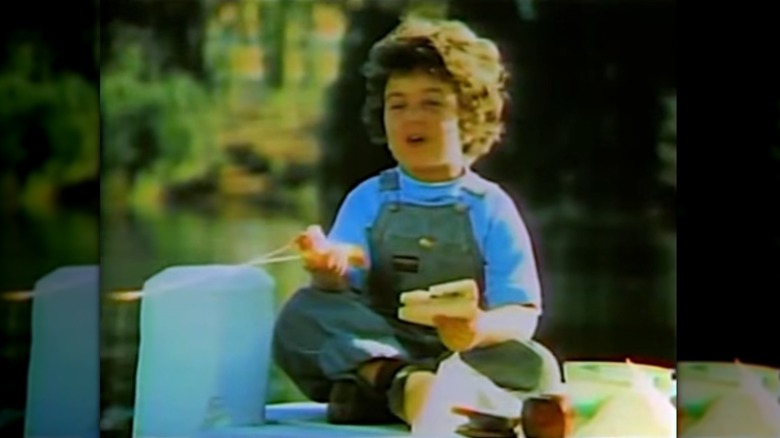
When it comes to making a viral commercial, it's hard to beat an ad that features a little kid holding a plastic fishing pole and half singing, half speaking "My baloney has a first name, it's O-S-C-A-R ..." slightly off-kilter and infinitely adorable. Like the Oscar Mayer wiener song, the ode to baloney gave the deli meats brand another poppy juggernaut. The tune itself, plus the appearance of 4-year-old Andy Lambros who appeared in the commercial, was motivation enough to fall in love with the deli meat brand in 1974 when the ad first hit the airwaves.
As for the jingle itself, it came from the brain of Oscar Mayer's Vice President of Marketing, Jerry Ringlien. The original idea for the commercial included a group of children singing on a playground. There was a certain logic to this beyond the cuteness factor. If some of the kids only knew a couple of the lines of the song, that was okay. Between all of them, the whole song would get sung. It was an approach that took the pressure off any single kid to learn the ditty all the way through.
However, a sudden flash of inspiration struck at the end of the commercial shoot. The question was asked: Could any of the kids sing the song all the way through? As it turns out, Lambros could. Due to his lopsided approach to the song, would-be bologna customers dropped their guard long enough to fall in love with him, and by extension, the bologna. Like all good jingles, it became an earworm that people remember now, some 50-plus years after it was unveiled.
McDonald's: Two all-beef patties ...
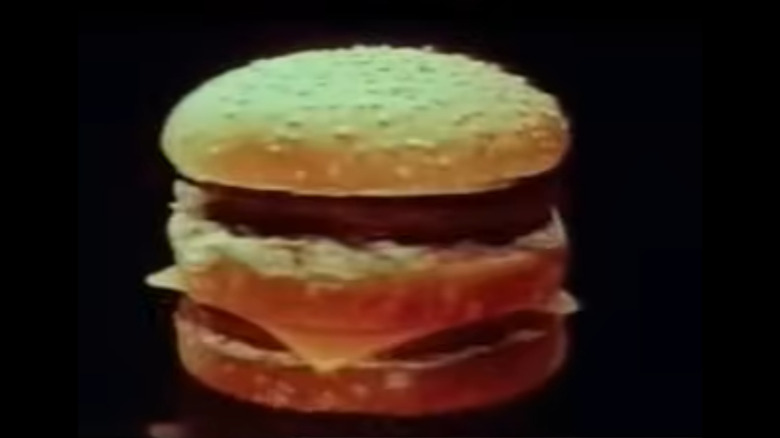
The McDonald's company has certainly had a number of years to get its jingles right. One in particular, the "Two all-beef patties" rap song, which was penned by Keith Reinhard, chairman emeritus of DDB Worldwide, effectively fried the ingredients list for the Big Mac into people's brains when it was released in 1974. It goes: "Two all-beef patties, special sauce, lettuce, cheese, pickles, onions on a sesame-seed bun." At that time, the Big Mac was not even 10 years old, having been introduced to the burger market in 1967 by Mickey D's franchisee, Michael Delligatti of Uniontown, Pennsylvania.
Ten years is certainly enough time to forge an identity for the burger that would become so important to the brand that it eventually became the name of a whole unit of measurement, the Big Mac Index. Granted, it was another 10-plus years after the jingle came out before the index was invented, but still. The tune that rapped out the entire ingredients list of the Big Mac might have had something to do with the birth of the index. Just sayin'.
Most of the commercials that featured the campaign treated it like a personal contest to be won. That is, could you sing or rap the whole list without help? Before the rappy commercials aired, the words to the jingle appeared as one very, very long headline in college newspapers. The timing on the ad was good. It proved to be a distraction from some of the upheaval the world was experiencing at the time, including Watergate. It was deliciously addictive, and people have been singing or rapping it ever since.
Pillsbury: Nothing says lovin' like somethin' from the oven
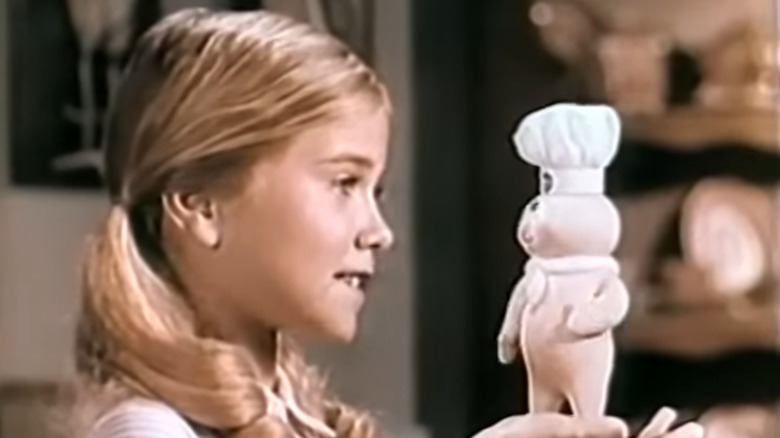
Who knew that Marcia Brady -– aka Mauren McCormick in real life –- hung out with Poppin Fresh, also known as the Pillsbury Dough Boy, in her early career, but she did. The giggly dough boy first graced commercials in 1965. As a spokesbun for breads, pre-made biscuits in the poppy cans, and other bready goodies, he built a great deal of good will and good humor for the brand. In the commercial featuring the future Miss Brady, Mr. Fresh, and a huge batch of chocolate chip cookies, the dough boy sings, "Nothing says lovin' like something from the oven."
It was the kind of "Leave It to Beaver" sort of ad that made you believe that chocolate chip cookies should be considered one of the four food groups. It was a wholesome and sweet commercial, complete with McCormick in the kind of ringletty pigtails that eventually made her TV sister, Cindy, famous. Although the TV spot with McCormick might be one of the most famous examples of the jingle, it wasn't the first time that the catchphrase "Nothing says lovin' like somethin' from the oven" was used. The commercials, and the jingle, go back to 1957's black-and-white TV days and include those sweeping melodies that are reminiscent of the era. And who could blame the ad men who made those spots? They were like comfort food breakfasts and desserts all rolled up into commercial after commercial. Pure yum!