

16 Unexpected Issues You May Run Into With Marble Countertops
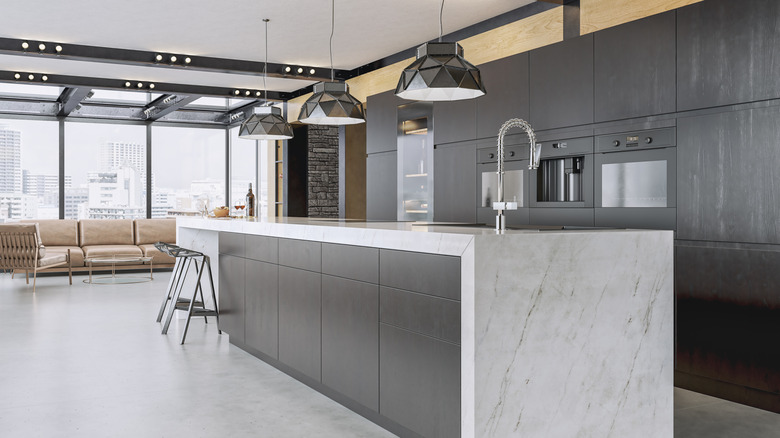
Everybody loves a marble countertop. Ina Garten swears by them, and while experts have recently been warier of marble than of other types of stone for kitchen counters, they are gradually making a comeback. On top of this, real marble countertops are often considered a selling point for homes on the market. They're often beautiful — a visual step above other materials — and totally inimitable (even if faux marble countertops are trying to become a thing).
However, you may run into several unexpected issues with marble countertops. Marble can chip, crack, and stain more easily than many folks realize. It also requires a higher level of care than some other types of stone. While marble can be polished and restored, these methods only work up to a point, according to Mubeen Patel, managing director for Granite House, so you've got to stay on top of it. "Think of marble as a high-maintenance material with a high-reward aesthetic," he says. "If you treat it right, it'll last decades."
Still, marble brings challenges, and you're better off knowing what they are from the outset, especially if you're planning a kitchen renovation. Here are 16 unexpected issues you might face with your marble countertops, and how to work around them.
1. The showroom sample won't necessarily work in your kitchen
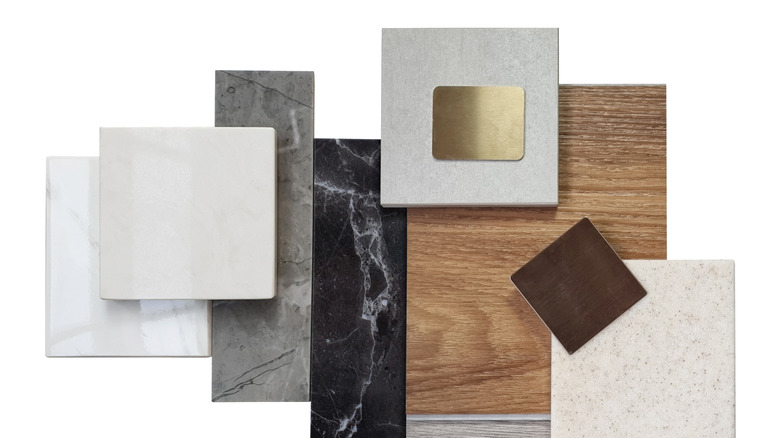
One of the biggest and most unexpected issues marble countertops bring with them is the fact that they can appear to change color, depending on the lighting and colors around them. "Marble looks different in a warehouse than it does under your kitchen lights or next to your paint," says Sergei Danilenkov, contractor and founder of Yorkland Homes. "I suggest you don't trust the showroom sample."
Instead, he says, you should always view the actual slab in person, ideally in daylight, before you buy. Bring home a sample and test it in your own kitchen, both during the day and at night, to make sure you still like the color and effect. This should give you enough of an idea to decide whether you like it or not. Even then, though, don't expect perfection. Danilenkov cautions: "Marble will change — it will wear, it will mark, it will evolve. That's part of the beauty. If you want flawless, buy quartz. If you want soul, go marble, but commit to it like a relationship."
2. Larger marble slabs cost more
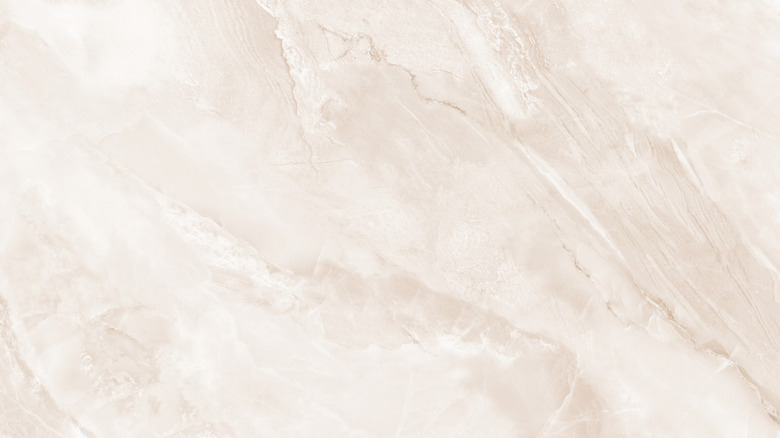
It's tempting to think of marble like tile. More expensive tile, sure, but nevertheless a material that costs a certain amount per square foot. This is not the case, however. Typically, with tile, you're always paying the same amount for a certain material over a certain amount of space. With marble, on the other hand, you will pay more for slabs of greater size, which catches most people off guard when they first begin pricing marble countertops.
There's a reason for this. "Marble slabs require careful quarrying and transport," says Rachel Blindauer, principal designer at Rachel Blindauer. "Larger stones mean heavier logistics and higher waste if imperfections crop up." The costs associated with the trucks required to move the pieces, installation prep, and overseas quarries in the case of specialized marble mean you should plan to spend a pretty penny for larger slabs.
Then there's the fact that it's harder to meet quality and consistency standards with a larger piece of marble. "Larger slabs are harder to source without natural defects, which makes them more expensive from the start," Mubeen Patel says.
3. Installation can be quite costly

Another of the unexpected issues marble countertops almost always pose? Installation costs. "Installation is costly because marble is heavy and delicate, requiring several highly experienced installers to minimize the chances of cracking the slab," says Tammy Cailliau, owner of Tampa Bay Granite.
Another way of thinking about it, Sergei Danilenkov says, is that you're not just paying for the size and perfection of the slab; you're paying for its survival. If the people putting your countertop in don't know what they're doing, they can inadvertently chip, crack, or otherwise taint the slab, and somebody has to eat that cost. In most cases, it's going to be the contractor, so rather than risking that, they're going to hire knowledgeable installation experts who cost more.
If you want high-level skills, such as on-site seam correction or book-matching — where installers flip marble slabs cut from the same block to create a mirror pattern — then you're going to pay more for that too. Same goes if you want the most invisible joints between two pieces. Add in additional requirements, such as reinforcing cabinetry where needed, and you're looking at costs that can mount quickly.
4. Color can vary quite a lot

Marble is mined, which means it is a product of a lot of natural variation. That variation is exactly why we love it so much — the drama and luxury of its patterns bring so much flair to a room. However, it's also one of the reasons that people run into unexpected issues with choosing and maintaining marble countertops.
"Marble is a natural stone, so its color and veining come from mineral content in the earth, which can vary significantly even within the same quarry," Tammy Cailliau explains. "This natural variation means replacement slabs almost never match your original install." When selecting marble for your surfaces, you should expect some variation of hue and pattern. "Marble is basically the Earth's mood ring," Sergei Danilenkov explains. Try to see that as a selling point rather than requiring every slab to look identical, which is a recipe for disappointment.
5. Marble countertops chip somewhat easily

According to Rachel Blindauer, "Marble is relatively soft and susceptible to chipping under sudden impact." Thomas Borcherding, owner and lead designer at Homestar Design Remodel, explains that this is because of how porous marble is: "Greater porosity means less density, making mishaps more likely."
The problem is, many people don't know this and assume marble is like any other natural hard stone that can easily withstand everyday wear and tear. "People treat marble like granite, but it is a totally different animal," Sergei Danilenkov explains. "Marble is softer — think of it like bone compared to enamel. Slide a metal chair across the floor, drop a pan, or have a kid with a toy car, and you've got a ding or a gouge."
There are solutions to this problem, but you should be aware of them ahead of time when making your selection. "For high-traffic areas, I typically specify a rounded bullnose edge, avoiding fragile square edges," Blindauer says.
6. Knives or metal objects can scratch marble

Due to marble's high porosity and low density, scraping, scratching, and gouging are frequent issues with marble countertops. "Due to marble's softness, you can easily scratch your stone by cutting on it," Thomas Borcherding says. "For this reason, the utilization of cutting boards cannot be stressed enough." You should also move more slowly when you're carrying objects, in case you accidentally scrape something along a slab.
Although marble looks like a sturdy surface, never trust it to withstand cooking or baking activities. Don't use ceramic, stone, or metal rolling pins on it. Always use cutting boards rather than using the surface itself as your cutting board. If you don't have any good boards on hand, get an inexpensive set such as Royal Craft Wood Cutting Boards or buy a HOMWE BPA-Free plastic chopping board set. Instruct all members of the household to pull these boards out when they do anything at all on the marble surface. Seriously, don't even look at that countertop without a protective mat between you and your kitchen knife.
7. Marble can crack
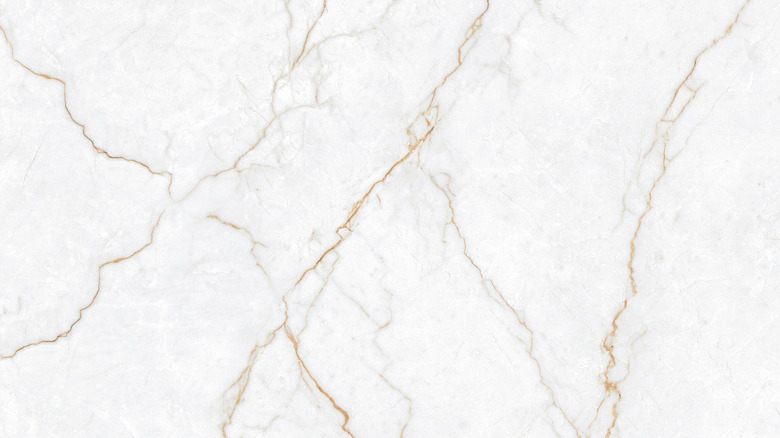
As if chipping and scratching aren't bad enough, marble slabs can straight up crack, and it doesn't take that much impact to make it happen, either. "Veining on marble is gorgeous, but those veins are actually weak points," Thomas Borcherding explains. "Mesh fabric is actually added to the back of these weak points to prevent damage to the marble." Unfortunately, that mesh is not enough to fully protect your surfaces. "To avoid damaging your marble, you must be more careful than you would with other stones," Borcherding says.
To put it more bluntly, you're gonna need to baby it. Sergei Danilenkov suggests felt pads on furniture, cutting boards on counters, and coasters on everything. "It's not fragile, but it demands respect," he says. If you can't guarantee that kind of treatment, you have two choices: opt for another material or cultivate acceptance. "You don't install marble in a rush household unless you are prepared to see it age," he concludes.
8. It's not heat-resistant
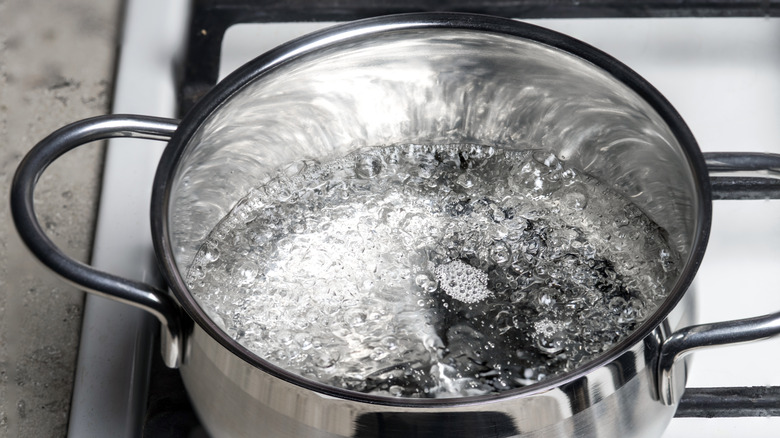
Next up on our list of unexpected issues marble countertops pose is the potential for heat damage. People tend to think, "Stone? No heat too high." False. "Despite its stone nature, marble is vulnerable to thermal shock," Rachel Blindauer says. This is a product of its calcium composition. "Setting hot pans directly on it can cause cracks or dulling. I always tell clients: Use trivets or hot pads, especially around cooktops and oven-adjacent prep zones."
Hot pans can also cause discoloration, Mubeen Patel says, especially when you're dealing with sealed stone. Ring marks from a hot pan are no one's idea of a good time, especially after you spent all that money on the material and installation. If you're an avid cook and don't have the patience to be gentle with your kitchen surfaces, there are rocks for that. "The best material for heat resistance is quartz," Tammy Cailliau says.
9. Etching from acids or cleaners

Etching might sound like scratching, and it can have the same disappointing dulling effects, but it's a subtly different problem that occurs due to chemical reaction rather than physical force. "Etching occurs when acidic ingredients — lemon juice, vinegar — melt the surface, creating dull spots," Rachel Blindauer says. The acids literally eat away at the calcium carbonate that makes up marble, a chemical effect that causes uneven patches and wears away the natural shine of polished stone.
Wine and tomato juice are also causes for concern, as are other types of citrus, brines, dressings, and marinades. The safest approach is never to assume that any ingredient is acid-free, and to prevent contact between liquids and the surface of the stone. Even more worryingly, there's no foolproof way to protect your marble from these effects. According to Thomas Borcherding, "Etching can occur even through a sealer."
10. The porousness of marble leads to stains
There's a reason experts often advise against choosing white marble countertops. Is it gorgeous? Yes. Is it hard to keep clean, à la all white things? Also yes. Light marble also may not be among the best countertops for resale. This issue is often unexpected because most people assume shiny, polished stone adds value and is impervious to spills ... but it isn't. Marble might look like the surface of a bathtub or sink, but its physical composition is different.
"Staining occurs due to marble's porosity and propensity to absorb liquids in its pores," Thomas Borcherding says. Substances such as red wine, coffee, sauces, or beet juice (basically anything with pigments) can soak in and change the color of the marble. The good news is that stone sealers do help to prevent staining, even if they don't do enough to stop etching. Make sure you wipe spills up right away to limit absorption.
11. Oxidation causes aging

Would it surprise you to learn that marble can actually rust? Well, get ready to be surprised. "Oxidation is when the iron content in marble reacts to moisture or air over time — it's nature rusting itself," Sergei Danilenkov says. "This shows up as yellowing, especially in white marble. People think their marble is "dirty," when in fact it is undergoing a chemical change." Bummer. Double bummer, since dealing with it is tough. "Deep poultices or even professional refinishing might be needed," Danilenkov says.
One of the best ways to avoid oxidation is to wipe up liquids quickly and to use breathable sealers. You should also seal counters regularly — "A good rule of thumb is to seal your marble every 6-12 months," Thomas Borcherding says. You can also try to keep the humidity levels stable in your kitchen or bathroom by using fans when cooking or showering.
12. Improper DIY maintenance shortens marble's lifespan
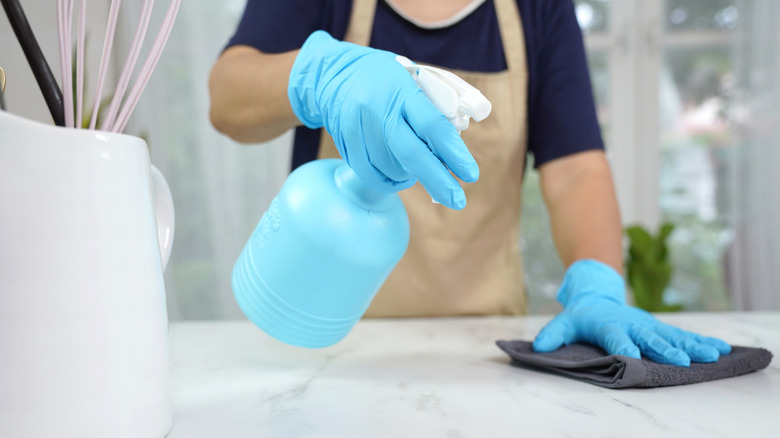
If you don't know how to properly care for marble, this can increase the chances that you'll run into issues with your countertops. Improper DIY maintenance, though, is sadly all too common. "Many people think they can treat marble like any other worktop, but it's much more sensitive to everyday wear," Mubeen Patel says. "DIY maintenance can work if you stick to gentle, non-acidic products and are consistent with sealing."
The risk, he continues, is that homeowners may think they're maintaining marble correctly when they're actually causing extra wear and tear using the wrong cleaners or fillers. If you aren't sure about the approach, it's good to have an expert show you what to do the first time around when you've recently had your marble surface installed. "Don't reach for a random cleaner or sandpaper," Sergei Danilenkov advises. "That's how I end up getting calls to fix $10,000 mistakes. Know your limits."
13. Professional help is expensive
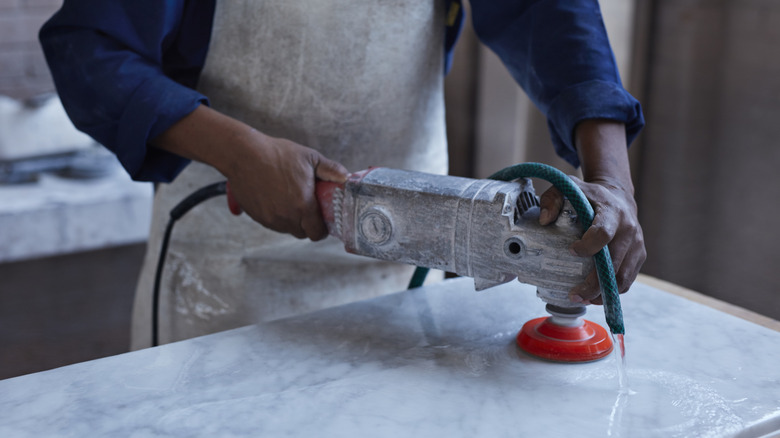
If you do end up needing professional help, you should definitely get it. Still, that doesn't stop this from being one of the most common additional expenses that marble countertops can bring. If you have serious issues, such as etching, oxidation, or structural cracks, it's important to call in the experts rather than bull ahead with a DIY solution.
The chance of something going wrong is especially high with white or light marble, Rachel Blindauer says. If that's what you've got, you should technically get a professional stone technician for your annual seal-and-polish, too. "[These experts] ensure protection and shine without over-grinding the surface," Blindauer explains. While this might pose a higher upfront cost, Mubeen Patel says, "Pros bring the right tools and knowledge — [after all], it's still cheaper than replacing the slab."
14. Marble has steep replacement costs

Let's face it: Life gets lifey. Sometimes, despite your best efforts, you're going to have to replace a marble slab. Maybe your kiddo dropped a pan, or an overexuberant houseguest put a coffee pot down too hard. Perhaps teenage cooking experiments left tomato sauce on the counter, and now there's nothing you can do about that vaguely brown-orange stain right in the middle of the island. When that happens, you'll have to eat the price — and it's unlikely to be insignificant.
"The cost isn't just the stone itself but includes demo, careful removal, leveling, and rebonding," Rachel Blindauer says. Even if you can find matching stone, you'll still have to get it fabricated and fitted. "You're essentially repeating the original install process: templating, cutting, polishing, transport, and labor," Mubeen Patel says. "It's also disruptive to existing cabinetry and plumbing." You may have to redo backsplashes, nearby walls, grout or other seams, and more. That often means pulling in various types of professionals, with all the labor costs they bring with them. "That's why we encourage preventative care and routine maintenance instead," Patel says.
15. You can't always get matching stone
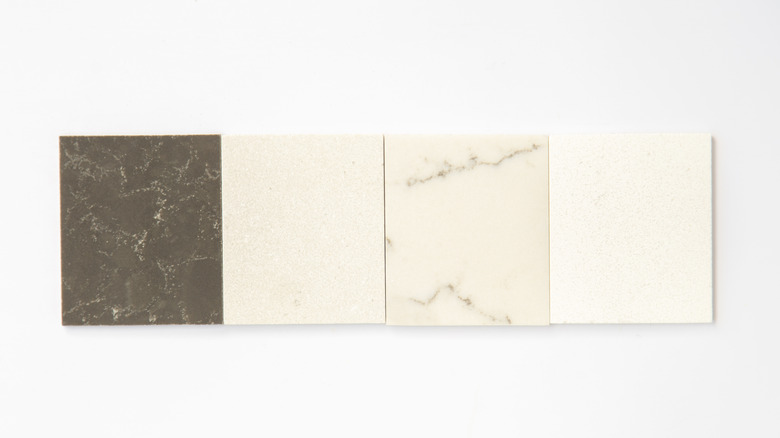
Remember when we were talking about how each piece of marble is unique? That is one of the aspects that makes it so lovable, but it also throws up some of the more complicated problems marble countertops can pose. "Marble is a geological fingerprint; no two slabs are identical," Rachel Blindauer says. "Even within the same quarry, veining, depth of tone, and pattern density can shift."
"It's a nightmare to match later," Mubeen Patel says. "If you try to get a section replaced months or years later, the chances of a perfect match are almost zero." Even if you do find marble of the same hue, it's unlikely to have the same type and color of veining. "We always advise our clients to purchase enough slab upfront to cover any possibilities," Patel says. That way, you can avoid a full replacement or visible patch job.
16. You need the right cleaning agents
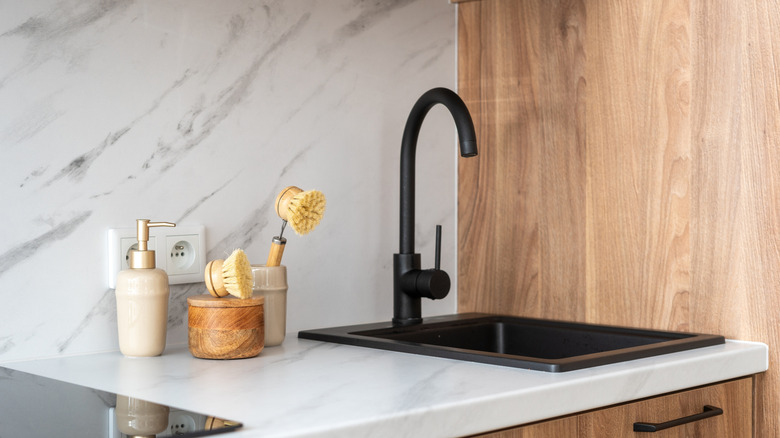
Last among the issues marble countertops can encounter is the need for a specialized approach to cleaning agents. "Due to marble's inclination to etching and staining, you'll want to use cleaning agents that are specifically formulated for marble," Thomas Borcherding says. Check the bottle and ensure that it says it's safe for marble, because regular cleaning agents may be too abrasive or have the wrong pH (it should be neutral). Note that the cleanser won't always have "marble" in the name. Products such as Weiman Disinfectant Granite Daily Clean & Shine can work on sealed marble. If you're worried about mucking it up, stick with a simple solution of dish soap and water.
And, if that sounds like too much work, then you might want to choose a lower-maintenance option for your countertops, such as granite or quartz. Or, you could get really trendy, make like Martha Stewart, and put in zinc countertops. If you're feeling brave, though, go ahead and get that marble. Why not live a little?