

The 8 Most Toxic Foods That Are Probably In Your Household Now
As a keen home cook, you would definitely know if something dangerous was lurking in your cupboards, right? Well, maybe not, as it is possible that some of the most innocent-looking items in your fridge and pantry could be harboring a dangerous secret.
We're not talking about foods that have gone off and starting to produce dangerous bacteria, but rather fresh produce that contain toxins naturally. From apples and cherries to nutmeg and almonds, there may be more toxic compounds lurking in your kitchen cupboards than you thought. However, before you rush to the kitchen to have a major clearout, in the majority of cases, these foods are only dangerous if they are eaten in enormous amounts, or in a way that would not be considered reasonable.
If you regularly make a smoothie consisting of apple seeds, cherry pits, and bitter almonds, you might be in trouble, but your taste buds wouldn't exactly thank you for it anyway. For everyone else, most of these naturally occurring toxins can be prevented from doing harm with a bit of common sense, and in some cases, a few minutes on the stove. Whether you are worried about eating too many rhubarb leaves, or just interested in the science, join us as we explore eight of the most toxic foods that could be in your household now.
1. Apple seeds
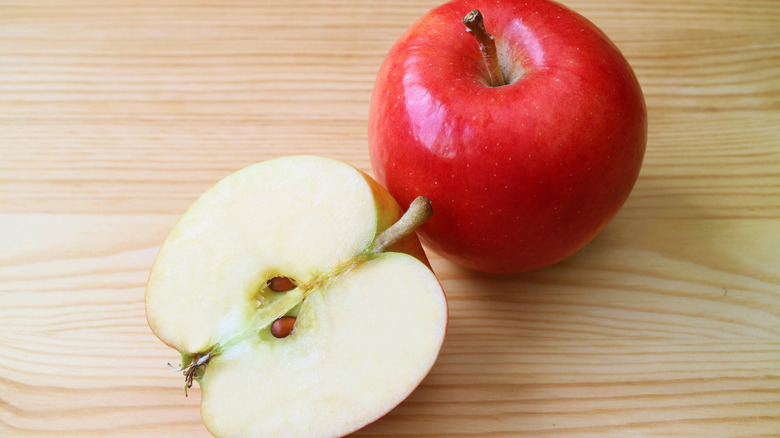
Remember when in your younger years someone told you that eating an apple seed would cause a tree to grow in your stomach, and you swore off them for life? Well, thankfully, that is not the case, but there is another reason to try to avoid chomping on the seeds — they contain a substance that can create the deadly poison cyanide.
It may seem crazy, but this incredibly nutritious fruit can react in your stomach to make a substance that you have likely read about in spy thrillers. However, there is no need to worry, assuming you eat your apples in a regular manner. The compound in question is amygdalin, which is known as a cyanogenic glycoside, and it reacts with enzymes in the body to create cyanide itself. The key is that the amygdalin is tucked away inside the hard coating of the seed, and it can only be released if that is broken. If you are chewing your apple seeds — first of all, why?! — then you will be releasing it into the body, and therefore creating cyanide as a result.
Doing this on occasion will not cause an issue, but the biggest risk could come if you are creating smoothies regularly using whole apples. Since the high speed blades could easily crush up the seeds, a smoothie made with whole apples will cause some cyanide to be created when it is consumed, but still nowhere near the lethal dose. More than 150 seeds would be needed to create a toxic dose of cyanide, so unless you have a serious apple addiction, you will be fine even if you do eat the occasional seed.
2. Raw kidney beans
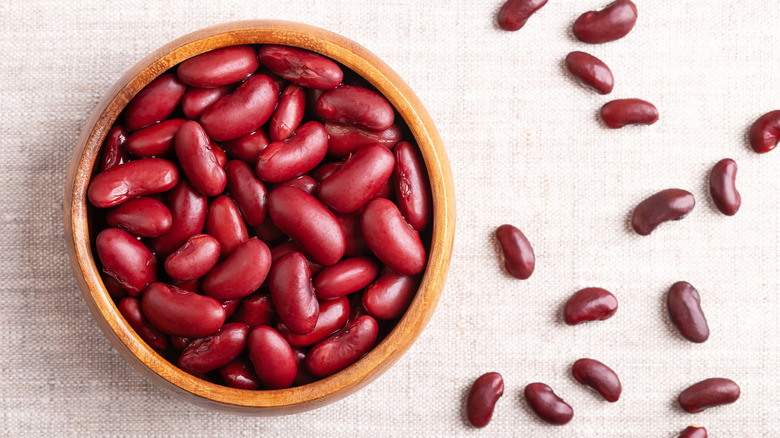
Kidney beans are a brilliant source of plant-based protein that are filled with fiber and vitamins and minerals, such as vitamin K and potassium. They are an excellent addition to your diet — as long as you cook them thoroughly first.
Raw kidney beans contain a compound called phytohaemagglutinin which is a lectin. Though present in all raw beans, it is particularly high in kidney beans, and can cause serious digestive issues if consumed. The number of raw kidney beans that can cause toxicity is thought to be as few as four or five beans, so if you were thinking of sampling a few before cooking — don't!
The good news is that you can still prepare your own red kidney beans from home by carrying out a few simple, but crucial steps. Soaking the beans for 12 hours, before then cooking in boiling water is all that is needed to destroy the compound and prevent any issues. Don't be tempted to cook your kidney beans in the slow cooker, as the temperatures reached may not be high enough to remove the inflammatory compound. Canned beans pose no phytohaemagglutinin risk, since they are already prepared and cooked before being canned, so you can opt for the canned version instead if you are worried about preparing them incorrectly.
3. Elderberries

Sipping on a fancy elderberry cordial, you may be wondering if elderberries are a fruit you should be adding to your daily berry routine, alongside blueberries and blackberries. While elderberry has been used for years as a natural cold and flu remedy in lozenges and cough syrups, eating them raw can be dangerous, and is definitely not recommended.
Raw elderberries contain compounds that can create cyanide, similar to those in apple seeds and bitter almonds. The leaves and stem of the elderberry plant have even higher amounts, with the roots containing the highest concentration. Ingesting any part of the plant raw can cause severe digestive discomfort, with reports that people have been hospitalized in the past after drinking a juice prepared with raw leaves.
The good news is that the risk disappears by cooking the elderberries, so you can continue to eat elderberry jam and take the syrup if you are feeling under the weather, without worrying that it will cause nausea. It is worth noting that elderberries are not recommended during pregnancy, so you may want to find an alternative option or speak to your healthcare provider.
4. Rhubarb leaves
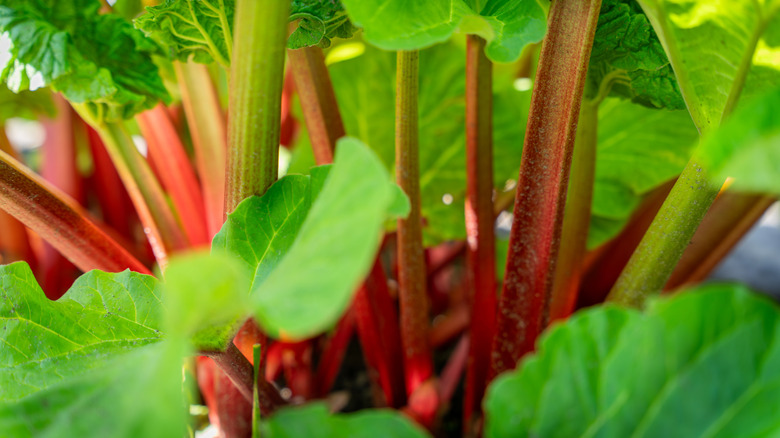
A bit like tomatoes and avocados, rhubarb is a sneaky plant that is pretending to be something it isn't. Widely accepted as a fruit, botanically speaking it is actually a vegetable, since we eat the stem of the plant, rather than the ovary. This shocking information, however, is not going to stop us adding it to our crumbles and pies.
Rhubarb has plenty of health benefits, including being high in antioxidants, and helping to lower cholesterol levels, but caution must be taken when you are preparing it. Rhubarb contains oxalic acid, which can cause kidney stones when eaten in large amounts, and while there is some in the stalk, the leaves contain much higher concentrations.
As a rule, you would need to eat more than 5 pounds of rhubarb leaves to suffer serious consequences, so the chances of this is rare. However, mild symptoms of overconsumption of oxalic acids can still be uncomfortable, including vomiting and diarrhea. So, be sure to remove the leaves entirely before you begin to reduce it down into the delicious puree that will be the base of your dessert. They would only add a bitter taste anyway, so keep the green part well away from your finished dish.
5. Cherry pits
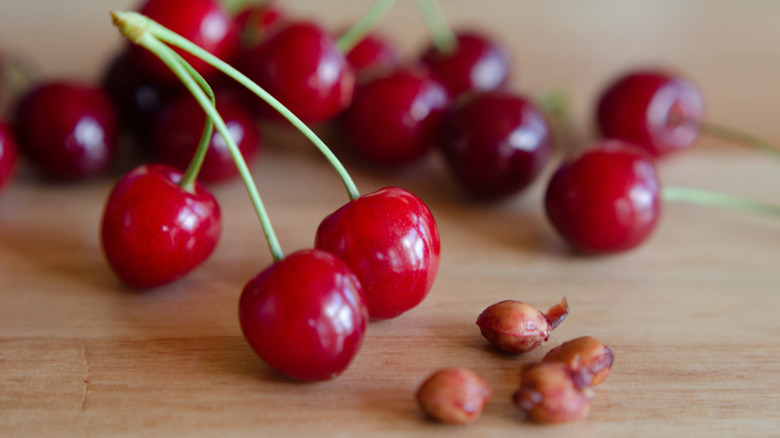
Cherries are a delight to eat, especially when in season. Sweet, slightly tart, and with a perfectly firm flesh, the only inconvenience is those pesky pits that have to be dealt with before every bite. What you may not know, is that the stones are actually toxic, and should never be eaten.
Like many other stone fruits, the pits inside cherries contain amygdalin, the precursor to cyanide when ingested. If you think you may have swallowed a small cherry pit by accident, don't panic. As with apple seeds, you would need to eat a huge amount to go over the toxic threshold, and they would need to be chewed or ground down first to release the amygdalin.
The only realistic way that you could be in danger from cherry pits is if you were adding them to smoothies whole, without removing the stones. However, your blender likely wouldn't be very happy about that, and the bitter flavor wouldn't do much for the drink either. As long as you don't chew on cherry pits or try making a novel new juice from them, you are unlikely to suffer any ill effects.
6. Nutmeg
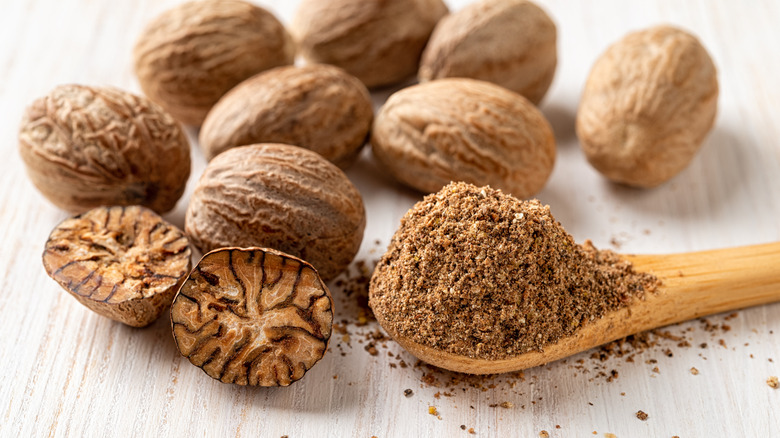
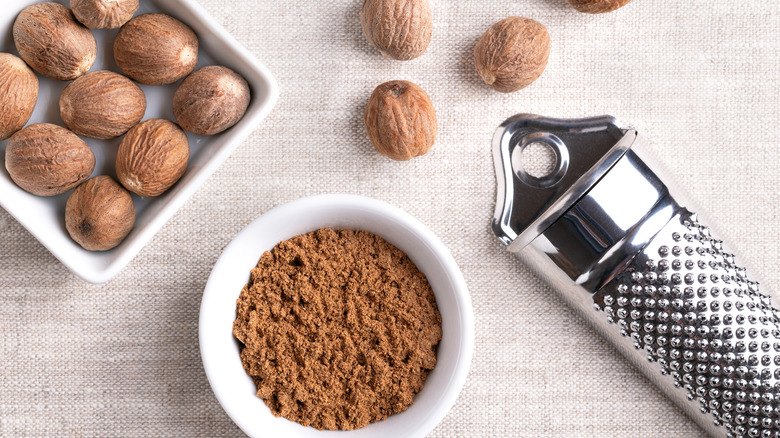
Nutmeg is a fabulous warming spice that is heavily associated with fall, making its way onto pumpkin lattes and mulled cider, though it also works brilliantly in savory dishes such as lasagne. It may shock you to learn that while we use it in tiny amounts in the kitchen, nutmeg contains a compound that is extremely dangerous when consumed in even moderate amounts.
The chemical in question is called myristicin, and has been shown to create hallucinogenic effects, in addition to dizziness, nausea, and heart palpitations. While for most of the toxic substances on this list, you would need to consume an unreasonable amount of the substance to suffer ill effect, with nutmeg, just a couple of teaspoons have been reported to have caused toxicity.
Before you head to your pantry and throw out this delicious spice, let's put it in context. Two teaspoons is still an awful lot of nutmeg to eat in one sitting, more than any recipe would ever call for. In general, you will be using a pinch of nutmeg for each dish, and the reported instances of nutmeg poisoning are rare. As long as you are not chewing on whole nutmeg seeds as a snack, you can happily dust it on top of your desserts and enjoy its sweet, warming flavor.
7. Raw oysters

Raw oysters are one of life's ultimate luxuries — salty, slippery, and oh so tasty. But if you are going to eat raw animal products, you need to accept that it comes with a risk, and in this case it is a bacterium called Vibrio.
Oysters are filter feeders, meaning they filter the water they live in, and absorb lots of nasties (for us) in the process. If they absorb the Vibrio bacteria and you then eat them raw, there is a chance of becoming sick. Unlike the plant toxins in our list, which are unlikely to cause many issues when consumed sensibly, 80,000 people get sick in this way from raw oysters each year, with the illness being fatal for 100 of them (according to the CDC).
The only way to completely ensure that you don't sick when eating oysters is to cook them thoroughly, but if you are determined to enjoy the experience of eating them raw, it is worth keeping in mind that the instances of vibriosis are significantly increased in the warmer months, as the bacteria will thrive more when the water is hotter. So, limiting your raw oyster consumption to the months of October to April could reduce your chances of illness, though it is still possible. Keep an eye out for symptoms such as vomiting and diarrhea, and contact a medical professional if you think you may have contracted the disease.
8. Bitter almonds
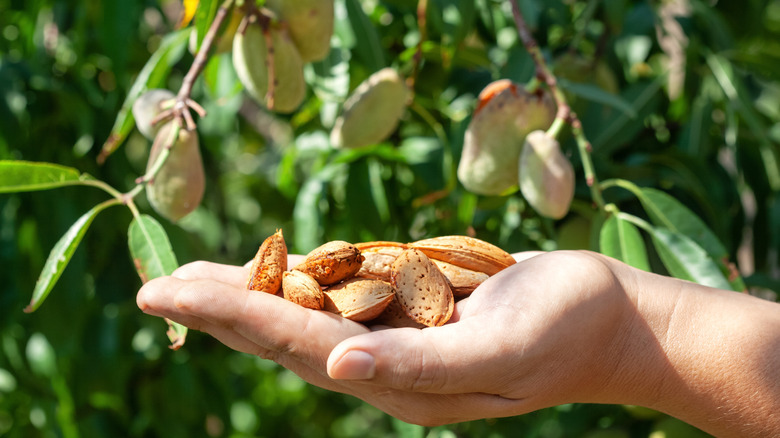
If you like to graze on a pack of almonds as a healthy snack filled with heart-healthy fats, there is no reason to stop. "Regular almonds," known as sweet almonds, don't contain significant amounts of toxins, but bitter almonds are a different story. In fact, bitter almonds are the regular version, and the kind we all enjoy eating are the result of a natural mutation that happened a few millennia ago and reduced the amygdalin in the nut.
Amygdalin is the cyanogenic glycoside that gives the almonds their bitter flavor, and also what would make you sick if you tried to eat them. The cyanide they create after consumption can create symptoms such as nausea, fever, and extreme thirst and can even be lethal if enough is ingested, or in this case, created. Less than 10 bitter almonds would be enough to make you very ill, so it is just as well that they are generally not sold for consumption. As long as you stick to store bought versions of bitter almond oil and flavoring, you shouldn't be in any danger of amygdalin poisoning.