

12 Absolute Best House Plants To Brighten Up Your Kitchen
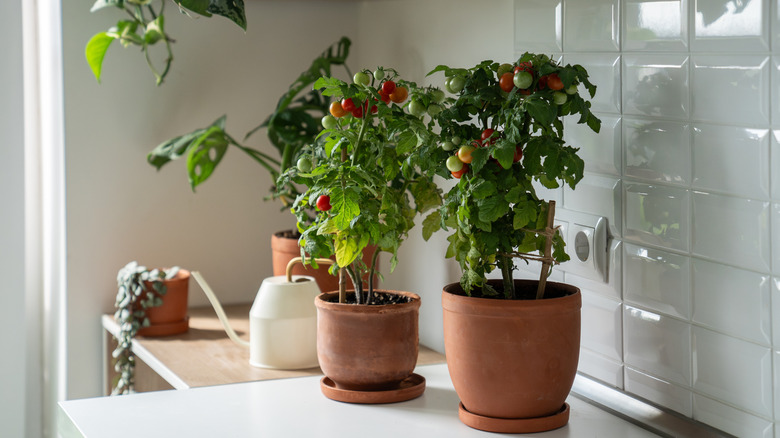
A well-designed kitchen has to be practical and efficient. However, that doesn't mean you can't decorate it, and your choice of decorations can help make the kitchen look more inviting and "finished." Adding a house plant or two (or more, we won't judge) is an easy way to give your kitchen that coordinated atmosphere. Those plants may also do a lot more than just look good; for example, they may help reduce stress levels and improve your mental state. Some plants are straight-up practical for the kitchen, such as those you'd keep in a windowsill herb garden. If you're worried about never being able to take trips because you'll need to care for the plants, there are ways to set up extended watering to help the plants thrive when you're gone.
Decorating the kitchen with house plants is something you need to approach carefully, especially if you have smaller inhabitants in your house that like to chew things. Many house plants are toxic to cats and dogs, for example, and you'll need to avoid these plants. Don't think placing the plants on a high shelf will be enough to keep them out of reach. Always verify toxic status before bringing a plant into your home. If you have small children who are in the "everything goes in the mouth" stage, then you'll need to be cautious, too. That said, these 12 house plants are excellent for brightening up your kitchen.
1. Culinary herbs
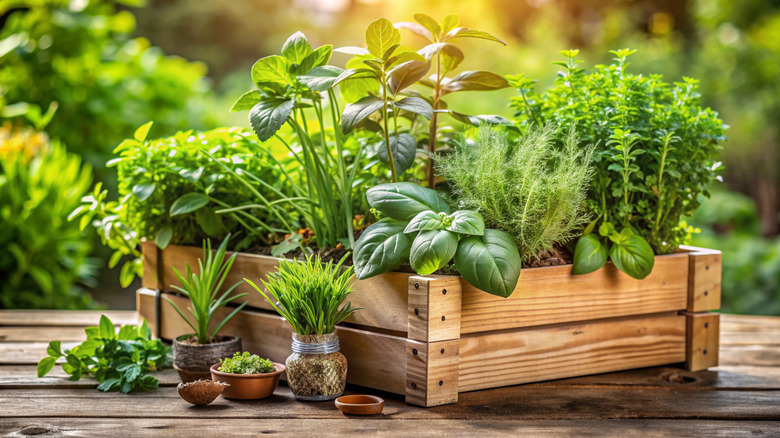
Keeping a collection of culinary herbs in small planters is both easy and cost-efficient; instead of buying a bunch of basil and letting half of it go unused, grow a basil plant and clip off leaves as needed. Most culinary herbs are incredibly easy to grow. You can even regrow green onions that you bought from the supermarket. However, grow what you or other household members use. If you've never had a particular herb before, stick with buying it from the store until you determine whether it's something you'll use frequently. Indoor herb plants can produce a good number of leaves each week, and you don't want to waste them.
Herbs do like full sun, and they tend to fare very well outside. However, they're good indoors in the kitchen, too, if you have a sunny window or an indoor growing kit with lights. Keep each type of herb in its own container so you can give each proper care. Mint is a very fast grower and considered invasive in much of the U.S., so don't plant it in the same pot with other herbs because they'll become overwhelmed. Pay close attention to the growing requirements; for example, mint needs to be watered a lot and must have well-draining soil, while dill wants cooler temperatures, and thyme needs regular trimming. Don't let basil (or other herbs, for that matter) flower or they will stop producing; if you forget, just pinch off the flower stems.
2. Aloe vera
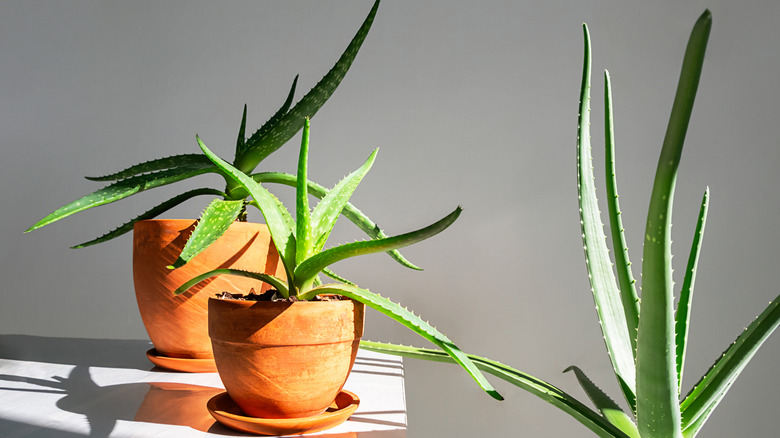
The rosette of tall, spiky, thick leaves that form aloe vera is not only pretty, but beneficial — those leaves hold a remedy for small burn injuries you might get while cooking. Each of the leaves contains a gel that can soothe minor burns quickly. All you have to do is cut off an outer leaf from near the base of the plant, slice off the spines on the leaf, cut it open to expose the gelatinous interior, scrape out some of the gel, and gently apply it to the burn. Larger leaves hold more gel than smaller leaves that grow toward the interior.
Aloe vera needs indirect light, but more importantly, you need to be very careful about watering this plant. It does not like a lot of water at all, and if you give it too much, root rot can easily set in (despite the plant's reputation as hard to damage). Place it on an open shelf with lots of space for good air flow. It can outgrow its pot, so repot it occasionally. You may see little shoots near the base, and you can use these as cuttings for new plants. Aloe vera is toxic to pets.
3. Golden pothos
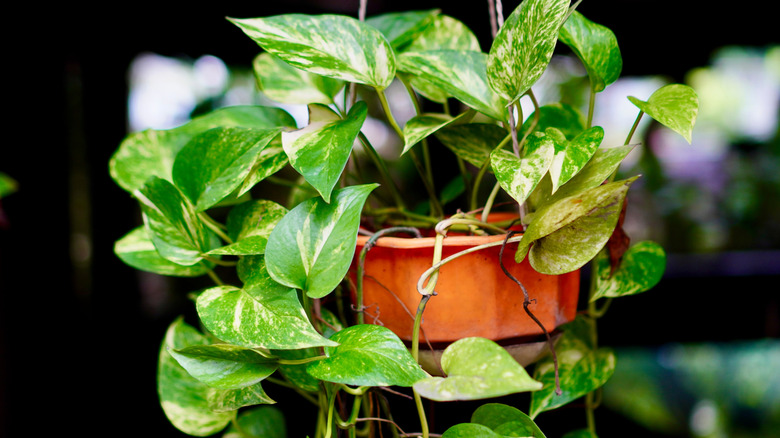
Sometimes, you need a plant that can fill a large space on top of a cabinet, and golden pothos is exactly what you want. This is a vine plant that doesn't get too big, but it grows outward to form a larger mass. It's easy to keep this plant trimmed so that it remains vertically compact in its pot, but the vines will spread all over the place. You can trim it at any time, but be sure to cut vines just above a node — the spot where a new stem and leaf are branching out. New growth will spring from that node. Pothos needs indirect light, but it will actually grow toward light sources. That means you need to rotate it, especially if it's in a darker section of the kitchen. If the only place you can put it doesn't get much light at all, you'll want to set it in a bright (but again, with indirect light) spot regularly so that the leaves don't fade.
Keep checking the soil and give the plant water when the soil is dry. Root rot is a problem with pothos, and the potting mix you use needs to be well-draining. Plan to repot the pothos every year. You can use that time to divide the roots to get more pothos plants. Unfortunately, pothos is toxic to pets and humans, and it can irritate skin. You may want to wear gloves when trimming or repotting the plant.
4. Spider plants
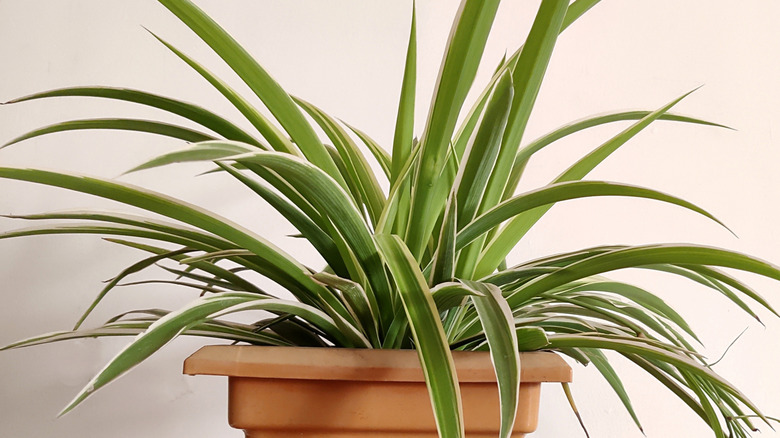
Finally, some good news for your pets: spider plants aren't toxic to dogs or cats. However, the plant is a mild hallucinogen to cats. You should reconsider having this plant in your home if you have feline friends because they will be attracted to the plant, they will eat part of it, their stomachs may not always agree with that decision, and your flooring could pay the price.
That being said, spider plants are very easy to grow, assuming no cats are around to chew on them. They actually like being a bit root-bound, meaning tight planting conditions in a pot are OK. However, they grow so quickly that you're going to have to repot them regularly. The leaves droop down, making this a good plant for either a hanging planter or a tabletop. Most light conditions are fine except for direct sun, so if you have a spot that tends to remain shady, this could be a good plant for that location.
Spider plants have small, white flowers that turn into plantlets. If you've ever seen a spider plant with what looked like small, clumpy mini plants at the end of thin stems, you've seen plantlets. You can propagate these in soil by placing the still-attached plantlet into the soil and letting it form roots. Then, you can cut the plantlet away from the stem from the parent plant. If you propagate the plantlet in water, cut the stem first.
5. Purple shamrock
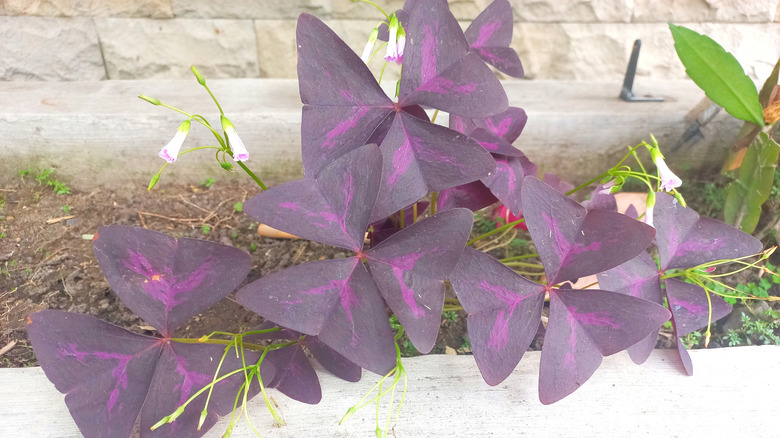
Purple shamrocks (or false shamrocks) are often found in outdoor garden beds. However, they can grow in pots indoors. You may see care instructions on tags when you buy the plants that say to provide indirect light, but if you're growing these indoors, a few hours of sunlight (partial sun) can be beneficial. You'd need to monitor your plant to see which conditions it prefers. Whichever light conditions it likes, rotate the planter regularly.
One of the nice things about purple shamrocks is that their leaves can close or open depending on the amount of light they get (this would be a fun project if you're learning how to use the timelapse feature on a camera). These plants are also rather hard to damage as long as you give them basic care. Note that the plant's water needs change throughout the year; during spring when the plant is growing, water when the soil feels dry. When the plant becomes dormant in summer (you'll see the foliage fade, and the plant will appear to stop growing), you'll need to restrict watering to every couple of weeks. Purple shamrock is toxic to humans (you can have them in your house; just don't let anyone chew on them) and animals.
6. Terrarium plants
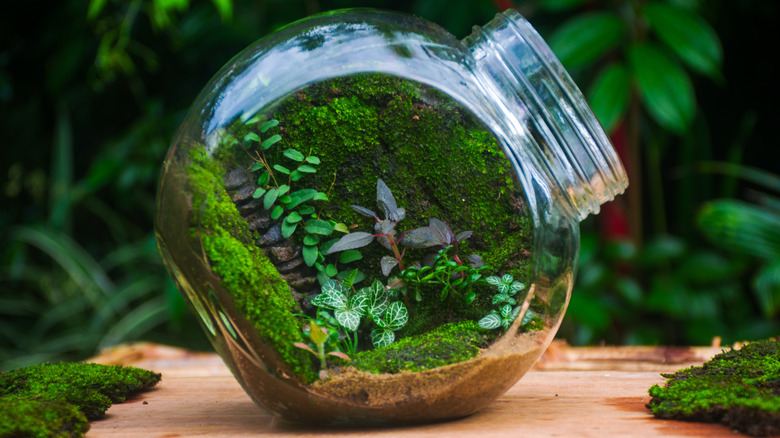
Obviously, a terrarium isn't a plant, but it's a type of planting container that's very popular in kitchens, especially those that don't have a lot of space. Terrariums may be open or closed, but they're always in clear glass or plastic containers. Closed terrariums produce humidity that condenses to form a self-sustaining water source, but that also means that mold can be an issue. Open terrariums don't have that problem, but they do need you to add water.
The planting mix used in terrariums is often a mix of peat moss, perlite, vermiculite, or some other well-draining mix. You can buy commercial blends rather than trying to whip up a mixture yourself. Note that all the plants that go into the terrarium — even open ones — have to have the same growing requirements. The planting environment is too small to allow for differences in light, water, and soil type. Air plants like Tillandsia are very good choices for terrariums, too. If you want the ability to place the terrarium wherever you want, use plants that need only low light.
7. ZZ plant
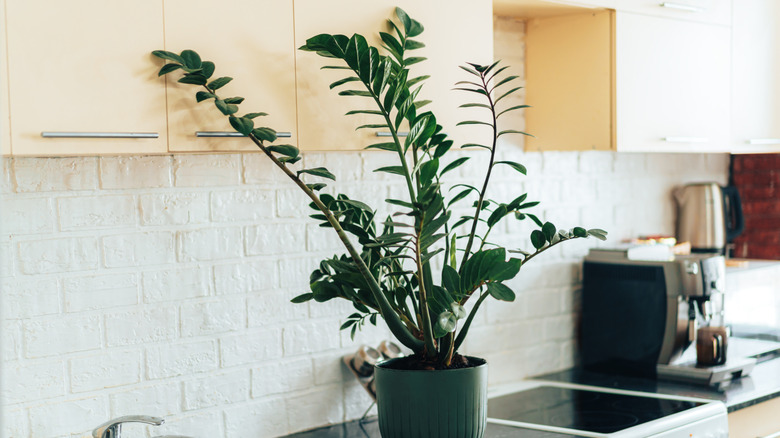
The ZZ plant is also known as the Zanzibar Gem plant. It is probably the best plant you could have in your kitchen if you were a beginner at caring for house plants; the one issue is that it's toxic to pets and humans. The plant doesn't need a lot of light, nor does it need a lot of watering and fussing. It has a reputation of being something you can just stare at and occasionally water with no harm done.
Of course, the ZZ plant does need some care. It's good to rotate it so that all the leaves get an even amount of light, wherever you put the plant. Do water it when the soil has become completely dry, but don't water it much. The joke is actually that you're supposed to water it every couple of months, although that's an exaggeration — just make sure the soil drains well and that you're not drowning the plant. Protect it from cold temperatures, as it's a tropical plant. It's also one of those plants that shows dust easily, so give the leaves a swipe with a cloth every few days.
8. Jade plant
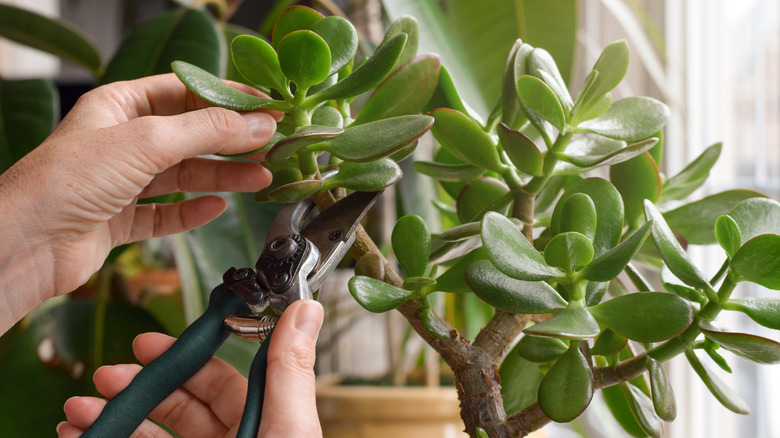
Jade plants have gorgeous, thick, oblong leaves that grow out of thick stems. These succulents can grow very well outdoors and can become rather big, but you can also grow them in a container indoors. The plants need full but not direct sun indoors, so sit that container by a sunny window that provides indirect light. Make sure the soil is well-draining, and repot the jade plant if you see roots peeking out of the top or bottom of the container. Be aware that jade plants are top-heavy, so the container you use has to be sturdy and not easy to tip over.
This is another plant with varying water needs. In warmer weather, water frequently; don't let the soil dry out completely, but don't overwater the plant. In cooler seasons, you may need to water only once a month or so. Jade plants are toxic to cats and dogs. If you notice older leaves starting to droop, try to rotate the container to ensure all of the plant gets some sun.
9. African violet
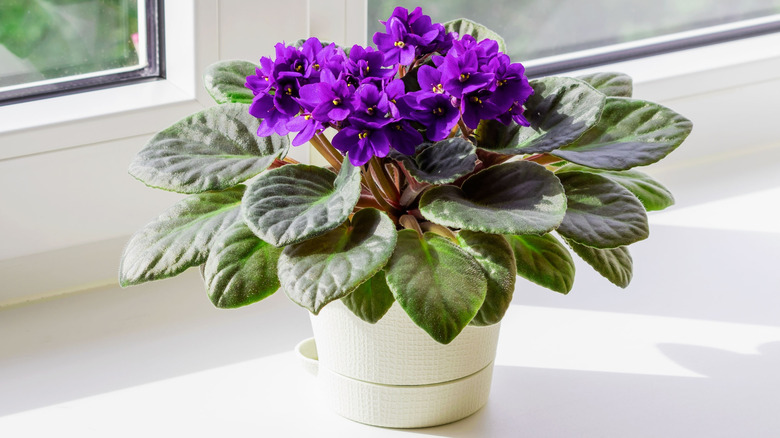
African violets are some of the prettiest flowers you'll see on a compact container plant, and they can brighten up your kitchen quickly. In fact, these flowers just don't do that well outdoors; they like the indoors, where they're sheltered from wild weather. They don't even like that much sun; indirect but bright light is best. As with other plants, rotate the container to give all sides of the plant sunlight. A nice, wide bowl can serve as a planter for these bunches of wide green leaves and clusters of purple flowers.
The plant's leaves tend to stay in a rather dense formation, making it tricky to water the plant. Keep water off the leaves, for the most part; use the bottom-watering technique to water the plant at the base in the soil. This involves letting the container sit in another container filled with water; the soil absorbs the water over the next hour or so. And make sure the water is room temperature as the plant's roots are sensitive. If the leaves do get wet, dry them off. Wipe them down occasionally to keep them clean. You will need to repot the violets occasionally. By the way, African violets are not toxic to cats or dogs.
10. Prayer plant
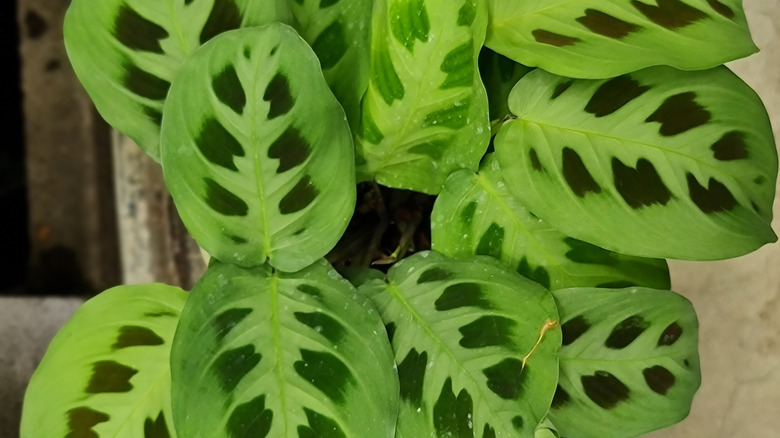
The prayer plant has masses of large, variegated leaves that drift upward at night. Don't give this plant direct light, but do give it a humid microclimate by setting the pot on a tray filled with pebbles and water. The pot sits on the pebbles, keeping the bottom of the pot out of the water, but the water provides humidity as it evaporates. The soil needs to stay moist, however, root rot can be a problem. Double-check the specific species you get, but in general, Calathea Insignis and Maranta Leuconeura are non-toxic to dogs and cats.
Prayer plants aren't the simplest plants to grow for beginners, but they aren't difficult once you know the requirements. Keep an eye on the leaves as they'll show signs of not liking their environment, such as scorching if the plant gets too much direct sunlight. The plant benefits from fertilizing with a balanced fertilizer in summer, but don't use fertilizer in winter.
11. Cast iron plant
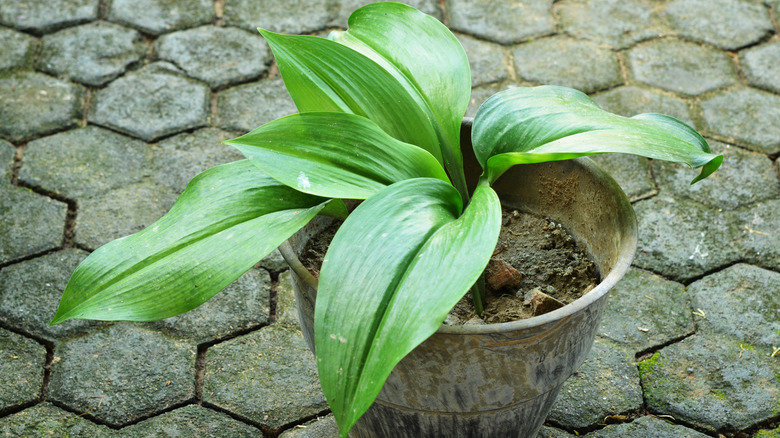
The correctly named cast iron plant is one of those good beginner plants that can handle just about anything you throw at it, as if it were made from cast iron. It can deal with dry conditions, wet conditions, bright conditions, dim conditions, and so on. The few things that can harm the plant are direct sunlight and extremely dry or soggy soil. This is a good container plant for dining room corners or other spots where a relatively large, upright plant can go.
Cast iron plants are non-toxic to cats and dogs, and some anecdotal reports online note that cats seem to like playing with it. The plants can recover from a lot of problems with proper care, so if you find you've overwatered or scorched the plant, just let it dry out — and then move it away from the spot that was getting too much light. Note that some varieties have solid-color leaves while others have speckled leaves, but no plant you buy should have yellowing or brown leaves.
12. Lucky bamboo
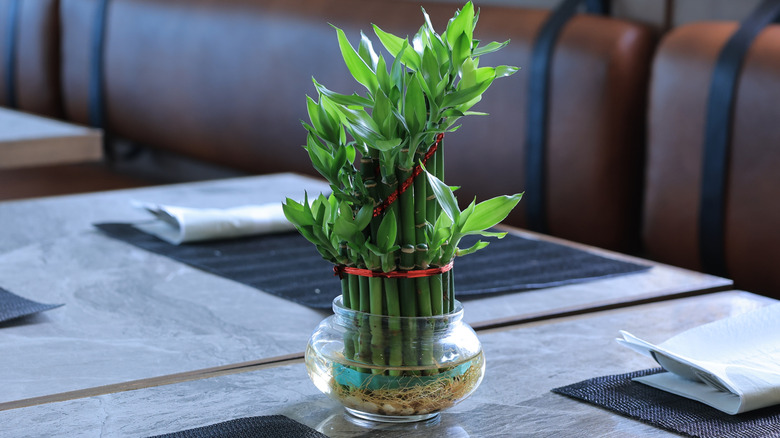
Lucky bamboo is not true bamboo — true bamboo would quickly take over a corner of your kitchen. However, lucky bamboo isn't safe for pets, unlike true bamboo. Assuming pets aren't a worry, though, lucky bamboo is a great plant for your kitchen.
Some lucky bamboo plants come planted in soil, but a typical plant sits in a non-draining planter with the stems held upright by small pebbles in water. There's no soil to change, so it's not as messy to care for. It also doesn't really need much special care. Keep it out of direct sunlight because that can burn its leaves. Give it bright but indirect light, make sure the vase has water (use bottled/filtered/distilled, rather than tap) about once a week, and trim off brown leaves as needed. Watch for pests; insecticidal soap is usually the remedy, although you need to toss plants that have been thoroughly taken over. When you buy one, look for ones with pebbles that leave a lot of space for water around the stalks, rather than tiny pebbles packed around them like packed gravel.
The number of stalks in a lucky bamboo arrangement has meaning in feng shui, or Chinese geomancy. For example, five stalks can represent balance and peace, while nine stalks represents great luck. Placement is important, too, and putting lucky bamboo in your kitchen is supposed to enhance health and well-being.