

13 Kitchen Backsplashes You Should Think Twice Before Installing
When it comes to designing the perfect kitchen, most people focus their attention on the big ticket items. This makes sense, of course, as your appliances are arguably the most important element of the room. The cabinetry color and finish are critical for setting the tone of the room, and your countertops need to suit your needs. But there's one critical element that can pull the whole place together, and that would be the backsplash.
Now, even if you haven't decorated this particular element, you still have a backsplash. It's simply the small wall space that stretches between your worktop, stove, or sink and your cabinets. As most home decor pros will tell you, your backsplash is an important area to update and do properly — especially if you're considering your home's resale value. Some options are classic and refined, while others might be alienating at best, messy and frustrating at worst. With this in mind, we connected with interior designer Brittny Button of Button Atelier to find out which backsplashes to carefully consider before installing.
1. Mirrored panels
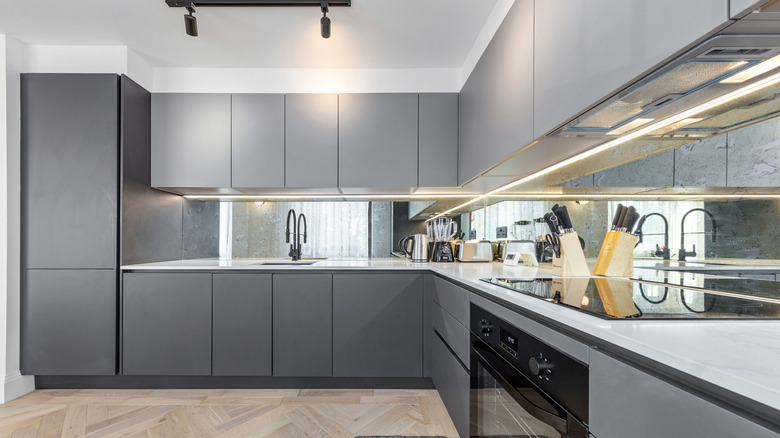
Backsplashes exist in the kitchen to catch splatter and splashes during your cooking and cleaning processes, which is why they tend to stretch down the length of the wall. This is also why you want them to be both easy to look at and easy to clean. With these points in mind, mirrored panels probably sound like a great option, especially if they're distressed or designed with a vintage patina to help further hide any messes.
However, designer Brittny Button says this look rarely works well in a home kitchen, both for aesthetics and functionality. "[Mirrored sections] read more as a bar-type setting, and over time, this effect is tiring to live with day-to-day," she explains. Instead, if you love the look and have an at-home bar, this could be a great compromise. But if you're looking for the best option for your kitchen, mirrored panels might be one to either skip or carefully consider before installing.
2. Tiles with dramatic or metallic veining
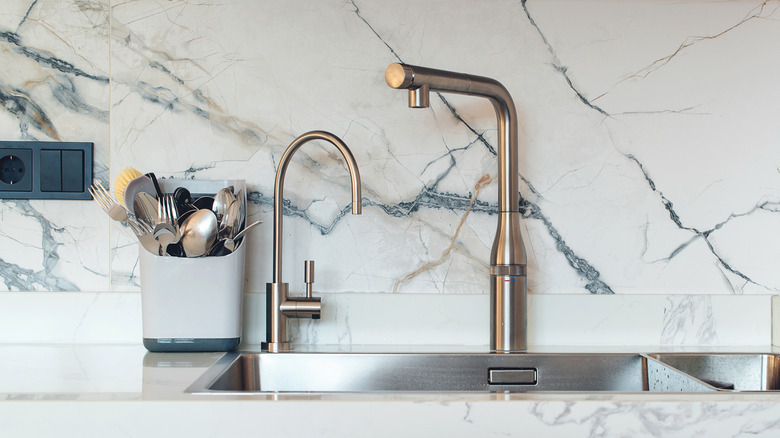
In recent years, marble-effect tiles with dramatic or metallic veining have risen in popularity. Available in a variety of scale, they've become popular in bathrooms and kitchens alike and frequently appear in inspiration images as a great backsplash option. But, as eye-catching as these tiles are, Brittny Button says they're also a big design commitment you might easily come to regret. "Although interesting looking, the metallic veining is very dramatic," she explains. "So much so, that it can dominate the feel of the space."
While this might not sound like a bad idea in theory, it can be trickier in practice. Consider, for instance, the metallic fixtures that are popular now versus what was considered "in" a decade ago. If your kitchen prominently features gold veining in the backsplash with gold or brass hardware to match, it could be tricky to swap your fixtures for nickel or chrome in the future. Doing so might call for a larger renovation if you want to keep your space current.
3. Backsplash matched to the cupboards
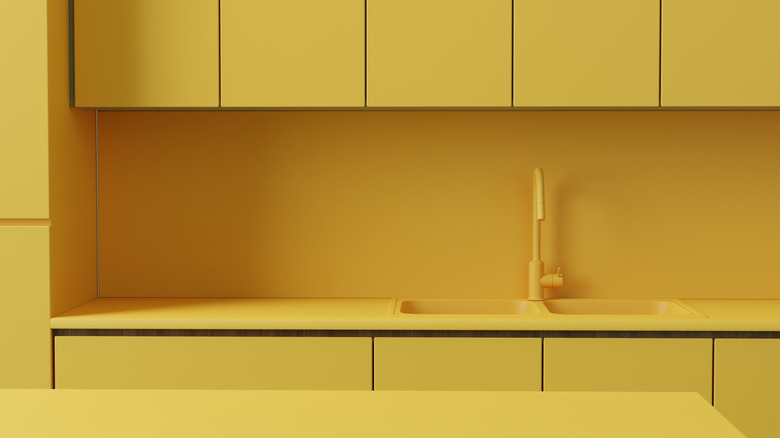
A cohesive color palette is a must-have in any well-designed place, but rarely does this mean a room where everything matches perfectly. In fact, most design pros will tell you that you should instead actively avoid going too far, and Brittny Button says this includes matching your backsplash to your cupboards. "Matching tile to cupboards can offer a uniform look yet can become fatiguing as it's very matchy-matchy within one space," Button explains.
There are exceptions to every rule, so if you're going for a chic color-blocking effect or you love the monochromatic look, then perhaps this is the style calling your name. In this case, though, you really do need to carefully consider the execution. The key is for this design to look intentional and not like you ran out of color ideas for your backsplash. You can do this with interesting fixture and hardware choices, a creative and functional kitchen lighting plan, and smaller accent colors and textures that carefully tie the room together.
4. Rainbow terrazzo tiles
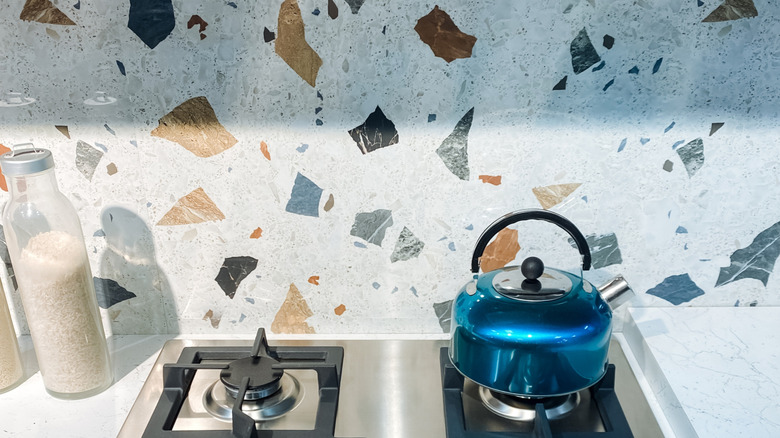
Mid-century modern first put terrazzo tiles back on the map, and rainbow terrazzo is a particularly vibrant version of this speckled option. In fact, it can feel downright busy in some places, and that's especially true of an already hectic room such as the kitchen.
With its neutral background and speckled multi-colored chips resembling pieces of a mosaic, Brittny Buttons says people should think carefully before committing to this look. In fact, for as playful as it can feel, it's often used in more corporate settings. "Rainbow terrazzo can feel too industrialized and tech office-like," she explains.
But if you like the brightness of rainbow terrazzo, consider other options. Granite or natural stone can be a better way to bring interesting texture and visual interest to the space, or keep your backsplash neutral and find other ways to add a splash of color. Just leave the rainbow terrazzo to the office break room.
5. Real bricks
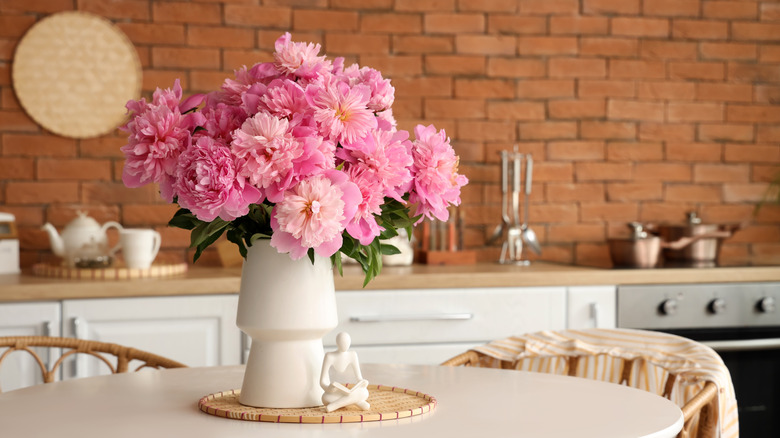
In some contexts, a brick backsplash can work well. For example, if you're in a pre-war apartment in New York or you live in a warehouse conversion, this can feel like a bit of character. But if you're looking to add a new backsplash option to your home kitchen, give some careful consideration to this pick.
It might look trendy and interesting in some homes, but in others, it creates a different vibe. "The brick can be cold in feeling," says Brittny Button. In fact, that's one reason people often paint their brick backsplashes — both to warm up the space and to better seal off the material.
Beyond the aesthetic downsides, you also need to carefully consider brick as a material. Actual brick can be difficult to clean, which isn't ideal in a kitchen space — let alone a space that's prone to staining. If you're committed to this style, consider instead brick-look tiles.
6. Limestone walls
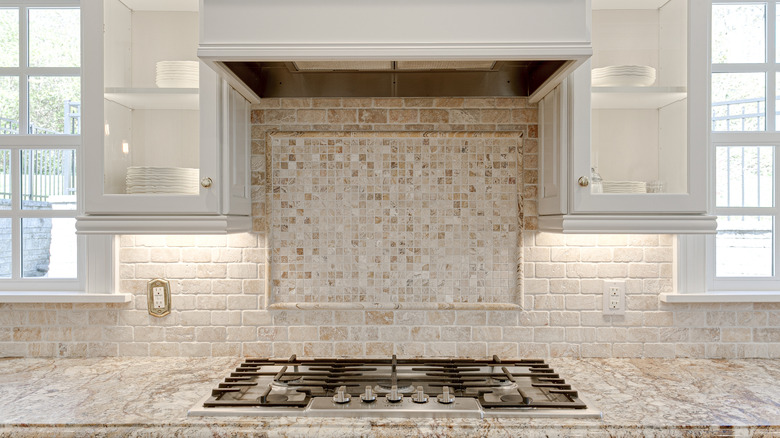
Limestone can be lovely in a kitchen, but it's not the most ideal backsplash option. "Limestone is best left as an outdoor material, as it is a brute to get clean from cooking oil, grease, or red sauces," warns Brittny Button.
Still, limestone is an appealing choice if you're going for a certain aesthetic in the kitchen, such as French country or English cottage. That's why Button suggests soapstone instead. It has a similar look, but Button says it's far more functional than limestone. "[Use] soapstone as a backsplash, given it's very durable and can withstand high heat," she says.
With this in mind, you can use soapstone near a stove in a way that might not work as well with limestone. That's because soapstone is non-porous, so it won't absorb moisture and encourage bacterial growth. "It's also a sustainable choice as it is a naturally occurring stone," adds Button, before warning that there is one downside to consider. "It does scratch more than granite," she adds.
7. Checkerboard pattern
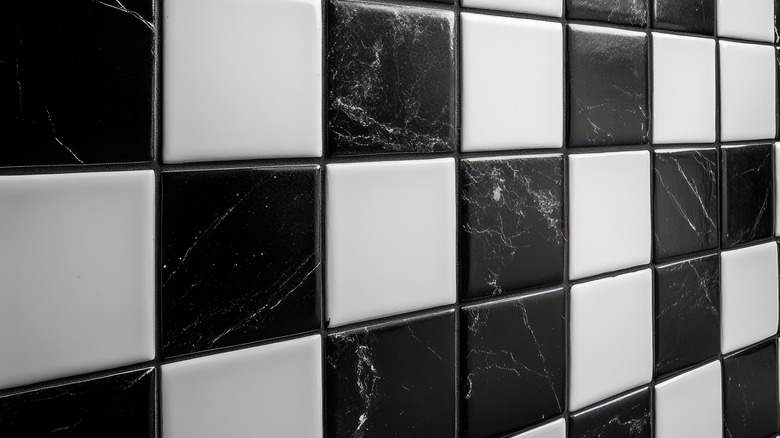
For many people, checkerboard pattern is a classic look, especially if you're designing a vintage-inspired kitchen. This is generally true, but it again depends on where you place it. As a floor pattern? Yes, a reliably beautiful choice. But as your kitchen backsplash? It's a bit more of a commitment. This is because the bold contrast of a tiled checkerboard backsplash is going to instantly pull your eye and become the centerpiece of the room. "Checkerboard tile gives a distinct look to the backsplash area, except you have to really love the dynamic effect this creates," explains Brittny Button.
If that's the look you're going for, then this is the right choice. But if you know you love checkerboard pattern and just aren't sure where or how to implement it, give this one careful consideration. Your best bet might be to play with it on a smaller scale first — such as with a new tablecloth, placemats, or even a bold rug or runner for the floor.
8. Moroccan-inspired tiles
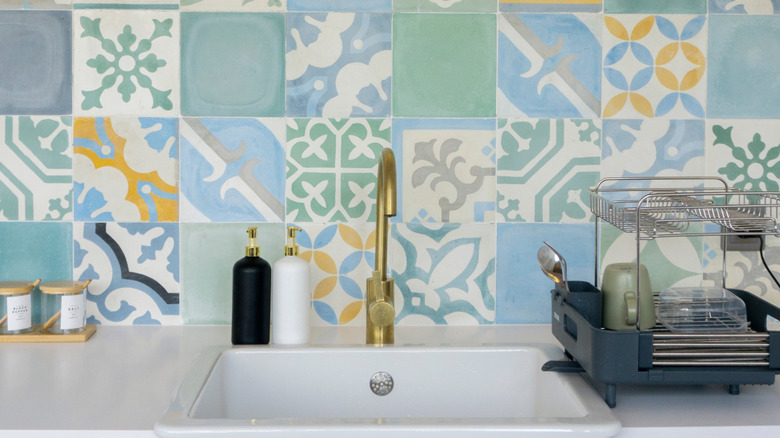
Moroccan tiles with intricate patterns are undoubtedly beautiful, but Brittny Button suggests carefully considering your kitchen's overall design scheme before committing to this aesthetic. You could even test it out with a peel-and-stick backsplash — which there are pros and cons to using – first to see how it feels, but you should definitely give more intricate tiles some forethought before installing.
"The Moroccan trend with moorish tile patterns and lines can be fun at the beginning and then become too overwhelming as time passes," Button says. This is especially true if you've opted for a bright color on your cabinets, intricate hardware, or eye-catching light fixtures alongside the Moroccan tiles. With too many things going on at once, your eye can easily get confused on where to look.
Instead, Button suggests incorporating this design into a more neutral kitchen or, better yet, an area that has less traffic and activity. "Use these kinds of bold designs in less frequently used areas like an outdoor kitchen or lounge," she suggests.
9. Stainless steel
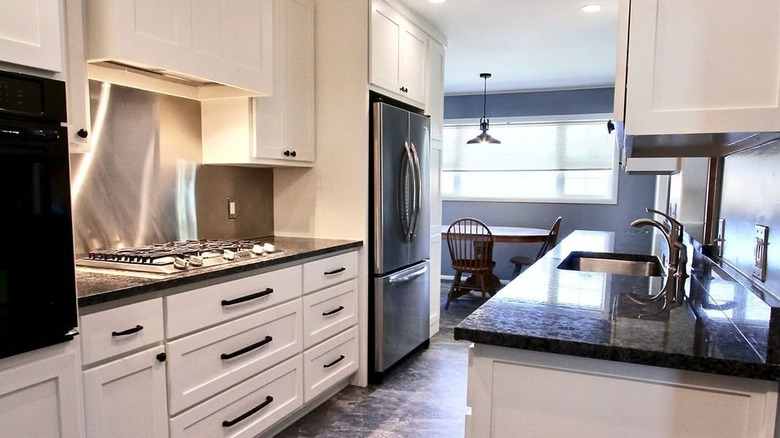
When you think of common materials used in a kitchen, stainless steel is an obvious choice. You see it on everything, from microwaves to toasters. But Brittny Button says it's not the best choice to use as your backsplash, and that comes down to daily maintenance.
"[Stainless steel shows] every smudge, sauce mark or piece of food," she explains. If you already have a stainless steel appliance, this probably isn't a surprise. It's a look that's notorious for showing every fingerprint, despite its durability and resistance to the elements.
Still, plenty of people love the sleek, functional look of stainless steel in the kitchen, and this look is particularly popular behind the stove, leading straight up to the hood for a cohesive look. In that case, assess the pros and cons. "If you're up for constantly wiping to maintain this polished look then go for it!" Button says.
10. Glass block tiles and glass panels
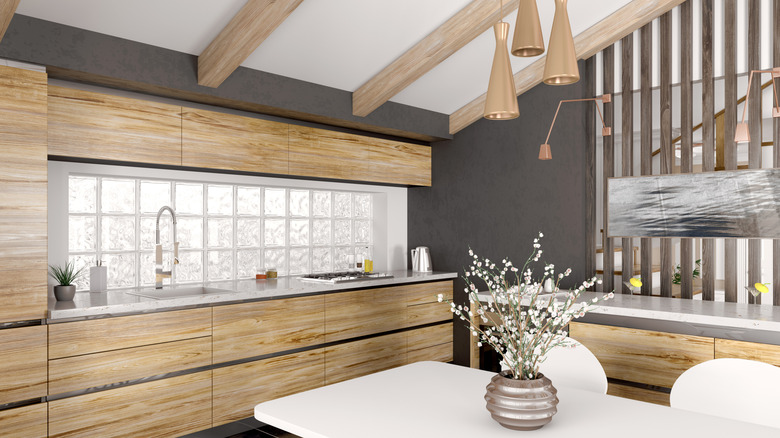
Glass is a surprisingly popular backsplash option, and it comes in a variety of design options. This can include glass block tiles, which are a bit more dated, as well as glass panels, which tend to look more utilitarian. But Brittny Button says however it comes, glass is another backsplash choice she's not so sure about, as it presents the same issue as stainless steel.
Textured glass is the safer bet if you're hoping to hide some of the splashes and splatters, but then you run the risk of picking a backsplash style that might be outdated. Not to mention, no glass option is going to be immune to smudging, cloudiness, and build-up. But if the thought of regularly spraying your backsplash back to sparkling doesn't appeal, move on. "Consider a material that is more forgiving and can be wiped down," says Button.
11. Bold or high-contrast grout
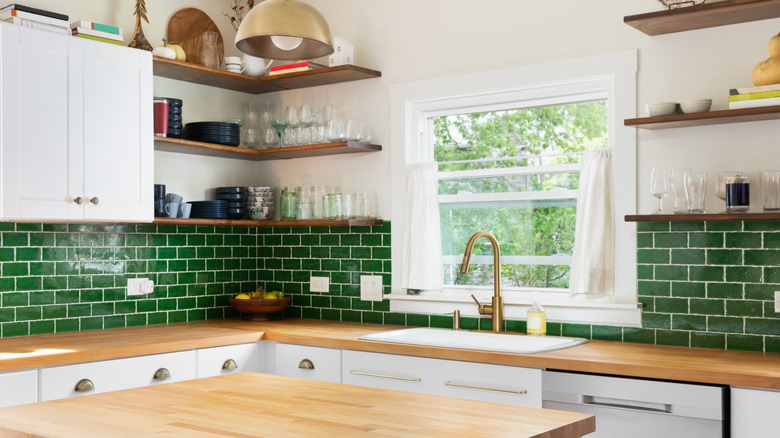
If you're choosing to tile your backsplash, then picking the right grout is just as important as selecting the tile itself and one of the biggest mistakes you want to avoid when renovating a backsplash. Recently, it's become somewhat on-trend to go for a bold grout that contrasts your tile choice, but Brittny Button says whatever you choose requires some careful consideration. "There's always a few questions when it comes to grout color and size," she explains. "One, do you want the tile pattern to stand out? This means grout it in a contrasting color. Or, two, blend in? [Meaning] grout matches the color of the tile."
Beyond this, Button says you should also consider the spacing of your tiles, as this will then determine the size of your grout. "Is the desire for the tile to appear as if it's one single sheet, or to have a thicker grout to show off a pattern such as herringbone, starburst or two-line linear detailing?" she asks.
Without asking these questions, you risk making a choice that doesn't align with your vision, so be sure to chat with a pro before installation. It's also worth considering that, while tiles are generally easy to clean, grout can be trickier. This is why people often opt for something darker, to help hide common kitchen stains.
12. Waterproof stucco
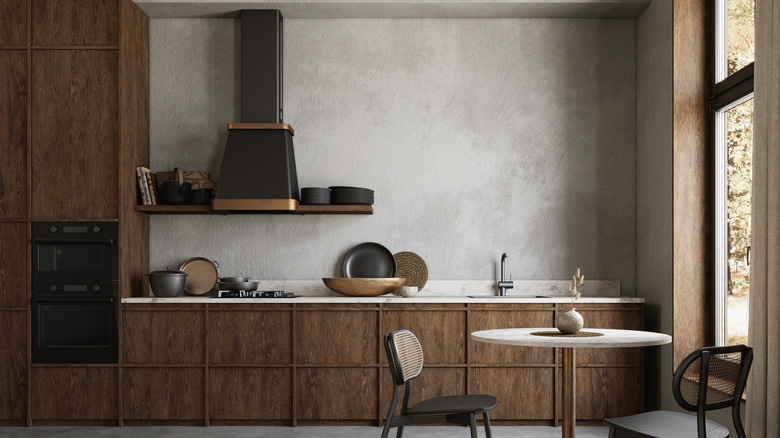
If you don't love the look of a decorated backsplash or you find you're averse to tiling this particular space, Brittny Button assures us there are still plenty of options. Waterproof stucco is one of them, and this is a particularly popular pick for anyone hoping to design a sleek, minimalist kitchen. However, it's not exactly perfect. Button warns you're still prone to a few functional problems with this choice.
"Waterproof stucco is a compelling option, although better to be used in a space where high water use or frequent food staining wouldn't be an issue," Button says. This means it might not be the best option above your stove or primary sink. For the rest of your workspace, though, waterproof stucco can look both streamlined and stunning without drawing too much attention away from the rest of the space.
13. White plaster paint
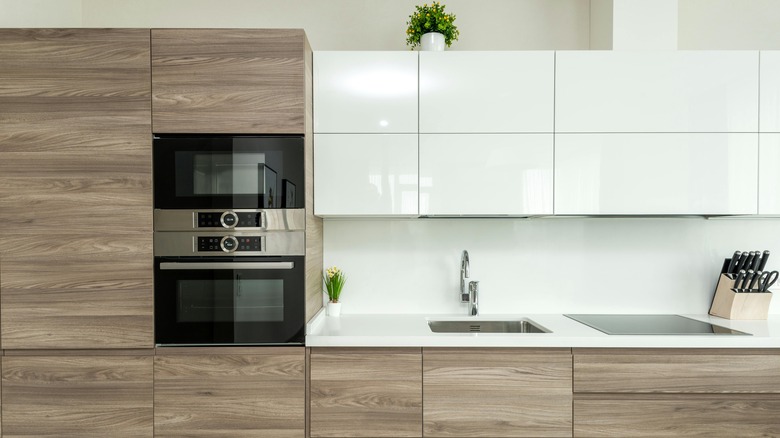
Of course, you're free to leave your backsplash completely bare. Many people do, especially if they're renting. All-white kitchens are ever-popular, and white plaster backsplashes are a common find. But as with waterproof stucco, Brittny Button warns that white plaster is really best in lower traffic areas along your worktop. That's because plaster might not hold up well in major splash zones.
Instead, Button suggests using it behind a secondary sink, and you can then opt for a smaller, sturdier backsplash in the high-splatter zones. But for the white plaster portions of the wall, be sure to prep the wall well before painting, and seal the white paint properly. You might also want to consider a glossier finish for easier wiping down. And, of course, if you decide this look isn't the one you want, it's the easiest of all to upgrade or replace when the time comes.