

13 Tips For Achieving The Tuscan-Inspired Kitchen Of Your Dreams
We may receive a commission on purchases made from links.
The heart of Tuscan kitchen design is warmth, openness, and lived-in comfort. Hailing from a bygone era in the Italian countryside, its focus is on natural materials, embracing patinas, and artisan elements. "The Tuscan aesthetic takes its inspiration from Italian villas and farmhouses in Tuscany, with a warm, country elegance," says Guillaume Drew, interior designer for Or & Zon. "It uses natural materials such as terracotta-colored tiles, rough wood beams, distressed stone, hand-plastered walls, and wrought iron accents."
Homeowners facing a kitchen remodel in the '90s or early 2000s began to take a Tuscan-inspired approach to mimic that cozy, old world charm, a trend that is still favored today. "The main aesthetic of a Tuscan kitchen is that it's a kitchen of a bygone era," says Colleen Bennett, interior designer and founder of CBB Design Firm. "It brings peace and evokes feelings of comfort. People love it because it feels cozy and incorporates natural materials and natural lighting, which makes the space feel homey and lived in."
Naturally, when going for a nostalgic vibe, you have to make sure you steer clear of questionable vintage decor trends, but there are plenty of ways to leverage a Tuscan-inspired look without falling into this trap. Let's take a look at 13 of the best ones to consider.
1. Let there be (natural) light

There are some pretty bad kitchen design choices out there, but letting in more natural light is never one of them, especially in a Tuscan-inspired space. "Since the color palette of a Tuscan kitchen is warmer, earthier tones, natural lighting makes the space feel even warmer," Colleen Bennett says. "You can incorporate it through large windows and skylights. Make sure your window coverings (if you decide to use them) are lighter or more translucent to let as much light in as possible."
Another way to ensure lots of natural light is to keep the main area as open as possible. Happily, that also blends well with the entire Tuscan aesthetic. "As open kitchen designs gained popularity, this style's blend of function and warmth appealed to homeowners as the key to creating warm but elegant rooms that are perfect for entertaining and family gatherings," Guillaume Drew explains. Concrete steps to take include not blocking windows with furniture or plants, using mirrors to bounce light around, and avoiding darker colors — especially in small spaces.
2. Go for earthy colors with brighter accents
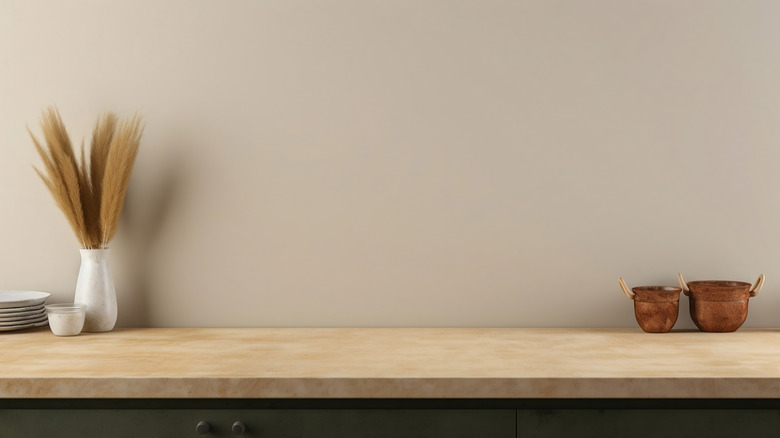
A Tuscan-inspired kitchen also relies on earth tones with pops of brighter organic colors. "Typically the cabinets have either some kind of blue or green, which are colors that would have been in Italy," Colleen Bennett says. Both blues and greens should mimic the hues of the natural patina on copper or bronze. You might see such paint colors on cabinets around the outside of the kitchen and on the island. Other Tuscan hues include pink, warm yellow, orange, and copper, Bennett adds. You will also see warm earth tones on the walls and floor.
When planning for cabinets, don't overlook the importance of drawers in your remodel. You should also make sure you use best practices to prevent your paint from bubbling, especially in kitchens that are used frequently — and consequently see lots of moisture, steam, and spatter. Always fill holes well before painting, too. A Sugelary Drywall Patch Repair Kit with Scraper will help you do this. Lastly, get durable furniture paint, such as All-In-One Durable Cabinet and Furniture Paint, or, if you want all the tools in one place, this Tidal Haze DIY 7-Piece Cabinet Makeover Set.
3. Use lots of wood and stone
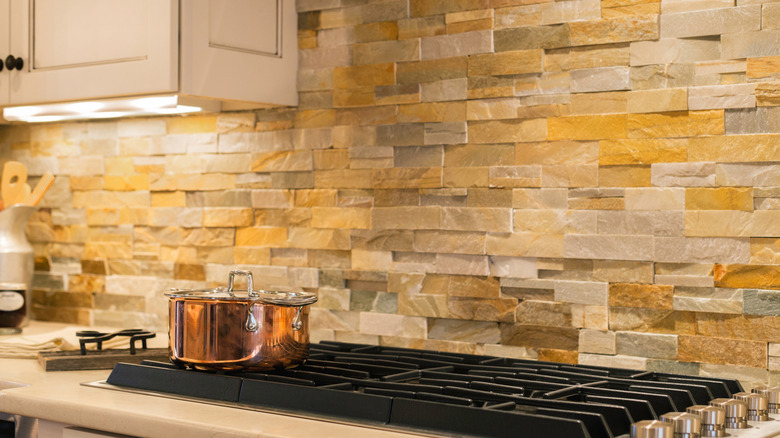
"Adding wood and stone is at the heart of a genuine Tuscan kitchen," Guillaume Drew says. "I often recommend distressed wood wide-plank floors and walnut or recycled oak ceiling beams, with natural stone elements like limestone or travertine countertops." If you want to add a more decorative concept to the space, consider outfitting your stove's hood. "The range hood can even be handcrafted from plaster, trimmed out with stone or wood corbel support," Drew explains. "These details add warmth, texture, and architectural heft, and transform the kitchen into a room that feels like it has been created over generations."
Tuscan-inspired kitchens also benefit from overhead beams in woods that match other components of the architecture or decor. If you have the resources, reclaimed woods are lovely, perfectly blending that vintage feel with earthy colors.
4. Expose structural elements in your kitchen design
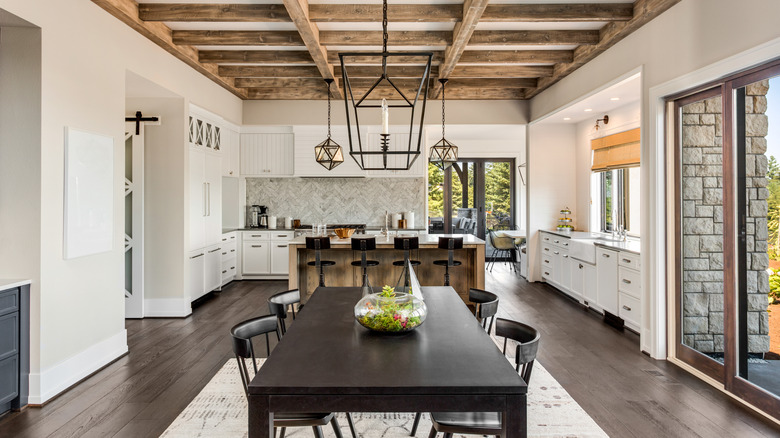
Speaking of beams: If you've got 'em, flaunt 'em. "One of the more dramatic aspects of Tuscan design is its focus on structure," Guillaume Drew says. "It's not just about appearances, it's about accentuating the bones of the house in a way that's respectful to tradition and to local heritage." Colleen Bennett agrees. "Make sure you have arches and exposed wood beams in your kitchen if you have the budget for it," she says. This will help show off those natural materials as well as bring interesting architectural flair to your Tuscan-inspired kitchen look.
Wooden beams aren't the only way to showcase structural elements, though. Arched brickwork and rustic stone feature walls also do the trick, Drew adds. They give the kitchen an authentic appearance of age and craftsmanship, he says. These are not, however, seat-of-your-pants design elements, because they are so integral to the entire layout and structural integrity of your kitchen. "If you're building or remodeling, I recommend having these details planned in early, perhaps through open trusses or arched window cutouts," he warns.
5. Plaster freely for texture
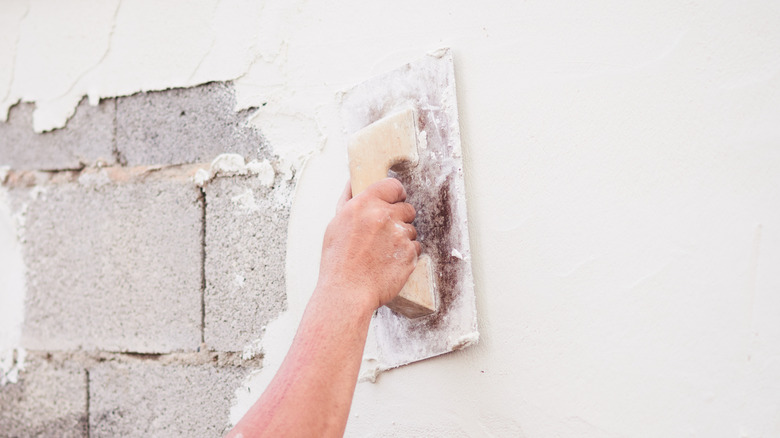
A Tuscan-inspired kitchen also benefits greatly from plaster. Although its ingredients are simple — nothing more than stone, water, and an organic or mineral binding agent — its design potential is nothing short of magical, which probably explains why humans have been using it for more than 9,000 years. When it comes to Tuscan vibes, it's the perfect material, and it's basically non-optional. "You're going to want to add some stucco," Colleen Bennett says firmly. "Stucco is great for the walls and can give it a more rustic finish, which is perfect for achieving a Tuscan feel."
If stucco isn't for you, though, there are other choices. "Hand-applied plaster walls, especially with limewash or Venetian plaster, can create the instant feel of aged loveliness and grandeur of a Tuscan villa," Guillaume Drew says. "I generally suggest warm neutrals like golden sand, terracotta blush, or muted olive for the foundation color, applied in asymmetrical strokes to mimic sun-weathered walls." Using a subdued color can help bring in natural daylight, which highlights the plaster's features. Because the effect is so beautiful, you can rely on it rather than art or fiber. "The treatment is particularly valuable behind open shelving or at windows to bring out architectural detail," Drew says.
6. Embrace the patina
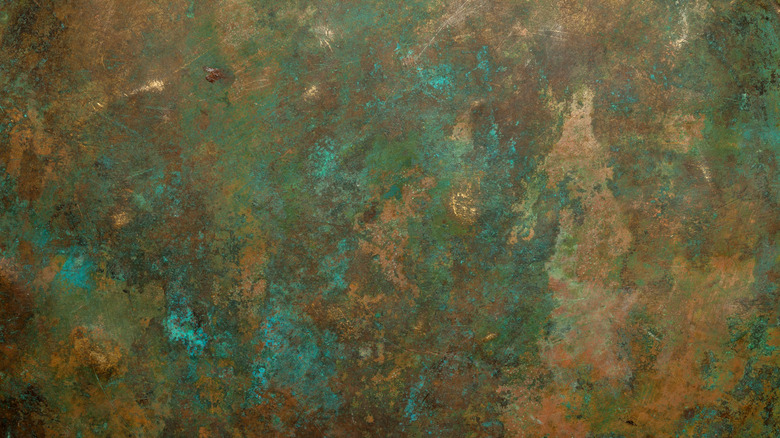
Light and bright is a wonderful aspect of kitchen design, and a Tuscan-inspired space is no exception. However, sterile effects run counter to the entire point of this design style. "The whole vibe of this type of kitchen is that it is a lived-in, well-used space, so you need to embrace the natural aging and finishes that objects take on," Colleen Bennett says. "Opt for elements that have a patina or natural finish. I love using copper in a Tuscan kitchen, because I think the stains and changes it develops are so beautiful."
Guillaume Drew agrees. "Tuscan style is not about unblemished surfaces," he says. "It's about narrative through wear and patina. I often choose finishes like unlacquered brass hardware that tarnishes with age, or honed stone that develops character through use."
It's not just metals or minerals, however. You can lend an aura of agedness to just about any surface, as long as you know what you're doing. For instance, he says, you can even glaze and lightly distress cabinetry to give it that "lived-in" patina. "Patina adds depth, especially when juxtaposed against clean, modern conveniences," he explains, and it is therefore invaluable. "It brings warmth and humanness to the kitchen."
7. Don't forget Tuscan-inspired wrought iron
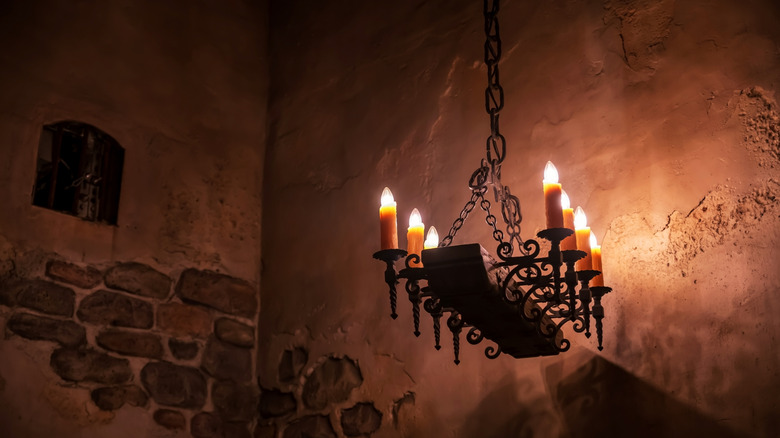
Wrought iron is famous for its use in fences and furniture. Perhaps it's only this writer, but it's also a common material used on catwalks and crow's nests that are exposed to the elements. However, wrought iron has its place indoors as well, and nowhere is this truer than in Tuscan-inspired kitchen design.
"Wrought iron is the quintessential Tuscan detail, and it's incredibly versatile," Guillaume Drew says. "I love to use it for pot racks that suspend above the island, scrollwork on cabinet knobs, or intricately forged lighting in a distressed black or oil-rubbed bronze finish." As if those ideas aren't enough, he has more: "Even something as simple as an iron wine stand or an antique wrought iron baker's table will make an enormous difference," he says, pointing out that wrought iron is the ultimate mark of human craftsmanship. "It helps to ground the room visually against pale walls and natural stone."
8. Introduce Tuscan design with tiles
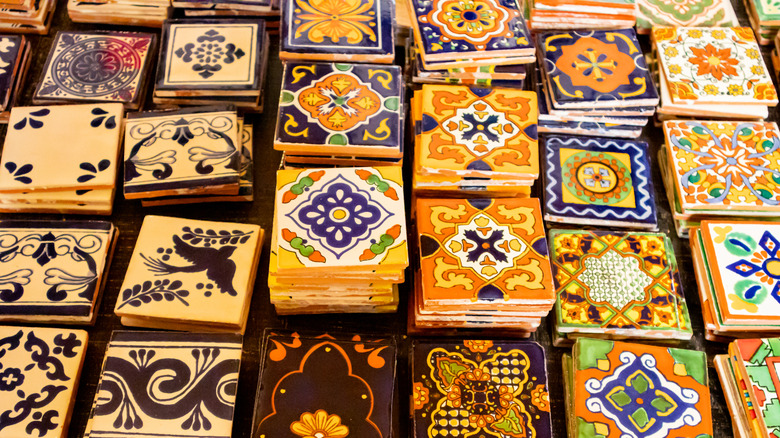
If you close your eyes and think of the word "Tuscan," chances are good you see tiles. Tiled rooftops, tiled walls, tiled walkways, and tiled artwork. Although you can certainly take a good thing too far, tiling is a wonderful element in a Tuscan-inspired kitchen, so long as you know what you're doing.
"I would say tiles are crucial for achieving the Tuscan look," Colleen Bennett says. "I recommend going and picking out some very beautiful terracotta tiles that have the star design." If you want other ideas, you can google Tuscan looks for inspiration to see what tiles are typically used, then choose ones that have organic materials and a handmade feel to them. Painted tiles can do the trick nicely.
Although square tiles or terracotta colors might scream vintage Tuscan, though, you have many other options. Floral, painted tiles are always popular. Simple terra cotta cut into interesting shapes that fit together are also a lovely approach. And while some people might tell you subway tile is on its way out, don't be fooled; you can get a lot of mileage out of natural stone cut to basic designs but arranged in a lovely pattern.
9. Display ceramics
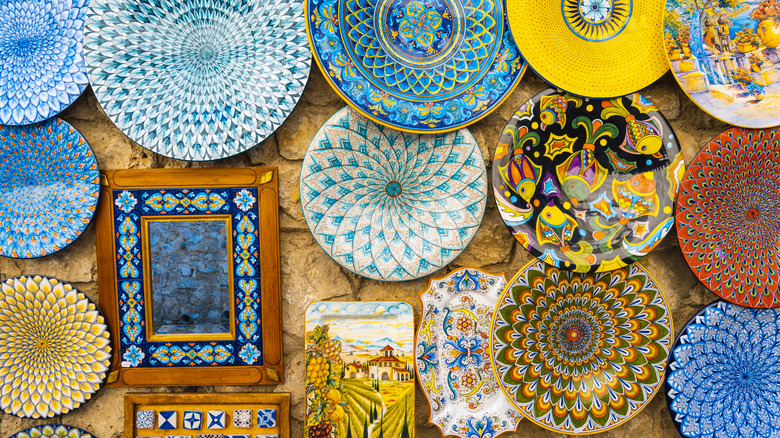
Second only to tiles in their Italianesque charm, ceramics are a must-have in any Tuscan-inspired space. "Traditional Italian ceramics, especially hand-painted ones from Deruta or Montelupo, are a beautiful way to bring in color and authenticity," Guillaume Drew says. "I prefer to use open shelves to hold pitchers, bowls, or decorative plates with motifs like lemons, grapes, or florals like Tuscan pottery." Not only do they add a pop of earthy, organic-looking vibrance, he says, but they speak a cultural story. Plus, you've got options: "If you do not prefer open shelving, then you can also hang ceramic platters or create a gallery wall for a more curated, artistic feel."
Colleen Bennett agrees that ceramics are important. "I highly recommend curating a beautiful collection to display," she says. "Anything that looks like they're from a bygone era." If you're not sure about hues, she advises you to look at the colors used by Le Creuset, the famous French cookware company. "They're kind of spot on," she says. "Go find those, but in a patina."
You don't need to spend a lot to achieve the look of Tuscan ceramics in your room. Affordable online options include Vancasso Ceramic Pasta Bowls and Certified International Piazzette Pasta Bowls. If you want to bring a little Tuscan charm to kid-safe options, these Bico Lemon Dreams Salad Plates are pretty cute as well, though they won't have the same authenticity hanging on the walls as real ceramic does.
10. Use a large table
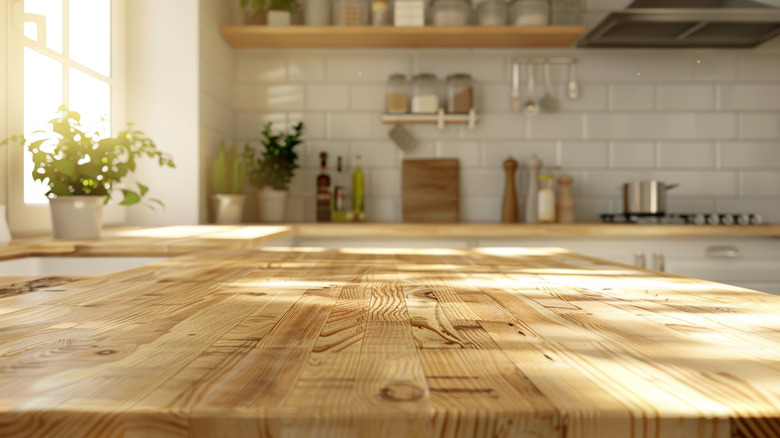
The Tuscan look is all about cozy gatherings and functional open spaces, so it's important to use the center of the room well. If your kitchen already has an island, then there's no need to figure out how to fill the space. There are many ways to functionally decorate a kitchen island, so make sure you take a Tuscan bent on yours. If you're island-less, however, a large table helps to fill up the room and provides lots of surface area for cooking, dining, and homework.
"For a Tuscan kitchen, I would find an old farmhouse table," Colleen Bennett says. Old butcher blocks or an antique tabletop can also work as an island if you're doing a full renovation and want a cozy, rustic, reclaimed effect. Better for the Earth, better for your design. You can either source it yourself and ask a contractor to build it into an island, or you can purchase table legs online and attach them to the underside of the flat surface, so long as you get appropriately sturdy legs for the weight of the top.
11. Put down a cozy Tuscan-inspired rug
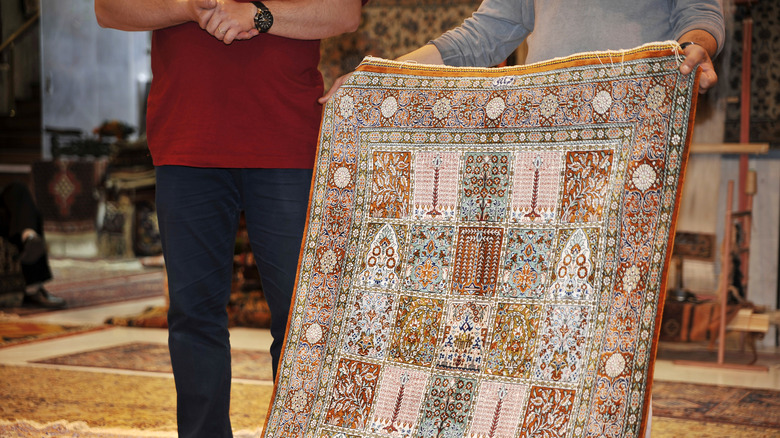
Many kitchens benefit from a rug. Not all have the space, of course, especially if there are narrow alleys or vents in the way. But many do, and the open design of a Tuscan-inspired kitchen is perfect for a large rug that adds coziness and a feel of coming home. "A Turkish or vintage rug in rich reds, ochres, and blues can warm up a tile or stone floor kitchen instantly," Guillaume Drew says. "Not only do these rugs tie the earthy color scheme together, but they also soften the hard surfaces and create the cozy, inviting feel of farmhouses in country Italy."
Make sure you choose a rug that can handle the business of a kitchen, though. "I prefer low-pile or flatweave rugs that will withstand foot traffic and spills but still be gentle to the touch," Drew says, adding that you should look for a pattern that has a slightly over-faded effect. The sense of wabi-sabi imperfection fits right in with natural materials, casually exposed structural elements, and metal patinas. It effortlessly creates that worn and easygoing atmosphere for which you're aiming.
If you can afford to buy a used Persian carpet, that's great. (If you happen to have one lying around, that's even better.) Most people, however, are working on tighter budgets. If that's you, try a Keen Home Design Machine Washable Entry Rug with Non-Slip Backing for a similar effect.
12. Bring the outdoors in with herbs and flowers
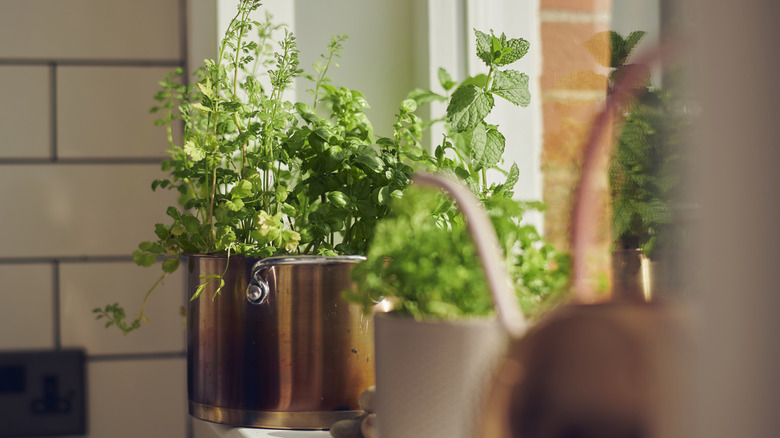
Herbs and flowers are too often an afterthought in the kitchen. You might throw a succulent on the windowsill or set a pot of living herbs on the counter if someone happens to bring them by as a housewarming gift, but they should play a much more vital role in the Tuscan-inspired kitchen.
"Tuscan kitchens blur the line between kitchen and garden, and one of the easiest things to catch that is with flowers and herbs," Guillaume Drew says. Fresh herbs offer earthy green color as well as lovely fragrances to the space, which underpins that Tuscan vibe. Plus, indoor herbs encourage you to make that creative recipe or stretch your Italian cooking skills the way knowing you can find them at the grocery store just doesn't. "I prefer to place potted rosemary, thyme, and basil on windowsills or counters in weathered terracotta or ceramic pots."
Colleen Bennett also loves natural elements, especially flowers. "Definitely incorporate floral arrangements," she says. "This helps to achieve that lived-in feeling as well as gives a more organic feel since you're incorporating another natural element." Other options, Drew adds, include dried lavender in a ceramic vase or olive leaves in a wooden bowl. Both of these add natural beauty without overwhelming the space.
13. Modernize Tuscan design without losing its integrity

The trick of Tuscan-inspired design is to bring those nostalgic, countryside vibes into your kitchen without compromising the 21st-century functionality of the space or losing the integrity of the Italian aesthetic. It's a juggling act for sure. "With the trend of modern and minimalist designs, some owners fear that Tuscan is too old-fashioned, but my answer always is that it is all about balance," Guillaume Drew says. "Pairing sleek cabinetry with distressed finishes or pairing matte black hardware with terracotta tile can render it modern without leaving the past behind."
There are plenty of other ways to bring in artisan craftsmanship that match your Tuscan vibes. Hand-forged lighting fixtures and custom cabinetry are two of Drew's favorites. Make sure that whatever elements you choose for your kitchen bespeak quality and attention to detail. That's what will set your design apart from the mass-produced knockoffs so common on the market today.