

11 Best Old-School Midwestern Desserts Of All Time
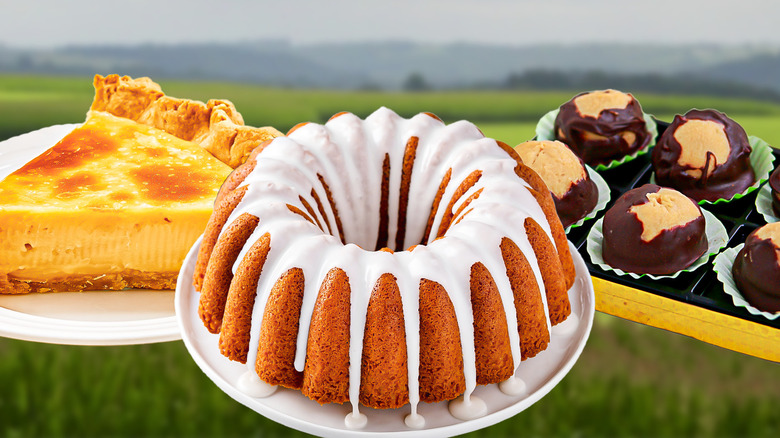
Though many folks might consider it flyover country, there's much to enjoy about the American Midwest. Whether you're chatting with a friendly face at the county fair or are enjoying the lush natural landscapes, it's hard to be sad in a place like that — especially when you factor in the food.
Celebrities ranging from Guy Fieri to Andrew Zimmern have taken note of the region's rich culinary tradition, but if you pop into a local bakery or, heck, any given home kitchen, you're sure to find some of the best sweet treats around. Midwesterners pull no punches when it comes to amping up your daily sugar intake, and while what you find might not always be modern or trendy, rest assured, it'll be delicious. So, read on to learn about some of the best old-school Midwestern desserts of all time. You might just discover your next dish to bring to a potluck.
1. Candy apple salad
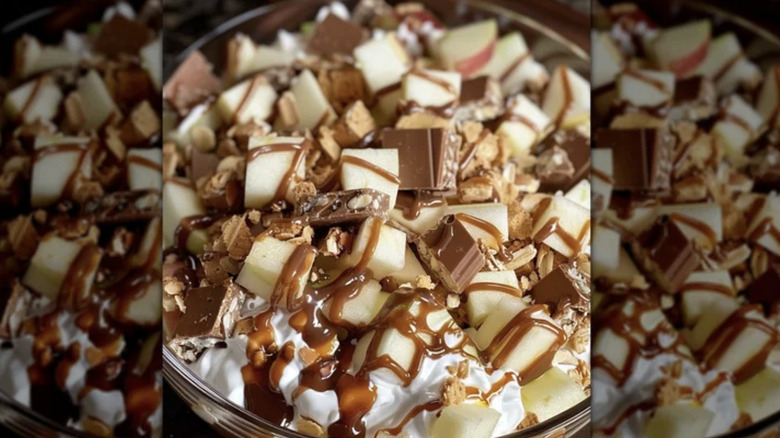
It's far from a health food, but there's a certain Midwestern salad that's long been a staple at picnics and potlucks: candy apple salad. You might know it by other names like Snickers salad, candy bar salad, or caramel apple salad, but the premise is generally the same — mix Cool Whip with vanilla pudding (some variations feature marshmallows or marshmallow fluff) and then fold in chopped Snickers bars and Granny Smith apples. To really zhuzh it up, some folks drizzle caramel sauce and add more Snickers crumbles on top for a bit of a garnish.
Though the exact origin of candy apple salad is unknown, its presence is especially strong in areas throughout the Midwest with a mix of both Lutheran and Scandinavian influences, like Minnesota and North Dakota. Candy apple salad is not by any means fancy, but its no-fuss nature is indicative of the comforting cuisine commonly found in the region, like casseroles, or if you're from Minnesota, the famous hotdish.
2. Scotcheroos
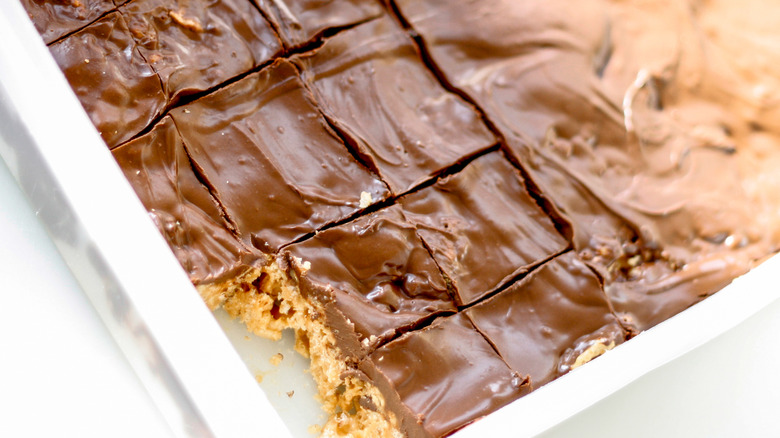
Your basic Rice Krispies Treat has nothing on the scotcheroo. Though that buttery, marshmallowy bar of goodness is a lunchbox staple, the scotcheroo takes it to a whole different level with the additions of peanut butter, chocolate, and butterscotch. Traditionally, the peanut butter is added to a boiled mixture of sugar and corn syrup, along with a dash of vanilla extract. Once all that is combined, the toasted rice cereal is folded in and spread into a buttered pan. After it has sufficiently cooled, melted chocolate and butterscotch chips are spread in an even layer across the top. In many ways, it functions like a homemade candy bar.
The scotcheroo is a Midwestern party essential and it truly feels like no get-together is complete without a 9x13-inch pan of these bad boys. Nevertheless, the recipe didn't come from the kitchen of a hardworking Midwesterner of yore, but from the side of a box of a central ingredient: Rice Krispies. Though the breakfast cereal corporate overlords introduced the recipe in post-World War II America, it's the state of Iowa that really takes pride in the dessert.
3. Buckeyes
Ohio has some curious cuisine, ranging from Skyline Chili spread over spaghetti and served up by the eponymous Cincinnati-based chain to goetta, the meat-and-grain sausage enjoyed at breakfast time. But for folks with a sweet tooth, there's one Ohio-specific dessert that might just catch your eye.
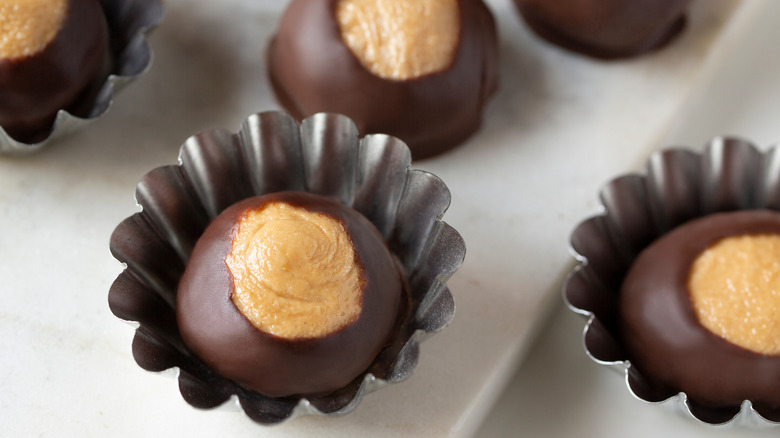
Buckeye candies are truffle-like creations consisting of a simple fudge made from peanut butter, butter, and powdered sugar that are rolled into balls and dipped in dark chocolate, leaving an "eye" of the fudge exposed. They were invented in 1965 by Gail Lucas, a woman whose husband was a student at and huge fan of Ohio State University, which features the iconic mascot the Buckeye.
The sweet treats are created to resemble none other than the OSU mascot, which in turn is based on the inedible seeds of Ohio's state tree, the Buckeye. The seeds are similar to that of an acorn, and have a glossy, dark-brown exterior and a visible light brown "eye." Just like the seeds, Buckeye candies can be found across the state at gift shops, bakeries, football tailgates, potlucks, and home kitchens alike.
4. Bundt cake
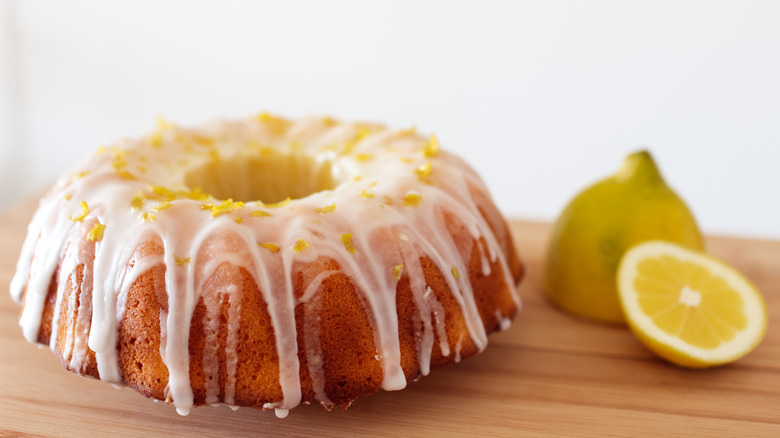
Bundt pans aren't exclusive to the Midwest, but Minnesota culinary tradition has staked its claim on the bakeware and the cakes that come out of it.
The pans came first, and they were created by H. David Dalquist of the Nordic Ware Company after being approached in 1950 by a few notable women in Minneapolis's Jewish immigrant community. After coming to the United States, the women weren't able to find German Gugelhupf pans, which were made of cast iron and used to make desserts similar to pound cakes. Dalquist created an aluminum version of the pan for the women, and he also sold the product to department stores.
By the 1970s, Dalquist was partnering with Pillsbury to sell the pans alongside Bundt cake mixes, which helped skyrocket the bakeware to popularity. Nowadays, Bundt cake recipes run the gamut in terms of flavor, but that signature ring shape is what Minnesota calls its own.
5. Gooey butter cake
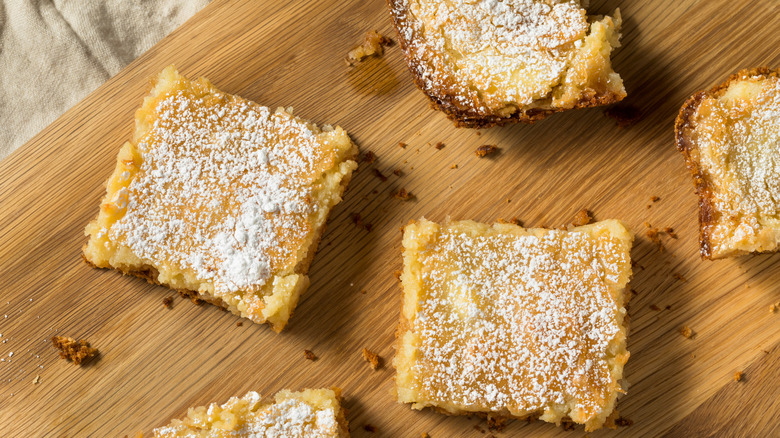
Gooey butter cake is exactly what you'd expect. It's ooey-gooey. It's rich and buttery. And it was actually created thanks to a kitchen mishap in a German bakery in St. Louis.
Though there are competing reports as to who created the first gooey butter cake, there's a general consensus that it was the result of a happy accident sometime in the first half of the 20th century at one of the many German bakeries in the Gateway to the West. As many of the stories go, one baker accidentally added too much butter to a cake recipe. But butter was hard to come by (either because of the prohibitive cost during the Great Depression of the 1930s or wartime rationing during the 1940s), so the baker decided to pop it in the oven rather than toss the batter and start over.
What emerged was a glorious creation: a rich and dense cake of flour, sugar, eggs, and butter propped up by chewy crust and finished off with a generous dusting of powdered sugar. Nowadays, you can find the indulgent dessert in eateries all across St. Louis.
6. Sour cream raisin pie
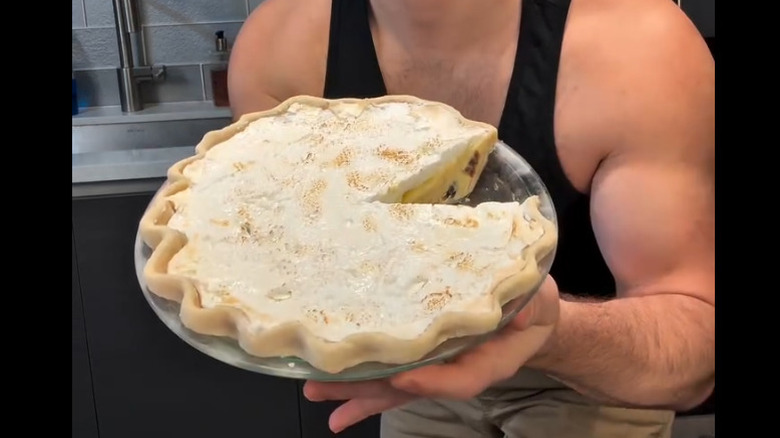
Midwesterners, much like the rest of the United States, love a good pie. Sure, apple and cherry are certainly classics, but the Heartland boasts some other unique creations, like sour cream raisin pie.
Though its name doesn't sound too appealing — like something your grandmother might have made — many Iowans adore it. Look beyond the name and you'll find that the dessert is rather delectable. Sour cream raisin pie features a custardy interior made even richer by the addition of sour cream. The sweet and chewy raisins are incorporated into that custard, and the entire pie is finished off with a toasted meringue topping, or in some instances, whipped cream.
Sour cream raisin pie comes from the Hawkeye State's Amish and Mennonite communities, but it continues to be a cornerstone of Iowa's dessert scene. Pop into diners, family restaurants, or bakeries across the state, and there's a good chance you'll be able to snag yourself a piece.
7. Kringle
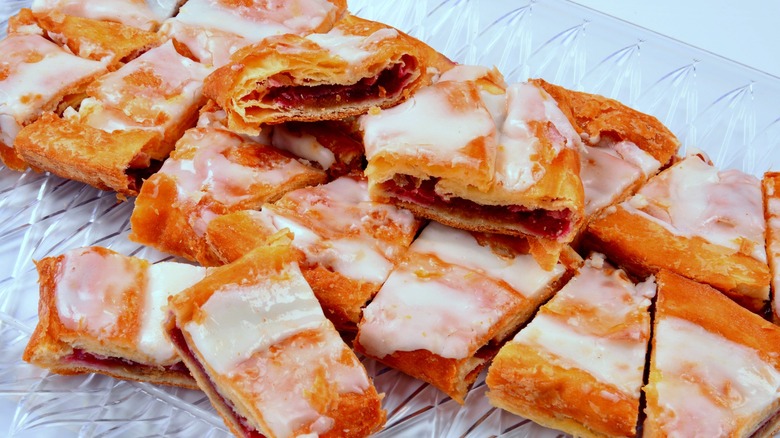
Wisconsin has an official state pastry, and it's the Kringle. Hailing from Denmark, the Badger State delicacy was popularized in Racine — a city in the southeast corner of Wisconsin where many Danish immigrants flocked beginning in the mid-19th century. Having been around for decades, O&H Danish Bakery and Racine Danish Kringles are two of the biggest names in the game, and nowadays they ship out the dessert to all corners of the globe, and even to grocery stores like Trader Joe's, Aldi, and Costco.
"But what exactly is a Kringle?" you may ask. In essence, it's a family-sized, oval-shaped, flaky, buttery pastry that's filled with anything from fruity jam to sweet cream cheese to nuts. All of that is topped with a sugary frosting or glaze. Kringle is especially popular during the holidays, and the tradition of sharing it with loved ones embodies the Danish concept of "hygge," slowing down to enjoy the simple things in life.
8. Mackinac Island fudge
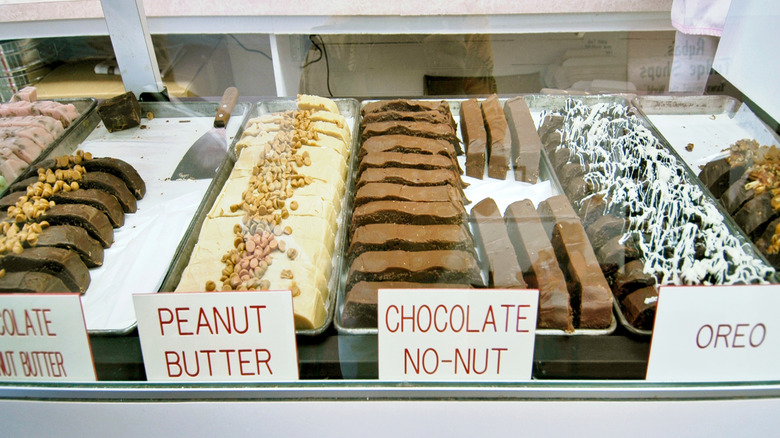
Mackinac Island is synonymous with one particular treat: fudge. And while the tiny island in Michigan certainly didn't invent the dessert, its robust candy industry has earned it the title of Fudge Capital of the World.
During the Victorian era, Mackinac Island became a hub for summer tourists who would visit the island to relax and enjoy some sweets. Though maple candy was initially a hit, it was when the Murdick family moved to the island in the 1880s and opened a candy shop that fudge really took off.
Rome Murdick turned his candy making into a sort of theater, preparing the fudge on marble slabs in front of a picture window to allow passersby to watch the magic as the hot fudge cooled into a solid to be sliced and sold. Soon enough, competitors emerged, mimicking the Murdick method. In the nearly century-and-a-half since fudge making came to the island, the demand for the dessert has only expanded, and during the tourist season in the summertime, the entire island produces upwards of 10,000 pounds of fudge daily. So even though fudge can be so expensive, if you find yourself on Mackinac Island, you might as well grab a slice.
9. Bumpy cake
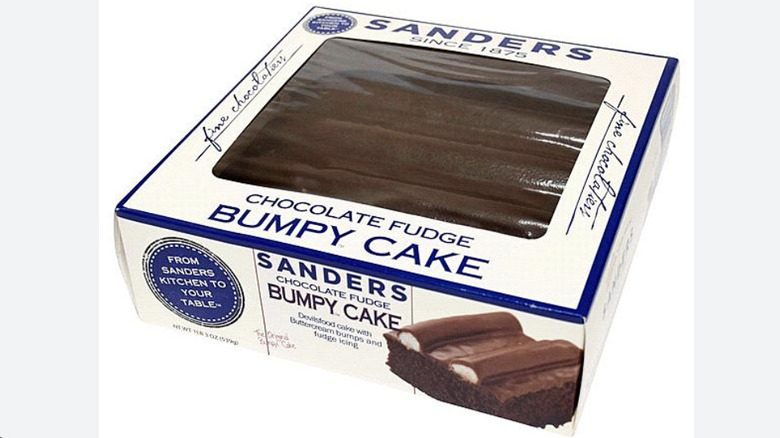
Though the name might conjure up an image of something rather unappetizing, Michiganders in the metro-Detroit area swear by a dessert called bumpy cake — a rich chocolate devil's food cake topped with buttercream ridges (this is where the "bumpy" part comes in) and covered in a glossy chocolate ganache.
Bumpy cake dates back to 1912, when confectioner Fred Sanders decided to create a dessert as an homage to his father, who had been the one to introduce him to the profession. Sanders' father had an affinity for devil's food cake, so he spent long hours looking to develop a dessert that highlighted the classic flavor. During one of his trials, Sanders was running low on buttercream and simply piped on four ridges. It ended up being quite the stroke of serendipity as folks loved the odd-looking but ultra-delicious dessert.
Sanders initially named it "devil's food buttercream cake," but as customers requested the cake with the "bumps" on it, the confectioner changed the name, and it went on to become the iconic Michigan cake that Sanders Candy still makes today.
10. Cream puffs
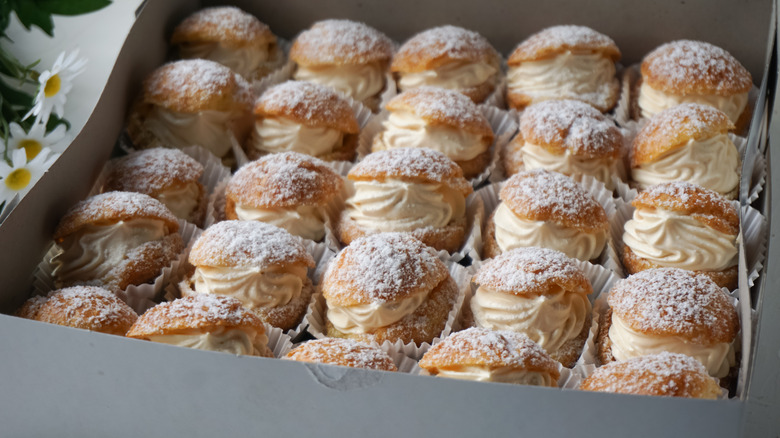
Midwesterners take their fair foods seriously, and Wisconsin is no exception. The most popular item at the Wisconsin State Fair is none other than the cream puff. It's made up of a light and airy choux pastry that's sliced lengthwise and absolutely stuffed to the brim with a sweetened whipped cream. The sweet sandwich is then dusted with a hearty helping of powdered sugar. Even though the dessert originated in France (non-Wisconsinites might know it by the French names "choux à la crème" or "profiterole"), America's Dairyland has adopted it into its culinary tradition.
The cream puff was introduced at the fair in 1924 as a way to promote the state's dairy industry. Considering the fact that nowadays up to five dozen cream puffs are sold every minute during the fair, it's safe to say that was a smart move. For over 100 years, attendees have been going nuts for the dessert, and each year more than 400,000 cream puffs are sold across the 11 days of the Wisconsin State Fair.
11. Hoosier pie
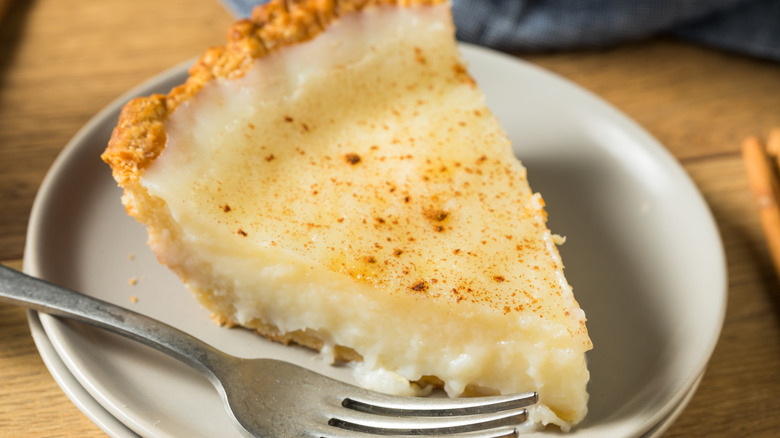
Sugar and flour — staples you'll find in nearly every pantry across the nation. But with the simple addition of cream, those three humble ingredients come together to make something particularly delicious: Hoosier pie.
As you may have guessed, Hoosier pie has roots in Indiana. Also known, for obvious reasons, as sugar cream pie, the simple yet delectable dessert is connected to the state's Shaker and Amish communities in the 19th century. When fresh fruit was in short supply but that darn sweet tooth was begging for a sugar fix, Hoosier pie became the go-to.
Making Hoosier pie is a pretty straightforward process. Prepare a traditional buttery pie crust (just make sure to avoid these common pie crust mistakes) and line your baking dish with it. Then, mix a healthy amount of brown sugar with just a bit of flour directly into that unbaked crust. Pour your cream right over top, give it a gentle mix, and pop it in the oven. Sure, it's simple, but there's a reason why the dessert has been a mainstay in Indiana's food landscape for over two centuries.