

14 Foods That Were Created Totally By Accident
We may receive a commission on purchases made from links.
Some of the greatest culinary breakthroughs didn't come from years of research or Grandma's secret recipe book; they came from chaos, forgetfulness, or straight-up laziness. Humans, after all, are very good at making mistakes. But when those mistakes involve sugar, heat, or dairy products left in questionable places, the results can sometimes change food history.
Think of this as the ultimate kitchen blooper reel. You've probably had your fair share of accidents while cooking: burned toast, oversalted soup, maybe that one time your attempt at homemade sourdough turned into a sentient science experiment. But every once in a while, the universe rewards our disasters with something delicious.
Whether it was a bored kid, a petty chef with a grudge, or some enthusiastic bacteria working overtime, these accidental food inventions prove a vital truth: Sometimes the best things in life happen when someone royally screws up and then, out of curiosity, decides to eat it anyway. Here are 14 iconic foods that were never supposed to happen ... but thank goodness they did.
1. Potato Chips
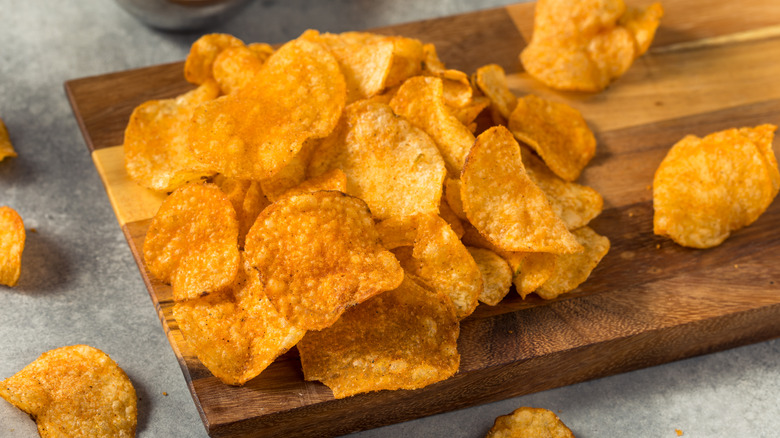
In 1853, at a resort in Saratoga Springs, New York, a salty little act of culinary revenge may have given us one of the world's favorite snacks. As the story goes, railroad magnate Cornelius Vanderbilt was dining at Moon's Lake House when he sent back his fried potatoes, complaining they were too thick and soggy. In response, chef George Crum allegedly sliced a new batch razor-thin, fried them to a crisp, and piled on the salt — fully expecting Vanderbilt to hate them. Instead, he loved them. The dish caught on and became known as the "Saratoga Chip," named after the resort town where the whole saga supposedly took place.
But like any delicious legend, this one comes with a few side notes. Some historians argue that Crum's sister, Catherine "Aunt Kate" Wicks, may have played a key role in their invention. Others suggest the chips were already being served at Moon's Lake House before Vanderbilt's arrival, or that Crum simply refined an existing recipe. One thing is for sure: Chips were popularized in Saratoga Springs.
And while they're iconic as-is, there are plenty of uses for chips that transcend snacking. Think crispy coatings for fried chicken, buttery crusts for mac and cheese, or a genius topping for casseroles. Revenge never tasted so versatile.
2. Chocolate Chip Cookies
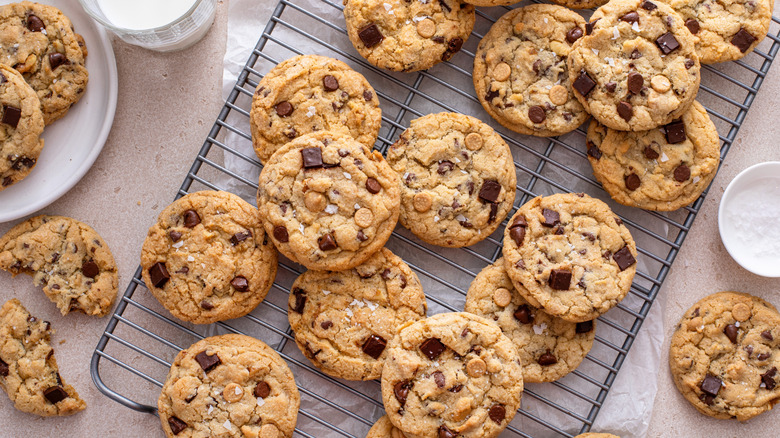
In 1939, Ruth Wakefield, the owner of the Toll House Inn in Whitman, Massachusetts, changed dessert history with what was essentially a baking experiment. While preparing a batch of cookies, she chopped up a Nestlé Semi-Sweet chocolate bar and mixed the pieces into the dough. She expected the chocolate to melt completely into the batter, but the chunks held their shape, softening just enough to create pockets of gooey chocolate in each bite.
The cookies became so popular that the Ruth's Toll House Crunch Cookie recipe was published in a Boston newspaper. What began as an accidental twist on a butter cookie quickly became a sensation. Nestlé took notice and reportedly purchased Ruth's recipe for only $1, a job writing other recipes, and free chocolate for life. Now, Ruth's Toll House cookie recipe can be found on the back of every yellow bag of Nestlé chocolate chips sold. Not a bad trade for what was essentially a happy kitchen accident.
3. Popsicles
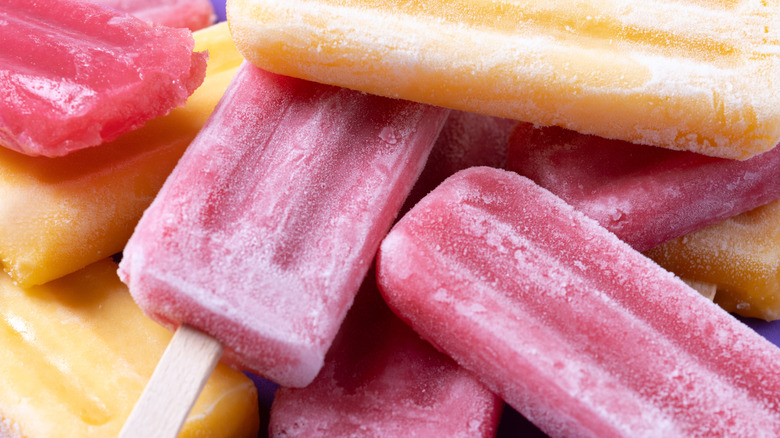
In 1905, an 11-year-old boy named Frank Epperson made a mistake that would go on to become one of the most iconic summer treats of all time. One chilly evening in San Francisco, young Frank mixed a powdered soda drink with water and left it outside with a wooden stir stick still in the cup. Overnight, temperatures dropped. By morning, the mixture had frozen solid, with the stick perfectly embedded in the center. Instead of tossing it out, Frank pulled the frozen treat from the cup and tasted it.
He originally called his accidental invention the "Epsicle," a mashup of his name and "icicle." He started selling them around his neighborhood, but in 1923, he expanded to a nearby amusement park, where they were instantly a hit. People loved the convenience of being able to enjoy ice cream without needing a spoon or cup. His own children started calling it "Pop's 'Sicles," and the new name stuck. By 1924, Epperson had patented the frozen novelty and began mass production. Despite later selling the rights, his childhood mishap had already made history.
Today, Popsicles are sold in dozens of flavors and shapes, far beyond the original soda mixture. Creative home cooks have even reimagined them as a fun frozen take on a breakfast parfait or layered with real fruit juice and yogurt. All because an 11-year-old kid accidentally forgot his drink on the porch.
4. Corn Flakes
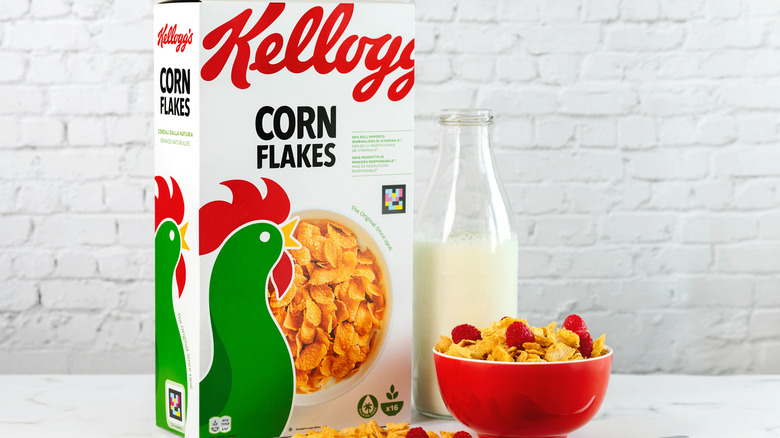
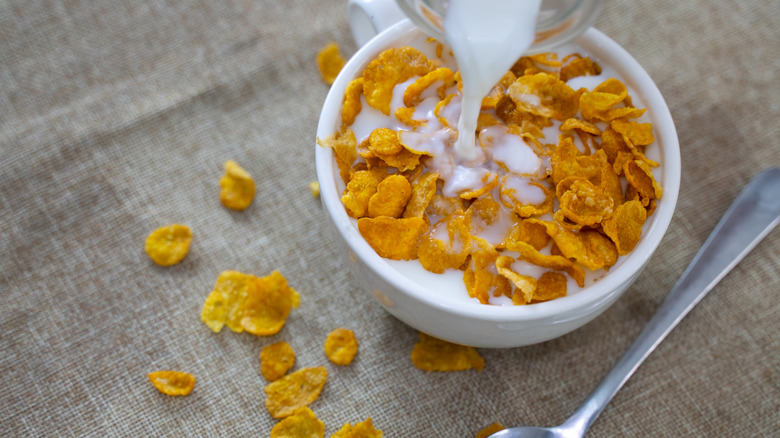
Corn Flakes were not born in a laboratory or crafted through years of recipe testing. Instead, they were the result of an accident in the kitchen of a sanitarium in Michigan. In the late 1800s, Dr. John Kellogg was working at the Battle Creek Sanitarium in Michigan, where he was the superintendent. Along with others, including his brother, Will Kellogg, he was experimenting with different foods to create healthy alternatives for the patients.
One day, a batch of wheat cereal dough was accidentally left sitting out for too long, and it began to ferment. Rather than tossing it, they rolled it into thin sheets, and it broke into thin flakes. When toasted, the Kelloggs discovered the flakes were not only edible but also surprisingly tasty. Will repeated the process and continued testing it for a few more years until he discovered that corn, instead of wheat, was even better.
Will saw the commercial potential for the cereal, and corn flakes were soon being produced in volume and sold to the public. While they were originally intended as a health food, Corn Flakes went on to become a breakfast staple.
5. Worcestershire Sauce
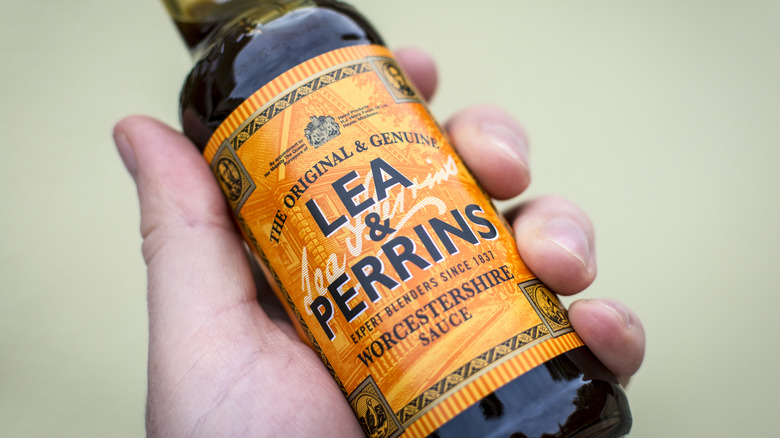
Worcestershire sauce is a dark, tangy condiment that can be found in kitchen cupboards around the world, but it was originally the result of what was considered a failed experiment. In the early 1800s, a British general asked two Worcester pharmacists, John Lea and William Perrins, to recreate a sauce he had encountered in India. The men attempted to blend a mix of ingredients which smelled similar to the description but tasted... not great. In fact, the inventors of Worcestershire sauce did not even like it at first.
Rather than throw it away, they stored the batch in their cellar and eventually completely forgot about it. Years later, while they were cleaning out their cellar, they rediscovered the concoction. Upon tasting it, they realized it had undergone a dramatic transformation. Fermentation had likely mellowed it out allowing the flavors to blend over time.
Lea and Perrins bottled this and began selling it in 1837. Thanks to marketing and sampling on British ocean ships, it quickly became popular in England. Eventually it became a staple ingredient in everything from Bloody Marys to Caesar salads. Its unique umami punch also makes it a secret weapon in stews, marinades, and burger mixes. Not bad for an experiment that sat neglected in a basement for months (maybe even years).
6. Instant Noodles
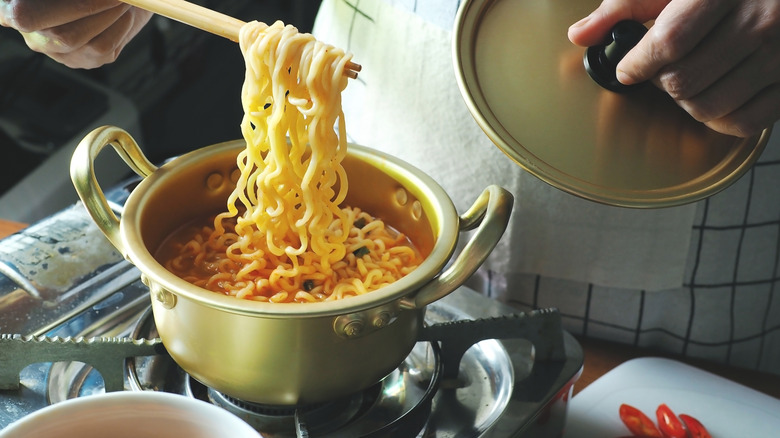
In postwar Japan, inventor and entrepreneur Momofuku Ando was struck by the sight of long lines of people in the cold hoping for a warm meal. Food was scared in Japan at this time which inspired Ando to find a better solution. He set a goal to create affordable, convenient comfort food for the masses using American wheat which was an ingredient recommended by the government in post-war cooking. In particular, Ando identified that noodles were wheat-based and wanted to create one that could be made at home with just water.
For a full year, Ando experimented tirelessly in a garden shed behind his house. He tried every preservation method he could think of, but nothing quite worked. Then one day, while watching his wife make tempura, inspiration struck. He noticed how the hot oil drew moisture out of the flour coating on the tempura batter. He realized that if that same principle could be applied to cooked noodles, they might be dehydrated and preserved.
Ando perfected the method by flash-frying cooked noodles in hot oil, creating a product that was shelf-stable, easy to rehydrate, and packed with flavor. In 1958, the first chicken-flavored instant ramen hit store shelves. Surprisingly, it was marketed as a luxury item at ¥35 per serving, costing almost six times more than fresh udon noodles (¥6). But the convenience caught on. After more innovation, Ando introduced Cup Noodles in 1971, and today, instant noodles are essentially an entire category of cuisine.
7. Yoghurt (or Yogurt)
Yogurt may be your go-to for gut health, smoothie bowls, and pretending to eat clean, but its origins are humble and frankly a little gross. According to many Bulgarians and some historians, yogurt was born in Bulgaria over 4,000 years ago when milk was carried in animal skins by nomads. This created a warm, moist environment, perfect for fermentation. It is suspected that it was left in these skins too long and curdled, thanks to having no refrigeration. Someone must have decided it would be a good idea to try eating it, and since it didn't kill them, they continued eating it.
Thousands of years later, the entire country prides itself on being the maker of high-quality yoghurt made with native bacteria that only thrive in Bulgaria. Traditional Bulgarian yoghurt was made with raw milk from whatever animals were around (sheep, buffalo, or cow, depending on the season). However, today's grocery aisle versions are almost exclusively cow's milk. This accident started the consumption of probiotics before it was trendy.
8. Pink lemonade
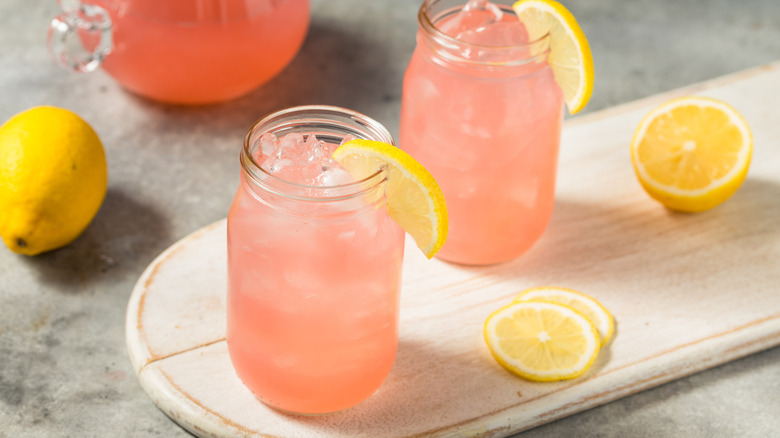
There are two competing theories on the origin of pink lemonade, and neither involves fresh strawberries nor artisanal rosewater. Instead, both stories claim that pink lemonade was allegedly invented at the American circus in the 19th century. The most plausible version comes from the obituary of circus man Henry E. Allott, who claims he accidentally changed the color of a batch of lemonade when he dropped red cinnamon candies into it. Rather than tossing the now-pink drink, he sold it anyway.
The second theory is a bit... less appetizing. In a book about circus performers, The Ways of the Circus: Being the Memories and Adventures of George Conklin Tamer of Lions, it is claimed that vendor Pete Conklin was running low on water when preparing his next batch of lemonade. In a moment of entrepreneurial desperation, he spotted a basin of dirty water recently used to wash pink circus tights and repurposed it as the base for his lemonade. When questioned about the color, he explained it was 'strawberry lemonade'. This drink thenceforth became a circus classic.
9. Chimichanga
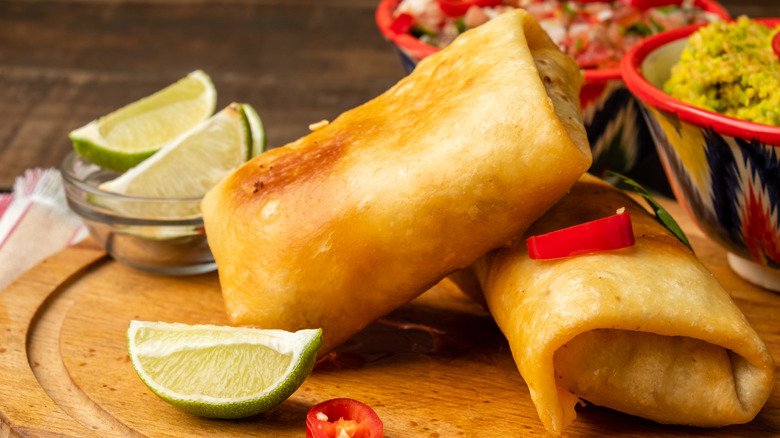
The word chimichanga is believed to be a playful Spanish euphemism, loosely translating to "thingamajig". It started out as a culinary accident that turned into a deep-fried legend. According to one of the most widely accepted accounts, Monica Flin, the founder of El Charro Café in downtown Tucson, invented the modern-day chimichanga in the late 1940s when she was making a late-night snack and accidentally dropped a bean burrito into the deep fryer. Flin reportedly blurted out "chi-" (the Spanish equivalent of a common English curse word) before realizing her young nieces and nephews were present. To avoid swearing in front of them, she changed what she was going to say to "chimichanga!" Today, it is still beloved, and variations exist that are both sweet and savory.
So what makes a chimichanga different from a burrito? It's all about the fry. A burrito is soft and doughy both on the inside and outside. A chimichanga is crispy on the outside and an explosion of melted flavor on the inside. The deep-frying process transforms a simple wrap into greasy, crunchy perfection.
10. Champagne
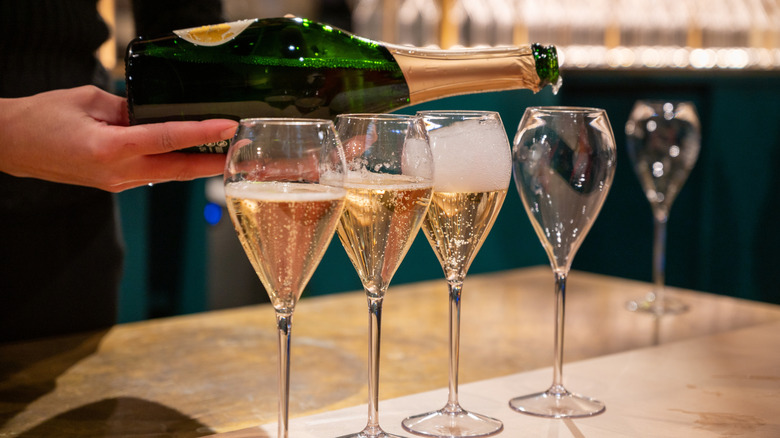
Today, Champagne is the drink of toasts, celebrations, and high society, but its sparkling bubbles began as a total accident. In the early days of French winemaking, wines underwent two separate fermentations. Because wines from the Champagne region were often bottled right before winter, the cold weather prematurely paused fermentation. Once spring arrived, the dormant yeast woke up and resumed fermenting inside the bottle. This caused carbon dioxide to build up, resulting in unexpected fizz.
At the time, this was considered a flaw. Bottles would often explode, and winemakers referred to the bubbly outcome as "le vin du diable," translated to the "devil's wine." Winemakers were frustrated by the unpredictability and the mess from double fermentation; the bubbles were not initially viewed as elegant or refined but rather as the unfortunate result of an incomplete fermentation process that increased the pressure in the bottle.
Over time, though, people began to enjoy the effervescence. English consumers, in particular, developed a taste for the sparkling version, which helped to shift its reputation. What started as an unstable fermentation experiment is now one of the most coveted styles of wine in the world.
11. Ice cream cone
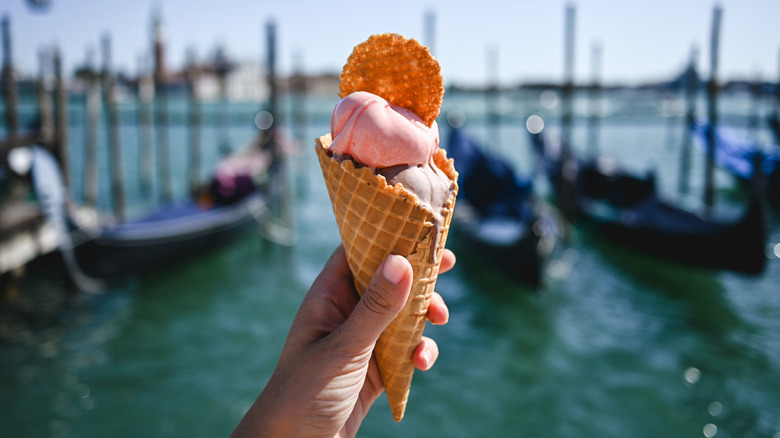
The accidental invention of the ice cream cone is often credited to a sweet stroke of teamwork and timing at the 1904 World's Fair in St. Louis. As the story goes, an ice cream vendor ran out of bowls during the rush and had no way to serve his frozen treats. Next to him, a Syrian concessionaire named Ernest Hamwi was selling zalabia, a thin waffle-like pastry. Seeing the vendor in a bind, Hamwi rolled one of his pastries into a cone shape and handed it over as a makeshift holder. The combination was a hit, and Hamwi later founded a cone company.
Before cones were invented, ice cream was served from glass dishes or even out of paper wrappers, which were less convenient and far less satisfying to bite into. Whether by necessity or genius, we are thankful someone thought of rolling a waffle into a cone shape for a portable summer dessert.
12. Coca-Cola
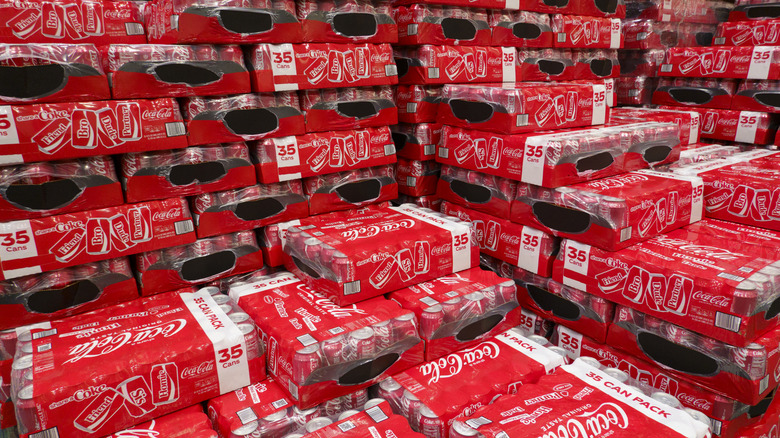
Coca-Cola was not created to be a soft drink. It was originally developed as a medicinal tonic by Dr. John S. Pemberton, a pharmacist in Atlanta, Georgia. In 1886, Pemberton developed the original formula as a remedy for headaches and upset stomachs. It was made from a blend of coca leaf extract and caffeine-rich kola nut, and he called it Coca-Cola, combining the two key ingredients in the name. It was originally sold at Jacob's Pharmacy, where it served as a health elixir for five cents a glass. Eventually, it was mixed with carbonated water, and customers loved the bubbly twist. The new version quickly gained popularity. The added carbonation gave the drink a refreshing quality and set it apart from other tonics of the time. Though Pemberton never saw Coca-Cola become a global phenomenon, his invention laid the groundwork for one of the most recognizable brands in the world. What started as a pharmacy concoction ended up changing beverage history one fizzy glass at a time.
13. Nutella
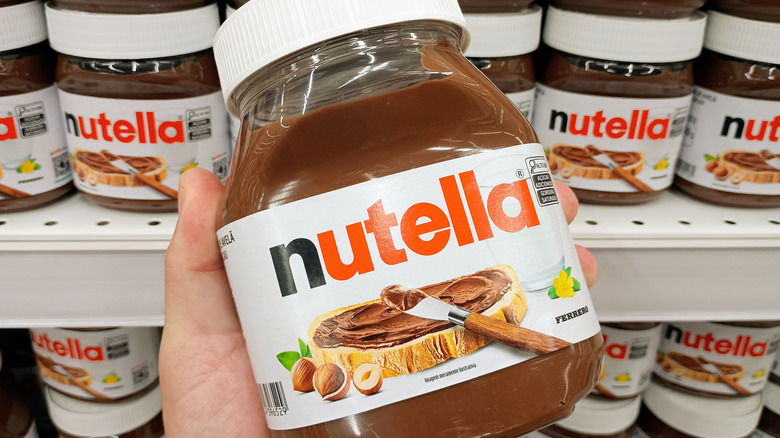
Nutella's origin story begins during a time when cocoa was scarce and expensive. In Piedmont, Italy, pastrymaker Pietro Ferrero was determined to create a sweet treat that made the most of limited resources postwar. In 1946, he developed a loaf-shaped paste made from hazelnuts, sugar, and just a small amount of rare cocoa. It was called "Giandujot" named after a local carnival character, and was designed to be sliced and eaten with bread.
The innovation worked because hazelnuts were abundant in Piedmont, and this allowed Ferrero to stretch the cocoa supply. In 1951, the original loaf evolved into a creamy, spreadable version called SuperCrema, which became wildly popular for its rich, chocolate-hazelnut flavor. In 1964, Pietro's son, Michele Ferrero, perfected and renamed the product Nutella. This smooth, sweet spread captured hearts across Europe and eventually around the world. Its distinctive sweet cocoa-hazelnut flavor made it a staple ingredient in desserts. What started as a clever solution to a cocoa shortage turned into one of the most beloved spreads globally.
14. Popcorn
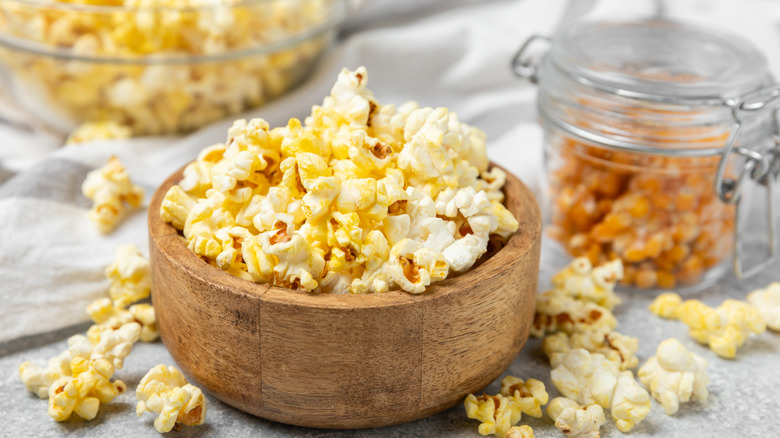
Of this entire list, popcorn is the oldest item on this blooper reel. With records of maize being harvested by Native Americans over 7,000 years ago, the exact origins of popcorn are impossible to pinpoint. But, based on fossils found in 2012 in Peru, we know that popcorn was originally popped directly on the corn cob, so it is possible that early civilizations likely stumbled upon popcorn while trying to reheat preserved corn. There are many ways to store corn in modern day, but in ancient times, food was preserved by drying it out so it would last longer.
While roasting fresh corn creates the most delicious sweet smoky corn on the cob we all know and love, roasting dried corn would have a very different result. When dried corn kernels are exposed to high heat, the steam trapped inside each kernel creates pressure until the kernel bursts open. This process turns the dried corn kernels into soft, foamy, and crunchy puffs. We can only imagine the surprise of the first people to witness the transformation of dried corn to popcorn. Over time, people began enhancing the popped kernels with salt, sugar, and eventually butter, transforming them into a beloved treat.