

7 Historic American Dishes No One Eats Anymore
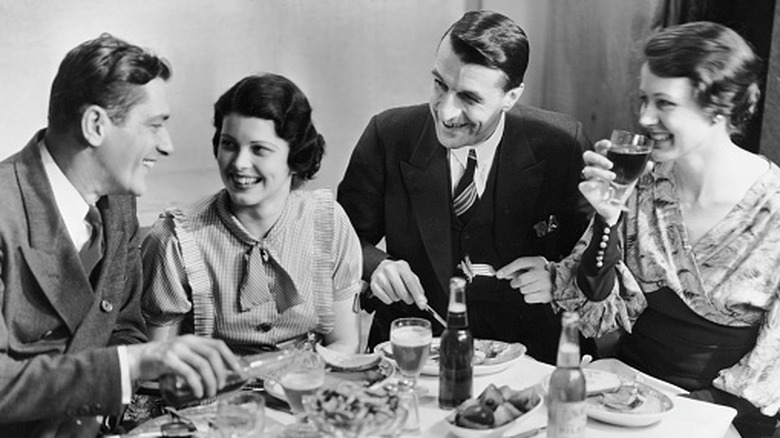
Culinary traditions have changed dramatically since the beginning of the American experiment, largely because the country itself has changed. Some foods that were once staples of the American dinner table have all but disappeared, replaced by newer recipes, convenience foods, and ingredients that better reflect modern tastes. Over time, industrialization, mass production, changing agricultural practices, shifting populations — and the declining availability of certain plants and animals — all shaped what Americans eat and how they eat it.
In some cases, dishes simply fell out of fashion. Others became less practical to prepare as ingredients grew harder to find or cooking habits changed. And while some colonial-era historic restaurants in Massachusetts still serve a taste of the past, we largely don't eat the same meals our forefathers did. These seven historic dishes offer a glimpse into what previous generations ate, and why those meals have largely disappeared from today's dinner tables.
1. Turtle soup
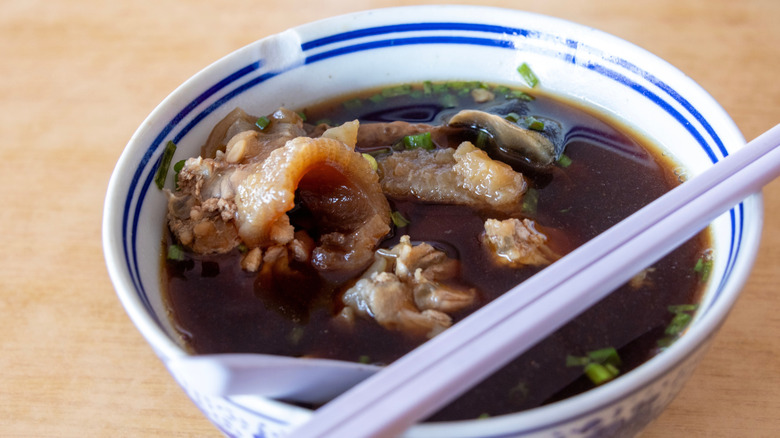
Turtle soup was a popular American dish for thousands of years, with evidence that an Indigenous tribe called the Calusa hunted and ate turtles in southern Florida long before Spanish explorers discovered it in the 1500s. British explorers caught wind of turtle soup, first with sailors using turtles as an emergency food supply and later with aristocrats importing green sea turtles from overseas.
Originating in American South and Caribbean cuisine, turtle soup became a delicacy in Europe. Colonists brought recipes with them, and by the mid-1700s turtle soup was back in America where it once belonged. Of course, green sea turtle was not widely available, so innovative American chefs began using snapping turtle, box turtle, and diamondback terrapin. "Turtle frolic" parties became an American pastime of the 18th century, with states as far north as historic Rhode Island throwing lavish parties when sailors were able to catch a large meal. The stew usually included vegetables like onion, carrots, and turnips, mixed with turtle meat and broth. Often, people served the soup in the turtle's shell for large groups to share.
This food trend continued up until fairly recently. The sea turtle population dwindled considerably by the 1820s, but people kept eating them despite higher prices. Other species quickly followed suit, with terrapin lasting on menus until the 1950s. The Endangered Species Act of 1973 criminalized hunting green sea turtles, eventually causing the soup to disappear from menus.
2. Hoover Stew
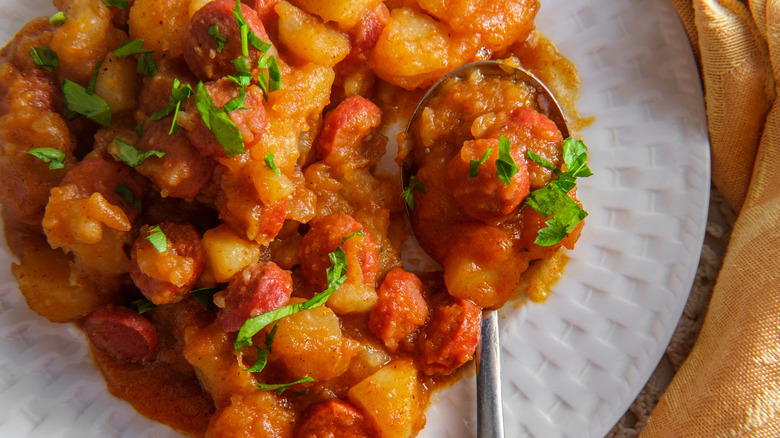
Hoover Stew gained popularity during the Great Depression. It was made with cheap ingredients people may have already had in the pantry, in an era when even having a meal was a luxury for many. Traditionally made with cut-up hot dogs, canned tomatoes, canned corn, and elbow macaroni noodles, Hoover stew could be customized by substituting any canned vegetables and noodle shape one had. Beans were also a popular addition to Hoover Stew for many families.
Soup kitchens in the 1930s regularly served Hoover Stew to countless Americans waiting in breadlines. The signature Great Depression meal was unlovingly named after the 31st president, Herbert Hoover, who began his administration in 1929 and showed little interest in supporting working-class people or ending the decade-long depression. Hoover Stew — along with tent cities called Hoovervilles — were named to jab at the one-term president. The meal — and the term —fell out of fashion during WWII, when the United States bounced back from years of widespread poverty.
3. Chipped Beef on toast
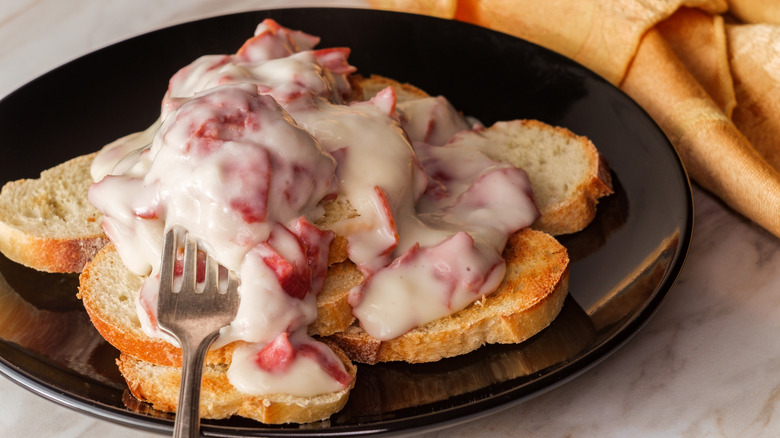
Chipped beef on toast, or the even more questionable creamed chipped beef on toast, was a quick, easy meal primarily served to active service members during World War I and World War II. It garnered many names throughout the years by military men, including "S.O.S." which stood for "same old slop," "save our souls," or "sh** on a shingle." Pick whichever of these names sounds most appealing.
The recipe has appeared in Army cookbooks for over 100 years, with various iterations hitting mess halls throughout American history. The most common version combines thinly shaved beef trimmings with butter, flour, milk, and salt and pepper. Flour and butter are used to create a roux, and milk is added to make the creamy sauce poured over the beef. All of this tops a slice of toasted bread for something that one could I guess call breakfast. Some lucky soldiers got to enjoy additional toppings like peas or onion.
Chipped beef on toast was designed to feed lots of hungry soldiers, often up to 60 men at a time. It was a cheap and easily accessible meal that, thankfully, was lost to time.
4. Jell-O Salad
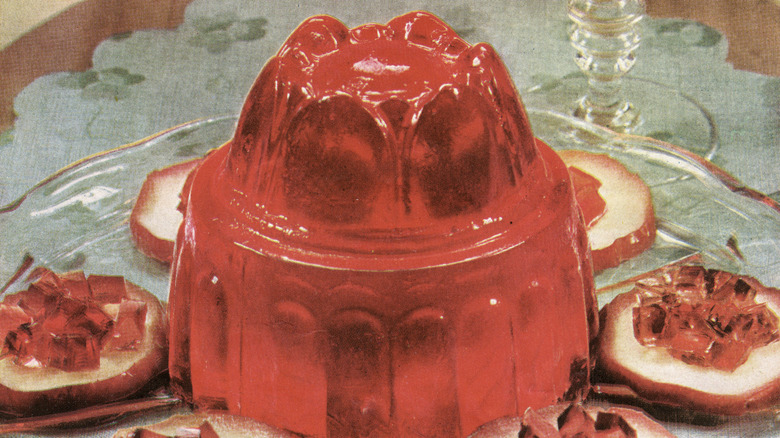
When you think of American culture in the 1950s, you likely think of the Jell-O salad. This gelatin gruel was particularly popular at stereotypical 1950s gatherings across the Midwest, including church events, potlucks, and sock hops.
Gelatin had been around long before the 1950s, though, first invented in the late 1800s and primarily eaten by wealthy Europeans. During World War II, the United States military spent millions of dollars on improving refrigeration and other food sciences out of necessity to continue feeding the 16 million U.S. service members. As a result, gelatin became accessible to regular Americans once the military passed that technology on.
Jell-O and Jell-O salads soon became household staples, thanks in part to marketing campaigns aimed at women and children. Advertisements played up the glamour and convenience of serving colorful molded dishes, often depicting mothers preparing meals with their young children. Schools even taught students how to whip up Jell-O salads and other modern convenience foods. By the mid-'50s, the craze had peaked, with home cooks experimenting with savory combinations featuring tuna, stuffed olives, and celery. But the futuristic appeal didn't last. By the 1970s, changing tastes and healthy-eating campaigns that encouraged Americans to cut back on sugar had helped push these elaborate creations out of fashion, and the Jell-O salad was headed for extinction.
5. Robin Pie
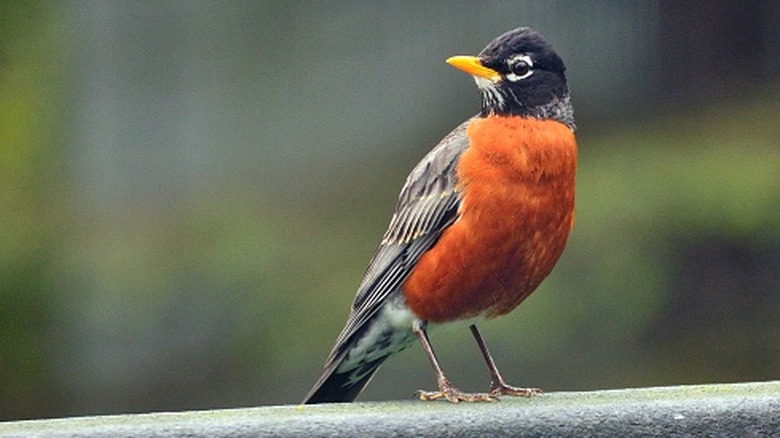
The American robin was once used as a protein option for many American dishes, none more famous than robin pie. This baked, savory dish stuffed multiple robins — oftentimes up to a dozen of them — into a pie alongside beef and bacon.
One of the earliest recordings of Americans eating robins stems from a 1671 letter by Englishman John Josselyn, who later became famous for his published works about life in the colonies. He describes one of his findings, the American robin, as "thrushes with red breasts, which will be very fat and are good meat." For years, robins were primarily eaten in the fall and winter months after they had the opportunity to fatten up over the summer.
Unlike some other species on this list, the story of the American robin actually has a happy ending. Despite being eaten regularly and unceremoniously until the late 1800s, the American robin population is still thriving today, even listed as a "least concern" among the IUCN Red List of Threatened Species. People discover that these small birds were actually helpful on farms, eating bugs that harmed crops. Shortly after, The Migratory Bird Treaty Act, signed by the United States and Canada in 1918, prohibited the hunting or selling of protected migratory birds such as the American robin without a government-appointed permit. Other countries followed suit in later years, protecting a valuable bird species that many Americans see out of their windows every day.
6. Ambrosia salad
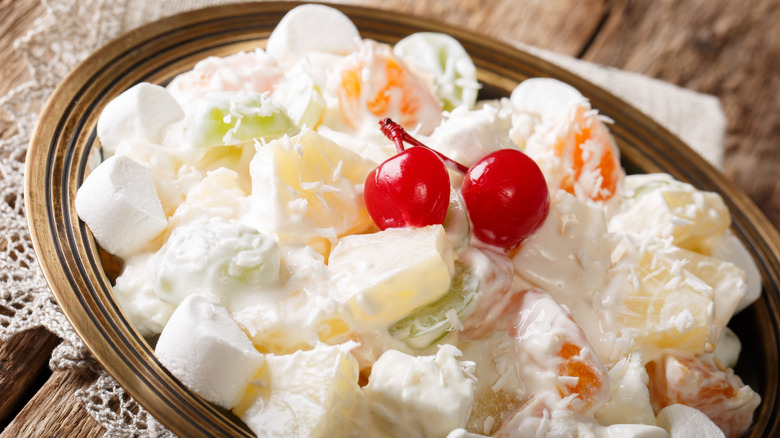
Most people can conjure an image of ambrosia salad despite never tasting it themselves. A Southern holiday staple, this controversial dish is believed to have originated in the late 1800s, during the Gilded Age, thanks to the transcontinental railroad and the burgeoning availability of previously exotic foods like coconut and oranges.
The first record of ambrosia salad was found in the 1867 book "Dixie Cookery; or, How I Managed My Table for Twelve Years." The simple recipe consisted of just pulped oranges and shredded, sweetened coconut. At first, ambrosia salad was typically for those with the money to acquire the fruits that the recipe calls for. The recipe caught on as more people — particularly southerners and midwesterners — gained access to new and exciting fruits and pantry staples. In the late 1920s, ambrosia changed forever with the introduction of marshmallows,making the sticky sweet treat we kind of know today.
The ambrosia salad was eaten regularly for around 100 years before it lost its novelty. The gooey side dish or dessert (depending on who you ask) hit its peaks in popularity in the 1950s and 1970s, reaching global acclaim as far as Australia. The Filipino fruit salad was inspired by ambrosia due to years of American rule over the islands. By the 1980s, however, diet fads and anti-sugar campaigns started the downfall of ambrosia while citrus became easily accessible all year round. Ambrosia was no longer the food of the future, but became a food of the past.
7. Roast beaver tail
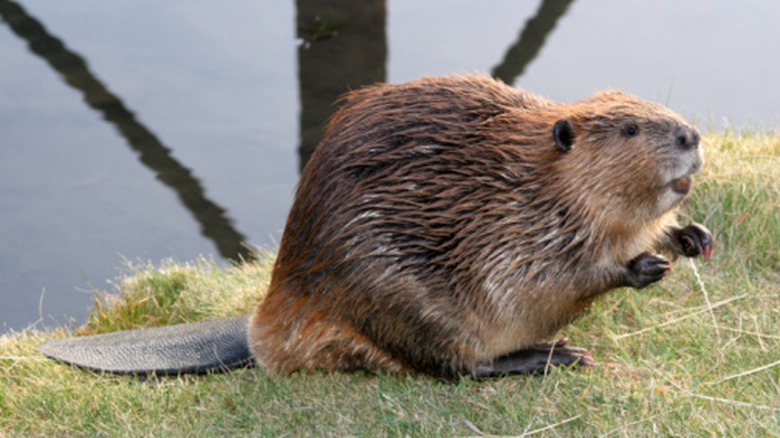
Beaver was a hot commodity in North America throughout the 1600s, so much so that the nearly hundred-year French and Iroquois Wars was colloquially named the "Beaver Wars." Native Americans counted on these beavers as a main source of food, while considering the tail a delicacy.
Settlers in cold climates like the Great Lakes region hunted specifically for beaver tail because it was rich in fat and could sustain a person in the wilderness who was in desperate need of food. The tail has a texture similar to pork rinds or baby back ribs, and was roasted over an open flame.
By the late 1800s and early 1900s, the North American beaver was nearing extinction, largely due to overhunting for its meat and fur. Conservation efforts, including trapping restrictions and relocation programs, eventually helped the population rebound in the tens of millions. The beaver is still part of the culinary conversation today, although you're much more likely to encounter one in the form of a BeaverTail, the popular Canadian pastry. Fortunately, we no longer need to eat dense sticks of beaver fat to survive.