

The Simple Cooking Habit That Will Ruin Induction Stovetops
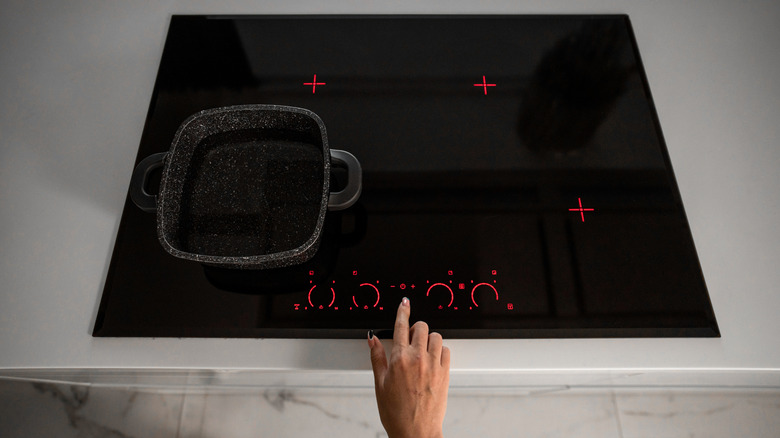
A scientific marvel that works by using electromagnetism, induction stovetops provide quick heating without the harmful byproducts of gas or the hard-to-clean metal coils of some electric stovetops. As long as you confirm your cookware is induction compatible, the sky's the limit for the types of meals you can make. While you can cook everything from omelets to chicken and rice, it's important to be aware of how you use your stovetop to avoid premature or unnecessary wear and tear. Dragging pots and pans across the induction surface can create unsightly scratches, as does using pans with bottoms that don't lie flat.
Some pots and pans, like cast-iron models, have abrasive bottoms that are especially prone to leaving scratches if dragged across an induction cooktop. The risk of damage increases with heavier cookware that presses down on the stovetop harder. Sugar or salt grains on the cooktop and burnt food on the bottom of your pans can also create scratches. This doesn't mean you can't use cast iron on an induction stove, but you'll have to pay attention to how you handle this and other materials. Take the extra few seconds to lift your cookware using potholders or handle covers instead of sliding it. Minor scratches won't affect the cooktop's performance, but it can be discouraging to see the smooth surface marred by lines.
Ways to protect your induction stovetop from damage
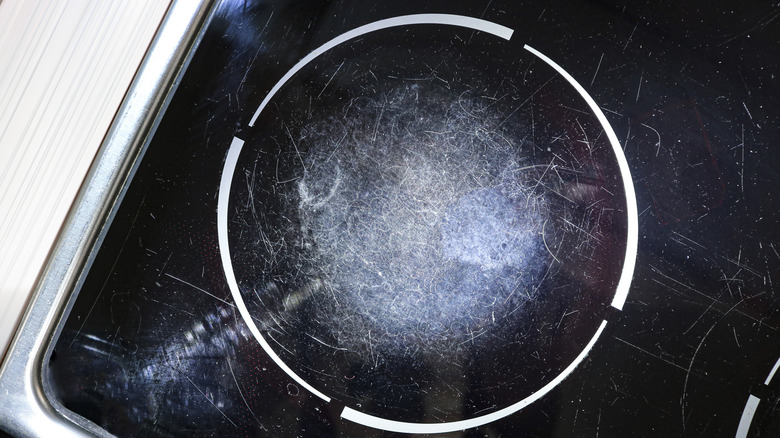
Many home cooks with induction stovetops place heat-safe items underneath their cookware or across the entire cooktop surface to facilitate easier movement of pots and pans and avoid scratches. Silicone mats and induction pads are popular choices as they allow an induction-compatible pan to heat up as normal without interfering with the process.
Make sure your pots and pans have flat, smooth bottoms without burrs, caked-on food, or uneven spots. Keep in mind that warped and uneven pots may not heat thoroughly due to not making full contact with the cooktop. Similarly, don't use rough materials like steel wool or stiff-bristle brushes to clean your glass stovetop. You can use a scraper if you keep it at a flat angle to avoid scratches. Harsh cleaning solutions containing ammonia can also compromise the surface by leaving permanent stains.
If your stovetop already has minor scratches, gently polishing it with a baking soda paste can smooth out and reduce the appearance of these marks. The abrasive particles in baking soda act as buffing agents. Any large or deep scratches will likely need professional work. Induction cooktops may have some downsides despite their many benefits, but you can easily address these with care and attention.