

14 Classic Foods That People Ate On The Oregon Trail
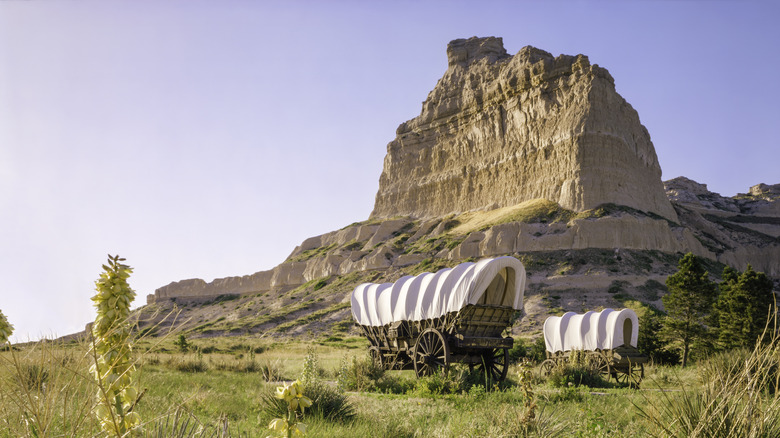
In the middle of the 19th century, hundreds of thousands of intrepid American pioneers set out on a two-thousand mile, East-to-West journey in search of their personal versions of Manifest Destiny. The trek was grueling: Dangers ranging from severe weather, communicable disease, and encounters with hostile wildlife that called the plains home led to almost unspeakable hardship. The travelers' limited food supply and the near-constant threat of starvation made the Oregon Trail even more dangerous.
Travis Boley is the Association Manager of the Oregon-California Trails Association, a non-profit organization dedicated to "protecting the historic emigrant trails legacy." He says, "On typical travel days, meals were fast, repetitive, and cooked over quick fires—consisting mostly of bacon, coffee, and hard bread or cold beans. On layover days, pioneers had the time and stationary campfires required for special treats."
When times on the Trail were good, travelers ate similarly to the rough-and-tumble cowboys of the time, with lots of beans, bacon, and hardtack, augmented with plenty of coffee and the occasional sweet treat. But when times were bad? "Boiled leather, pets, and even other travelers if things went south," Boley says. This constant quest for food often led to solidarity among the travelers. "Men and boys from the broader group often cooperated on shared security, wood gathering, or communal hunting and fishing to supplement individual family rations," Boley says. Even the most capable travelers worried about their next meal, and when or if it was coming.
1. Bacon
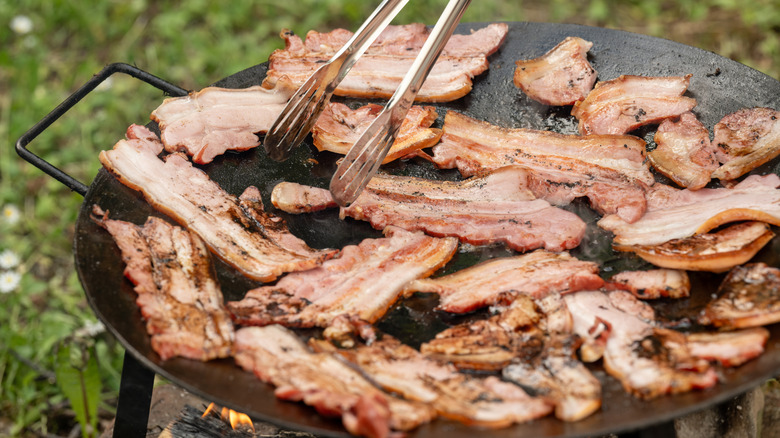
Journals of the time suggested that each family begin the journey West with anywhere from 25 to 75 pounds of bacon. "Prized for its long shelf life, bacon grease and fat served as the primary cooking oil and flavor enhancer," Travis Boley says. In fact, breakfast on the Oregon Trail was much the same as it is today. Some families brought chickens as part of their traveling party, meaning bacon and eggs were a common morning meal on the Trail.
Also recommended for the trip: salt pork, the vintage preserved meat that kept Wild West cowboys going. Like bacon, salt pork comes from the belly of the pig. Bacon, however, is both salted and smoked, while salt pork is only, well, salted. Both types of pork were ideal for the trip: Since there was obviously no refrigeration, food had to be eaten fresh or preserved by salting or pickling.
2. Flour
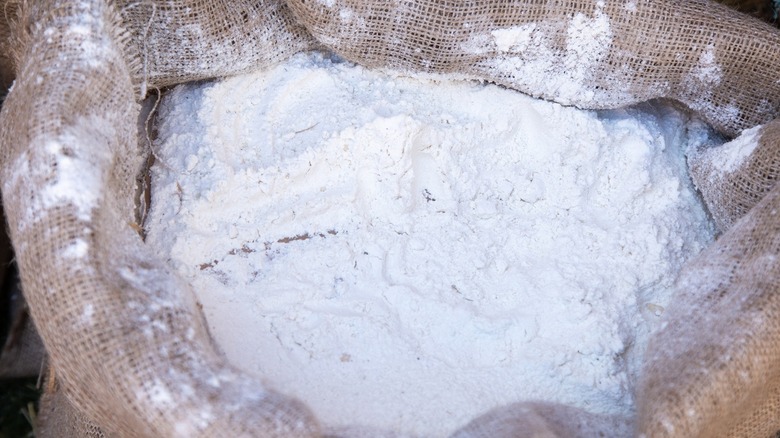
Pioneers relied heavily on flour during the journey West. Families carried flour "packed by the hundred-pound barrel," Travis Boley says. He adds that the large quantities were "used to make daily bread, biscuits, and hardtack." Sources from the time recommended that each family start the trip with 120 to 200 pounds of flour. That amount of flour took up a substantial amount of precious space and added lots of weight to the wagon. The suggested maximum weight of a wagon making the trip was 2,000 pounds, meaning flour alone ate up ten percent of a family's total cargo.
Similarly, travelers also relied heavily on cornmeal, another ground grain that kept well. Boley says that the corn mill was "used to make quick morning mush, cornmeal pancakes, johnnycakes, and hoe cakes." Much less cornmeal than flour was taken on the trek and guide books and journals suggested bring only a half of a bushel.
3. Dried beans
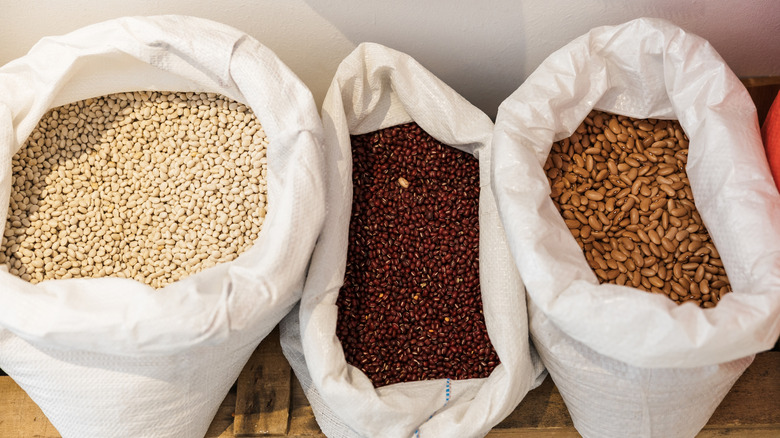
Dried beans were loaded into Westward-heading wagons in formidable amounts. Guidebooks advised each family to pack up to two bushels of beans, depending on how many mouths there were to feed. "Pinto or navy beans were simmered in Dutch ovens," Travis Boley says, adding they were "often mixed with bacon and molasses for protein and energy." Navy beans are the ideal choice for baked beans–always an easy and filling meal for long days on the Trail.
Almost all of the food, including the baked beans, was prepared in cast iron pans over open fire. "Cooking duties typically fell to the women and older children of the household, who prepared meals over individual campfire pits using cast-iron Dutch ovens or skillets during morning and evening stops," Boley says. When beans were prepared in the morning for breakfast, the leftovers were often eaten cold during what the travelers called "nooning," a midday period of rest and recovery.
4. Coffee
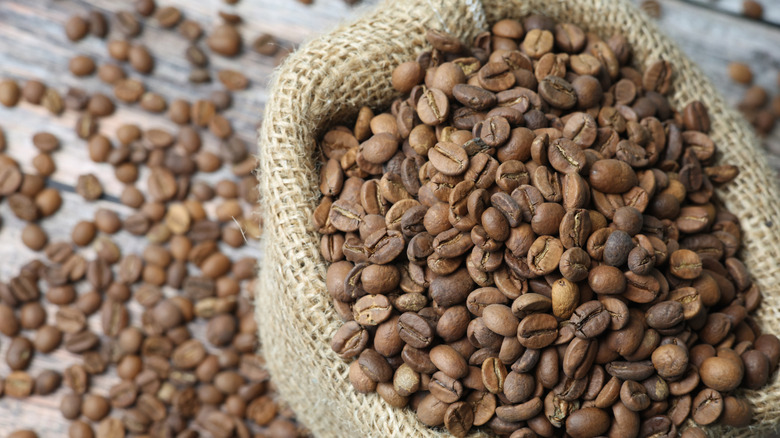
"Essential morning and evening fuel; green coffee beans were roasted and ground in camp," Travis Boley states. Various trail guidebooks instructed each family to carry between five and fifteen pounds of coffee on their journey. One popular guidebook of the time, "The Emigrant's Guide" by Joseph Ware, upped the ante by recommending each family set out with one hundred pounds of coffee beans.
Since water had to be boiled to make coffee, the beverage was also safer to drink than water alone. Although they didn't know it at the time, by boiling the water, pioneers were killing germs, most threateningly cholera, that could cause fatal diseases. Families often carried tea as well, which also required boiling water. Boley calls both caffeinated beverages, "essential morning and evening fuel." Joseph Ware's guide called for families to pack five pounds of tea, while other writings advised cutting that amount down to two pounds.
5. Sugar
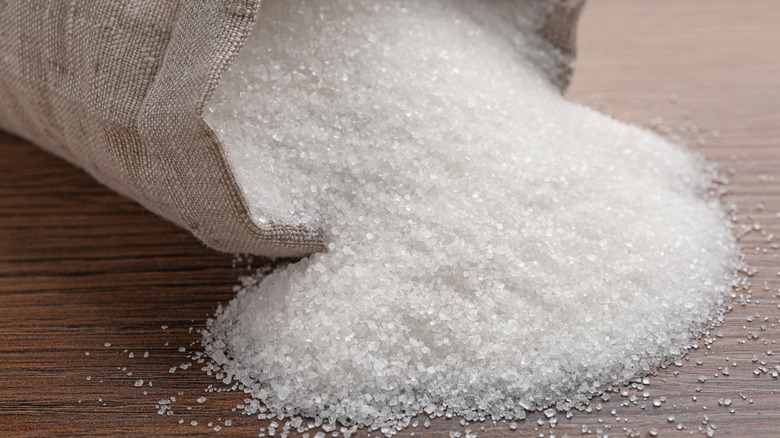
Sugar was a quality-of-life essential out on the trail. Travis Boley says the sugar was typically used for "sweetening, and baking," leading to better-tasting food. "White and brown sugar were heavy and expensive," Boley adds, "but precious amounts were brought along to sweeten coffee or make special puddings and gingerbread." Guidebooks recommended bringing up to 25 pounds. This was costly, because at the time sugar had to be imported from the Caribbean or a Southern state.
Settlers also brought molasses for similar purposes, but the sticky stuff also offered another benefit. According to Boley, "molasses was also mixed with whiskey to create a medicinal drink known as 'skullvarnish'." The true healing powers of the drink were often questioned, but claiming the drink was medicinal allowed travelers to bring whisky along without incurring the wrath of the temperance societies that were popping up at the time. Adding molasses also "stretched" the whisky supply, which was important since opportunities to acquire more were few and far between.
6. Hardtack
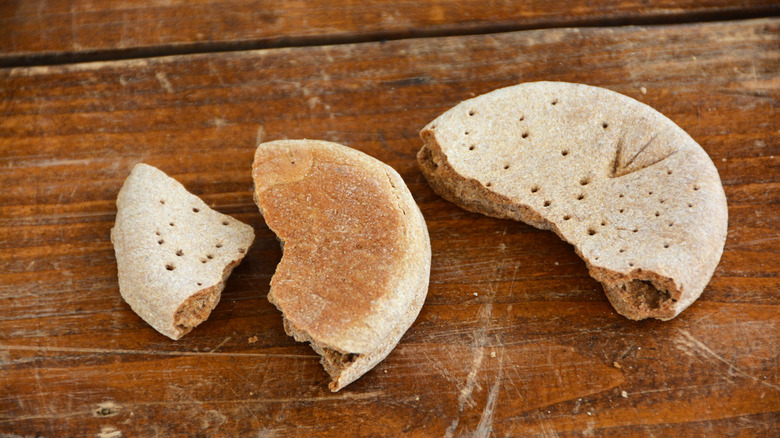
Travis Boley describes hardtack as "a rock-hard biscuit made of flour, water, and salt that lasted for years but required softening in coffee." Out on the trail, hardtack was usually made by mixing flour and water, then baking the pasty mixture low and slow in a cast iron Dutch oven over an open fire. It could also be made in a "reflector oven," if a family had the foresight to pack one.
Also called a "tin kitchen," Boley describes the reflector oven as, "a metal box with an open side placed facing the campfire to reflect heat and bake biscuits or small pastries." The reflected heat could make baking the hardtack easier, but the method did nothing to improve the taste. Hardtack wasn't a popular food choice on the trail, but it served a purpose: It could be made far in advance, so on rainy days when campfires were hard to start or impossible to keep going, there was plenty of hardtack to fill up on.
7. Dried fruits
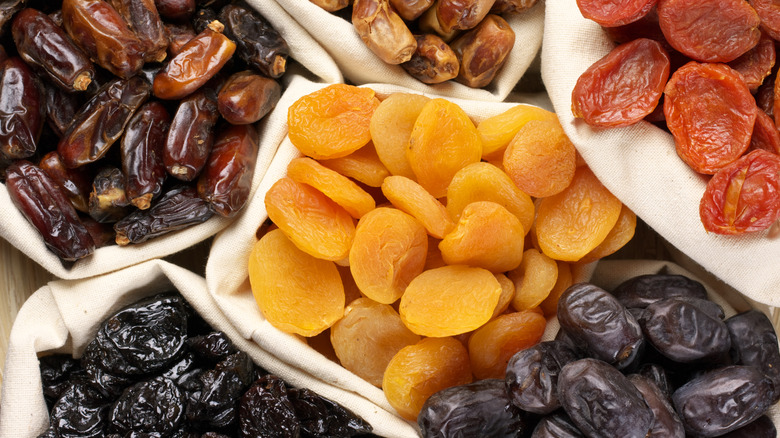
Dried fruits, like apples and peaches, were used "to add variety and combat monotony," according to Travis Boley. Travelers foraged for fruit along the Trail and made use of anything they found. For instance, Boley says, "strawberries, blackberries, and huckleberries (could be) used to make fresh pies and jams." Pies could be baked on days set aside for rest and served up as a tasty treat. Jams could be eaten with hardtack or bread to add much-appreciated flavor to otherwise bland offerings.
Fruit also helped to ward off scurvy, or so they thought. Scurvy was one of the top killers of travelers on the Oregon Trail, so the pioneers were always looking for ways to ward off the painful disease. Scurvy results from a lack of vitamin C, and fresh fruit can be a terrific source of the vitamin. Unfortunately, and unbeknownst at the time, drying the fruit removes the vitamin C, so its medicinal effects were basically nil.
8. Cider vinegars
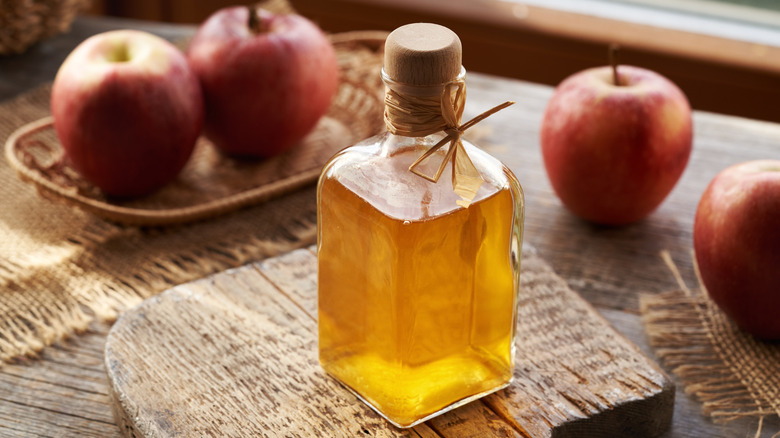
Cider vinegars were another multipurpose, pseudo-medicinal foodstuff cherished by travelers. Travis Boley says the cider vinegars were "carried in stoneware jugs to purify brackish water, prevent scurvy, and flavor meals." Cider vinegar is made when fresh fruit, like apples or peaches are left to ferment. The resulting pungent liquid definitely provided flavor and tang, but with little to no vitamin C, it did nothing to prevent or combat scurvy.
"Vinegar cost about 22 cents a gallon," Boley adds, "and was used to brighten up wilting greens or create vinegar pie, which was a clever dessert made with sugar, flour, and water that mimicked the taste of lemon meringue." There was no citrus fruit on the trail to Oregon, so settlers were encouraged to bring lemon extract with them. If no apples or other fresh fruits were available on a stretch of trail, the lemon extract could be mixed with vinegar to create a quick cider vinegar.
9. Butter
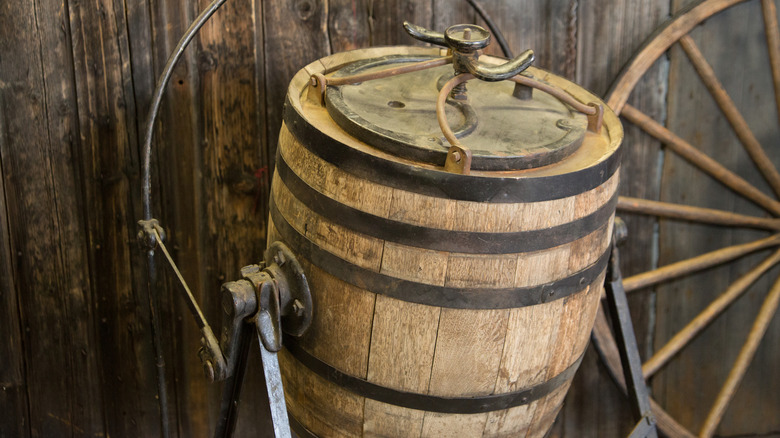
"Though fresh butter spoiled quickly, some families packed crocks of butter or churned it using the motion of the wagon itself over the first few weeks of the journey," Travis Boley says. Although not as surprisingly simple as making butter at home nowadays, using the natural sway of the wagon to churn the butter was a much less labor-intensive way to make a necessary culinary staple. But to make butter, you need milk. While many families traveled with a dairy cow, others either didn't or lost theirs along the Trail.
In the absence of butter, travelers turned to lard. When packing for the journey, which took upwards of five months, travelers were instructed to load their wagons with as much as 200 pounds of lard. Lard, like butter, could be used as cooking fat and was great for baking. Lard had another advantage over butter: It had a much longer shelf life than the dairy product.
10. Wild game
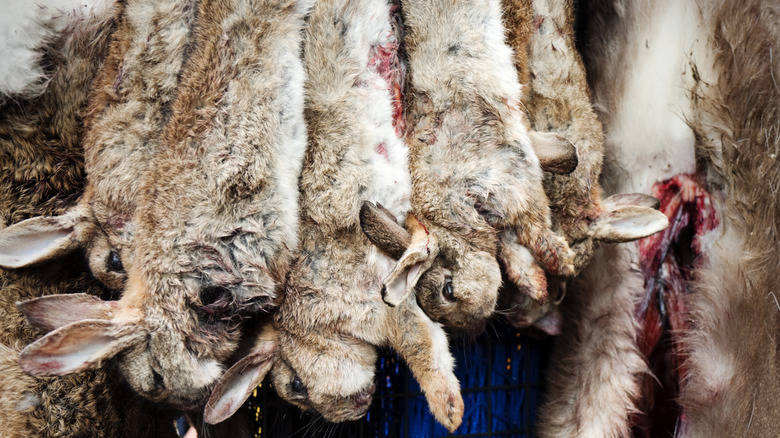
Besides finding clean, fresh water, hunting for game was probably the top priority for travelers on the Oregon Trail, also called "Overlanders." A rifle was a must-have when making the trip west. They were used both for safety and for hunting. Travis Boley explains that the pioneers hunted both large game and small game. Boley points to "buffalo, antelope, and deer (venison)" as common large game that was eaten on the journey. Small game available along the Trail included "rabbits, squirrels, prairie dogs, ducks, geese, sage hens, and grouse," he says.
Finding a herd of buffalo was a particularly fortuitous event. Besides the massive amount of meat acquired from taking down just one of the massive animals, there was also the droppings, or "buffalo chips," found where herds grazed. As Boley explains, "Dried bison dung became a vital fuel source once travelers reached the treeless Great Plains, burning hot and steady like dry peat."
11. Foraged plants
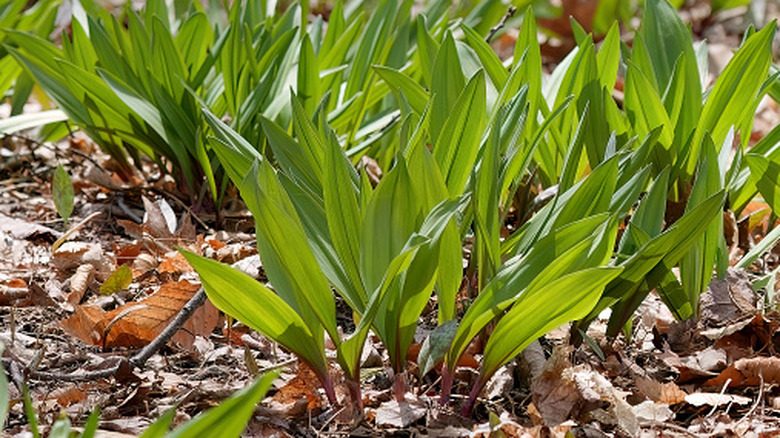
Foraging on the Trail could be a perilous endeavor: Many of the plants the Overlanders encountered along the way were poisonous, and ingesting them could be deadly. The Oregon Trail was two thousand miles long and wove its way through diverse landscapes from prairies to mountains to deserts, so multiple varieties of the same plants were common. Unfortunately, not all were safe for consumption. One particularly tricky plant was the readily available yet often dangerous camas root. Travis Boley explains, "Foragers had to be careful, as toxic varieties grew in certain areas."
Boley adds that some typical, less dangerous, wild plants and herbs found along the Trail included wild onions, garlic, and greens. Onions and garlic were always a good find, as both are alliums. Alliums, which are still used in cooking today, are terrific for flavoring dishes like stews and soups, both staple meals along the Trail. When times were lean, the foraged plants could be eaten on their own. When supplies dwindled, Boley says, "Emigrants gathered wild berries, onions, cabbage, and yucca plants alongside the trail."
12. Pies
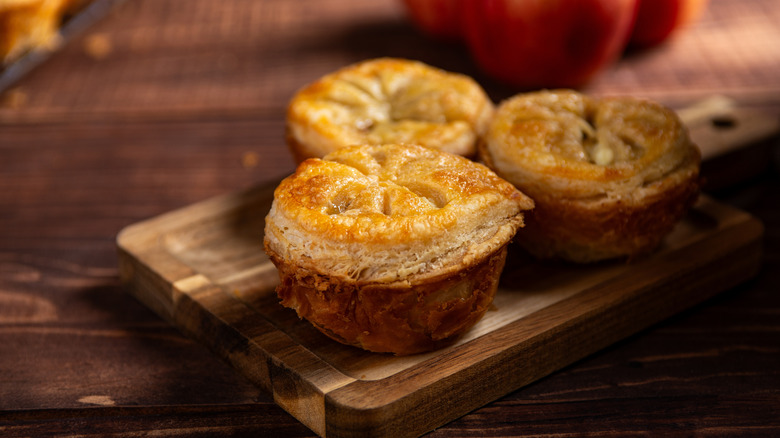
Some days on the Oregon Trail were tastier than others. Travis Boley explains, "On typical travel days, meals were fast, repetitive, and cooked over quick fires—consisting mostly of bacon, coffee, and hard bread or cold beans. On layover days, pioneers had the time and stationary campfires required for special treats." Boley adds, "Rest days were prime time for baking. Women used the butter they had churned during the week to make crusts, filling them with foraged wild berries or dried fruit." The rustic pies were cooked in cast iron Dutch ovens, like most everything else. Common flavors included pumpkin and apple.
Oftentimes, pies were baked to celebrate milestones along the Trail. "Emigrants used dried apples, peaches, or wild foraged berries (like strawberries and huckleberries) to bake celebratory pies and cobblers in cast-iron Dutch ovens," Boley says. For additional flavor, they added spices. For such purposes, "cinnamon, ginger, and nutmeg were carefully stored in small quantities," Boley adds.
13. Puddings
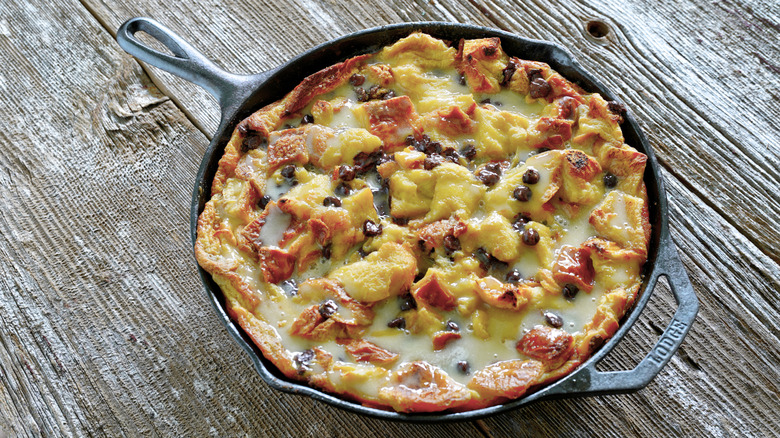
Pies weren't the only sweet treat served up on the Oregon Trail. As Travis Boley explains, "Diaries note that resourceful cooks used extra time and ingredients to make treats like molasses pudding, gingerbread, or rice pudding." The pioneers would also turn stale, leftover bread into bread pudding.
Another popular pudding for Overlanders was made from potatoes. Recipes show that potato pudding consisted of boiled and mashed potatoes blended with egg whites, sugar, flour, salt, and cream. The concoction was baked in a Dutch oven and served with additional cream and sugar. If fresh berries were available, they would often be used to top off the pudding.
Not all puddings were a cause for celebration, though. When supplies dwindled, travelers would often sate their appetites with a raw flour paste pudding. "Stranded or delayed families mixed raw flour with water to make a paste that filled the stomach," Boley says, "though it offered very little nutritional value." There was also hasty pudding, also known as "mush." Boley describes it as "a gray porridge made by stirring cornmeal into boiling water, sometimes left to set firm in a tin plate so the leftovers could be sliced and fried in bacon grease for breakfast."
14. Freshly baked breads
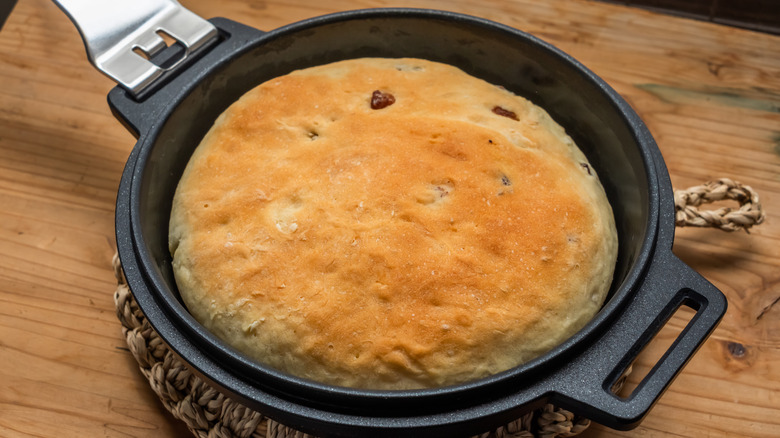
Bread was a vital part of an Overlander's diet, so it was baked as often as possible. "Instead of quick-panned biscuits or hardtack," Travis Boley explains, "travelers could take hours to properly rise and bake specialty breads, such as salt-rising bread." Biscuits were a large part of the pioneer diet, too. Both the biscuits and the bread were cooked in cast iron Dutch ovens set over fire embers. More embers were piled onto the lid of the Dutch oven to ensure a more even bake. Dutch ovens were the most important piece of cooking equipment on a traveler's wagon. "These heavy, flat-bottomed or three-legged cast-iron pots with tight-fitting lids were the absolute standard," says Boley.
Travelers also made sourdough bread. In fact, you can actually buy sourdough starter that dates back to the Oregon Trail. The starter was crafted in 1847 by an Overlander named Carl Griffith, and his descendants have kept it alive for more than 150 years.