

Cadbury Vs Hershey's: How The Candy Giants' Milk Chocolate Recipes Differ
We may receive a commission on purchases made from links.
There's no doubt that Cadbury chocolate and Hershey's chocolate taste totally different. Each brand has its die-hard devotees, so we took a look at the difference between the recipes used by Cadbury (which is the OG, by the way; it's older than The Hershey Company) and Hershey's to figure out exactly what is creating such a stark divide in the chocolate fandom (we ranked Hershey's above Cadbury in our popular chocolate bar ranking, but to each their own). To be clear, we're only looking at each brand's milk chocolate bars here for the sake of consistency.
Both ingredient lists are fairly short. The ingredients listed on the back of a Cadbury Dairy Milk Bar are sugar, milk, cocoa butter, chocolate, lactose, soy lecithin, PGPR (aka polyglycerol polyricinoleate, an emulsifier), and natural and artificial flavor. The ingredients listed on the back of a Hershey's Milk Chocolate Bar are fairly similar: sugar, milk, chocolate, cocoa butter, milk fat, soy lecithin, PGPR, and natural flavor. But a recipe is more than the ingredients included, so let's take a look at some of the other factors that contribute to the distinct taste of the two chocolate bars.
Differences between Hershey's and Cadbury beyond the ingredients
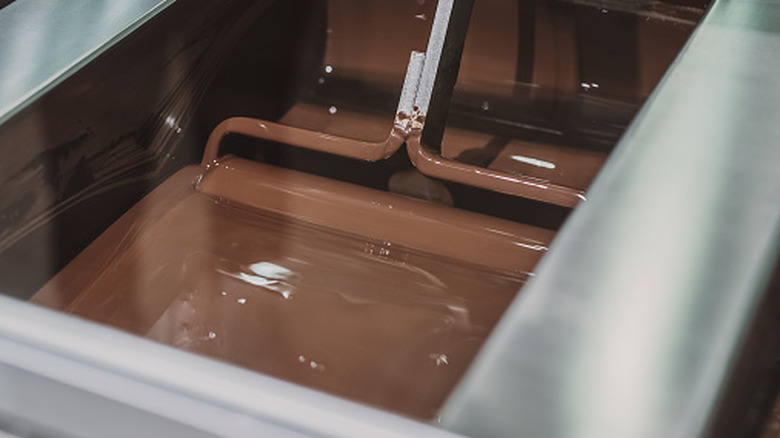
The difference in ingredients certainly provides some insight into why the Cadbury chocolate made in the United Kingdom (more on that in a moment) and Hershey's chocolate made in the United States taste different, but the chocolate-making process followed by each confectionery giant also plays a role. One of the most commonly mentioned differences between Hershey's and Cadbury is the slightly sour, acidic taste in a Hershey's bar. Candy companies in general are notoriously tight-lipped about manufacturing processes, but it seems that butyric acid may play a role in the candy's distinct taste. Butyric acid is a fatty acid found in dairy fats, and because Hershey's claims it doesn't add butyric acid itself, it's possible its presence is due to lipolysis, a process used to break down milk fat and make it shelf-stable.
British chocolate makers often use a different method for breaking down the milk. Instead of lipolysis, they create a thick mix of milk, sugar, and chocolate liquor which is then dehydrated to form what's known as chocolate crumb. The chocolate crumb technique adds the caramel flavor you may notice when you bite into a British chocolate bar. Plot twist: If you've only eaten Cadbury chocolate purchased in the United States, there's a good chance you've never had real British Cadbury.
The surprising Hershey-Cadbury connection you might not know about
If you travel a lot, you might have noticed there's a difference in the way Cadbury chocolate tastes when you purchase it in the United States compared to overseas. The Hershey Company actually acquired the rights to manufacture and market Cadbury-branded products in the United States back in 1988, so unless you specifically purchase British-made Cadbury chocolate, you're getting chocolate made by Hershey's. Some say the U.K. version provides a smoother, sweeter experience. For a truly British Cadbury experience, you'll want to check the back of the candy bar's wrapper to see where it was made and ensure you're getting the correct version.
Hershey's bars, American-made Cadbury bars, and British-made Cadbury bars are all delicious, in our opinion. And while you should stick to straight-up chocolate bars if you want to figure out which brand you love the most, there are a ton of other ways to compare the brands. Try Cadbury's almond chocolate bar and compare it to a Hershey's bar with almonds, for example, or try comparing dark chocolate offerings from the different brands. Finding your favorite — whether it ends up being Hershey's or Cadbury — can be a fabulous journey.