

8 Fried Chicken Chains Boomers Loved That Are Slowly Being Forgotten
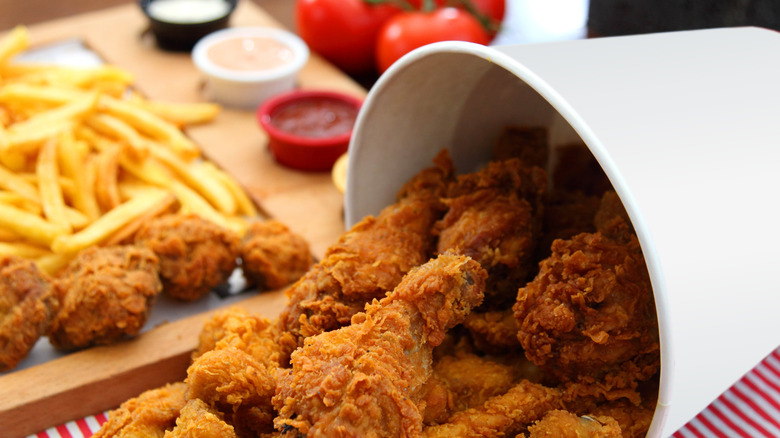
Fried chicken has been a beloved part of American food culture for generations, inspiring countless fast-food fried chicken chains nationwide. While some brands grew into national institutions, others became regional favorites before disappearing almost entirely. For diners who grew up with fast-food chicken in the 1960s, 1970s, and 1980s, these restaurants were more than convenient places to eat: They were part of the local landscape, complete with distinctive signs, catchy slogans, celebrity endorsements, and recipes customers believed they could recognize in a single bite.
A restaurant's sign could become a landmark, while a paper bucket or a familiar side dish could evoke a particular hometown and era. Some chains were swallowed by larger companies, some ran into financial trouble, and others simply lost ground as new competitors arrived. Today, many survive only through a handful of locations, old advertisements, or the memories of the people who grew up eating there. Their stories show how quickly a familiar fast-food brand can move from everyday life to local legend, highlighting the importance of regional identity in American food history.
1. Pioneer Chicken
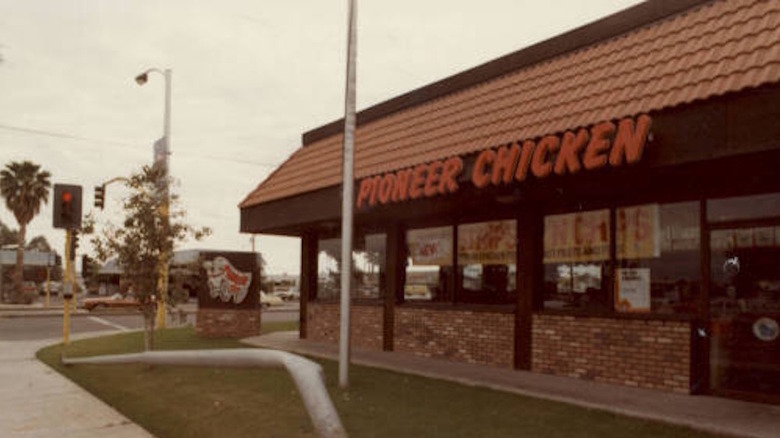
Pioneer Chicken began in Los Angeles in 1961 and became one of the West Coast's most recognizable fried chicken brands. Its restaurants were known for bright signage, a chuck-wagon mascot, and crisp, heavily seasoned chicken that stood apart from larger competitors. At its height, the chain had hundreds of locations, making it a familiar sight to Southern California diners.
Pioneer Chicken's decline was dramatic. After the company went through bankruptcy, Popeyes acquired the struggling chain in the early 1990s and converted many Pioneer restaurants into Popeyes locations. The change erased much of the brand's former footprint, but not its local following. Pioneer Chicken's own history now presents the company as an enduring Los Angeles classic, while a retrospective in theLAnd captures the nostalgia surrounding the remaining restaurants. A small number of locations still serve the original-style chicken, making Pioneer a rare surviving link to the region's fast-food past.
2. Minnie Pearl's Chicken
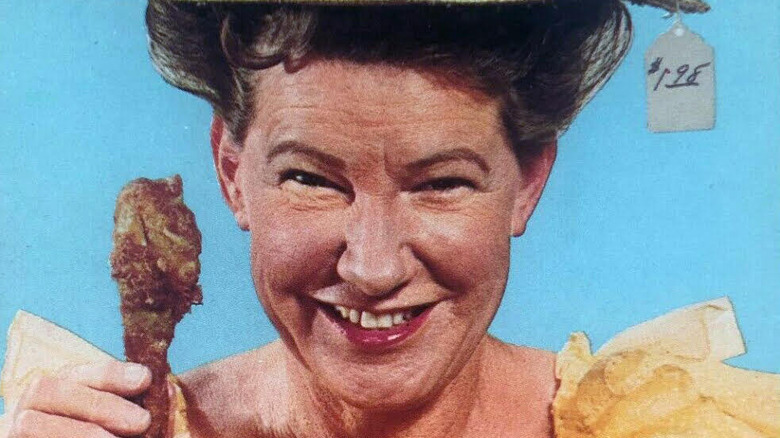
Minnie Pearl's Chicken was created to compete with Kentucky Fried Chicken during the late 1960s. The company licensed the name and image of country comedian Sarah Cannon, whose Minnie Pearl character was already familiar to television and Grand Ole Opry audiences. The celebrity connection gave the chain an immediate marketing hook, complete with the slogan "How-dee-licious!"
The business expanded quickly, but the number of proposed franchises did not translate into an equally successful restaurant system. A contemporaneous New York Times report described a company with hundreds of franchises sold or operating, while also reporting concerns about the chain's finances, competition, and unprofitable stores. The expansion model depended heavily on selling franchises, and the company's troubles eventually undermined both investor confidence and the restaurants themselves. Minnie Pearl's Chicken did not become a lasting rival to KFC, but its brief rise shows how celebrity branding and the booming franchise industry shaped fast food during the period.
3. All-Pro Chicken
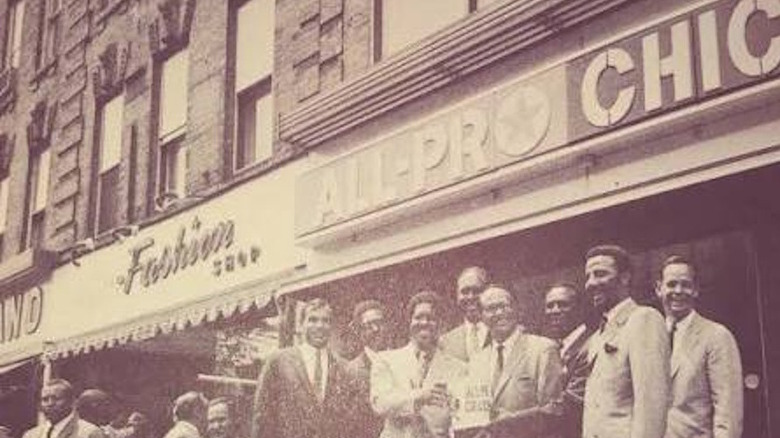
Before Brady Keys became known for his business career, he was a professional football player who had played for the Pittsburgh Steelers. In 1967, he opened the first All-Pro Fried Chicken restaurant in San Diego, using recipes and restaurant knowledge he had developed while learning the chicken business. The concept combined fried chicken with sports-themed branding and a franchise model designed to create opportunities for Black business owners.
All-Pro Chicken attracted national attention because Keys was unusual among restaurant entrepreneurs of the era. Contemporary reporting described the chain's expansion and its effort to license restaurants to Black franchise holders. The Keys Group's own history says the company eventually established more than 50 All-Pro franchises across the East and West coasts. Although All-Pro never became as ubiquitous as KFC, its importance extends beyond its size. It was an early example of a Black-led fried chicken franchise with a national ambition, and it helped launch Keys' broader career in franchising and business.
4. Yogi Bear's Honey Fried Chicken
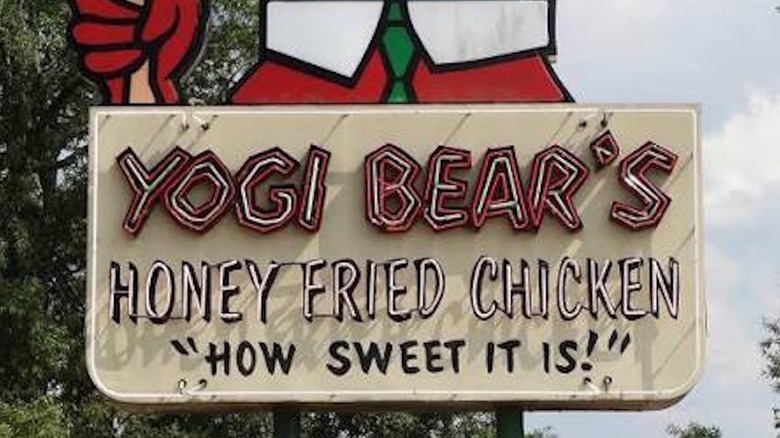
Yogi Bear's Honey Fried Chicken built its identity around a distinctive variation on the classic fried chicken basket. The chain's chicken was associated with a honey-flavored coating, and its restaurants became a regional presence in parts of the Carolinas. The Yogi Bear name and picnic-style branding gave the business a memorable identity at a time when themed restaurants were competing for family customers.
The chain eventually attracted Hardee's attention, which acquired the honey-fried-chicken concept. That deal did not turn Yogi Bear's into a national powerhouse. Instead, the branded restaurants gradually disappeared, leaving the Hartsville, South Carolina, restaurant as the last known location associated with the chain. The restaurant's official Facebook page still presents it as a local fried chicken institution, while regional reporting traces how the once-expanding business was reduced to a single survivor. For customers who remember the chain from its Carolinas heyday, that restaurant functions as both a working business and a culinary time capsule.
5. Mahalia Jackson's Glori-Fried Chicken
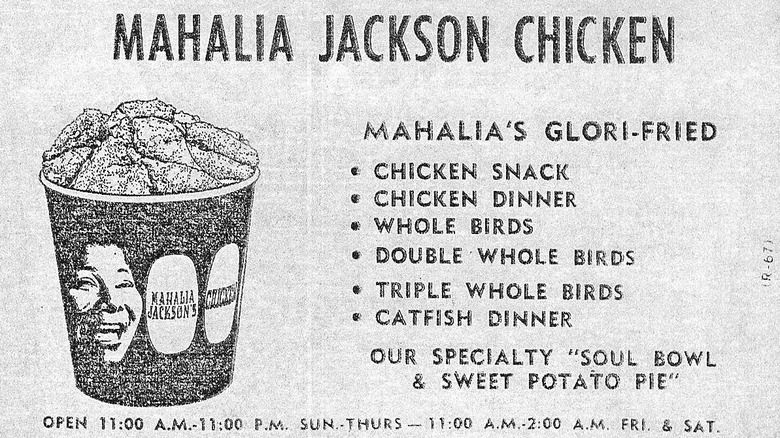
Mahalia Jackson's Glori-Fried Chicken was a late-1960s fried chicken venture connected to gospel singer Mahalia Jackson and businessman Benjamin Hooks. The restaurant system emerged during a period when Black entrepreneurs and community leaders explored franchising to create jobs, ownership, and economic opportunity in Black neighborhoods. Its short life also reflects the challenges ambitious, community-centered franchises faced, inspiring respect for their pioneering spirit and resilience.
An archival record from Memphis Public Libraries documents the opening of a Mahalia Jackson's Glori-Fried Chicken restaurant and identifies Hooks as president of the Memphis-based Chicken System, Inc. in 1968. The restaurant's significance therefore extends beyond its menu. It represented an attempt to connect a famous Black entertainer's public identity with a business model that could serve Black communities and support Black ownership. The chain did not become a lasting national brand, but its story remains an important part of the history of fried chicken, celebrity restaurants, and Black entrepreneurship during the late 1960s.
6. Holly Farms Fried Chicken
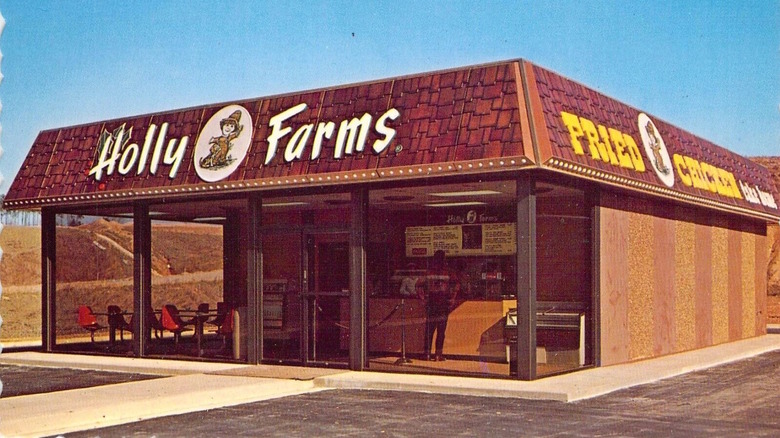
Many shoppers remember Holly Farms as a poultry company whose chicken appeared in grocery stores, but the brand also operated fried chicken restaurants. During the 1970s and early 1980s, Holly Farms competed in the regional fast-food market, particularly in the Southeast and Mid-Atlantic. Its menu included fried chicken and sides that gave the restaurants a recognizable place in local dining culture. For families in the region, it was part of the same weekly routine as other neighborhood takeout stops.
A contemporaneous Washington Post article about the region's fried chicken competition identified Holly Farms among the chains competing for Washington-area customers. The article also described the qualities that made the restaurant's chicken distinctive to local diners. Arlington Magazine's retrospective adds the personal side of that history, recalling the chain as a familiar Arlington presence. Holly Farms eventually moved away from operating restaurants and concentrated on its poultry business, so the restaurant chain faded even as the name continued to appear on packaged chicken.
7. Sisters Chicken and Biscuits
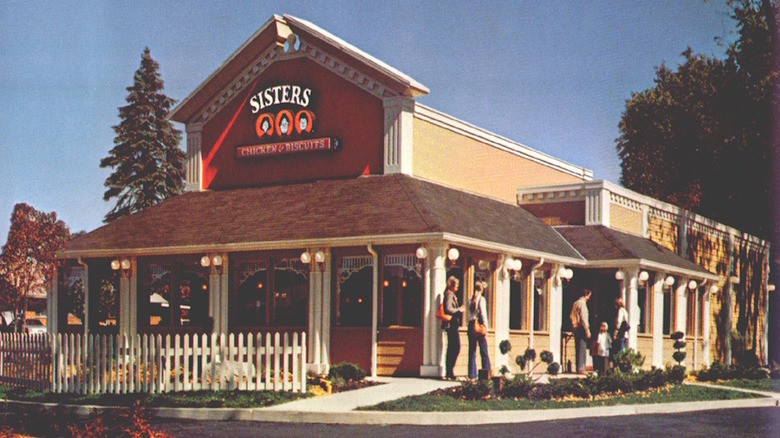
Sisters Chicken and Biscuits was a fried chicken and biscuit chain that grew with Wendy's support. By the mid-1980s, the subsidiary had dozens of restaurants, particularly in Ohio and other Midwestern and Southern markets. Its combination of fried chicken, biscuits, sides, and breakfast items gave it a menu distinct from Wendy's hamburger-focused restaurants. That local connection helped the name linger even after the company disappeared.
The chain's connection to Wendy's gave Sisters access to a major fast-food company, but the partnership did not last. A 1986 New York Times report identified Sisters as a Wendy's subsidiary and described its restaurant expansion. Wendy's sold the business the following year as the company refocused on hamburgers. Sisters continued under new ownership for a time, but the restaurants eventually disappeared. A Columbus Restaurant History retrospective shows how the chain's buildings, biscuits, and chicken remained part of local memory long after the brand itself had closed.
8. Golden Skillet
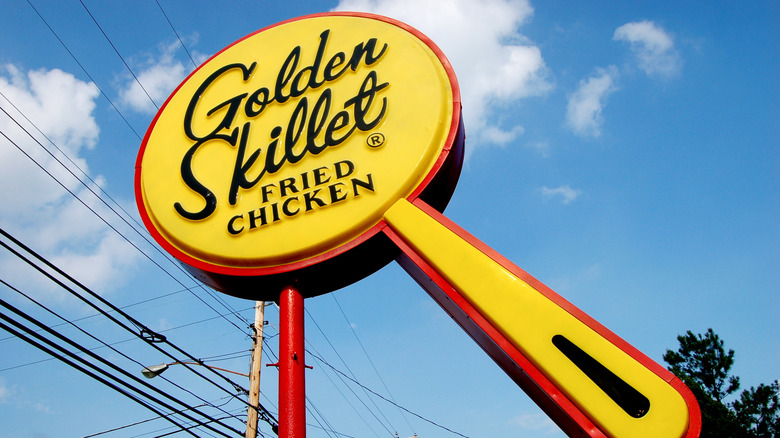
Golden Skillet began in Richmond, Virginia, and grew into a large fried chicken franchise system. At its height, the chain had more than 200 locations, including a substantial presence in Virginia's Hampton Roads region. Its bright branding, familiar chicken meals, and regional identity made it a recognizable competitor during the expansion of fast-food fried chicken. Its survival in a few independent restaurants keeps the brand from becoming a memory entirely.
The chain's decline was gradual rather than sudden. After Dairy Queen International acquired the company following the death of founder C.W. Guthrie Sr., many Golden Skillet franchises eventually closed. Local reporting has documented the disappearance of longtime locations, including the final Golden Skillet in Hampton Roads, while Richmond Magazine reports that only a small number of independent restaurants remain. Golden Skillet has not vanished completely, but its transformation from a large franchise system into a scattered group of survivors explains why the name is becoming unfamiliar to younger diners.