

8 Disadvantages Of Thrifting Kitchen Appliances
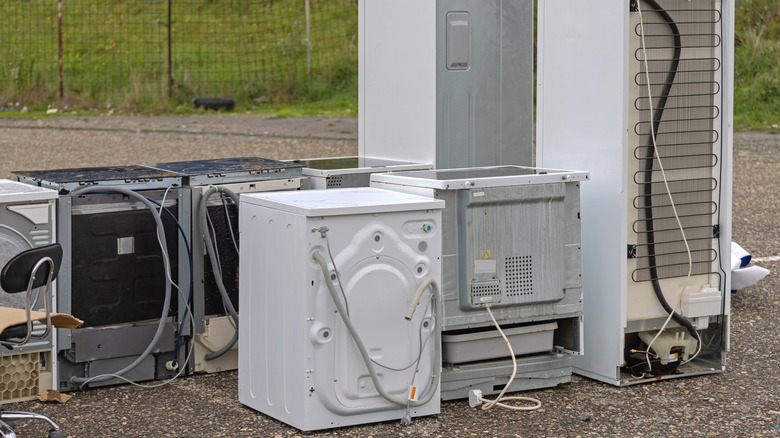
In this day and age, we truly don't blame anyone who is looking to cut costs, especially when it comes to home design. Sure, you could try your darnedest to save money on the home reno you've been dying to do or put it off entirely, but when the stove decides to break at the worst time, you may not have any other choice but to look for a cheap (and fast) replacement. And what better place to look for one of those "cheap fixes" than a thrift or secondhand store?
The benefits of thrifting kitchen appliances and cookware are numerous. You're keeping things that would otherwise end up in a landfill out, and also scoring yourself kitchenware for a fraction of what you'd pay for something straight out of the showroom. While it may seem easy to book a U-Haul, Venmo your friends a couple bucks to help you move things, and sift through whatever your local Goodwill has to offer, there is a lot more that you need to consider before you pull the trigger on a thrifted appliance.
In order to get some insight into some of the biggest disadvantages of thrifting kitchen appliances (think stoves, dishwashers, fridges, and even small appliances like coffee makers and Crock-Pots), we spoke to Joanne Loftus, president and owner of Archival Designs. "As a kitchen designer with over 40 years of experience, I have noticed that many customers are excited to find great deals on used appliances while browsing thrift stores. As a designer, I must break the news to them of the potential hidden costs associated with these 'great deals,'" she says.
1. It may not be sized correctly for your space
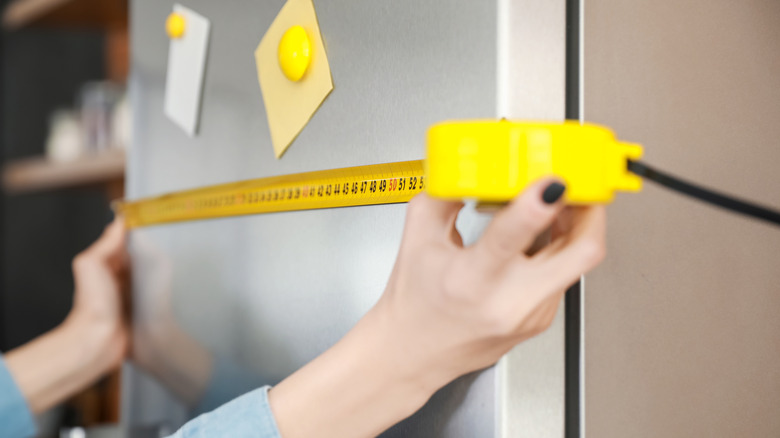
An appliance is of no use to you if you can't fit it into your space. While this problem won't really affect small appliances, as long as your coffee maker and blender have enough clearance under your cabinets, size compatibility is an important consideration for someone who is making a larger purchase, like a stove, dishwasher, or fridge.
"A used refrigerator that is only [2 inches] wider than the opening of the cabinet can cause huge problems," says kitchen designer Joanne Loftus, who claims sizing is one of the biggest problems of buying used appliances. "It can cause a void that has to be filled, or worst case, it can cause us to have to modify the cabinetry that we have already spent money on." This can drive up the cost of the overall appliance replacement, making it cheaper in the long run to just buy new.
Loftus tells us about one of her clients who made this critical mistake after getting a steal of a deal from a resale website, but realizing that the fridge was two inches wider than the space she had made for it. "To accommodate this issue, she needed to alter two cabinet panel sides as well as move the counter configuration further back. In total, she incurred approximately $800 in modifications," Loftus says. Measuring dimensions critically — both of your space and the appliance you intend to purchase (if there is even a suitable option with the correct dimensions available) — can help you avoid making this expensive mistake.
2. Color, shape, and selection can be limited

Chances are that you will be using your appliance every single day, so you want something that meets all of your "wants" and that you love using. However, when you visit a thrift store or a resale store, you are at the mercy of what other folks decided to donate. You may potentially have to settle for an appliance that you don't 100% love the color, shape, and/or design of simply because it's your only option. This may be worse if you're in panic-buying mode, as you may want to buy the first dishwasher you set eyes on and are more willing to overlook potential issues or incompatibilities with your space because of your urgent need. Buying the wrong appliance for your space can have major repercussions, per Joanne Loftus. "Any slight variation from the specifications can throw the whole design out the window," she says.
The best advice? Shop around, compare prices, and measure as carefully as possible. Look at all of your options, whether that's renting an appliance, buying new, or trusting in whatever Goodwill has in stock, and consider what you are willing to compromise on before you make your purchase.
3. There is no warranty
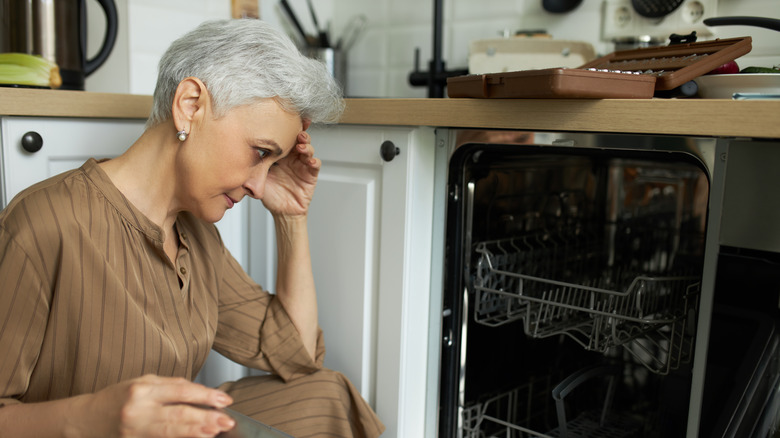
The last thing that you want to do is to bring an appliance home that you think works only to have it break and be stuck in the exact same predicament you were in the first place. If you were buying a new — or potentially certified refurbished machine – you would have some sort of warranty to fall back on, which may allow you to recuperate some of the money you spent or get a new, fault-free one installed. This is not the case for used items.
"The main issue [with used appliances] is that there is no warranty to fall back on, so any failures post-purchase are the owner's problem. Failures in a newly renovated kitchen can have further impacts beyond the failed appliance including damaging surrounding cabinetry, flooring and countertops," says Joanne Loftus. You may even void your home warranty by installing used appliances or making DIY modifications so that they can work in your space, which can drive up long-term costs even more.
4. Older appliances may not be as efficient or safe
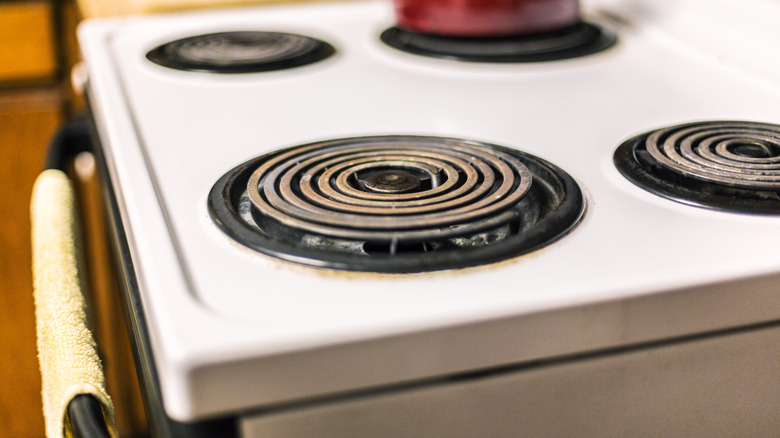
If you are browsing the thrift store selection, chances are you aren't getting a glimpse of the latest and greatest technology. Joanne Loftus estimates that most donated appliances are upwards of 10 years old, which not only calls their lifespan into question, but also their efficiency and safety. "These older appliances typically were not built to meet energy efficiency and safety standards that many newer appliances adhere to. For example, a refrigerator from 2010 will likely use significantly more electricity than its 2024 counterpart, and we see this in utility bills every month," she says. Energy efficiency is one of the things that she says can drive up the cost of a used appliance, even though the purchase cost itself may have been low. Doing your research, looking at Energy Star ratings, and more can give you some idea about what you can expect to pay, but it's safe to say that older appliances are generally more expensive to operate and maintain than newer ones.
Older pieces also may come with safety risks. Thrifted dishware, while not an appliance, can be dangerous if it was manufactured before lead standards were put into place. Even vintage Crock-Pots and other small appliances may have their own hazards, especially if you don't know how well they were maintained before they ended up in your cart (that is, if they were maintained at all). Newer models often have automatic shut-offs and other features that make them safer to use than older ones, too.
5. They may require more maintenance than a newer appliance
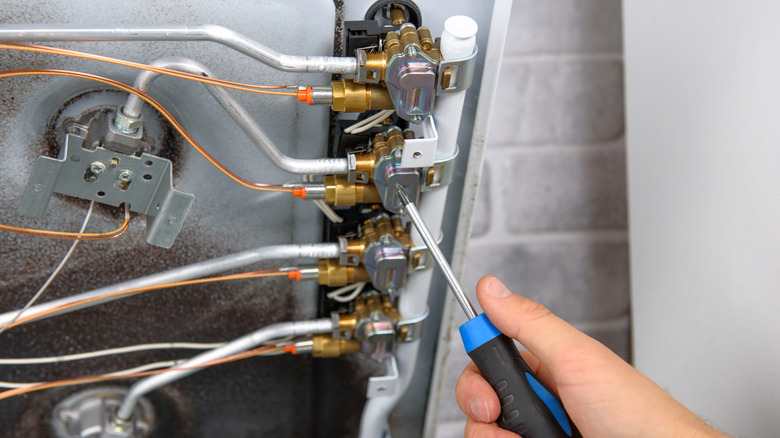
Buying an appliance at a thrift store is like a box of chocolates ... you never know what you're going to get. Could it be in good working order and require few repairs? Totally. But it can also end up costing you more in maintenance than it would to buy a new model. This is one important consideration that Joanne Loftus says people need to consider when deciding whether a low purchase price is actually a good value in the long run. "The cost to repair a used appliance for parts and labor often exceeds the original purchase price," she says.
There are some things that you can do before bringing an appliance home to try and circumvent these costly repairs. The first is to test it in the store, if you can, to ensure that it (at least) works. It's equally important to remember that although it turns on, that doesn't mean it will run as it should, and you may not be able to find the root of a problem until you open it up beyond what you can do in the store. As such, you may also want to take someone who is knowledgeable about repairs with you so that you can get a trained eye to look at a prospective purchase before you bring it home.
6. Finding parts can be difficult
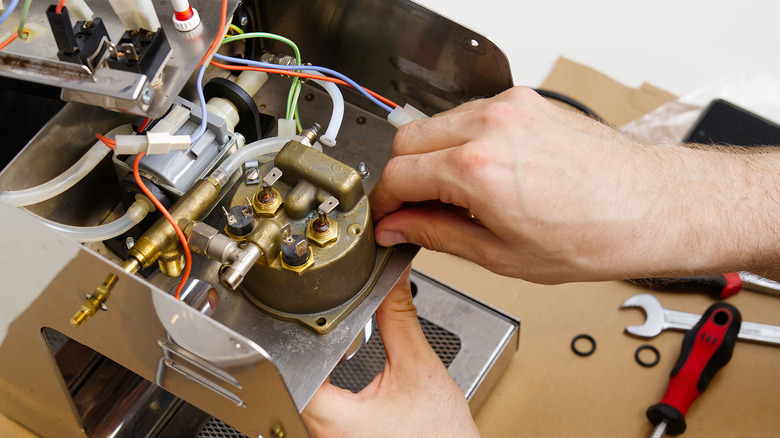
Anyone who has owned a beloved vintage kitchen gadget will know the pain of having a part break and not being able to find a replacement for it because it's simply not made anymore. Technology is always evolving, and that means it may be cheaper to buy a whole new appliance than trying to buy a replacement liner, filter, or water tank for your beloved find. The same can be said for large appliances, particularly older models.
Joanne Loftus agrees with this. "When a 15 year old dishwasher finally breaks, it is often very difficult to find a parts replacement for a model that was discontinued years ago. Often repair people are unable to source the parts and so in the end it is still more cost effective to replace the item even though it was 'donated,'" she says. Doing your research here is especially hard, as you won't know what parts your new-to-you appliance needs until it needs them.
7. Requires a thorough inspection before purchase
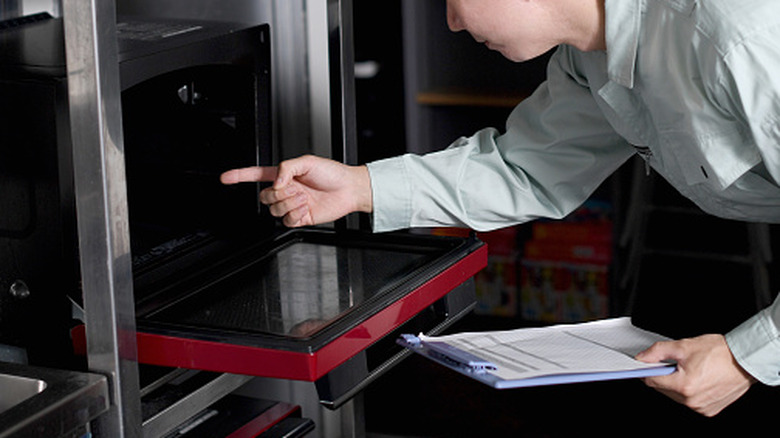
The best thing that you can be as a shopper is curious. If you have weighed the costs and benefits of thrifting an appliance, it's time to take a closer look. Like some of the things you should be on the lookout for when thrifting cookware, you should always be looking for damage and wear on a used appliance. Otherwise, you could be stuck with not only a machine that doesn't work but also one that's dangerous.
The two most important things that Joanne Loftus recommends checking for are rust and unpleasant or smoky odors. A couple of dings and scratches will not affect the way an appliance operates, but these two incriminating pieces of evidence are signs that you should walk away.
"I don't care how good a price is or how clean the rest of the unit looks. If there is rust in this area then there is evidence that moisture has penetrated somewhere that it shouldn't. It's not cosmetic," she says. Be sure to lift up the appliance, look around the ports, and inspect all sides when shopping. Meanwhile, you may only be able to tell that your appliance is smoking or burning when it's in operation, but Loftus explains that you may even be able to smell it before it's plugged in. "The smell will follow you home and could be very nasty in a kitchen. So, it is something to investigate further before you bring it home," she says.
8. May come with limited information about its history
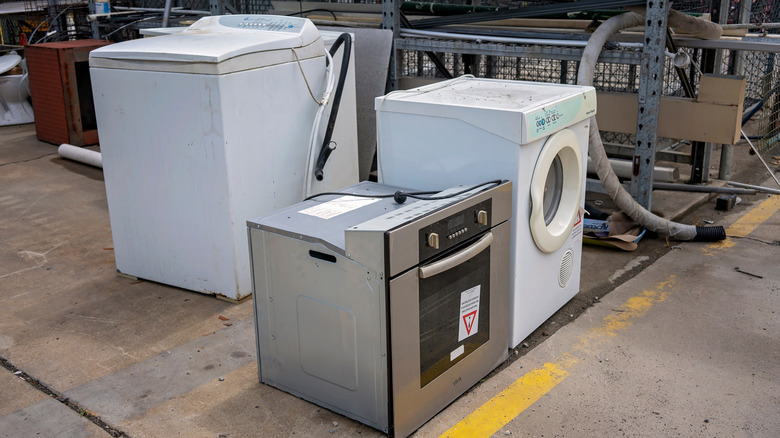
It's fair to say that the employees at thrift stores probably aren't appliance experts, and they won't be able to answer some of the questions that you would normally ask a salesperson when buying a kitchen appliance. But if they can't even answer "Does this thing even turn on?" you might want to shop elsewhere — and the same applies if you're buying one from its "original owner" off of Facebook Marketplace.
"A seller who cannot provide information regarding basic questions such as the age of an appliance, and whether or not it has been repaired for example, is a major red flag. If the seller fails to respond to either of these questions, then it is clear that the seller has not taken proper care of the appliances during their ownership," Joanne Loftus says. If you are buying something secondhand from a private seller, rather than a store, you might be able to ask more pointed questions, including about repair history, lifespan, or damage. However, that Goodwill employee may not know more than the approximate date the stove arrived in the store (if that). Granted, it's impossible to know whether a seller is being entirely honest – whether that's on purpose or because they genuinely don't know the history of an appliance — but failing to ask questions can land you in deep trouble.