

You Found A Vintage Crock-Pot At The Thrift Store — But Is It Actually Safe To Use?
We may receive a commission on purchases made from links.
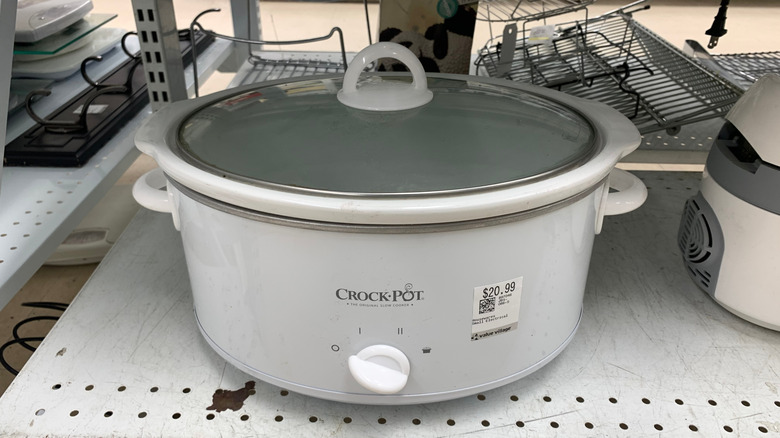
If you're lucky enough, thrift stores can be a great source of treasure. And by treasure, we don't mean something expensive that's embellished with gold, but vintage pieces that are evidently hard to come by today. If you managed to score a vintage Crock-Pot, there are a few things to check before you actually use it, as its safety can depend on its condition. For instance, slight rusting (which shouldn't be a huge cause for concern if removed) can give your food an unpleasant taste. Meanwhile, wiring issues get an automatic pass, and they should be one of the things to look out for when thrifting cookware.
Some issues can be checked while you're at the thrift store, such as inspecting for bugs, dirt, or exterior damage. However, other issues require some time to really gauge their safety. So before and after you take the vintage Crock-Pot with you, give it a thorough assessment by checking all of the potential issues below.
What to check for at the thrift store
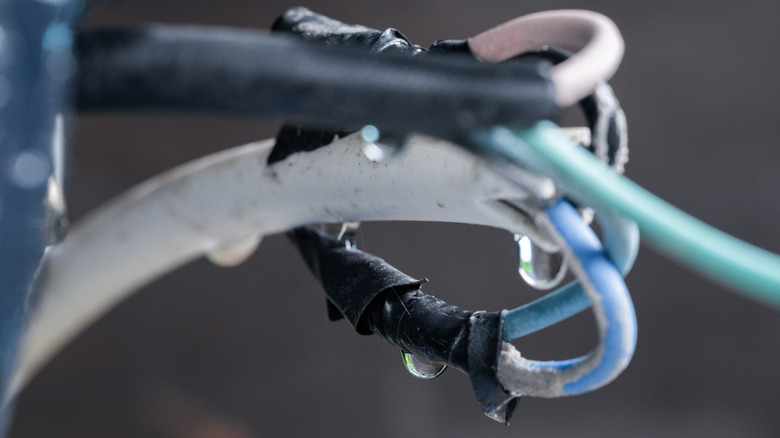
It's a good idea to check the Crock-Pot's electrical wiring first. Tin whiskers can induce a short circuit, whereas plastic surrounding the switches can split, which can develop into a bigger electrical issue down the line. Unless you know how to actually fix them, it's best to wait for a better vintage — or buy a new one if you need it immediately. Plus, some models don't comply with modern safety regulations, so bringing them into your kitchen can result in accidents.
It's important to check if each component is still properly secured. Unstable handles, most especially, are accidents waiting to happen, as they can come loose while you're moving the slow cooker around. It won't be a pretty sight if all the hot food spills on you, which also means you have to start a six-hour-long process all over again. On the bright side, if you're restoring the old-school appliance, the Crock-Pot might not totally be a lost cause.
Additionally, any Crock-Pots released earlier than 1976 will surely not have a removable insert, since it only started being offered that year. Not only is a removable insert an indication that you can wash your Crock-Pot in the dishwasher, but it also tells you that it's a newer model that may be more useful (and safer) in modern kitchens. Rusting inside the insert can contribute to an unappealing metallic taste, so even if you see subtle signs of it, it's better left on the shelf.
What to check for at home
It's hard to rely solely on a quick inspection at the thrift store, so you can start the appliance at home to double-check anything that might be a miss. For one, check if the heat setting is still functional by pouring tap water into the slow cooker, leaving some room at the top. Leave it at low heat for around eight hours, as you would when cooking a dish. Afterward, make sure the thermometer reads 185 degrees Fahrenheit or higher. If it falls below ideal temperatures, it's not necessarily unsafe, but it won't cook your food as intended. If it becomes hotter than normal, it won't be ideal to leave it on the counter for long periods of time. While you're at it, any odd smell can signal electrical issues.
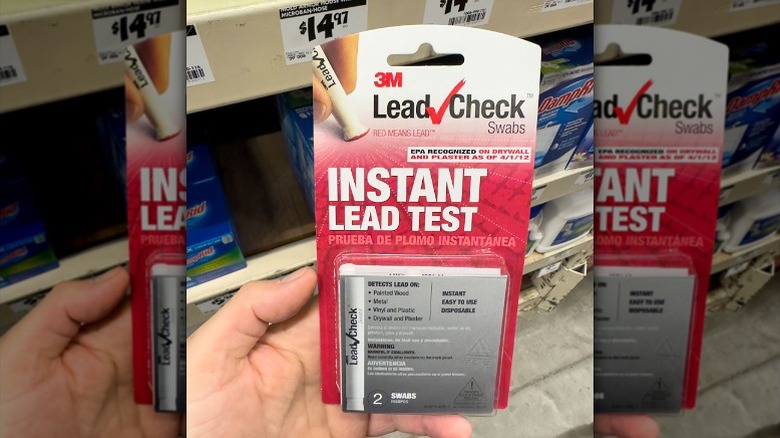
Vintage cooking and dishware sometimes have issues with lead content, including Crock-Pots. Be cautious of any models produced before 1971 — the year the FDA began regulating lead in ceramics. One way around this is to perform a test yourself before cooking. There are lead test kits available in stores, such as the Pro-Lab Lead Surface Test Kit. Swab the surface of the appliance with a moist pad and see if its color changes, indicating whether there's a presence of lead.
Buying vintage kitchenware can be exciting for those with nostalgia for old things, a penchant for collecting, and even a passion for an appliance fixer-upper. It's an exciting yet challenging hobby. But if there's one thing to remember, it's to prioritize your safety so you continue treasure hunting with peace of mind.