

13 Regional Styles Of Chili, Explained
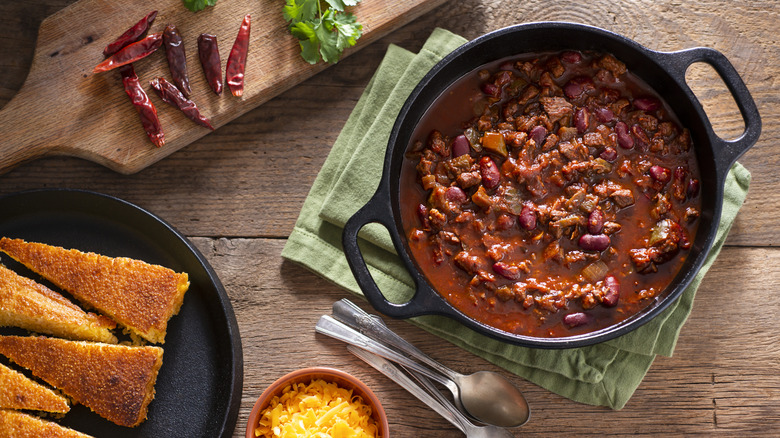
There are truly few meals as hearty, warming, and comforting as a bowl of chili. How someone defines chili, however, can be entirely subjective. Chili is technically defined as a thick stew containing, principally, mild or spicy chile peppers; however, aside from those requisites, this centuries-old dish knows no bounds, with its differing variations across regions in the U.S. that we're here to explore today.
Over the years, chili has taken many different forms — often depending on the history, geography, population demographics, and ingredient availability. The stories behind chili are just as rich as the chili itself, and they are often rooted in global foodways, immigrant resilience, and, of course, the delightful cultural eccentricities of regional America.
Countless styles of chili, from bright-red gravies to chunky green stews, are poured into bowls, served alongside starchy sides, and even ladled over hot dogs, every day across the country. If you are curious about just some of the U.S.'s many versions of the iconic dish, then you've come to the right place. Keep reading for the lowdown on 13 regional styles of chili — including where they came from, what they consist of, and how locals eat them today.
1. Texas chili con carne
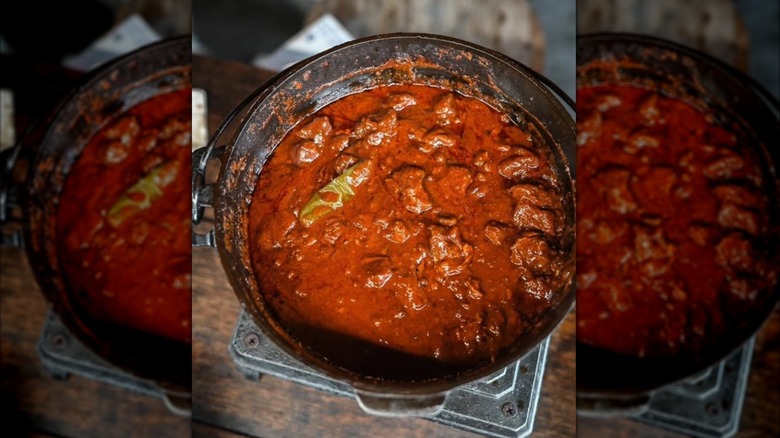
A list of regional styles of chili would be incomplete without chili con carne, which translates from Spanish to "chili with meat." Many Texas chefs and home cooks continue to contest what belongs in it; however, a classic preparation, also called "Texas Red," consists of a beanless stew with plenty of beef (often chunks of chuck, but sometimes coarsely ground), a melange of sweet and hot chile peppers (including chipotles, anchos, and poblanos), and spices such as oregano and cinnamon. Sometimes, it is also thickened with a pinch of masa harina (nixtamalized corn flour).
Texas-style chili con carne's path to the state is contested. Some argue that chili con carne is evocative of specific Indigenous Mexica dishes; others believe that it has roots in Canarian migration to south-central Texas during Spain's colonial expansion; and some still point to chili con carne as the result of culinary innovation in Texas-Mexico border communities. In the late 19th and early 20th centuries, Mexican American vendors known as "Chili Queens" sold bowls of chili con carne at outdoor booths across San Antonio, which also contributed to the meal's ubiquity in the state. The result of these foodways is a complex stew that, even in Texas, still has plenty of variation today.
2. Cincinnati Chili
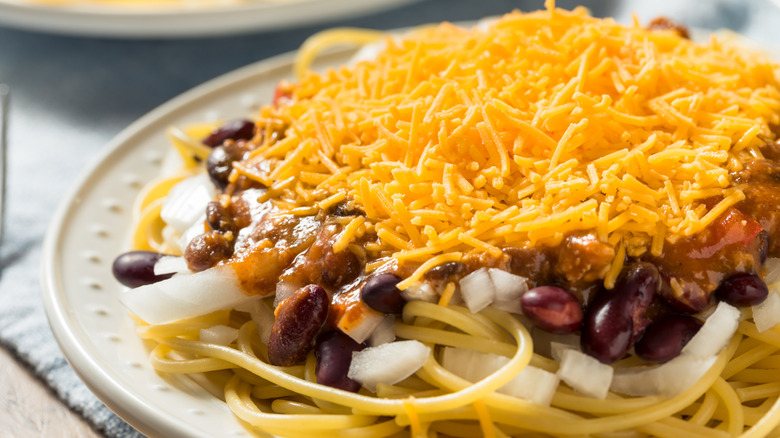
The story of Cincinnati-style chili does not begin in this Ohio city, but instead in Macedonia, from which brothers Tom and John Kiradjieff immigrated to open the restaurant Empress Chili Parlor in 1922. The thinner, ground-beef-based stew, which later became known as Cincinnati chili, boasts warming spices such as cloves, nutmeg, and cinnamon. Notably, it is also popularly sold over spaghetti with accoutrements such as shredded cheddar cheese, beans, and chopped onion. The various available combinations of toppings for Cincinnati chili are referred to as "Ways" (for example, a 3-Way would consist of spaghetti, chili, and cheese).
Today, Empress operates across the river in Alexandria, Kentucky. In Cincinnati, the restaurant now has a number of just-as-famous competitors. These include Dixie Chili, which got its start in 1929, and Skyline Chili, which began in 1949 and eventually grew into a regional chain that deserves national attention for the sheer number of food items that the restaurant tops with its famous stew (think french fries, burritos, baked potatoes, hash browns, and nachos). These two chili parlors were also founded by restaurateurs from Macedonia and Greece, and have helped cement Cincinnati chili, which combines U.S. Midwestern comfort food with Mediterranean and Balkan flavors, as another story of immigrant innovation and entrepreneurship in the regional canon.
3. Oklahoma chili
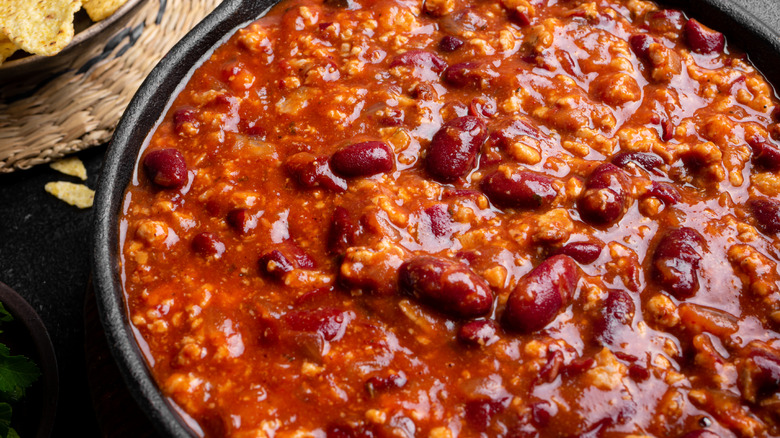
Some of the earliest records of chili appearing in Oklahoma are from the late 19th and early 20th centuries, when residents noted Mexican American chili stands and restaurants around Oklahoma City. Unlike other regional U.S. chilis, recipes for Oklahoma-style chili have not been as married to — or as strict about excluding — certain ingredients. Some early recipes from Oklahoma home cooks look more like Texas' beanless chili con carne, while others adopt the Midwestern chili traditions of adding beans, using Cincinnati-style warming spices, or even serving it atop spaghetti.
Oklahoma-style chili is not characterized by what it must have, but is instead characterized by what it might have. There is a certain joy in the fact that your chili might consist of a stew of masa-thickened ground beef and tomatoes, or of a bean-filled gravy for topping on spaghetti or Fritos — and that, either way, it is still absolutely a plate of Oklahoma chili.
4. New Mexican Hatch chile verde stew
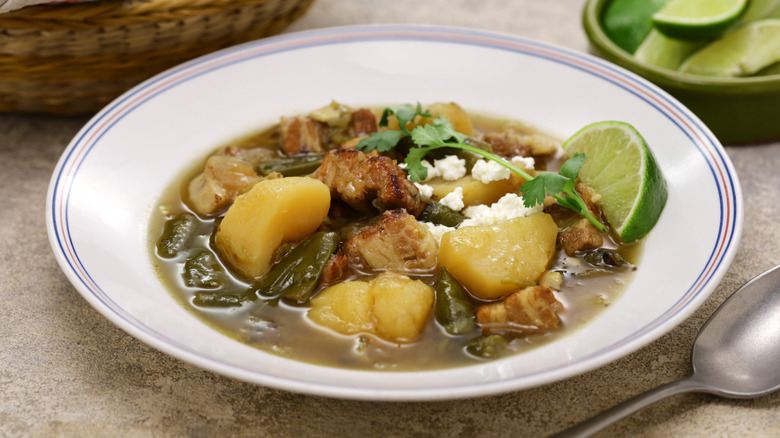
The green color of classic New Mexican Hatch chile verde stew isn't the only thing that sets this dish apart — you also won't see its main ingredients of pork chunks, potatoes, and Hatch green chile in many (if any) other regional chilis. The path of the green chile pepper to New Mexico is complex: food historians point to trade and cultivation between Southwestern Pueblo communities and other Indigenous peoples further south, and also suggest that chile seeds made their way to the state through Spanish colonial networks. Centuries later, in 1913, Mexican American horticulturalist Dr. Fabián García developed and released a cultivar of chile known as "New Mexico No. 9," which laid the groundwork for the varieties of green chiles grown in New Mexico today.
Many of the most iconic dishes in New Mexico rely on these mild peppers, including Hatch chile verde stew, which is made with green chiles cultivated in the state's Hatch Valley. Pork chunks are given a gorgeous sear before tomato and chicken broths are introduced, leaving the meat with a satisfying bite and facets of rich, rendered fat. Other ingredients, such as cumin and oregano, as well as the flour tortillas with which the chili is typically served, also reflect the Mexican culinary influences found in New Mexican cuisine.
5. Springfield tavern chilli
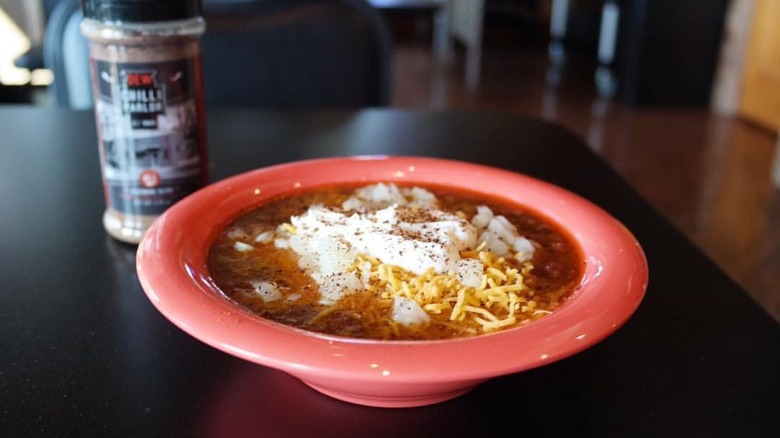
No, that is not a typo you spotted above. In Springfield, Illinois, this spicy stew is known as "chilli," not chili. In the late 19th and early 20th centuries, packaged chilli products and outdoor chilli tamale vendors were among Springfield's first introductions to the dish. In 1909, Springfield's Dew Chilli Parlor became the first restaurant to spell chilli with two Ls, and the city hasn't looked back since.
Dew serves what is perhaps the best cup of chili in the state of Illinois, although many chilli parlors across Illinois will happily serve you a bowl of it today. Tavern-style chilli literally uses extra fat for another layer of flavor in the form of suet (hard, fatty deposits found around the loins and kidneys of cattle), and the richness is balanced by a tomatoey broth.
Springfield chilli is also distinct for its degree of customizability — from opting for "light" or "heavy" suet to loading up your bowl with toppings such as relish, pickles, jalapeños, and sport peppers. Notably, beans and meat are prepared separately for tavern-style chilli, allowing for another avenue for customization. In a nod to its Midwestern cousin, you can also get your tavern-style chilli in "ways" over spaghetti at parlors like Dew.
6. Carolina chili sauce
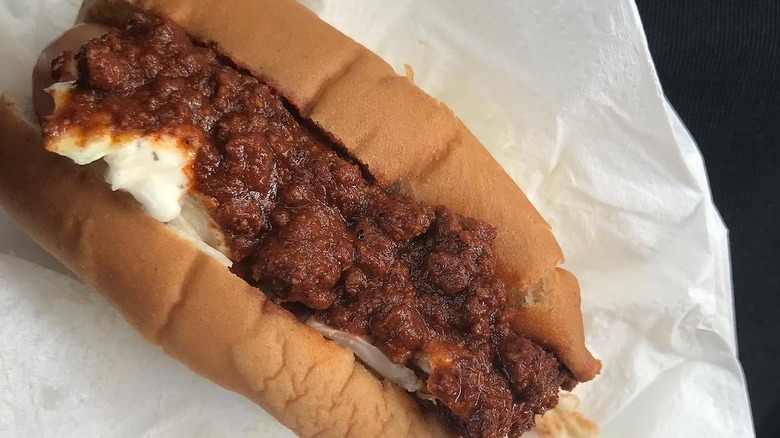
Just like with Texas chili con carne, beans have no place in a Carolina-style chili. This is because chili in these two Southern states is usually served as a condiment, rather than in a bowl on its own. Carolina chili shines its brightest as a topping for a classic slaw dog, a hot dog boasting toppings of creamy coleslaw, mustard, chopped onions, and, of course, a generous ladle of chili sauce. While many roadside dives across the Carolinas claim credit for the state's chili-topped hot dogs, the true origin story of this regional delight remains a mystery.
Carolina chili sauces will vary slightly depending on the recipe, but the bulk of them consist of plenty of ground beef, stewed into a thick gravy with Worcestershire and tomato sauces, chili powder, and a splash of vinegar for acidity. Some sweeter recipes include brown sugar or ketchup, while others pay homage to the Carolinas' affinity for mustard with the addition of Carolina-style barbecue sauce or plain yellow mustard itself.
7. Indiana Hoosier chili
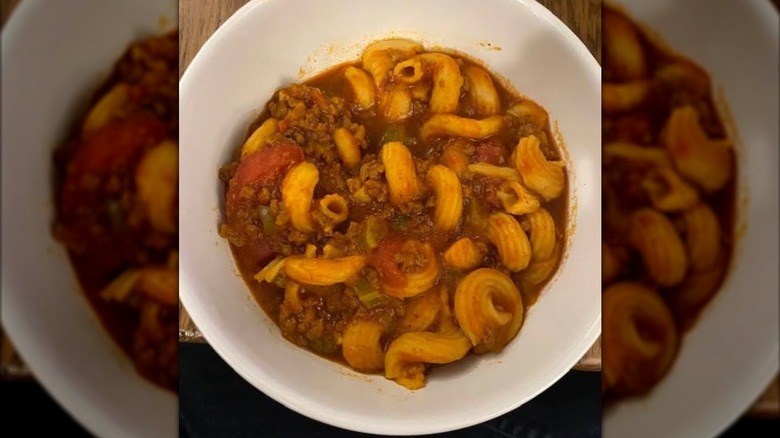
Recipes for Indiana's Hoosier chili might vary between chefs, but there is one ingredient addition that sets Hoosier chili apart from the rest: pasta, usually in the form of elbow or spaghetti noodles, simmered directly in the stew. Although the inclusion of pasta might sound similar to Cincinnati-style chili, there is evidence that Hoosier chili actually came before the regional Ohio dish, with recipes calling for spaghetti appearing in Indianapolis newspapers as early as 1908. Decades later, a restaurant chain by the name of Blacker's Chile Parlors continued to popularize the style of chili; after its closure in 1965, the chili had already become a statewide phenomenon in restaurants and home kitchens alike.
Aside from pasta, finding consistency between Hoosier chili recipes can be a challenge. Most recipes feature ground beef, some type of beans, a stewing liquid of tomato juice or soup, and a whole lot of chopped onions, celery, and peppers (both mild and hot). Some wild-card ingredients that you might find in Hoosier chili include Tabasco hot sauce, packaged chili seasoning mix, beef suet, and sometimes even V8 vegetable juice.
8. Southwestern white chili
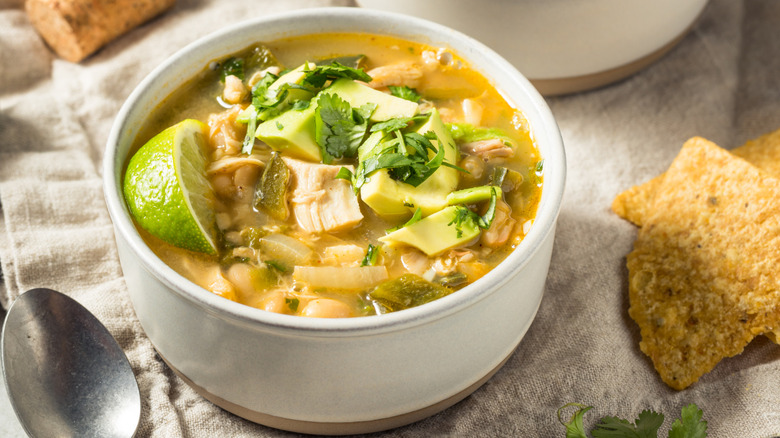
Many restaurants (and home cooks!) would love to take credit for this tomato-free chili, but we will never know where white chili truly came from. We only know that it began to spike in popularity across the Southwest in the 1980s, and that it continues to be a classic comfort dish in the region.
With its murky origins, it makes sense that recipes for Southwestern white chili vary. Most, like this hearty white chicken and navy bean chili, are made with chicken chunks and chicken broth (rather than pork or beef), some type of white bean, and plenty of green chile peppers (such as jalapeños, poblanos, Anaheims, and Hatch green chiles). Unlike many of the other regional chilis on this list, Southwestern white chili does not call for tomatoes, which keeps its broth light and zesty — and a perfect vehicle for a number of toppings, such as sour cream, tortilla chips, cilantro, lime wedges, fresh or sun-dried tomatoes, avocado, and shredded cheese.
9. Hawaiian chili
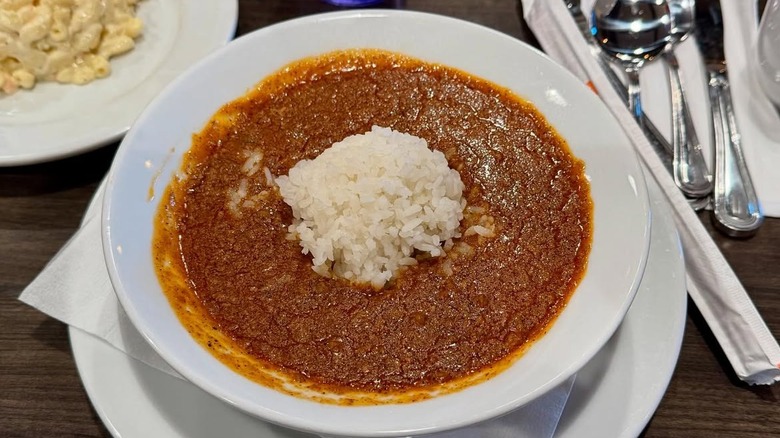
This style of chili, like many of Hawaiʻi's other specialty dishes, embraces the immigrant foodways that have shaped the state's cuisine. In 1966, brothers Francis and Charlie Higa propelled Hawaiian-style chili to local fame when they founded quick-service restaurant Zippy's.
The eatery, which started out serving bowls of the noodle soup saimin at a counter dubbed the Saimin Lānai, also cooked up a chili of its own — one that's still a nostalgic and beloved staple across Hawaiʻi. The Zippy's recipe boasts ground beef, kidney beans, Worcestershire sauce, sugar, and, most importantly, linguiça, a smoky and rich cured Portuguese sausage that reflects the influence of Portuguese immigrants on Hawaiʻi's food scene.
At Zippy's today, the ways you can order the restaurant's famous chili are seemingly limitless. The chili itself is available with and without both beans and meat, and can be served loco-moco-style over hamburgers, as a topping for burritos, alongside fried chicken and beef franks, or, for the purist, around a mountain of white rice.
10. Kansas City chili
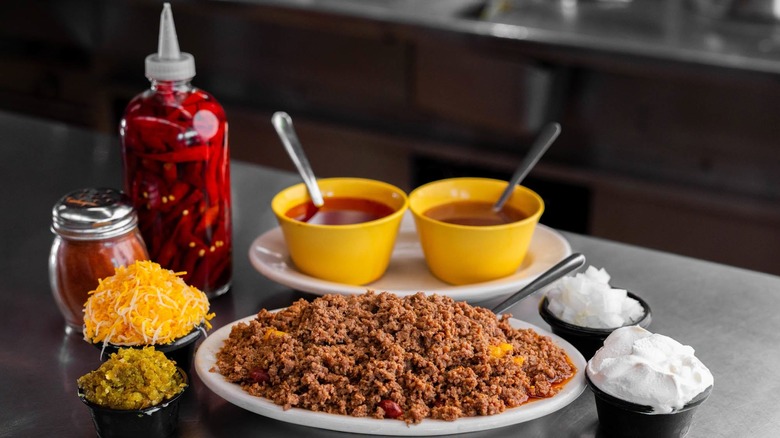
Just as with several other regional styles of chili, one restaurant is often credited with turning Kansas City chili into a sensation: Dixon's Famous Chili, which got its start in 1919 and is known as the longest-running family-owned restaurant in the KC metropolitan area. Over the past century, the eatery has been visited by politicians such as President Harry S. Truman, who helped bring national acclaim to the local dish.
Although Dixon's has relocated from Kansas City to the neighboring town of Independence, its recipe, which hasn't changed since the restaurant's founding, remains the blueprint for Kansas City-style chili. A plate (not a bowl!) of this chili consists of beans and ground beef cooked separately and served in your choice of "style": "Juicy," which lets the beef's natural juices shine; "Soupy," which thins the mixture with the addition of bean broth; or just plain "Dry."
Popular toppings include the usual suspects, such as onion, sour cream, and shredded cheese, as well as some more unique options, including jalapeño relish, pickles, and ketchup. Kansas City chili also gets creative with its vessels — at Dixon's, try your chili served over a tamale or spaghetti.
11. Michigan Coney sauce
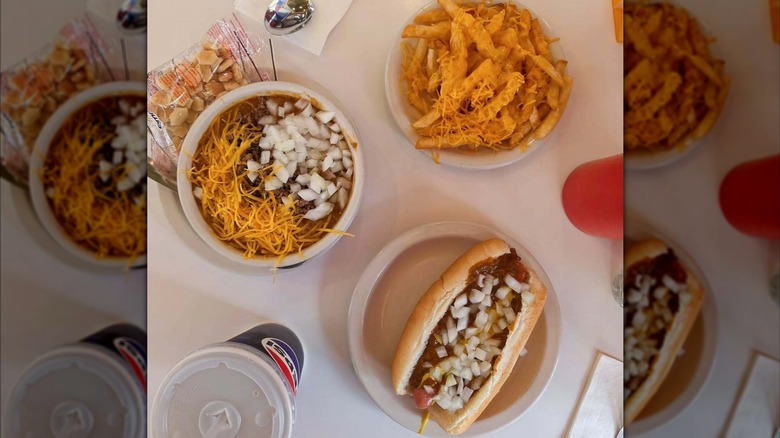
Like Carolina-style chili, the one most popular in Michigan is best known as a sauce rather than a standalone dish (although many restaurants will happily serve you a bowl!). In the Wolverine State, one of the most popular ways to order chili is on a Coney dog, a nod to the iconic (usually chili-less) hot dogs you'll find on New York's Coney Island boardwalk.
The jury is out on the true birthplace of the Coney, which traditionally features a steamed hot dog with layers of chili, yellow mustard, and chopped white onions. That said, it's been a point of pride for Detroit and greater Michigan since its earliest noted appearances in the state in the early 1900s. Some argue that there are more Coneys available in Michigan than anywhere else in the country.
In 1914, George Todoroff, who immigrated to Michigan from Macedonia, founded Todoroff's Original Coney Island and helped catalyze Michigan's ongoing love affair with the Coney. Todoroff's became a local chain, but today, all of its locations have closed. However, Coney-style chili is still a staple of restaurants across Michigan. The chili is packed with ground beef (no beans), seasoned with cumin, garlic, and other aromatics, and kept thin in consistency for the perfect hot dog topping.
12. Louisiana Creole chili
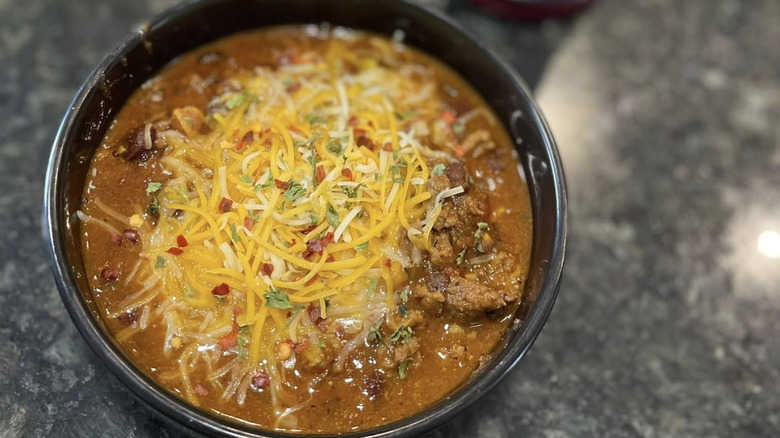
Louisiana-style chili is not a historically established Creole dish in the same sense as jambalaya or étouffée; however, it has emerged as a more modern adaptation of the classic stew. It draws from chili styles in the Southern and Midwestern U.S., but it also relies heavily on ingredients and techniques from Creole cuisine — a New Orleans culinary tradition molded by the city's African, Caribbean, Indigenous, and European communities.
Louisiana Creole chili often begins with the Holy Trinity of aromatics found in other Creole fare: onion, bell pepper, and celery. From there, because it is a newer dish, you can expect the chili's ingredients to vary considerably depending on who is cooking it. Common additions include a rainbow of red and green chile peppers and tomatoes (frequently including canned Ro*Tel products), Creole seasoning mixes, and a variety of beans. As far as meat is concerned, a bowl of Louisiana Creole chili might feature ground beef, ground or shredded chicken, chorizo or andouille sausage, shrimp, or a combination of them. The only way to find out is to stick your spoon in!
13. Colorado Pueblo green chile stew
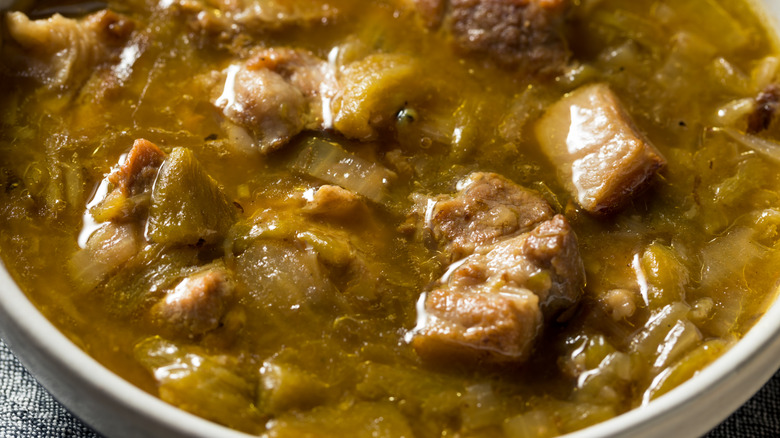
The final chili on this list relies on a pepper that has, over centuries, become an icon in regional Colorado cooking: the Pueblo chile. Although food historians continue to debate how the Pueblo chile landed in Colorado, DNA samples of its parent strain, Mirasol chile (translated from the Spanish phrase "looking at the sun"), reveal that the pepper has roots in Oaxaca. Because of these findings, many food historians hypothesize that Mexican farmers and traders brought early varietals of Pueblo chile seeds to Colorado during the mid-to-late 1800s. A century later, a diverse array of green chiles had become fixtures at Pueblo truck farms, and Pueblo chiles were on their way to becoming a backbone of Southern Colorado cuisine.
While Colorado Pueblo green chile stew, traditionally made with pork chunks, shares some similarities to the New Mexican Hatch chile verde stew, there are some important distinctions between them. Perhaps the biggest is that Colorado-style chili is thickened with a roux of butter and flour, which gives it a velvety, rich taste and texture. Instead of potatoes, the Colorado Pueblo green chile stew is made with diced tomatoes for a hit of acid (a nice contrast with the roux) and an extra dimension of flavor when paired with the vegetal chiles.