

The 14 Most Popular Chocolate Candies In The 1960s
We may receive a commission on purchases made from links.
The 1960s might have been several decades ago, but that does not mean that sweet, decadent chocolate has come close to going out of style. Plenty of chocolate candies made their rounds in grocery stores, chocolate shops, and on the highest shelves of childhood homes during the decade — and while some treats have been discontinued or have grown far more obscure in the years since, many others remain popular today.
The following list rounds up some of the most popular chocolate candies during the 1960s. On it, you'll find everything from classic and still-nostalgic candy bars by major manufacturing companies to chocolates that now are far more difficult to come by (and even one that is no longer produced today). Keep reading to see how many you've tried — and how many more you would like to try, should you be able to get your hands on them in the 21st century!
1. Chunky
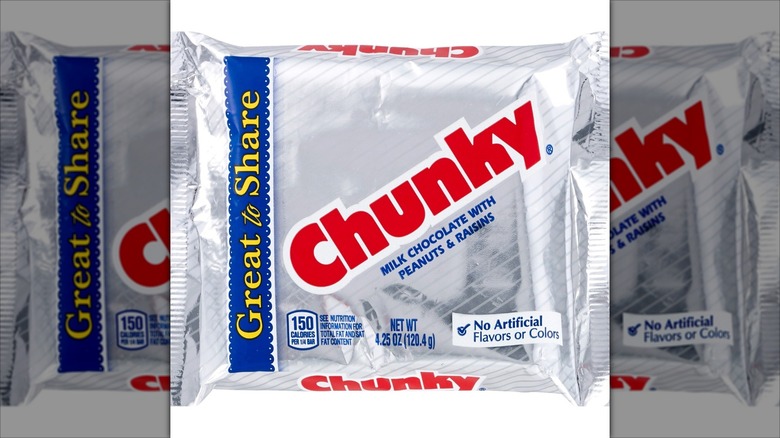
In the 1930s, the Chunky — a squat, pyramid-shaped bar featuring California raisins and roasted peanuts suspended in milk chocolate — was born. The treat steadily grew in popularity over the next several decades, and in the 1960s, it had become an enduring member of the American chocolate canon.
Commercials emphasized the bar's thick (and dare we say, chunky) structure, as well as its variety of high-quality ingredients. At the time, the bar was made with both cashew and Brazil nuts, rather than peanuts, according to advertisements. Also a star of '60s commercials was actor Arnold Stang, whose catchphrase, "Chunky, what a chunk of chocolate," was another contributor to the candy's popularity.
Today, Chunky bars are still available for purchase from online and physical retailers, but they are certainly not one of the most mainstream chocolate candies today. However, while they might be slightly more obscure, they are still relatively easy to find — and the same, unfortunately, can't be said for some of the other treats on this list.
2. 100 Grand Bar
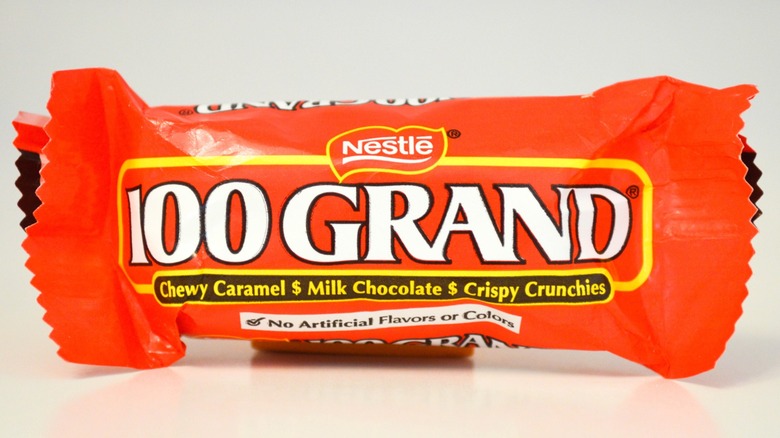
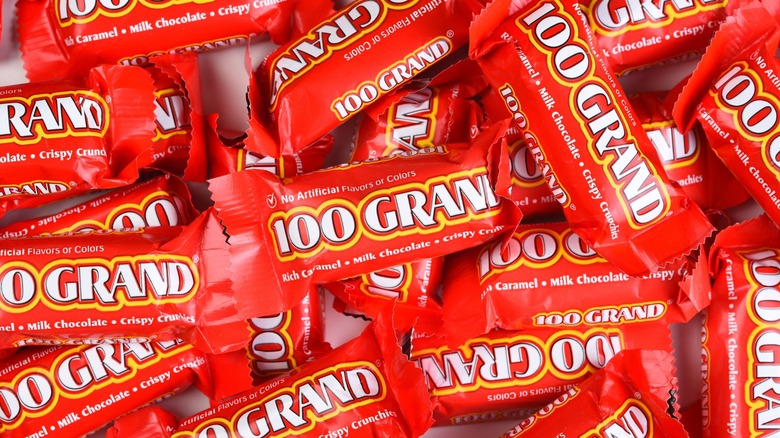
Originally known as the $100,000 Bar (said as "Hundred-Thousand Dollar Bar"), the 100 Grand Bar made waves after its advent in 1964 for its caramel center, crisped rice pieces, and milk chocolate coating — flavors that, together, one of its '60s slogans claimed, "taste so good it's almost illegal." Other slogans were "A Fortune in Flavor," and "That's Rich!" emphasizing the bar's high-quality ingredients and rich, decadent taste. In the 1980s, candy wrappers referring to the bar as the 100 Grand began to emerge, and the updated label continues to be the candy bar's sole name today.
In 2018, Ferrero Group acquired the 100 Grand Bar from its creator, Nestlé, along with many other iconic nostalgic chocolates, in a $2.8 billion deal. Although it might be one of the old school candy bars you've forgotten about, the bar is still produced today, and it remains widely available, everywhere from big-box grocers to mom-and-pop candy shops.
3. Crunch
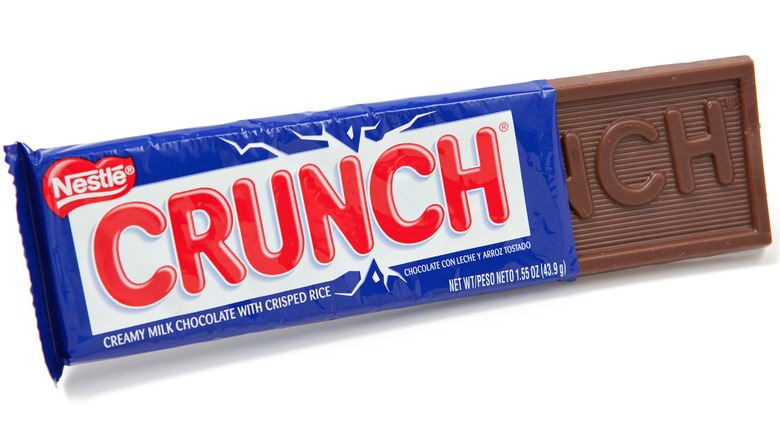
Another popular milk-chocolate-and-crispy-rice bar in the 1960s was Crunch, in which those two ingredients take center stage. This timeless chocolate bar has come a long way since it first hit the scene in 1938, when it sold for five cents and was known as "Nestlé's Crunch."
In the 1960s, Crunch was advertised as a versatile chocolate candy that could easily be baked with, melted down, and simply savored as a snack. In the '60s, the brand advertised its chocolate products as some of the most high-quality on the market by emphasizing its roots in Switzerland and its popularity around the world.
Crunch was another of the Nestlé chocolate bars acquired by Ferrero Group in 2018. Just as with many of its other acquisitions, Ferrero has still retained the chocolate bar's original branding (minus, of course, the classic Nestlé emblem on its wrapper). Good luck stepping into a grocery or candy store today that doesn't carry this legendary treat!
4. 3 Musketeers
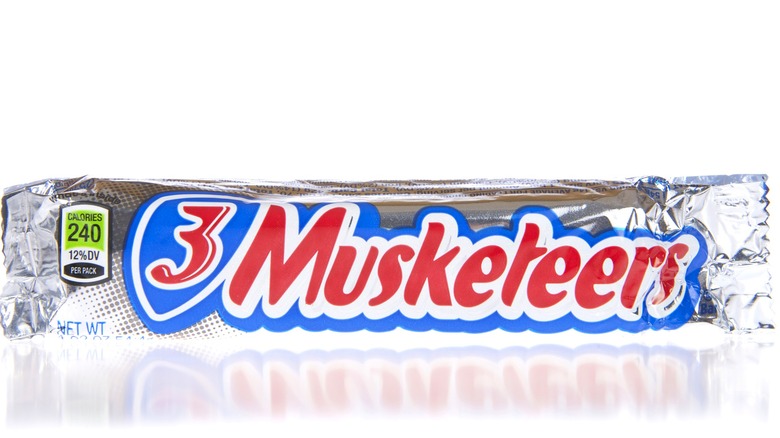
In 1932, the chocolate company Mars began selling three differently flavored bars of nougat coated in milk chocolate in combined packages, which is where the 3 Musketeers got its name. By the time the '60s rolled around, the chocolate bars had exploded in popularity and were especially beloved for the shareability of their three-bar package, as well as for their scrumptious combination of creamy milk chocolate and fluffy, cocoa nougat. Although a chocolate coating and a cocoa-flavored center might initially seem like double-chocolate overkill, anyone who has tried one of these popular candies can attest to how harmonious the combination is.
Like many other Mars bars that were popular in the 1960s, it is very easy to find a 3 Musketeers bar in major retailers and grocers today. That said, if you don't feel like a trip to the candy shop, you only need three ingredients to make homemade candy that tastes exactly like 3 Musketeers.
5. Charleston Chew
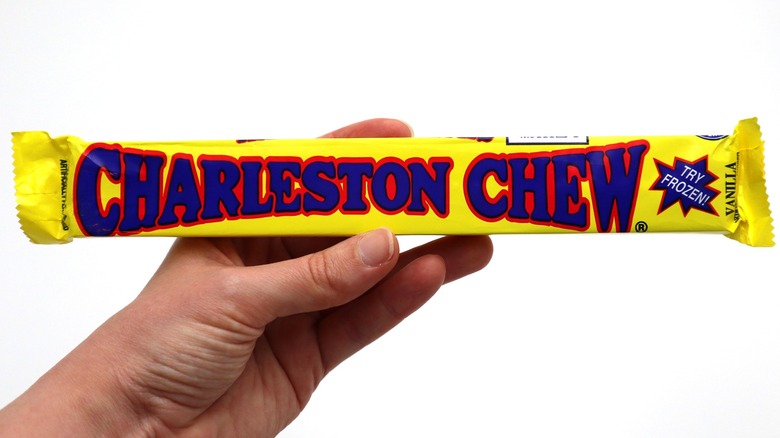
Like the 3 Musketeers bar, the Charleston Chew boasts a nougat center and a milk chocolate coating; however, the Charleston Chew is a decade older than the aforementioned candy bar — and its nougat comes in flavors of vanilla, chocolate, and strawberry. Contrary to popular belief, the Charleston Chew was actually named after the popular '20s dance known as the Charleston, rather than the South Carolina city.
In the 1960s, the chocolate bar became even more popular due to its manufacturer, the Fox-Cross Candy Company, encouraging customers to freeze the bars and crack them against a hard surface until the bar became a collection of snackable, cold shards. The result, colloquially known as "Charleston Crack," remains a popular way to eat the Charleston Chew today. In fact, the wrappers still feature the same "Try Frozen!" emblems. While no longer one of the most popular chocolate bars in the 21st century, the Charleston Chew is still manufactured today by Tootsie Roll Industries and is still sold by many online and physical retailers.
6. Baby Ruth
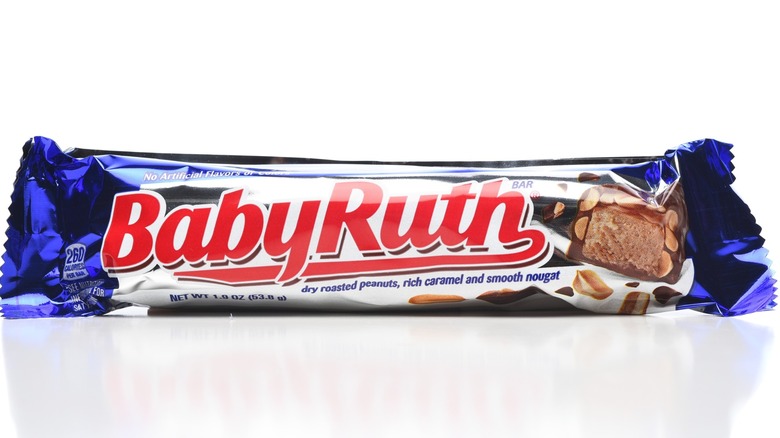
In the 1920s, the Baby Ruth, which consisted of a center of nougat wrapped in a layer of caramel and roasted peanuts and coated in milk chocolate, began its ascent to fame. During the 1960s, it was advertised as a sweet treat for all ages, rather than simply as a chocolate bar aimed at children. The textural contrast between the smooth caramel and crunchy peanuts, as well as the fudginess of the bar's chocolate, was also major draws at the time.
Today, the Baby Ruth bar is considered a more nostalgic but still-popular candy, and is now manufactured by Ferrero Group, and available at most stores that carry candy bars. Today's marketing for Baby Ruth appears to be focused on an acute attention to detail and the high quality in its ingredient list, from advertising dry-roasted peanuts to proudly stating that the bars contain no artificial colors or flavors.
7. M&M'S
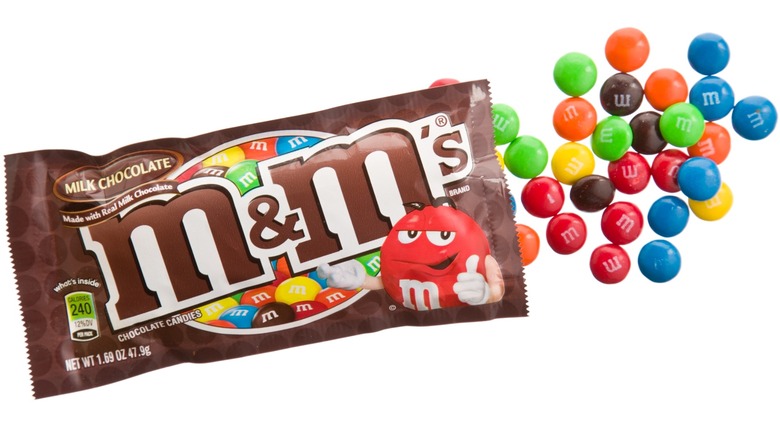
M&M's, the ubiquitous, bite-sized morsels of chocolate encased in hard candy shells, were introduced to the masses in 1941 — meaning that, by the time the 1960s rolled around, they were still one of the newer kids on the block as compared to their chocolatey peers. During the decade, Mars also rolled out M&M's Fruit Chewies (later known as STARBURST), but that does not mean that the original M&M's lost any love.
During the '60s, M&M's stood out because their candy shell prevented them from easily melting in hands and during transit, unlike many other chocolate candies. As such, the candy was marketed as being a portable, go-with-you-anywhere treat, with the popular tagline: "Melts in your mouth — not in your hands."
Today, you'd be hard-pressed to find a candy store that doesn't sell M&M's. Since the product's inception, M&M's have come in countless flavors — some evergreen and some limited-time. Current highlights include Caramel Cold Brew, Peanut Butter & Jelly, and Lemon Meringue Pie.
8. Butterfinger
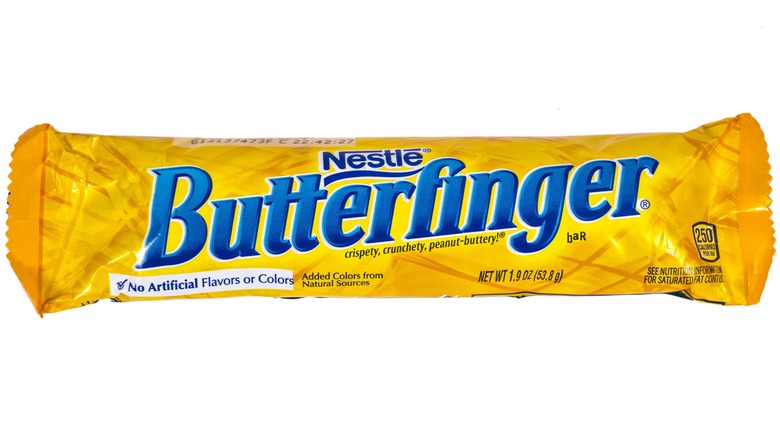
As another beloved 1920s-born candy bar, Butterfinger (named for the term often given to athletes who couldn't hold onto the ball) was another go-to chocolate during the 1960s. With its "Crispety, Crunchety" peanut-butter center enrobed in milk chocolate, the Butterfinger was advertised as a treat fit for school and work lunchboxes.
Although Butterfinger was initially invented by the Curtiss Candy Company in Chicago, Nestlé acquired it and took over production in 1990. Unsurprisingly, Butterfinger was also part of the same $2.8 billion acquisition deal between Ferrero Group and Nestlé in 2018. One year later, a press release from Ferrero Group announced that the company had reformulated the chocolate bar to create a "Better Butterfinger," featuring "carefully-selected U.S. grown peanuts and a rich chocolatey coating, delivering an indulgent, craveable taste with a robust peanut flavor."
However, some consumers have not been impressed by the reformulation, alleging that it now tastes drier and grittier than it ever has. In fact, online petitions calling for the brand to revert to the original Butterfinger recipe are still receiving signatures at the time of writing.
9. Mallo Cup
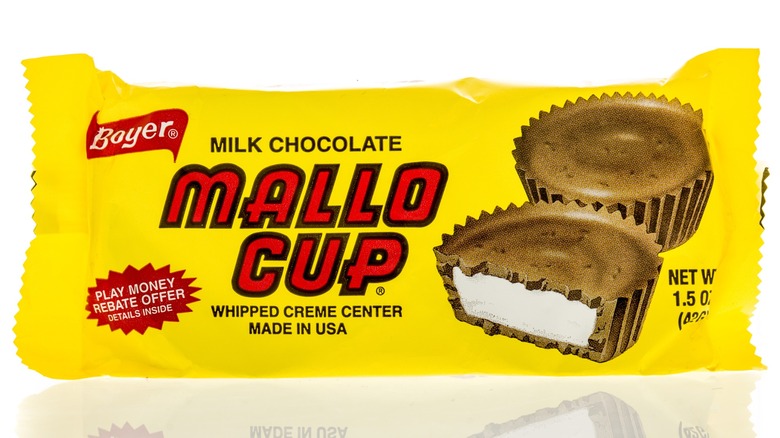
As one of the more obscure candies on this list, there is a good chance that you have not yet heard of (or have already forgotten about) the Mallo Cup — milk chocolate cups filled with a whipped, marshmallow-flavored creme center — but they were pretty popular in the '60s. The Mallo Cup was invented by the founding brothers behind the candy company Boyer, who, during the Great Depression, rode their bicycles door-to-door selling homemade treats in their hometown of Altoona, Pennsylvania.
During the 1960s, Mallo Cup's advertisements were known for their inclusion of the candy's mascot — Marty Mallo who, of course, was known for craving a Mallo Cup. Boyer also included Mallo Cup Play Money, in the form of cardboard coin inside each package, which customers could collect and redeem for rebates.
Although they are a lesser-known candy in the 21st century, the Mallo Cup is still produced by Boyer today. Longtime fans (or the Mallo-curious) can find them for sale on the Boyer website, as well as select (and often specialty) online and physical retailers.
10. Milky Way Bar
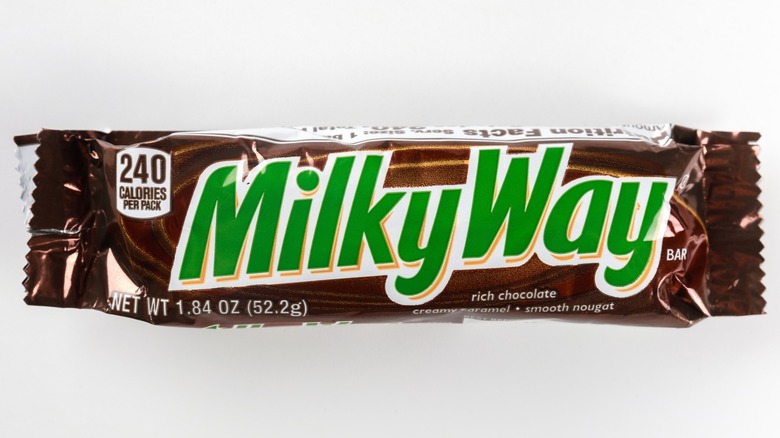
We have arrived at the oldest Mars chocolate bar that is still sold (and immensely popular) today: the Milky Way, which boasts layers of nougat and creamy caramel enrobed in rich milk chocolate. In 1924, the chocolate bar, which was originally modeled after the flavor of a malted milkshake, was first introduced to the world — and it has been a popular pick ever since, including in the 1960s.
During the decade in question, the Milky Way was marketed as an exceptionally rich and creamy candy bar, and was often compared in flavor to chocolate milk. The fluffiness of its nougat was also a large selling point in the '60s.
Today, you can find Milky Way bars wherever most other chocolate candies are sold. Although it has been a while since the chocolate bar was marketed for its milkiness or likened to a milkshake, its flavor remains consistent and as nostalgic as ever.
11. 5th Avenue Candy Bar
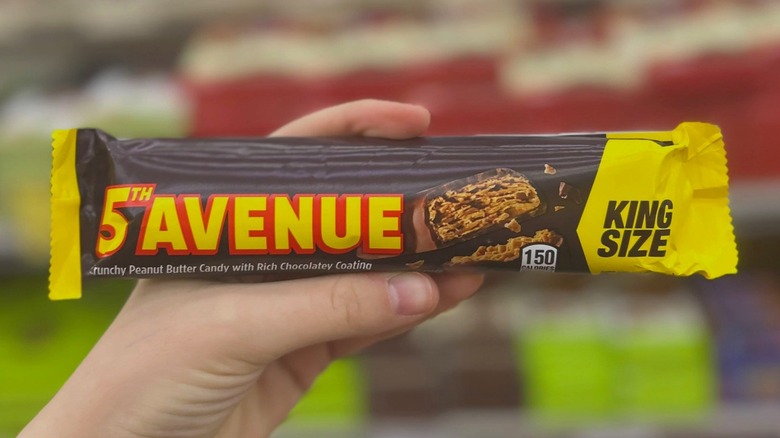
You can think of the 5th Avenue Candy Bar as Butterfinger's lesser-known sibling. The bar similarly features layers of flaky, crunchy peanut butter enrobed in a chocolatey coating, and was invented in 1936 by Luden's (yes, the same company that produces the popular cough drops). In the 1960s, advertisements for the 5th Avenue Candy Bar were populating pages and screens.
Commercials from the time highlighted the peanut butter, honeycomb, and almond center of these bars. Many 5th Avenue candy bar advertisements from the era also emphasized that each bar was made with real milk chocolate.
In 1986, The Hershey Company acquired the entirety of the Luden's brand, and the 5th Avenue candy bar officially became a Hershey product. Today, it is a bit harder to find these bars in a mainstream grocery store; however, they are still available for purchase via The Hershey Company's digital storefront, as well as select online and physical candy shops.
12. Reese's Peanut Butter Cups
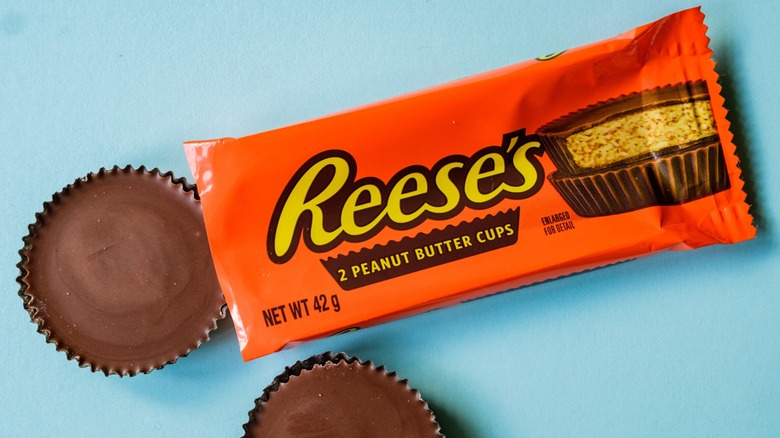
Former Hershey employee H.B. Reese created Reese's Peanut Butter Cups in his basement in 1928, and they have been a phenomenon for nearly 100 years, including during the 1960s. Just like Mallo Cups, these candies feature a peanut butter center encased in a milk chocolate cup. Interestingly enough, some ads from the '60s seemed to suggest that Reese's Peanut Butter Cups were kind of a health food. One in particular curiously referred to the chocolate candy as "peanutritious."
Today, Reese's Peanut Butter Cups are one of the most mainstream and best-known chocolate candies on this list, and you can find them for sale wherever you like to get your chocolate. The Hershey Company has long been the manufacturer of these; however, the brand has recently found itself in hot water as some of its recent recipe adjustments have not landed well with some customers, who argue that the cups now taste overly sweet and more artificial (here, you can see exactly how they changed from 1928 to 2026).
In response to this criticism, The Hershey Company announced that it will be reverting some of its Reese's products back to their original recipes in 2027. Don't feel like waiting? You can also make peanut butter cups that taste like Reese's with only three ingredients.
13. Caravelle
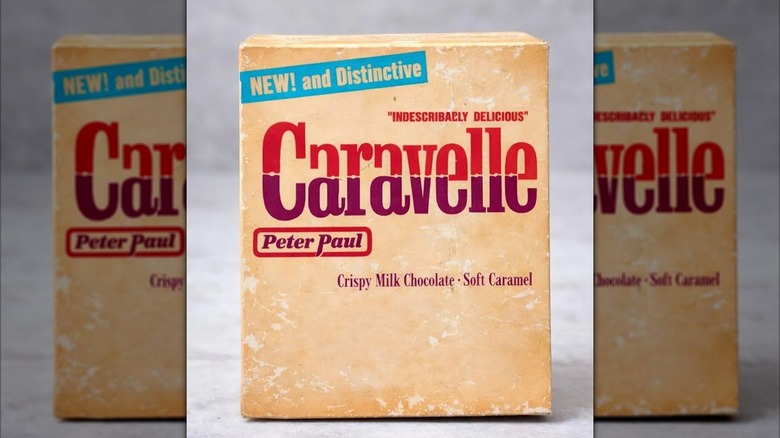
Caravelle, a chocolate bar consisting of crisped rice, caramel, Brazil nuts, and milk chocolate, is, without question, the youngest — and also the shortest-lived — chocolate bar on this list. Invented in 1965 by candy manufacturer Peter Paul, Caravelle was discontinued in the '70s. That said, while its time in candy shops was short, it undoubtedly had a whirlwind success story. In fact, just two years after its inception, customers voted it one of the best new candies.
Media and advertisements during the '60s and '70s highlighted the generous portion of caramel inside Caravelle bars, as well as high-quality, fresh chocolate and crisped rice. Simultaneously, the bar was advertised as one of the smoothest and crispiest chocolate bites on the market.
Caravelle is the only chocolate candy on this list that has been discontinued. As such, if you are looking to taste what all of the fuss was about, you are sadly out of luck.
14. Snickers
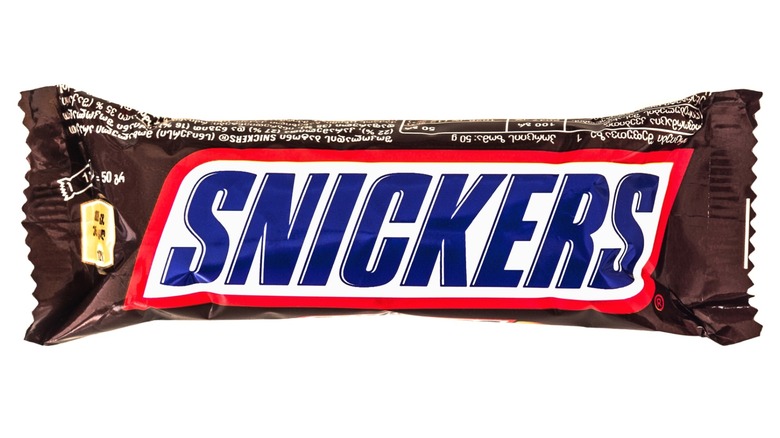
The easiest way to describe the iconic Snickers bar is a cross between a Milky Way and a Baby Ruth. It features the stacked caramel and nougat layers that you will find in the former, plus a layer of roasted peanuts like the latter, complete with a milk chocolate coating. The result is a toothsome bite that many (including its manufacturer Mars) can only think to describe as "satisfying."
Snickers was invented in Chicago in 1930, where the bar was actually named after a beloved family horse. In the 1960s, the bars were celebrated for their lack of artificial ingredients, as well as top-quality chocolate and nougat made from whipped whole egg whites.
Fast forward a few decades, and Snickers officially surpassed $1 billion in sales in 2013, and bars are still available to purchase from countless major (and specialty) candy retailers. Today, Snickers bars are marketed with the brand's slogan: "You're not you when you're hungry." This phrase emphasizes the ability of a Snickers bar to sate your appetite (and prevent accidental bouts of hanger).