

12 Tips For Using Your Big Green Egg Grill Like A Pro
We may receive a commission on purchases made from links.
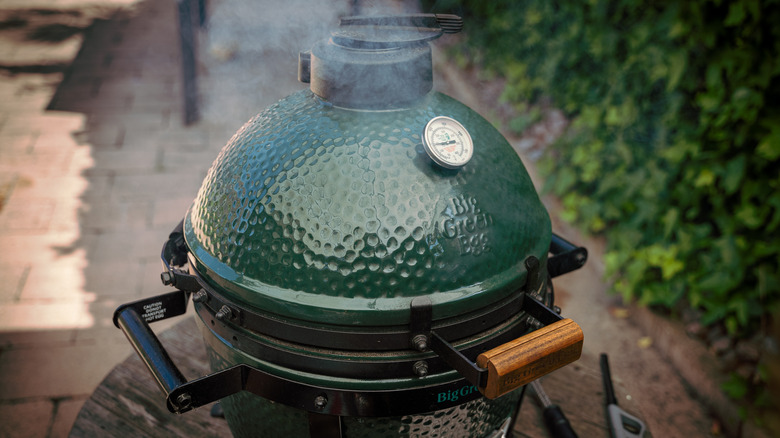
Cooking outdoors can be such a satisfying experience, and using the Big Green Egg grill takes it to another level. Its kamado-style design gives it a distinctive look, and its ceramic construction makes it incredibly versatile. Compared to a regular barbecue grill, however, there are a few differences, and learning them before you embark on your Big Green Egg journey will make for smooth sailing.
To take you through the main features of the Big Green Egg, we spoke to four grilling experts who know more than your average garden cook about how to get the most out of the Big Green Egg. Jess Pryles is a meat expert, live fire cook, and author of "Prime Cuts: The Complete Guide To Choosing, Understanding, And Cooking Meat"; Benton Palmer is a teacher, backyard grilling expert, and founder of Grill This Smoke That; Kelley Schmidt is executive chef of Four Seasons Hotel St. Louis; and Greg Garrison is partner and executive chef at Repeal 33 in Savannah, Georgia. Between them, they told us everything you need to know about mastering the Big Green Egg and using this unique grill like a pro.
1. Master the temperature before you add any food
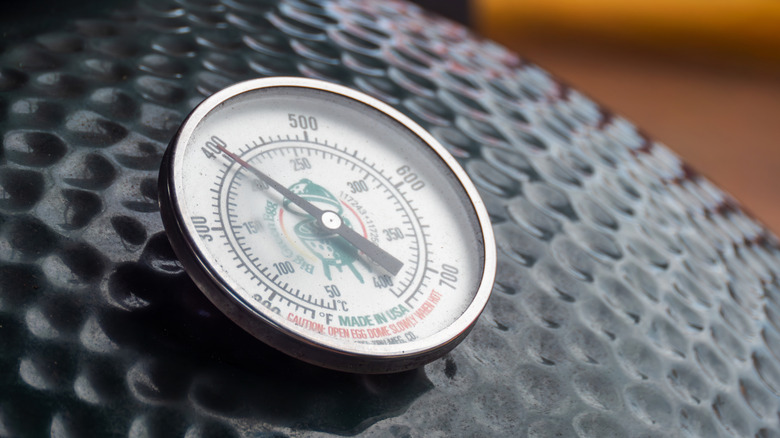
Getting the temperature correct on your Big Green Egg is crucial and needs to be mastered before you add any food. Compared to other grills, it's a bit of a learning curve to make sure you don't overcook the food. "Understand that temperature is controlled by airflow, not by turning a dial," explains Jess Pryles. "And most importantly — it's very easy to get it hotter, but really difficult to cool it down."
Benton Palmer agrees and recommends raising the temperature slowly toward 350 degrees Fahrenheit, rather than racing it up high and then waiting for it to cool. "The Big Green Egg holds heat extremely well, which is one of its biggest advantages, but that also means you don't want to overshoot your target temperature," he explains. The key to controlled temperature is through the vents. "Think of the vents as the throttle for your fire," says Palmer. "More airflow means a hotter fire, while restricting airflow lowers the temperature."
Kelley Schmidt also believes that the vents are the secret to getting the Big Green Egg exactly as you want it. "While you have the lid closed, you want to adjust the chimney and the intake vents to align with the heat you'd like to have (to cool it down, close the vent tighter; to add more heat, open it up)." To get the most out of the grill, patience at the start of the cook is essential to create the perfect cooking temperature for your food.
2. Plan in advance how you want to light the Big Green Egg
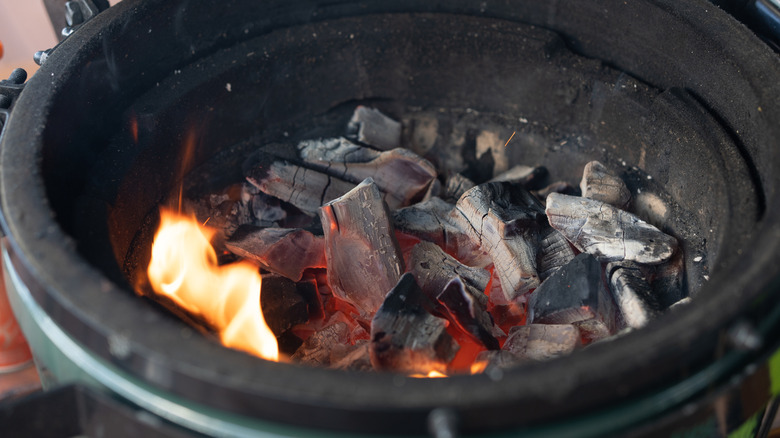
Lighting the grill is always a fun part of the grilling experience, but with the Big Green Egg, it helps to know how you want to do it beforehand. Kelley Schmidt likes to keep with the green theme and light it with materials that have already been used. "I prefer to use natural materials — like newspapers, bags, etc. that are going to be recycled," he explains. "Spray it lightly with neutral oil (vegetable oil), put it in a chimney starter, and then light the paper."
Benton Palmer also likes to cut down on waste by utilizing leftover cooking oil and saving it for lighting the grill. "I keep an old pickle jar near the grill with balled up paper towels soaked in old cooking oil," he advises. "I add my natural lump charcoal, bury a paper towel ball in the center, light it and leave the dome and vents open for 10-15 minutes." Greg Garrison, whose preferred method is hardwood lump charcoal (like Big Green Eggs 100% Natural Oak & Hickory Lump Charcoal) and a chimney starter, warns never to use lighter fluid, which matches Big Green Egg's recommendation.
Another efficient option is an electronic lighter, which Jess Pryles says is popular among grill users. However, she points out, "You do have to stand there while it lights (whereas with a regular charcoal grill you can just use a chimney)." Whichever method you choose, Big Green Egg recommends keeping the lid open for about 5 to 10 minutes to let the fire start before closing and carefully controlling the temperature.
3. Give the Big Green Egg time to preheat
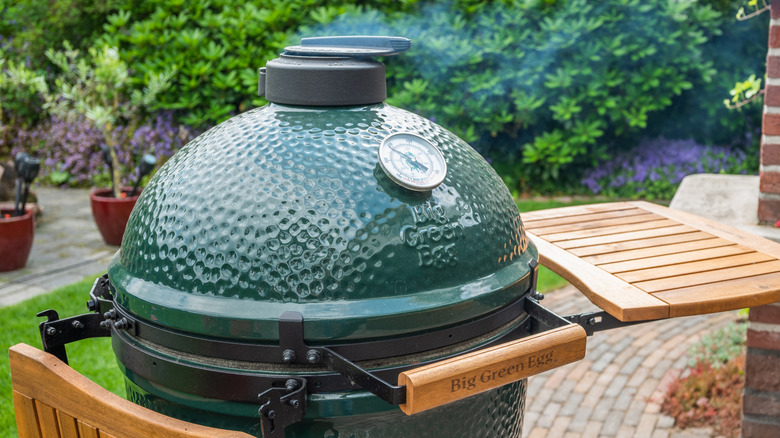
No matter how keen you are to get the steaks on the grill, you need to give the Big Green Egg enough time to preheat properly, and lighting the charcoal is just the beginning. For beautiful grill marks, the grill needs to be fully heated before you add the food. Kelley Schmidt advises waiting until the charcoal is covered in grey ash, then moving the hot coals to the space you will be cooking in. Close the lid and let the Big Green Egg do its thing. "This process takes up to one hour so that the ceramic can build up radiant heat, so make sure to give it time to stabilize when it's at your desired temperature," he advises.
Keeping an eye on the built-in thermometer will let you track the preheat, though Benton Palmer warns the actual temperature is usually about 25 to 50 degrees hotter. "Once it gets close to my target temperature, I'll start adjusting the vents to stabilize it," he says. "Give the Egg some time to stabilize if you're planning to smoke meats." Your patience will pay off when the grill is perfectly heated and ready for you to start grillmaster duties.
4. Keep the lid closed while the food cooks
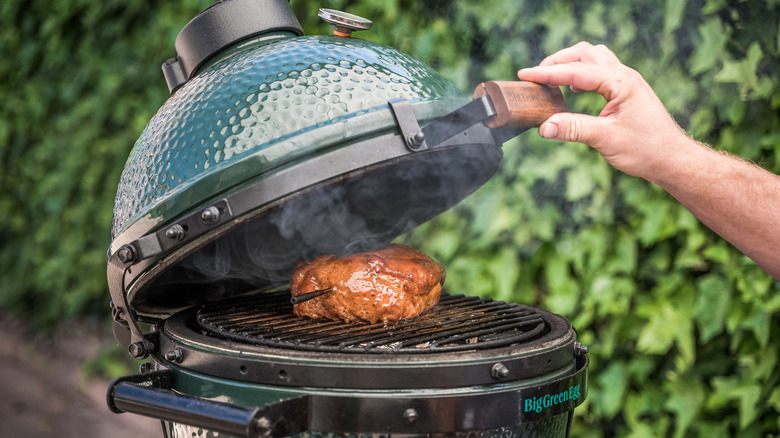
Once you finally get the food on the grill and close the lid, it's tempting to keep opening the dome to check how your dinner is coming along, but you must resist. "A ceramic cooker is designed to cook with the dome down," explains Jess Pryles. "Opening it repeatedly releases heat and adds oxygen to the fire." After spending so much time carefully controlling the heat at the start of the cook, the last thing you want is to spoil the perfect cooking environment by peeking too early.
Benton Palmer explains, "The Egg is designed to cook with the lid down, and that's where you get the benefit of its ability to circulate heat and maintain a consistent cooking environment." Palmer notes one exception, though, when it's acceptable to open the dome. "If I'm searing at the end of a cook, I will leave the lid open for maximum airflow and quick flipping." The Big Green Egg website also advocates keeping the grill dome closed and trusting that your food is cooking beautifully.
5. Burp the Big Green Egg a few times before opening it while cooking
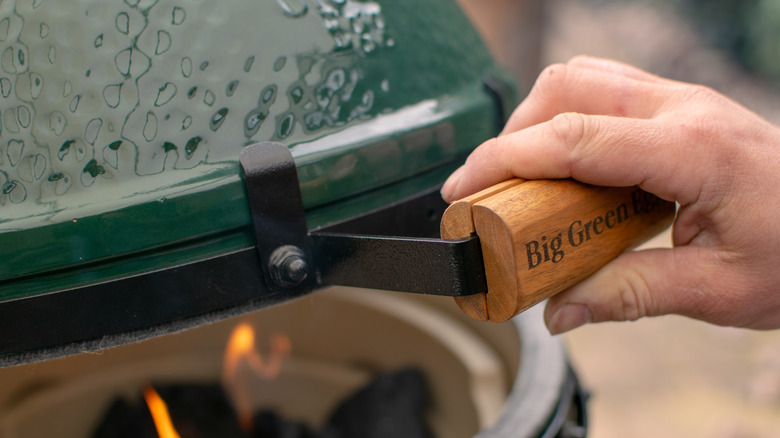
When it's time to open the Big Green Egg dome, keep in mind a crucial safety tip that differs from most grills. As Jess Pryles explains, "[Big Green Eggs] have a weird quirk not everyone knows about. Whenever you open a hot egg, you need to 'burp' it first: lift the lid just a few inches, lower it, and repeat two or three times before opening it fully.
While burping your grill may seem a little strange, swinging the lid open straight away can be dangerous when the Big Green Egg has been deprived of oxygen throughout the cook. "This introduces oxygen gradually and helps prevent a flashback of fire," Pryles explains. Burping the grill is an important safety step when you lift the lid. It prevents your hands from getting scorched by a flash of flames as oxygen rushes in.
6. Learn the difference between direct and indirect heat
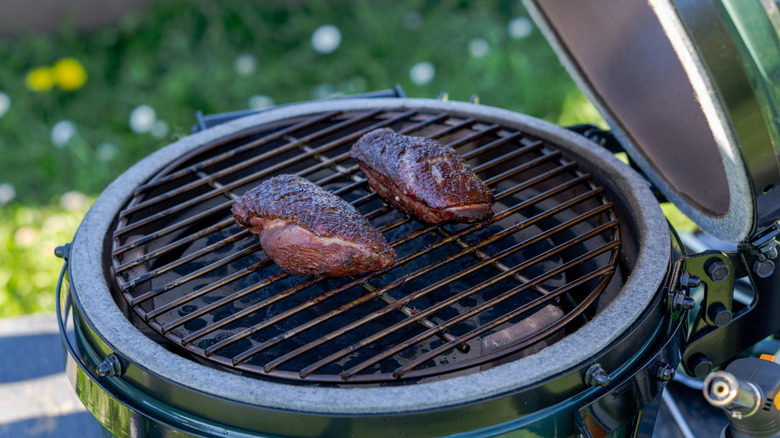
One reason the Big Green Egg is so popular is that it lets you use different cooking methods. As Kelley Schmidt explains, "You can cook on direct heat, indirect, high-heat or low-heat; it's very versatile." While cooking over a hot flame is a big attraction of outdoor cooking, knowing that the grill can handle various cooking methods means you can try out different techniques when you fancy a change. Direct-heat grilling is fairly straightforward, but if you want to smoke your meat instead, you will need a different approach.
"If you're wanting to try "smoking" style cooking, you need to use the indirect heat deflector plate on top of the charcoal, so the meat isn't directly exposed to the heat source," explains Jess Pryles. In the case of the Big Green Egg, this accessory is called the ConvEGGtor and is available for purchase on the Big Green Egg website. It's a ceramic plate that sits between the food and the flames, allowing the food to cook slowly without burning. It lets the Big Green Egg function like an oven, massively increasing the variety of foods it can cook.
However, to avoid over-smoking your meat, bear in mind that less is more. "More smoke isn't always better," warns Greg Garrison. I want clean smoke that adds some character to the food without overpowering it."
7. Invest in a good thermometer
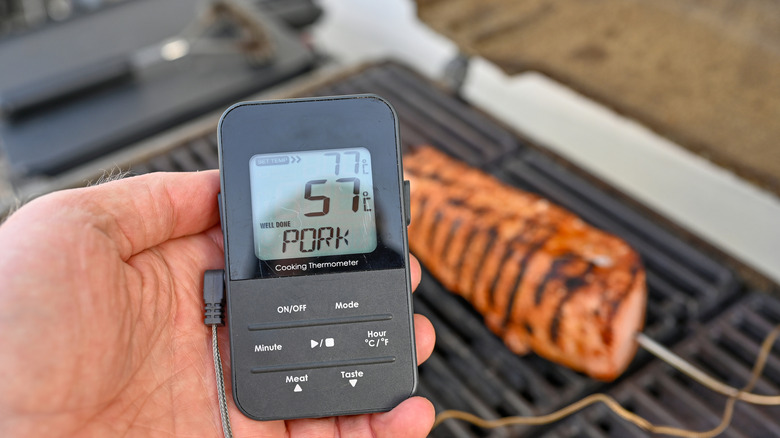
One of the joys of buying a new food appliance is buying accessories to go with it, but the price quickly adds up. For the Big Green Egg, in addition to the ConvEGGtor plate for indirect heating, the most important accessory that the experts recommend is a good thermometer. "[A] digital, instant-read grill thermometer to check the internal temperature of what I'm cooking," is one of the key accessories Kelley Schmidt lists for the Big Green Egg, alongside a grill brush and a set of spring-loaded tongs.
Benton Palmer also feels that an instant-read thermometer is a must-have to ensure your meat is cooked perfectly. "A wireless or leave-in thermometer is another great investment for longer cooks, and I use one anytime I'm cooking thicker meats to ensure you hit your targeted finishing temperature," he says. Greg Garrison agrees that a thermometer is the best option, adding, "You can buy a million accessories for an Egg, but you really don't need that much to get started."
While it may be tempting to buy the entire catalog of Big Green Egg accessories, the ones that improve your results are the most important. Prioritize perfectly cooked meat with the help of a digital thermometer.
8. Adjust the cooking method depending on the food
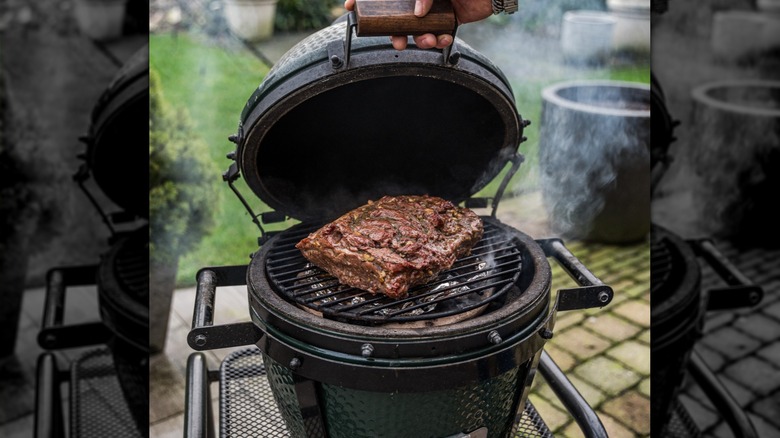
Once you have mastered the difference between the methods of cooking, it's time to put your knowledge to use by deciding what foods to cook. While steaks are a popular choice for the Big Green Egg, Jess Pryles points out that not all steaks are created equal, and the thickness and cut determine the best cooking method.
"Thick steaks work well with a two-stage cook, using gentler heat first and finishing over high direct heat," she explains. "Thinner steaks are usually better cooked directly." The two-stage cook on the grill is similar to the reverse-sear technique, letting the meat cook slowly and then forming a delicious crust over high heat at the end.
If you have a ConvEGGtor plate, you don't have to stick to steaks, as the Big Green Egg can handle bigger cuts of meat too. "Larger cuts such as pork shoulder, lamb shoulder and beef ribs suit ceramic cookers (with the deflector plate) particularly well because they benefit from steady, controlled heat," explains Pryles. While throwing a few juicy New York strips on the grill may be the first thing you want to do with your Big Green Egg, as you become familiar with it, you can expand your repertoire and see the difference it can make to other cuts, too.
9. Branch out and cook things other than meat
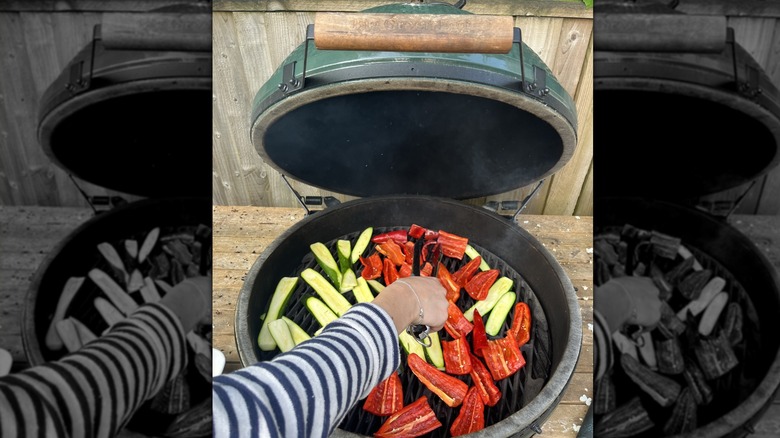
Steaks, pork chops, and chicken are all great foods to cook in a Big Green Egg, but if you only use it for meat, you're missing out on some of the unexpected foods you should be grilling. "I use it for everything!" shares Kelley Schmidt. "Vegetables, St. Louis ribs, and St. Louis pork steak. Whole fish, etc." You can make a full meal at once using the EGGspander dual-zone cooking accessory, so fish, veggies, and potatoes can all cook alongside each other. Schmidt also uses it as a cast iron oven and recommends baking even cornbread on the Big Green Egg.
Greg Garrison also enjoys using the Big Green Egg for non-meat items. "I actually really enjoy baking in the Egg," he admits. "Dinner rolls on the stone are great, and naan and pizza are probably some of my favorite things to make. The ceramic holds heat so well that it basically becomes a charcoal-fired oven."
And if you assumed it was only for entrees, think again. "We'll also use it for desserts with seasonal fruits — served with pound cake and ice cream," says Schmidt. "I encourage everyone to experiment and be creative with the grill!" Once you branch out from the safety of steaks, you will realize you can move a huge portion of your cooking outdoors and take advantage of the Big Green Egg's versatility.
10. Don't be put off by bad weather
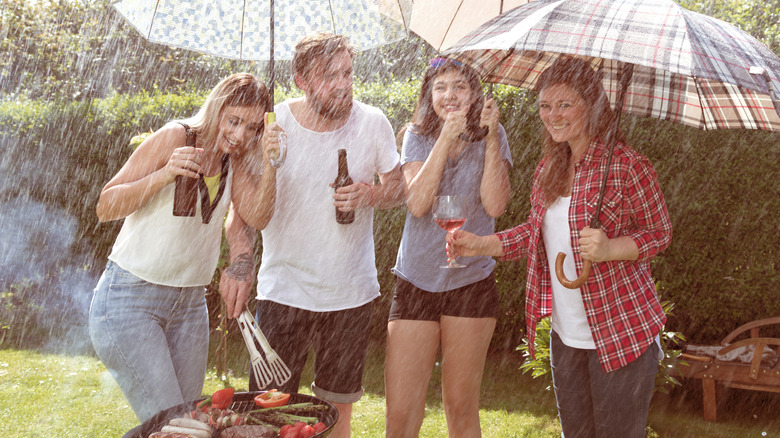
If you're used to the sight of grey clouds putting a damper on your grilling plans, the Big Green Egg will put an end to that. One big attraction of the grill is that you can use it safely in the rain. "This is one of the benefits of it being made of natural ceramic: it can contain heat very well, much better than a steel grill," explains Kelley Schmidt. "Just carefully monitor the internal temperature of the grill."
In addition to the large dome protecting the food underneath, the ceramic is key to its use in inclement weather. "Ceramic grills are well insulated and can generally be used in cold or wet weather, although wind and outside temperature may affect how quickly the fire comes up to temperature," explains Jess Pryles.
Greg Garrison agrees that the Big Green Egg is suitable for all weather, stating, "Once the Egg is hot, it is surprisingly unaffected by cold or rain. Most of the time the weather is harder on the person cooking than it is on the Egg." If you're using the grill on a particularly cold or windy day, expect to adjust preheating times compared to a hot, sunny day, and keep an eye on the thermometer. But the arrival of dreary weather doesn't mean that the Big Green Egg is out of commission — though you may want a few large umbrellas for your guests.
11. Take care of cleaning up while the grill is still warm
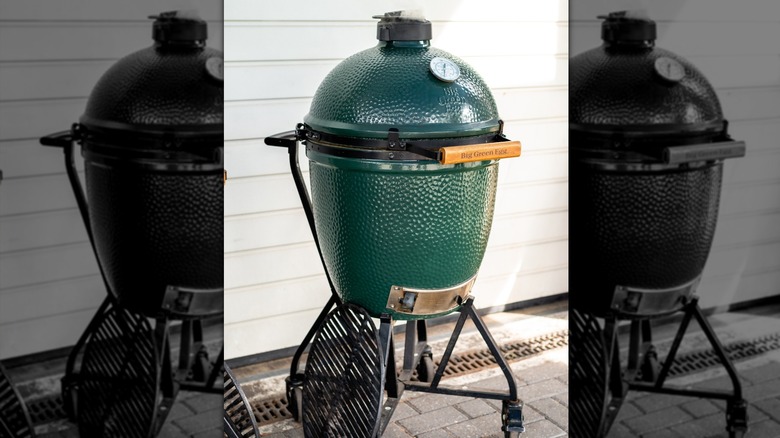
One of the least enjoyable cooking-related tasks is cleaning up afterward, and when grilling outside, it somehow seems even worse. If you own a Big Green Egg, you will want to take good care of it, and cleaning it properly after every use is crucial, even if you would rather forget about it and enjoy your evening.
While it may be tempting to leave the hard work until the morning, Kelley Schmidt recommends dealing with it as soon as you can. "Use the grill brush right after you take everything off the grill while it is still warm [as] it comes off more easily," he advises.
One thing you can, and should, leave until the next day is disposal of the ash. Schmidt recommends leaving it overnight to ensure they have fully cooled before disposing of it safely. The Big Green Egg website recommends that managing the temperature is much easier with no ash present, so removing the ash each time will help your grill perform optimally. Greg Garrison also has a tip you can use occasionally: "Every once in a while, you can also let it run hot and burn off some of the buildup inside. I don't use chemicals or cleaners on the interior ceramic."
12. Enjoy a different grilling experience from what you're used to
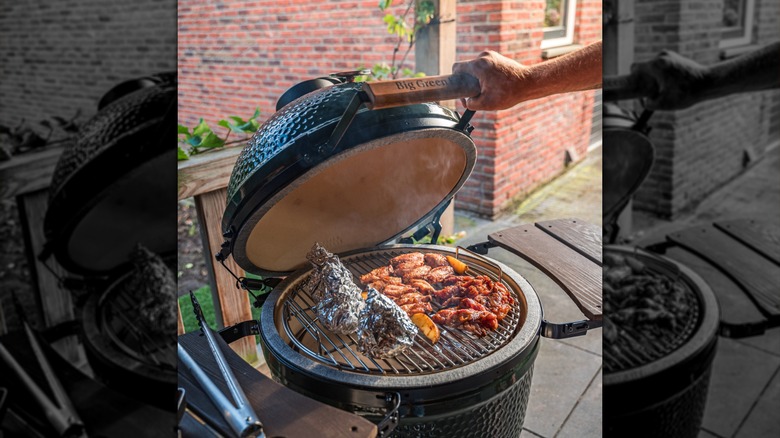
While you may need to learn many details about the Big Green Egg before you master it, the grill's distinctive qualities make it so fun to use. "The shape and heat retention make it a very unique cooking experience," says Jess Pryles. "[It has] thousands of loyal fans across the globe, but it is worth mentioning that you will need to adjust your cooking style to that apparatus."
This is evident in the experts' advice, from using the vents to adjust the temperature to taking advantage of different cooking methods and surfaces to extend the variety of food you cook. "The primary difference is the grill's design with ceramic materials — it retains heat very well and is very versatile," says Kelley Schmidt. The best way to use the Big Green Egg is to embrace its versatility and uniqueness. Not only will it look fantastic in your garden, but it will create an outdoor cooking experience that will allow you to add a creative flair to your grilled food, something your guests will be impressed by.
Greg Garrison reassures readers that although there are many features to get used to at first, it comes easier with practice. "The more you use the Egg, the more you stop thinking about exact instructions and start getting a feel for the fire," he says.