

The Rare Cast Iron Brand You Should Always Grab If You Spot It At A Thrift Store
We may receive a commission on purchases made from links.
Some thrift store finds simply feel like lovely little treasures, while others flirt with actual heirloom status. Pyrex, of course, is one such classic vintage dishware brand, even secondhand. Flashy gold-lined Canella glassware is an even more obvious score. Griswold-branded cast iron pieces rank right up there with those famed and gilded items, and they might even last longer thanks to their naturally sturdier constitution.
The Griswold Manufacturing Company enjoyed an esteemed, nearly century-long run from around the mid-1800s to the 1950s, when its original factory was shuttered, and the brand name changed hands. Griswold manufactured all manner of cookery over the decades, some of which is still in circulation today, thanks to the sheer volume of Dutch ovens, muffin tins, and skillets that would have rolled out of its Pennsylvania locale over the decades.
Griswold's sturdy materials account for a lot of that longevity, too, as a cast iron can last virtually forever, with the right care. Pieces emblazoned with the Griswold name can command thousands of dollars on marketplaces such as eBay today. Plenty of others are priced in the low double digits, with many offerings occupying the dollar signs in-between. Any potential resale (or re-resale, re-re-resale, and so on) value will likely be a mystery at the thrift store, unless you happen to be shopping with an expert. But a few considerations will ensure that even a potential Griswold cast iron retains value to you, as well as make it likelier to be the real deal.
Deciding whether a Griswold pick is right for you
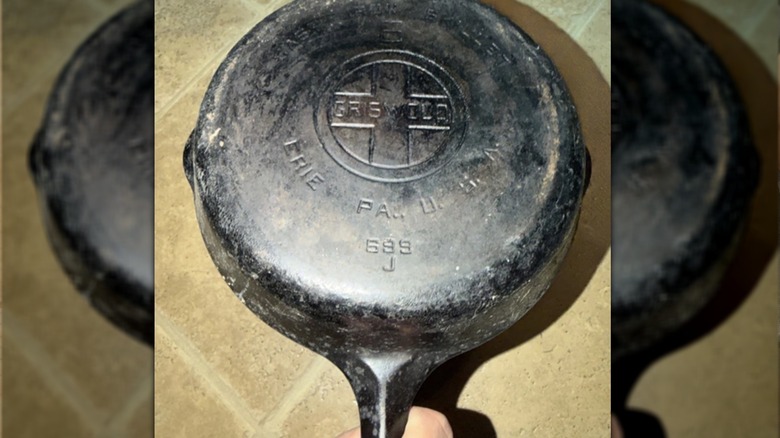
Cast iron pans of any value are hardly as famous for knockoffs as something like designer handbags, but collectors, or just the curious, will still want to have a good sense of what they're actually getting. Peruse any online resale market, and you'll see a wide variety of logos, numbers, and other identifying marks, rather than one, consistent Griswold signature. This inconsistency is plausible enough for a company that lasted for as long as Griswold did, as styles and technology would have evolved between centuries.
Some marks, however, can clue you into the pan being official. The Griswold name printed inside a cross, which itself is set within a circle, is a fairly common signature, although the moniker sometimes appears inside a diamond, or not at all, with the company's home of "Erie" standing in instead. In addition, the pans will have an "iron mountain" handle, creating a uniquely squared loop shape.
Like with all thrift shopping, if an item is worth it to you, it's worth it in general. Most folks aren't going to be able to authenticate even the most convincing Griswold piece without an "Antiques Roadshow" companion. But if it looks to be in good condition, you have a use for it, and it's within your budget, it might end up more than worth your while to take a risk on a Griswold pick. In the worst-case scenario, provided you don't overspend, you can refurbish a cast iron piece to give it new life for many thrifters to come.