

Review: Yeti's Carbon Steel Griddle Pan And Wok Are Built For The Wild, But Not Every Kitchen
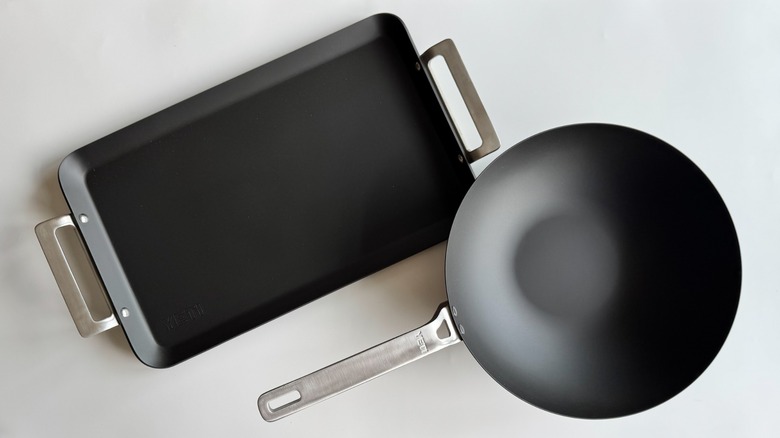
Do you want to know what folks who like to venture into the outdoors, bona fide tailgaters, and the members of blue-collar America have in common? They all likely know of a not-so-little brand named Yeti. Of course, this is a gross oversimplification, as the brand known for its Ramblers (insulated tumblers) and pricey hard coolers (which have inspired countless dupes over the years) sells a little something for everyone. And now, it's started to market to an entirely different audience — home and outdoor cooks — with its line of carbon steel products.
I've been a fan of Yeti for a very long time and own everything from water bottles to Ramblers to coolers to bags. I buy them because I think the quality of each product supersedes their competitors (and not to mention, a Yeti hard cooler looks great on a boat). However, I was interested to see how its new carbon steel wok and griddle pan actually perform, and whether or not they are truly "Built for the Wild". So, I put them to the test, preparing pancakes on the griddle pan and steak stir-fry in the wok, and considered factors like durability, feel, weight, utility, and overall value to help come to a conclusion on whether these cookware items are worth adding to your cart or if you're better off sticking with other brands.
Some recommendations are based on firsthand impressions of promotional materials and products provided by the manufacturer.
Methodology
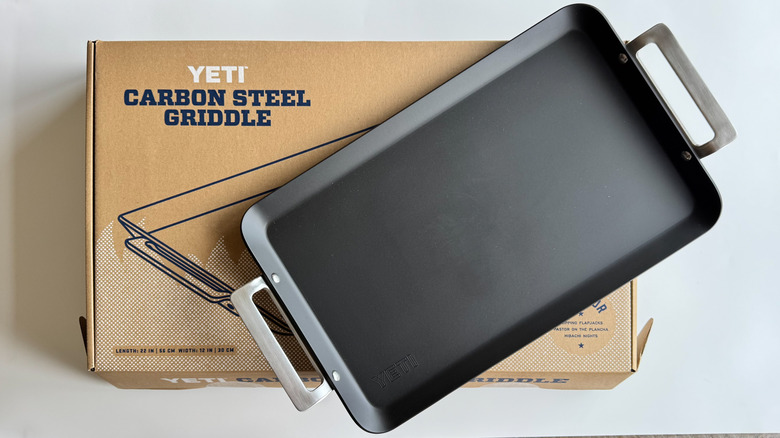
I always approach high-priced cookware skeptically, and that is especially true when it's coming from a brand that is more well-known for its (admittedly overpriced) drinkware and coolers. So, I knew that I was going to have to put both the carbon steel wok and griddle pan through actual work to see if they could hold up. I first inspected each pan to assess its overall durability and finish before preparing simple recipes on them: pancakes on the griddle and a beef stir-fry in the wok.
As I was preparing foods on the respective pans, I assessed important user experience factors. The first is the pre-seasoned, non-stick coating, which is one of the perks of using carbon steel over other cookware materials. It's not a good sign if the food starts to stick the second it touches the pan. I also looked at overall design, which included factors like weight, ergonomics, and ease of use. I wanted to see whether a home cook could actually use these pans. The coating, durability, functionality, and ease of use ultimately tied back to the value of each of the items. In other words, would I personally be willing to spend $200 (which is not a small amount of money, I might add) on one of these items, or would I be better off scouring the aisles of T.J. Maxx to find a cheaper alternative?
Price and availability
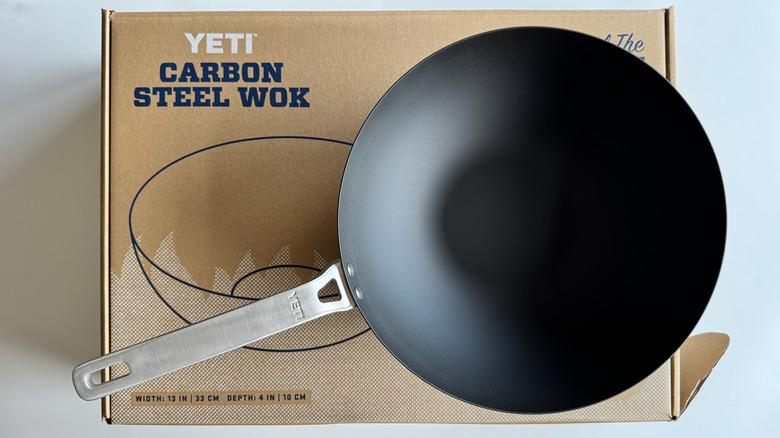
Both the Yeti Carbon Steel Wok and Carbon Steel Griddle Pan are available for purchase on the brand's website, alongside the 10- and 12-inch Carbon Steel Pans, which were introduced earlier. The griddle and the wok retail for $200 each on the website. You can also buy them through Amazon, though the price is the same and is, as of the date of writing, not eligible for Amazon Prime (meaning you may have to pay for additional shipping, depending on your location).
Review: Yeti Carbon Steel Wok
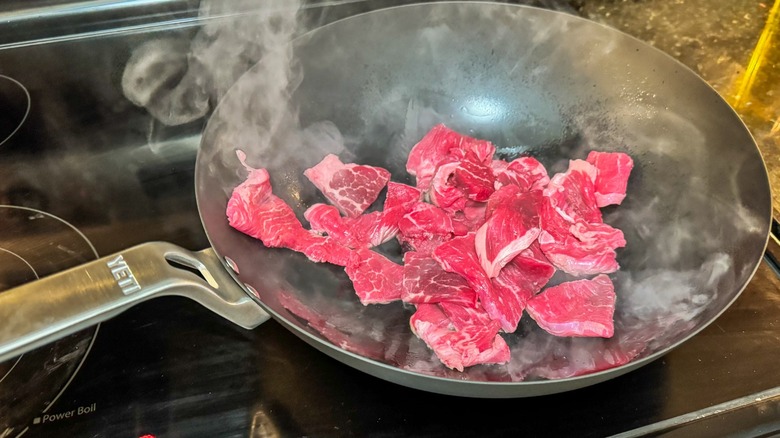
The Yeti Carbon Steel Wok weighs 4.7 pounds empty and is 21.5 inches long (from handle to far edge). It comes pre-seasoned and with a nitrided coating to help with rust resistance. The brand says that it's this nitriding process that sets it apart from other brands and is what makes its carbon steel cookware so durable.
The first thing I noticed about this wok was its shape. It has a large, flat bottom, which almost resembles a classic skillet — just with higher sides. This only adds to the wok's utility, as you can shallow-fry classic fried chicken or make great scrambled eggs in it, as well as use it for stir-fry. The handle is also long, which comes as both a benefit and a drawback; it'll keep your hand far from the flame, but it also makes flipping and maneuvering it more awkward. Overall though, the construction of the wok is excellent.
This pan feels like it weighs more than 4.7 pounds, and I had to hold the handle with both hands to move it around as I cooked my beef stir-fry. Folks with mobility issues may want to invest in something lighter, because it does a number on the wrists. As expected, this Carbon Steel Wok heated up remarkably fast and held heat well. A little bit of oil kept its contents from sticking, and it yielded well-cooked stir-fry. My favorite thing about it? The size of the wok and its high sides kept the contents from spilling out. You could make a large portion of stir-fry or fried rice and not worry about getting it all over your stovetop.
Review: Yeti Carbon Steel Griddle Pan
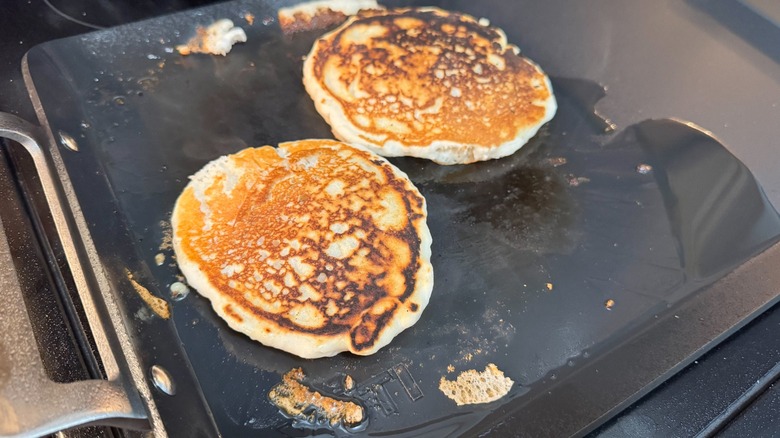
The Carbon Steel Griddle Pan is significantly heavier than the wok, coming in at 12 pounds. It's 22 inches by 12 inches, and the handles are 6 inches long. I was very thankful for those generous handles, as transferring and moving this pan was much more awkward than the wok.
This is a chic pan, which seems like an odd thing to say about cookware, but it's still true. The construction on it is fantastic, as the handles are very firmly bolted to the sides of the pan and clearly aren't going anywhere. It's an easy pan to carry, despite its weight, but some folks with mobility concerns may not be able to comfortably transfer it from the stovetop to the grill or to the oven.
Carbon steel comes with a learning curve, as it heats up really fast (faster than cast iron, in the case of this pan). I preheated this one on the stove on medium heat, and it was ready for pancakes within minutes. Since it comes pre-seasoned, I did not add any oil to it — which was a mistake. The pancake batter stuck, burnt, and smoked. However, after I sprayed avocado oil on the pan, I found that everything lifted off easily, and that I was able to prepare some of the best, most evenly cooked pancakes I've ever made — better results than I usually get from my Lodge cast-iron skillet. It's easy to clean, as I expected it would be, and as long as you follow the care instructions, I have no doubt that this pan will hold up long-term.
Yeti's Carbon Steel Griddle and Wok trade indoor convenience for outdoor performance
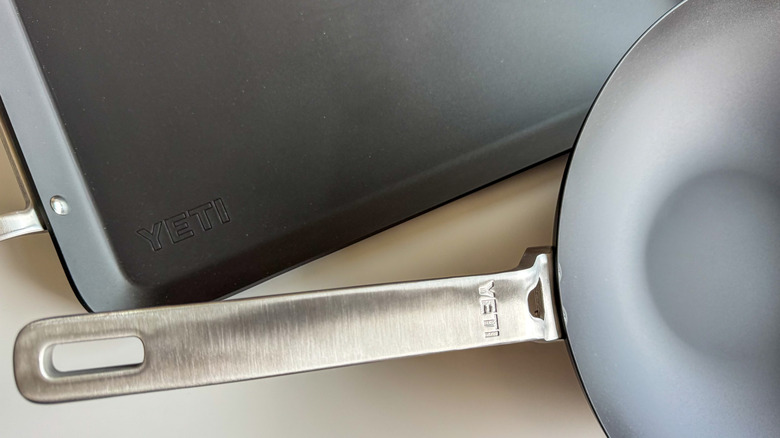
It seemed like for every positive feature of each product, there was a drawback. The wok had a large handle that was comfortable and a massive cooking surface that could hold a lot of food, but its weight and shape made it awkward to hold and use. The griddle pan was durable and sturdy, offering more than enough space to cook on, but it was also a little too large for someone who is only making a meal for one or wants something light that they can easily transport from point A to point B.
These pans are great for people who cook outdoors, but who still want a pan that they can use indoors. I doubt that someone who exclusively cooks indoors (which is, for the most part, me) would get much use from them, simply because they are more heavy-duty than they need to be. Aside from outdoor cooking enthusiasts, the only other population that I would recommend these pans to is folks who want a material that isn't as heavy as cast iron, but isn't as flimsy or cheap as non-stick metal pans. They are pretty darn good carbon steel pans, provided that you know how to use them and are willing to spend the extra money on something that's well-crafted. If that sounds like you, I recommend first reading up on carbon steel cookware (and how it differs from other materials) so you can get the most out of them.