

The 10 Best Companion Plants For Healthy Summer Squash
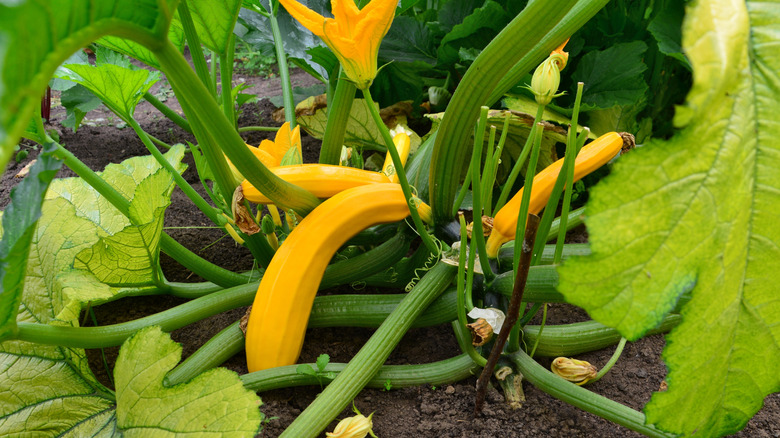
Companion planting is a natural gardening technique that pairs compatible plants together so that they can benefit from each other. This can involve attracting beneficial insects or repelling damaging ones, improving the soil, and reducing the impact of weeds. If you are growing summer squash, knowing the best companion plants can help with pollination, which is different in squash than most other plants, and can increase the health of your vegetables in general.
To get the best advice on which companion plants to choose, we spoke with numerous experts to get their input. Lucie Bradley is a gardening and greenhouse expert from Easy Garden Irrigation; Judit Ender is chief research officer at The Chef's Garden; and Lindsey Chastain is founder of Waddle and Cluck. Crystal Portwood is garden consultant at Sustainable Seedling; Matt Lebon is the founder of Custom Foodscapes; and Adam Weiss is the founder and master gardener at Pike Lane Gardens. Between them, they have vast gardening experience, and their advice can help you choose which squash companion plants will work best for you. Whether you have a substantial garden or are thinking about growing your veggies in a pot, let's take a look at some expert-approved suggestions for healthy summer squash.
1. Nasturtium
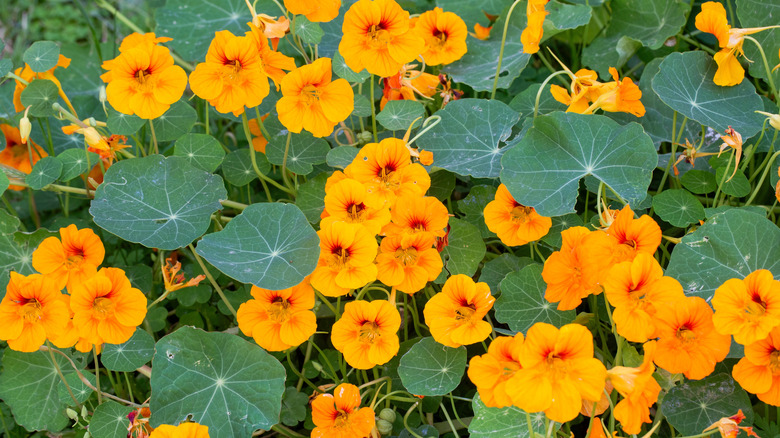
For the ultimate companion plant for summer squash, nasturtium is undoubtedly one of the best. Recommended by all the experts we spoke to, they protect summer squash in a number of different ways. Lucie Bradley describes nasturtiums as the "ultimate trap crop," explaining that they lure damaging insects, such as aphids, away from your precious squash. Squash bugs, as the name suggests, can be particularly detrimental to squash plants, and Crystal Portwood recommends nasturtium as a "great sacrificial flower" for keeping them at bay.
As well as keeping your summer squash safe from insect infiltrators, the aim is to support a healthy harvest by attracting the correct types of insects. Pollinators like bees and butterflies are crucial for transferring pollen between flowers, and nasturtium flowers are very attractive to them. Matt Lebon explains, "The goal is to have flowers blooming throughout the season so pollinators and beneficial insects always have a reason to stick around."
For best results, Judit Ender recommends planting nasturtiums around 12 to 18 inches from the squash, which will allow them to repel pests while attracting pollinators, without being so close that they will interfere with the growth of the squash. "Squash needs a lot of room," says Lindsey Chastain, "so just make sure it has room to spread and breathe." Planting nasturtiums around your summer squash plants will help protect them from pest damage and encourage flowers to grow through pollination, too.
2. French marigolds
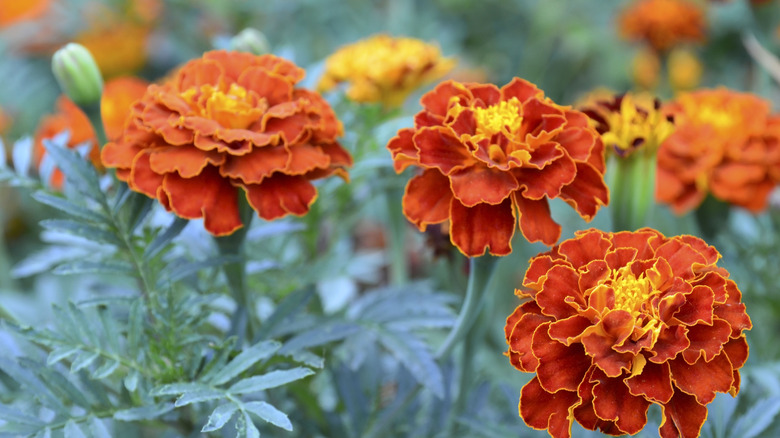
For an easy-to-grow companion plant that will also add beautiful flowers to your garden, French marigolds are an excellent option. Their first flowers bloom in spring, and they remain throughout the summer until the first frost, benefiting the squash plants for many months of the season. Crystal Portwood highlights the powerful scent that they create, which is thought to repel pests such as aphids and whiteflies, as well as mask the scent of the squash plants themselves, making them less appealing to hungry squash bugs.
The bright colors and rich nectar of the French marigolds will attract pollinators, like bees, increasing the likelihood of an abundant harvest. Lindsey Chastain recommends that marigolds be planted around the same time as the squash so that the flowers are in full bloom and primed to attract pollinators at the right time. 12- to 18-inch spacing between the French marigolds and the squash is optimal to ensure the protective benefits are as favorable as possible without blocking sunlight.
French marigolds also provide a unique extra protective element for squash, as Lucie Bradley explains: "Unlike other companion plants, French marigolds also secrete a substance via their roots into the soil that reduces the harmful root-knot nematodes, which can severely damage your squash plants by feeding on their roots [and] lead to poor harvests." Given their multiple beneficial effects, French marigolds should be considered fantastic companion plants to grow near your summer squash.
3. Sweet alyssum
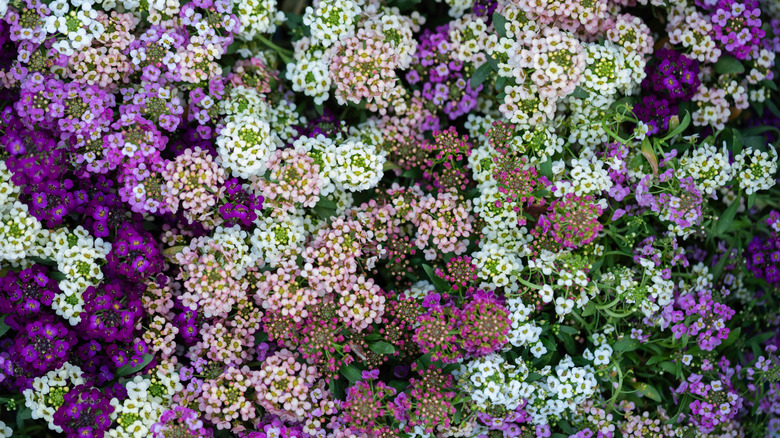
Sweet alyssum is a stunning flowering plant that has a sweet scent to attract plenty of beneficial insects. Lucie Bradley points out that the flowers enjoy the same conditions as squash, including an abundance of sunshine and well-drained soil. "Sow your alyssum seeds in modular trays a few weeks before you intend to transfer your summer squashes outdoors," she advises. "Plant them either as a border around your squash bed or intermingle amongst your squash plants."
While pollinators such as bees are crucial to the healthy growing of squash plants, other insects play an important role, too. Judit Ender points out that sweet alyssum "draws beneficial insects, such as hoverflies, parasitic wasps, and lacewings that help control aphids and thrips." By munching on the pests that can be a threat to squash plants, these carnivorous insects help to protect the vegetables without the need for chemical pesticides.
Matt Lebon is also a fan of planting sweet alyssum, particularly for the way they attract pollinators. "For summer squash, I like to focus on plants that support beneficial insects rather than trying to find one magical plant that repels pests," he explains. Since sweet alyssum is a low-growing flower, it can be planted close to the squash without blocking its sunlight. Bradley recommends spacing them 6 to 8 inches apart, which will give enough room to prevent them from vying for nutrients.
4. Borage
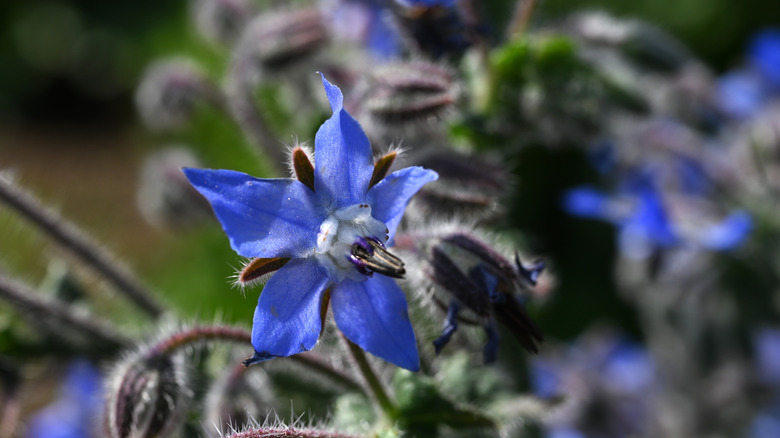
When it comes to pollination, squashes and the rest of the Cucurbitaceae family, which includes cucumbers and melons, have a unique setup. "Where tomatoes, peppers, [and] eggplants have both the male and female within the same flower ... Squash ... are unique in that they have a separate male and female flower," explains Adam Weiss. This means that pollinators, particularly bees, are absolutely crucial in making sure that the squash will grow. Borage, also known as starflower, is an excellent example of a companion plant that encourages pollinators toward the squash plants, increasing the chances of successful squash growth throughout the season. The beautiful bright blue flowers attract bees and butterflies with their abundance of nectar and are also appealing to pest control bugs, such as ladybugs, hoverflies, and assassin bugs, that will help reduce the damage done to the squash by aphids, squash bugs, and thrips.
Another way in which borage can be a good companion plant for summer squash is in weed control, as Judit Ender explains: "Dense-growing companion plants, including marigolds and borage, shade the soil and compete with weeds for sunlight, water, and nutrients, reducing weed growth naturally." Don't plant borage too close to the squash plants; three to four feet will ensure they don't overcrowd them.
Borage also has the added effect of improving the soil, which will help the squash in the long term. "They do this by both their long tap roots, helping to break up any compacted soil [and aiding] with aeration and drainage, whilst these same deep roots pull up trace minerals from the soil, including potassium and calcium, which concentrate in their leaves," explains Lucie Bradley.
5. Dill
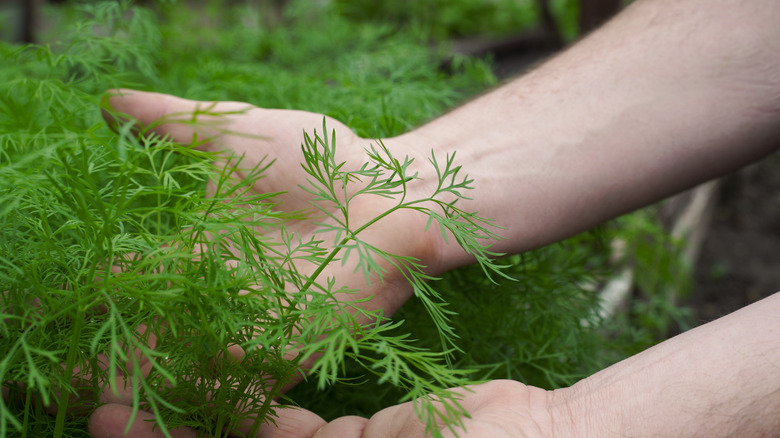
While many of the best companion plants for squash are flowering plants, herbs can also be a great option. Matt Lebon even suggests that herbs can be doubly effective if you leave them to grow flowers. "I also love letting herbs like dill and cilantro flower instead of pulling them out," he explains. "Once they bloom, they become magnets for beneficial insects." With squash bugs and aphids causing carnage when they set into your squash plants, allowing the herbs to flower and attract predatory bugs is an excellent plan, with pollinators likely to visit too.
Lucie Bradley describes dill as one of the best companion plants for summer squash and highlights its thin, tall nature, which doesn't encroach on the growth of the squash. Since dill grows under the same conditions as squash, it makes it an easy option to grow alongside.
The aniseed flavor that makes fresh dill such a popular choice as a herb also has a beneficial effect for your squash plants. "The strong, 'liquorice-like' scent of dill does the perfect job of masking the scent of your squash plants, making it difficult for pests, such as squash bugs, aphids, spider mites, cucumber beetles, and cabbage loopers, to locate your plants," explains Bradley.
6. Beans
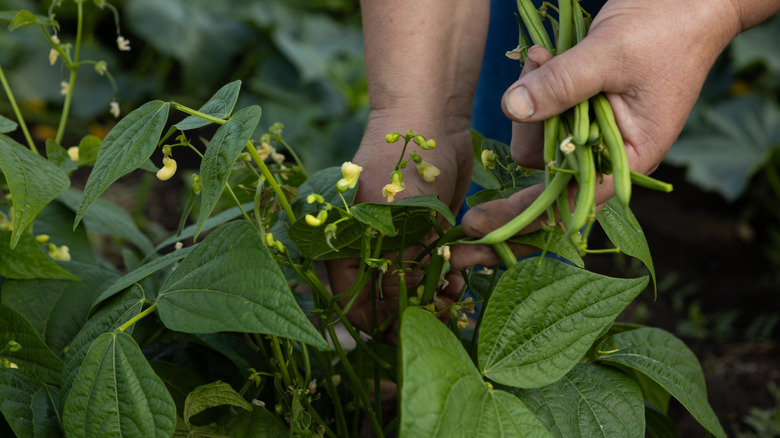
Legumes are great companion plants for summer squash, and beans are particularly useful. This is due to their ability to add nitrogen into the soil, thanks to special bacteria found in nodules on their roots. "Legumes, such as beans, fix nitrogen in the soil, benefiting nearby heavy-feeding crops," explains Judit Ender. This ability allows them to take nitrogen from the air and turn it into a form in the soil that they can use efficiently. Though much of the nitrogen is used by the beans themselves, if they're planted near squash, the squash can benefit from this nitrogen-rich soil, too.
As well as seeking out the best companion plants for summer squash, it is important to consider which plants could be detrimental to have nearby. Since the squash will benefit so much from the added nitrogen the beans provide to the soil, it is crucial to avoid planting other crops that require the same nutrients. Adam Weiss advises not planting potatoes near squash, commenting, "Both ... vegetables are heavy feeders and require more nutrients."
Potatoes also suffer from similar diseases to summer squash, meaning the likelihood of fungal diseases, such as verticillium wilt, will be increased. "I also don't plant pumpkins, cucumbers, or winter squash near summer squash," explains Lindsey Chastain. "It doesn't hurt anything, but they do share the same diseases, so if a disease hits one, it usually hits all." Where possible, keep beans growing close to the squash, around 6 to 12 inches away, and plant potatoes and other cucurbits in a completely separate part of your garden.
7. Blue Hubbard squash
One of the big challenges of organic gardening is getting rid of pests, and in the absence of chemical pesticides, gardeners need a clever alternative strategy. This is particularly true in the case of summer squash, which is extremely susceptible to insects such as cucumber beetles, vine borers, and squash bugs. Certain plants known as "trap plants" can be used to tempt pests away from the squash and reduce the extent of any damage to the crops by the harmful insects.
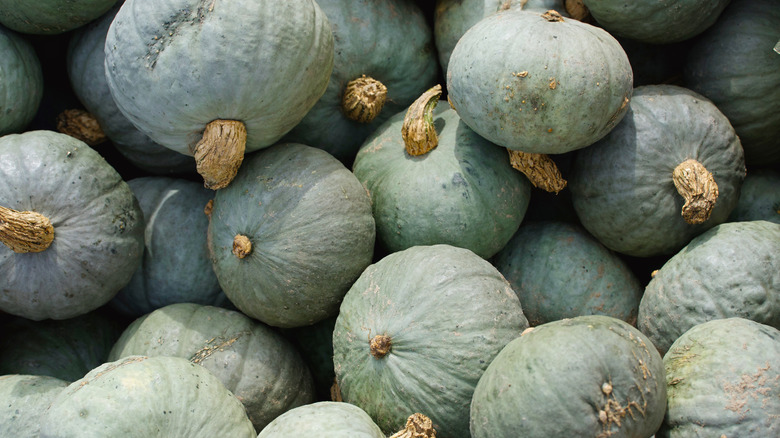
While most other members of the cucurbit family are best planted away from summer squash, blue Hubbard squash is actually beneficial, as Matt Lebon explains. "One interesting exception is blue Hubbard squash. It's often used as a trap crop because cucumber beetles and other squash pests are especially attracted to it," he says. "The idea is that pests concentrate on the blue Hubbard instead of your zucchini or yellow squash."
While the blue Hubbard squash will help in your war against insects, you still have to be vigilant and do some bug hunting yourself. "If you see large pests, go ahead and grab some gloves and squish them, then look for eggs underneath leaves," advises Crystal Portwood. "The hardest part of gardening is managing pests, but as an organic gardener, keeping up with pests and decreasing their population is the key." Keeping your squash plants pest-free will be down to a combination of companion planting and close observation, but since blue Hubbard has been shown to reduce the need for insecticides by up to 94%, according to Judit Ender, it is certainly worth planting a few of these unusual-looking winter squash nearby.
8. Calendula
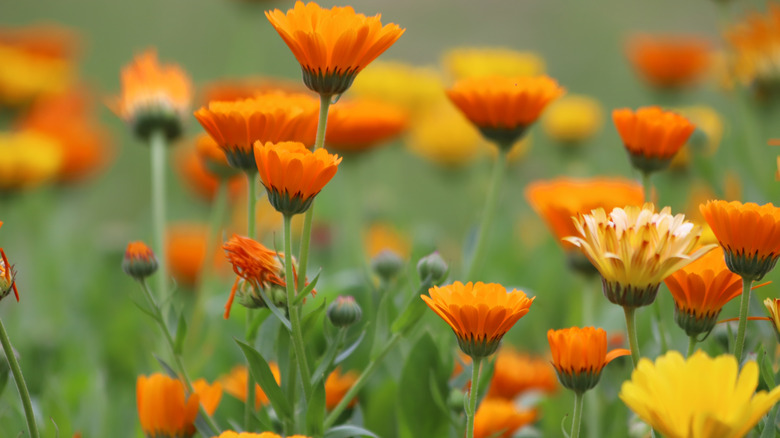
Calendula is another attractive edible flower that helps summer squash by acting as a trap plant. According to Crystal Portwood, it is particularly effective thanks to one particular quality — its sticky leaves. Pests such as aphids and whiteflies get trapped on calendula's leaves, keeping them from visiting the squash plants and sucking the precious sap from the stems and leaves.
Calendula is dual-functional as a companion plant, as Judit Ender explains: "Flowering plants, such as calendula, ... attract bees and other pollinators, improving fruit production in crops like melons, squash, zucchini, and berries." The more plants your garden contains that are nectar-rich and can attract pollinators — especially bees — the higher the chance there will be of a bumper harvest of squash in the summer months.
To further increase your chances of summer squash success, you should pay attention to creating optimal conditions for the plant. "Give squash a lot of room and a lot of sun," recommends Lindsey Chastain. "It also needs really rich soil. Add compost before planting to help out." You should also be careful when watering, and water the soil rather than the leaves, as keeping the leaves dry will help prevent mildew.
9. Buckwheat
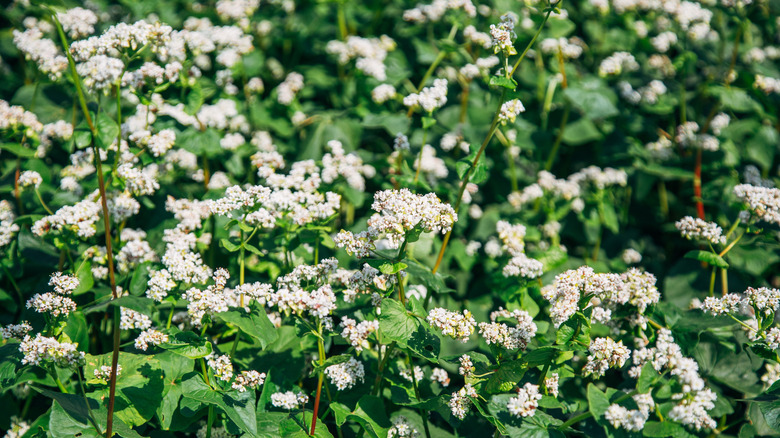
Buckwheat makes a great companion plant to summer squash, as it attracts a very particular type of insect. Matt Lebon describes it as his favorite companion plant "because it's fantastic at attracting pollinators and beneficial insects, like parasitoid wasps, that help keep pest populations in check." Parasitoid wasps have a pretty brutal method of keeping squash pests at bay. They lay their eggs inside the larvae of the bugs, or sometimes inside the grown adult, by piercing them before laying with an organ called an ovipositor. Once the eggs hatch, the wasps consume their hosts from the inside. By planting buckwheat near your squash plants, the wasps can target the pests that tend to attack the squash, keeping your beautiful plants healthy right up to harvest time.
Buckwheat also makes a useful companion plant due to its ability to enrich the soil. It is capable of finding phosphates in the soil, which can in turn make phosphorus more readily available to other crops nearby. Phosphorus is a major nutrient when growing summer squash, helping the growth of healthy fruits. Buckwheat grows quickly, needing only eight weeks or so to grow from seed, so following Lebon's advice of planting it following the last frost should give it plenty of time to be fully established by the time your summer squash are growing fruit. Its flowers can then attract parasitoid wasps and other predatory insects, as well as bees and butterflies for pollination.
10. Zinnias
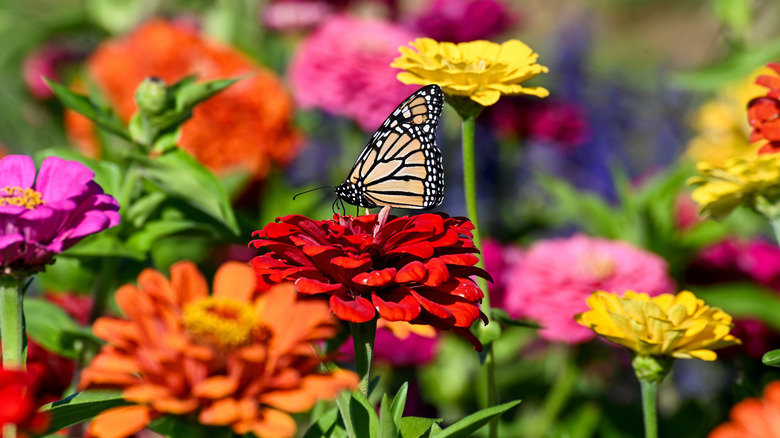
If you are looking for one of the most eye-catching and brightly colored companion plants for summer squash, then zinnias should be on your list. Adam Weiss recommends them as one of the best options for squash, noting that "Planting a pollinator plant such as ... zinnias ... will attract pollinators, such as bees and butterflies." The brightly hued flowers come in a huge variety of colors, including purple, which is highly attractive to bees, and red, the color favored by butterflies.
If planting zinnias near your squash plants, you should be vigilant since they are very susceptible to powdery mildew, a disease that is also very common in squash. This presents as a white film across the leaves, and as a fungus, it can spread easily. Keep an eye on the leaves of both your zinnias and squash, and remove any that appear to be affected.
Another crop that is vulnerable to powdery mildew is melon. Though part of the same family as summer squash, if the vines of the plants overlap, the chances of disease spreading are high. Lucie Bradley also points out that the whole cucurbit family is susceptible to the same pests, including squash beetles, cucumber beetles, and melon aphids. "This means that by planting both crops together you are creating the perfect feeding ground for these pests, which will happily move from plant to plant, damaging both crops," she explains.