

Can You Substitute Frozen Blueberries For Fresh?
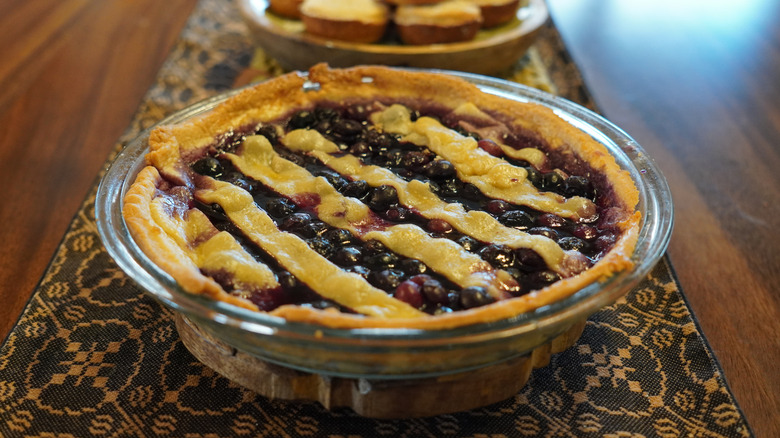
Fresh blueberries are fantastic for so many things — smoothies, sweet breads, muffins, pancakes — the list could go on and on. But if you have a favorite recipe that calls for fresh blueberries and can't get your hands on any, you may find yourself wondering whether you can use frozen instead. The good news: In general, it's perfectly fine to use frozen blueberries when you don't have fresh ones available. Yet there are still a few things you'll need to keep in mind to get it right.
When deciding how to use frozen berries in place of fresh, consider the type of dish you're making. If you're blending ice-cold smoothies, topping off a yogurt bowl, stirring some into oatmeal, adding the fruit to waffle or pancake batter, or otherwise avoiding baking, you can use frozen blueberries without any issues. However, if you're whipping up something that requires time in the oven, like bakery-worthy blueberry pie, you'll have to make a few adjustments to avoid mishaps like runny fillings, such as accounting for how freezing turns berries mushy.
The intricacies and benefits of swapping fresh blueberries with frozen ones
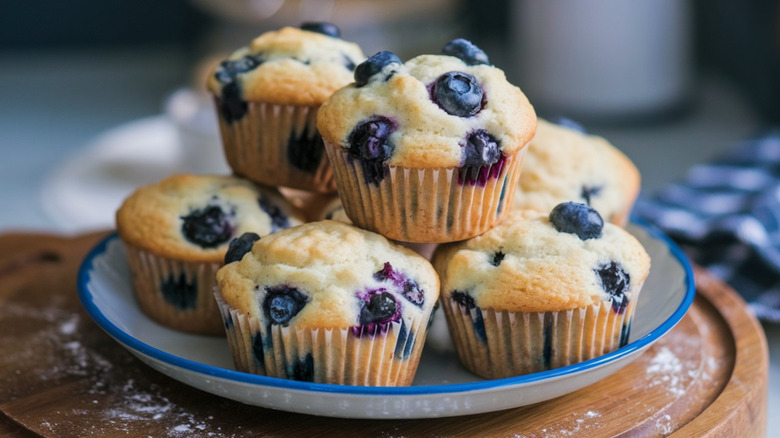
As frozen berries cook, they typically release more liquid than their fresh counterparts because freezing damages the fruit's cell walls. It can do quite a number on the consistency of baked goods and other oven-bound dishes like baked brie, causing leaks or soggy pockets. To counteract this excess juice when making pies, muffins, or crumbles, for example, you can mix the blueberries with cornstarch (or your preferred thickener). Figure a teaspoon for every 4 cups of fruit to achieve the best texture. Luckily, you don't need to thaw frozen berries before using them in baking. They'll heat up just fine in the oven with the rest of your dish.
A word of caution, however: Frozen blueberries can break apart pretty easily, so you'll want to stir them gently into any batter by hand instead of letting your stand mixer have at it. If you mix too aggressively, you run the risk of turning your batter blue (don't worry, though, it will still taste fine). You can also help keep the fruit from staining by dredging the berries in flour before adding them to your baked goods, or rinsing them under cold water — just make sure to dry them off thoroughly.
Besides convenience, using frozen blueberries comes with another advantage. Because they're picked and frozen at peak ripeness, these fruits are generally more nutritious. So, not only is this a relatively easy swap, but it's also a useful one.