

8 Classic Cowboy Dishes That Have Been Forever Etched Into History
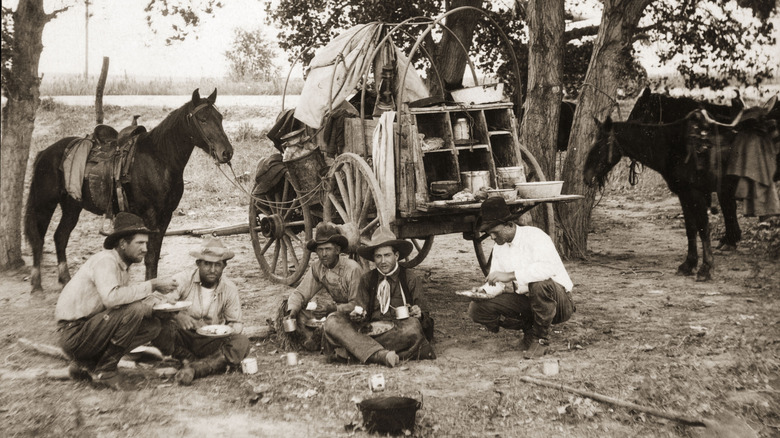
Vaquero cooking, otherwise known as Mexican cowboy cuisine, developed along the US-Mexico border in the late 19th century. Life was hard out on the range, and supplies were limited to what would fit inside a small chuck wagon. The cocinero, sometimes called the coosie or cookie, had only the basics to work with, and the grub had to be both filling and tasty.
Typical vaquero meals featured grilled meats, pinto beans, peppers, and whatever accompaniments the cookie could find on the range. Everything, of course, had to be cooked over burning hardwood, usually in cast iron skillets, Dutch ovens, or grill grates. Some items were cooked directly over the open fire or wrapped and buried in burning coals. The two distinct flavors of vaquero cooking were mesquite and chile piquin. The heavy smoke from the mesquite wood and the small, hot peppers that grew abundantly in the Southwest provided the smoky, spicy essence that still defines the Tex-Mex food of today.
Many of the chuck wagon favorites from more than 100 years ago are still popular today. From ribs to huevos rancheros, from chili to fajitas, modern Tex-Mex menus are filled with rib-sticking range food loved by the real-life cowboys of long ago.
1. Ribs
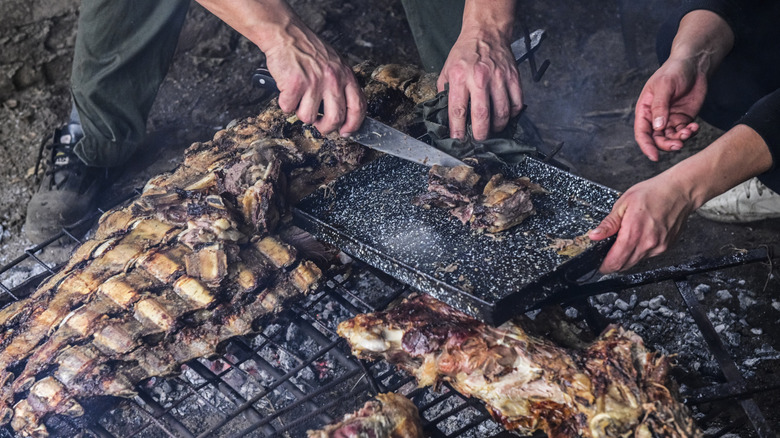
Vaqueros obviously had access to beef, but both pork and lamb were often available. In fact, some herd owners didn't want their cowboys diminishing their valuable stock in order to feed themselves, so herders often travelled with other sources of meat.
Whichever animal the ribs came from, the preparation was largely the same: The meat was grilled and smoked over an open fire on cast iron grates using mesquite wood. This style of cooking could be a labor-intensive task, as the ribs had to be monitored and turned frequently to insure an even cook, and the heat had to be adjusted to make sure the ribs were grilled at the perfect temperature. To reduce the workload, sometimes the cookie would braise the ribs in a cast iron Dutch oven instead. Braising was easier, but the ribs were different in texture and chew than those grilled over the open fire. Naturally, braised ribs also lacked both the smoky mesquite flavor and the slightly firm chew that came with the best open fire barbecuing.
2. Cabrito
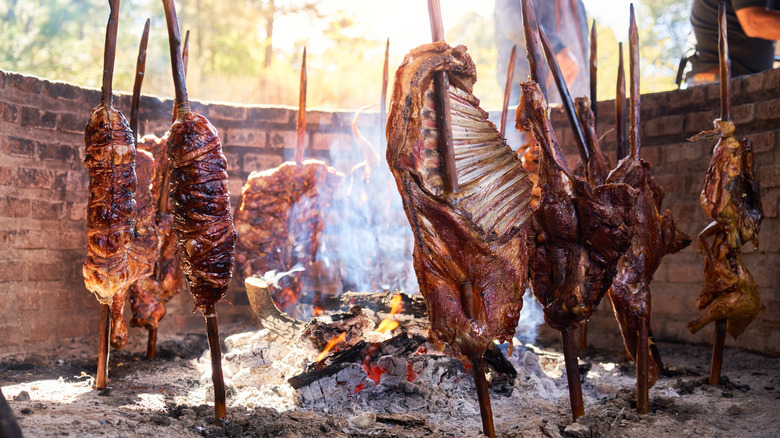
Making cabrito wasn't pretty: The cocinero had to split and splay a baby goat before grilling it over an open fire. Depending on the number of hungry vaqueros, this could mean preparing and cooking multiple kids at once. The messy work paid off, though, resulting in crunchy skin concealing juicy, snow-white loin meat that pulls away from the backbone in long, tender strands. No part of the goat was wasted, however. In traditional cabrito, the head, blood, and organ meat were often served up as side dishes.
Though not as popular in the U.S. today, goat is the old school BBQ meat that came before beef and pork. Goat meat was introduced to the Mexican people in the 16th century, when European explorers brought the animal to the Americas. Since goat meat is leaner and gamier than beef or pork, it had to be cooked longer than those other meats to achieve maximum tenderness. That meant long days by the fire for the weary cookie.
3. Carne guisada
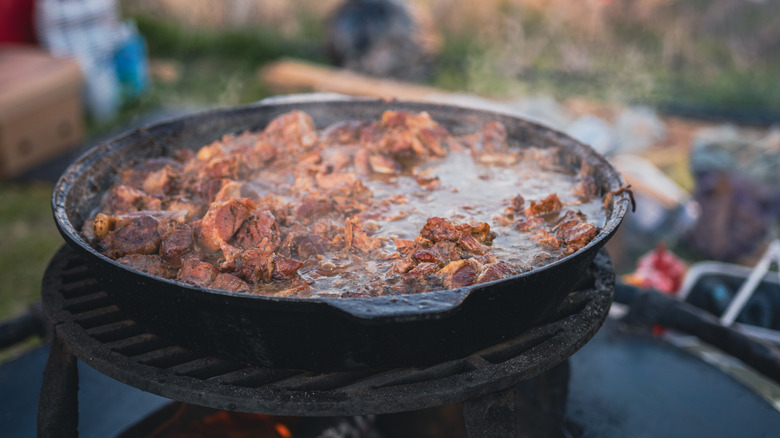
Literally "meat stew," carne guisada was a staple of cattle drives. Though "meat" often meant "whatever is available," the preferred cut for this sturdy stew was sirloin, because it could be cooked until tender without falling apart. The beef was typically cut into strips, then lightly seared in a cast iron Dutch oven. Once the pieces of steak had developed a nice outer crust, they were simmered in a tomato and chili pepper gravy. The tomatoes came in cans, thanks to the burgeoning food processing industry, as did basically every other vegetable the cocinero served up. Carne guisada was a popular meal on the range due to both its spicy, tomato-y flavor and its hardy, rib-sticking nature.
The stew was usually cooked up in large quantities in deep, cast iron Dutch ovens set or hung over an open fire. Most people nowadays need a Dutch oven, and it was a vital piece of equipment for camp cooks back then. The heavy, cast iron pots weighed down the chuck wagon, but their heat retention and near indestructibility made them worth the weight.
4. Chili
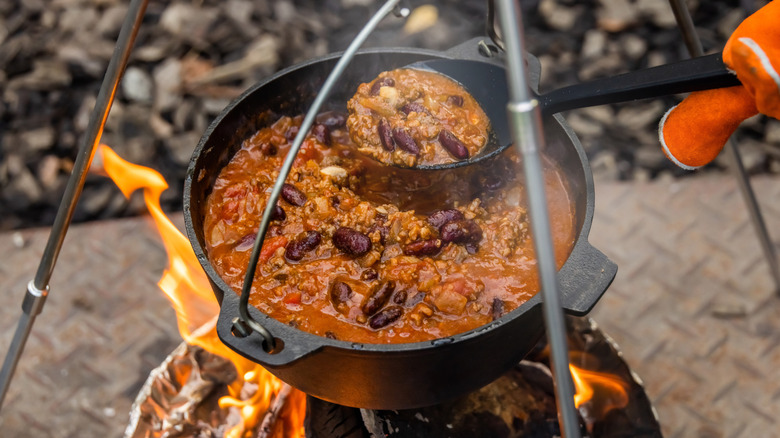
Chili is more of a stew than a soup, so like carne guisada, it made for a filling meal out on the trail. The difference between chili and "meat stew" basically boils down to beans. Dried pinto beans were a staple in chuck wagons. They were both inexpensive and available in large quantities, so beans were an economical way to feed a bunch of hungry cowhands.
The chili that 19th century vaqueros ate is much like the chili of today: It was a tomato-based stew loaded with beef, beans, or both, and spiced up with peppers. In the Southwest, the most readily available pepper was the small but hot chile piquin. That same pepper that still grows along the Texas-Mexico border, but you should think twice before trying it in your own chili: Chile piquin peppers can top out at 100,000 Scoville Heat Units. For comparison, that's about 10 times hotter than your average jalapeno.
5. Pan de campo
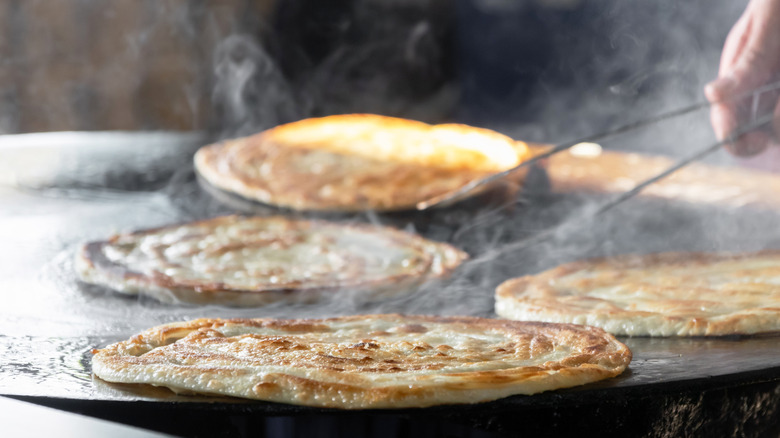
Pan de campo is a traditional flatbread made in cast iron Dutch ovens or skillets. Along the trail, they were a quick and easy accompaniment to whatever was being served up that day. Because of that history, pan de campo was named the official state bread of Texas in 2005. Pan de campo, however has its roots farther South, across the Mexican border.
Pan de campo was served as a side for almost every meal. The flatbread was not only easy to make, it also only required four ingredients, all of which were chuck wagon staples: flour, salt, water, and baking powder. Those ingredients got mixed into a dough, smooshed into flat, round cakes, and cooked over an open fire. Pan de campo is similar to the tortilla in both its make-up and simplicity. That points to it's journey from Mexico to Texas, brought North by the vaqueros.
6. Fajitas
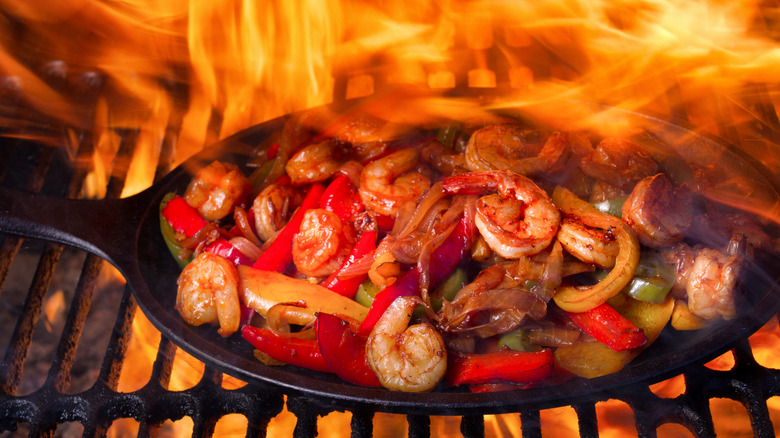
Fajitas are still a staple at Tex-Mex restaurants, and the vaqueros of the early 20th century enjoyed them, too. The cookies often made fajitas from skirt steak or other tough cuts. That meat was marinated, grilled, spiced up with peppers, and served with tortillas, just as they are now. It's a timeless combination, and our favorite sizzling steak fajita recipe isn't much different for what the vaqueros ate a century ago.
On the range, when a cow was butchered, the cowhands were loathe to throw away any edible meat, including the tough or otherwise undesirable parts. This insistence on nose to tail cooking gave rise to many unique dishes, notably menudo (a tripe stew), barbacoa de cabeza (head barbecue), and fajitas. Like those other dishes, fajitas remained a regional "secret" for many several decades. In the middle of the 20th century, however, traditional vaquero fajitas began to achieve the kind of widespread popularity in the US that those other creative cowboy concoctions have never known.
7. Frijoles charros
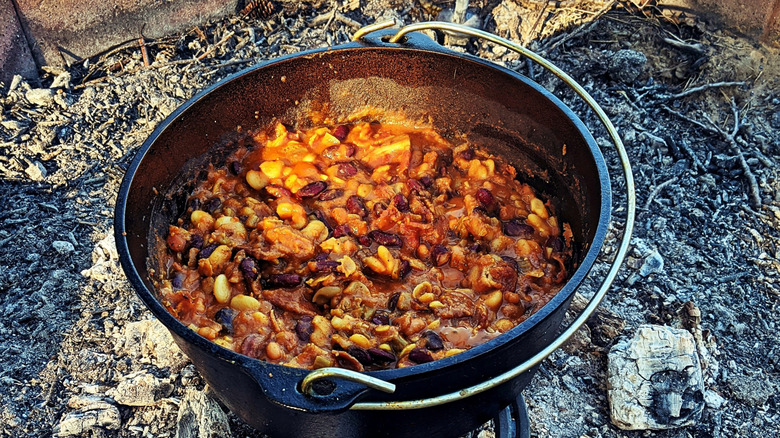
Frijoles charros, or simply "cowboy beans," are similar to carne guisada and chili in that they're all easy-to-cook stews that can feed lots of people. Traditional cowboy beans were made by simmering dried pinto beans in water over a campfire with whatever meat scraps were available. Common ingredients included salt pork, garlic, and onions. Most modern recipes call for using bacon or salt pork as the meat. Other modern advances include the addition of chorizo, pickled peppers, or even pieces of hot dog. Whatever the ingredients or the historical era, for the best frijoles charros, the mixture has to simmer until it coalesces into a thick bean stew.
Frijoles were a large part of cowboy cuisine largely because pinto beans were cheap, widely available in bulk quantities, and travelled well. Even today, chefs consider beans one of the essential ingredients home cooks need for really good Mexican food.
8. Huevos rancheros
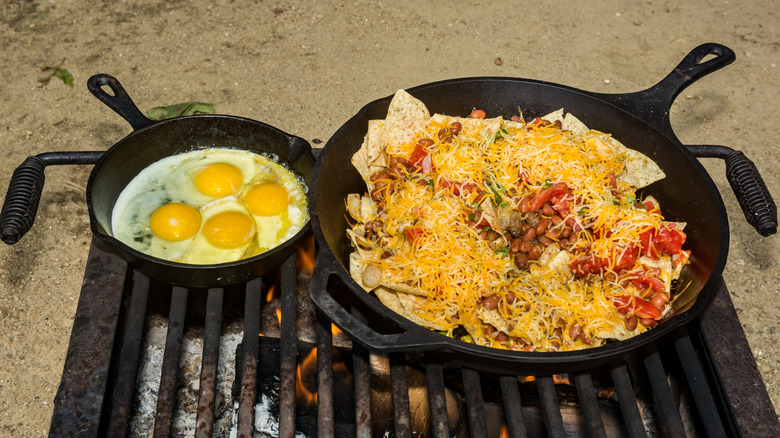
Everyone that has seen a diner menu knows about huevos rancheros, or "Ranch-style eggs." The dish is a traditional Mexican one, consisting of two eggs over easy, served on a flat tortilla, often with cheese, and topped with sauce. Nothing much has changed since the days of the cattle drive. When the vaqueros would return to camp at mid-morning for a hot breakfast, huevos rancheros were a popular choice.
The salsa ranchera that tops the dish, both in modern diner versions and in 19th century camp fare, is a cooked, tomato-based sauce. And on most menus today, the tortilla is still typically made with corn in keeping with Mexican and vaquero tradition. As for the cheese that's de rigueur today, the vaqueros mostly did without: Dairy was hard to keep out on the range, though some chuck wagons did stock hard cheese that had been dried and coated in wax. By many accounts, this range cheese, typically cheddar, was little more than palatable. Still, the homestyle Mexican dish became a staple of the cowboy breakfast.