

The Traditional Mexican Dish That Became A Staple Cowboy Breakfast
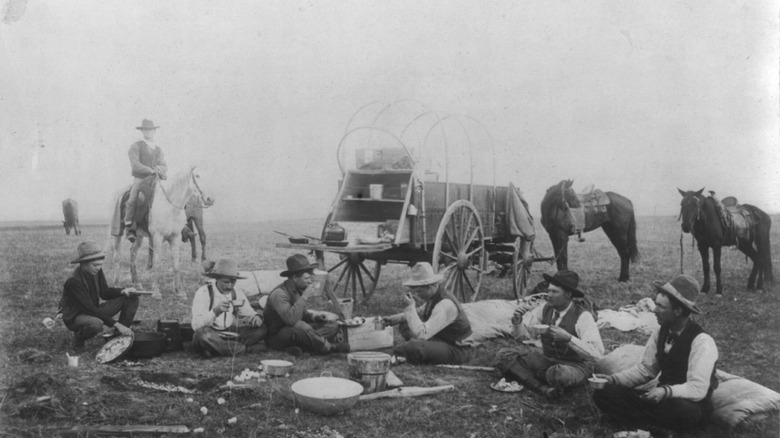
For centuries, the dish we know as huevos rancheros, rancher's eggs in English, has been a staple dish on the ranches and farms of Northern Mexico. Its hearty combination of sunny side-up fried eggs, salsa, and corn tortillas, often topped with queso fresco or Cotija cheese, kept workers going from the 16th century onward. Long before the often mythologized American cowboy of the 1800s, there were Mexican vaqueros, mainly Indigenous Mesoamerican men who were expert riders, ropers, and cattle wranglers. By the 19th century, when the American cowboy came around, it was the vaqueros who taught them the skills they needed. Along with this, they also heavily influenced cowboy cuisine.
Huevos rancheros (not to be confused with chilaquiles) was among the dishes that made the leap north from Mexico into cowboy culture and became a staple dish of the American Southwest. By the early 1900s, the dish was sometimes referred to as cowboy eggs. Around this time, other standard cowboy foods included beans, tortillas, and ranchero sauce, a standard condiment made of cooked tomatoes, chiles, garlic, and onion that was used on everything, including huevos rancheros. Huevos rancheros would have been a go-to meal served from the chuckwagons that often accompanied cowboys on their cattle drives.
From the ranch to the world
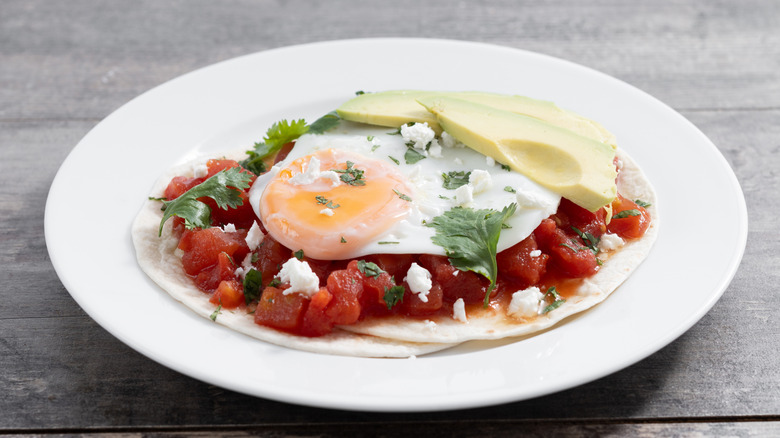
It wasn't long before huevos rancheros went from cowboy cuisine to finding its way onto plates of everyday folks. In 1896, a prominent San Antonio couple held a dinner for some visitors from Massachusetts that featured huevos rancheros along with other traditional Mexican dishes. "It is safe to predict that some of the savory Mexican dishes were not as toothsome to some guests from Yankeeland as Boston brown bread and baked beans ..." quipped the San Antonio Express-News. By the early 20th century, the breakfast dish was also finding its way into diners, at least in Texas. A 1904 advertisement for The Ranch Cafe in the El Paso Times includes the dish in its list of specialties. It would soon spread further north.
Today, huevos rancheros can be found in many restaurants across the country made with a wide range of ingredients. The dish had come a long way from simple Mexican ranch fare to cowboy chow to restaurant staple. Perhaps it's the meal's simplicity that has helped keep it alive and thriving for more than 500 years.