

11 Restaurant Methods For Making Your Food Look More Expensive
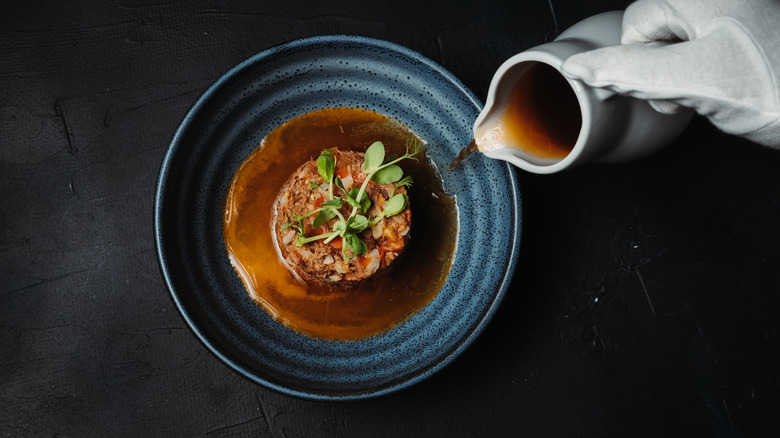
It's fair to say that most of us wish that we could eat at high-end restaurants more often. It may not even be the flavors or the textures that keep people coming through their doors, either; it's the plating, refinement, and attention to detail that causes diners to shell out and dig in.
If you have the skill to prepare fine dining-inspired fare at home, and have access to great stores with high-quality meat and produce, you are well on your way to an upgraded dinner at home that costs you much less than dining at a high-end restaurant. However, if you're not confident in your plating and can't make your meal look expensive, well, you may be wishing you just settled for takeout. To help you out, we decided to get some tips on how to elevate simple home-cooked fare into dishes that look like they just came out of the kitchen of a Michelin-starred restaurant. And who better to ask than Jennifer Maune, "MasterChef" finalist and restaurateur behind the upcoming Restaurant Fleur in Arkansas; Reed Palmer, chef de cuisine at Folia Bar & Kitchen; and Charlie Palmer, Michelin-starred chef and co-founder of Appellation Healdsburg. Their tips are perfect for when you have an upcoming dinner party and need to impress some VIPs or are just looking for ways to make your weeknight favorites look a bit more interesting.
1. Opt for a large plate rather than a small one
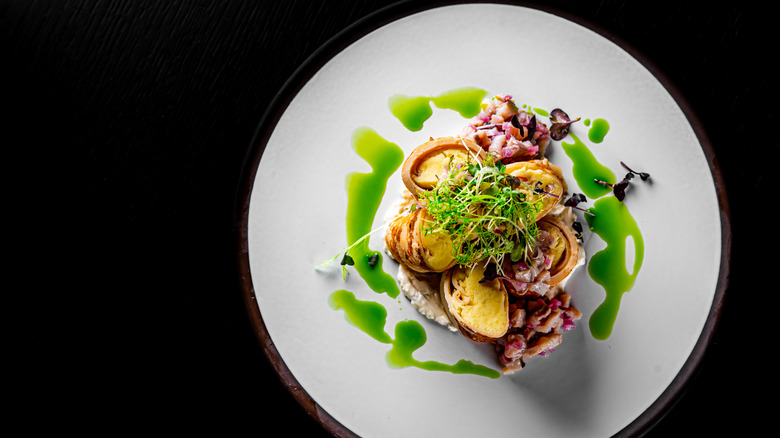
Have you ever wondered why fine-dining plates are so large, but the food is so small? A lot of this has to do with scale and the use of negative space. "I generally recommend choosing a plate that's slightly larger than you think you need because it gives each element room to breathe," says "MasterChef" finalist and restaurateur Jennifer Maune. "Thoughtful use of negative space creates balance, draws the eye across the plate, and gives the dish a sense of elegance and refinement." If you add too much to your plate, it will look heavy and hectic, rather than dainty and refined. After all, no one has ever gone to a greasy spoon diner known for its massive portions and said that its plates, piled high with pancakes, eggs, hash browns, and everything under the kitchen sink, look "expensive."
However, just selecting a large plate for your dish won't do you any good. You need to consider how it will look relative to the food on it. "The plate should frame the dish, never overwhelm it. When size, scale, and composition are in harmony, the presentation feels effortless, sophisticated, and worthy of the experience you're creating," Maune says. This is to say that you're going to need a comparatively larger plate for a large serving of pasta than you would for a petite steak or piece of fish.
2. Avoid making your plate look too busy
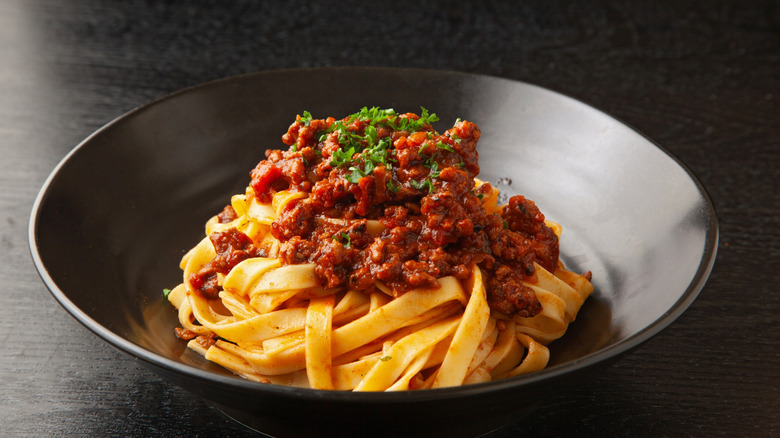
As Jennifer Maune alludes to, using a large plate and creating negative space are important. So if you use a large plate, but fill it up with distractions, you are essentially negating all of that work. The idea when plating restaurant-quality food at home, in other words, follows the age-old Henry David Thoreau quote: "Simplify, simplify, simplify!"
"We often think abundance equals beauty, but restraint is a powerful tool. When too many components compete for attention, the dish loses clarity and elegance," Maune says. Chef Reed Palmer echoes this sentiment. "Oftentimes it seems like home cooks are trying too hard to be artistic. My philosophy has always been: the simplest, the best — let the ingredients shine," he says.
When plating at home, you may only limit yourself to three or four elements, whether it's different colors or textures. Although you might feel the pressure to add an additional garnish or a swipe of a sauce, you should think critically about whether tacking on that extra component is going to add to the plate or detract from it. In this sense, it's better to have a few elements that are done well (and look luxurious) than thrown together haphazardly on a tray because it looks like not enough. The goal here is refinement, not excess. "If a garnish doesn't contribute to the flavor, texture, or visual balance, it likely doesn't belong," Maune says.
3. Take the time to clean up your plate
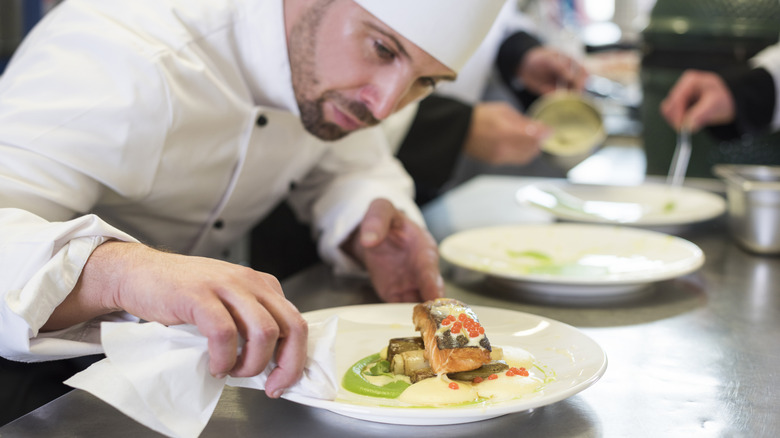
Have you ever been to a fine dining or expensive restaurant only to have your plate come out with sauce dribbling over the edge? Probably not. Taking a second to wipe down your plate before snapping a photo for Instagram or serving it to an awaiting dinner party guest can make it look much more professional and expensive. Forgetting to do so is one of the mistakes Jennifer Maune says that people make when plating foods. "One quick swipe with a clean towel makes an incredible difference and instantly makes the dish feel polished," she says.
Part of this harkens back to the restaurant tradition of taking the time to give the plate a once-over and ensure it looks good when it arrives at a guest's table. "In professional kitchens, those last few moments are often what elevate a good dish into a memorable one," Maune says. "Beautiful food isn't about complexity or expensive ingredients; it's about care, precision, and respect for both the ingredients and the guest. Those thoughtful finishing touches are what transform an ordinary weeknight dinner into an experience that feels truly special." Taking the time to clean up your plate before you serve it to your friends and/or family (or just yourself) will show that you took the time and the effort to make it look good, which is arguably more important than any expensive, showy garnish can do.
4. Play with straight and curved lines
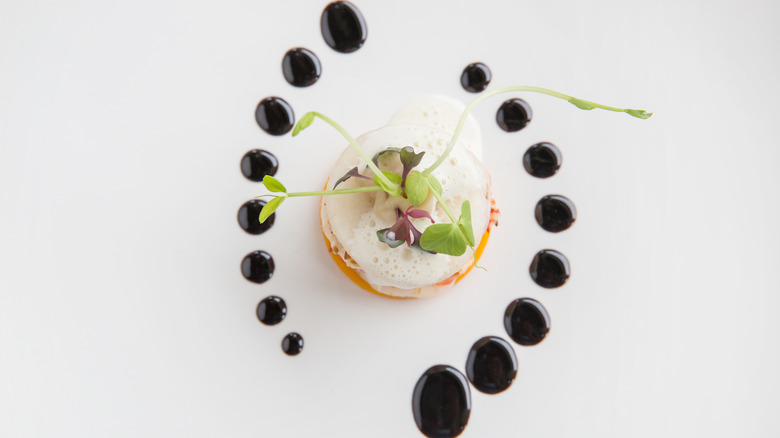
We eat with our eyes, and some of the most expensive-looking dishes prioritize this visual effect. You want to make something that looks like it just came out of a gallery — not a galley kitchen. A good way to do this is to look at lines. Many fine-dining restaurants and food stylists here think in terms of straight lines and curves, which add dimension and shape to a plate and help elements flow between one another.
Jennifer Maune explains that there is no right or wrong choice as to what shape to use, as it really depends on what's on your plate, and, as she says, what "story the food is telling." "Straight lines feel modern, structured, and precise, while curves feel softer, more organic, and inviting," she says. Maune shared some examples with us. "A refined vegetable dish or composed salad might benefit from clean lines, while something rustic like braised short ribs or pasta naturally lends itself to more flowing movement," she says. Chef Charlie Palmer admits he'd rather see circular and rounded plating styles, as he says they're more visually appealing than straight lines.
But how do you create these "lines" on your plate? Well, if you're plating something like a slice of pistachio tiramisu cake, you might use a ruler and a squeeze bottle to dispense straight, rigid lines of cream onto your plate. But for a whimsical bananas Foster, add a scoop of vanilla ice cream to complement the half-moon shapes of the fruit. One dessert is going to give you more formal vibes than the other, which is a testament to the role that lines and shapes play in plate perception.
5. Work around a focal point
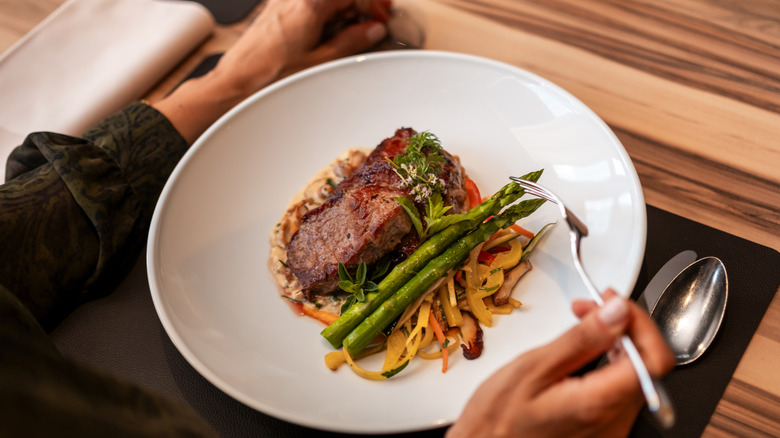
We've already concluded that the best plates are the simplest and the most straightforward. One of the best ways to maintain that simplicity is to have a main visual element. "Every plate should have a clear focal point. Start with the principal ingredient like a beautifully seared fish, a perfectly roasted piece of meat, or a seasonal vegetable prepared with exceptional care," says Jennifer Maune. This is the item your eyes will drift toward first when they see your plate. The focal point doesn't have to be big, either; it just has to command attention. "Plate in the center of the plate; when people try to go off-center, it looks like they are trying [too] hard," says Reed Palmer.
Establishing a single element as a focal point will allow you to showcase a more expensive item on your plate, too, such as a steak with whiskey cream sauce or a piece of beef Wellington, and depending on how you organize the rest of the plate, it can also make this protein look larger than it actually is. Meanwhile, everything else on the plate has to play a supportive second fiddle. "Allow everything else to support that element rather than compete with it. Garnishes, sauces, and accompaniments should enhance the composition while reinforcing the intention of the dish," Maune says.
When you are narrowing in on a single point, you are letting the pressure to add more and more fall by the wayside. "Restraint, balance, and intentionality are what keep a plate refined rather than busy," Maune adds.
6. Find opportunities for contrast
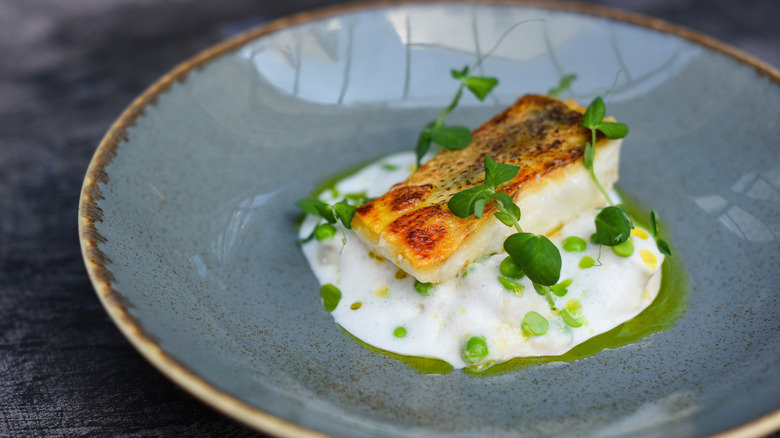
A good plate is dynamic in more ways than one. If you're slapping a piece of cheesy baked ziti haphazardly on a plate, for example, it looks more homey than it does refined. But if you were to add a pop of color with a garnish, or a diverse texture with some greens, you can create contrast and elevate your plate, all without skipping out on flavor.
One of the best inspirations for plating and creating textures, per Jennifer Maune, is nature. "Rich golden vegetables next to vibrant green herbs or deep burgundy beets alongside creamy white purées naturally create visual interest. You don't need every color on the plate, just enough contrast to make each ingredient shine." Produce isn't that expensive, either, but it will still make your plate look pricey.
That said, color is not the only way to organize and create contrast on your plate. "I prefer grouping by purpose rather than simply by color. Think about how textures interact: a silky puree beside something crisp, or roasted vegetables nestled near the protein they complement," says Maune. That said, you shouldn't sacrifice functionality when building your plate. If a sauce is meant to be eaten with a piece of seafood, for example, it makes sense to drizzle it on rather than isolate it somewhere else on the plate. Using contrast allows you to create functional and visual cohesion, making your plate look and feel like it just came out of a five-star restaurant.
7. Transform your garnishes rather than just throwing them on the plate
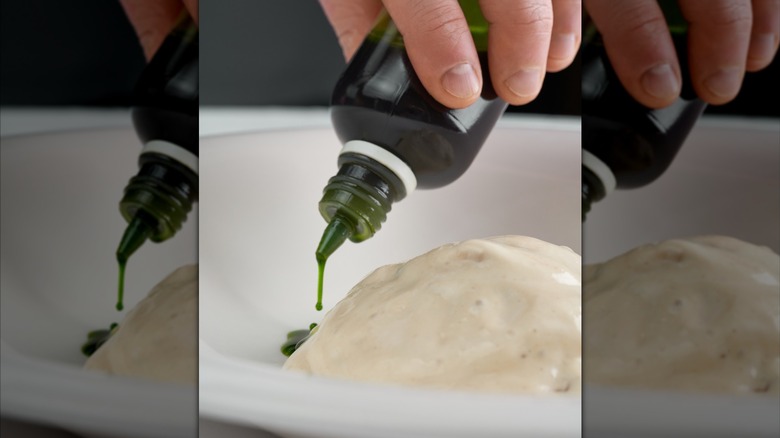
When you think of the word "garnish," what comes to mind? A sprig of parsley? Chiffonade of basil? If you don't use these garnishes to their full potential or elevate them, you could be missing out on something that'll make your plate look more expensive while requiring very little work to implement.
Jennifer Maune offers some ideas. "Fresh herbs can become delicate herb oils or vibrant herb powders. Citrus can be candied, zested, or preserved. Shallots can be thinly sliced and fried until crisp, while nuts can be toasted and finely chopped for texture," she says, noting that even vegetable peels can be crisped up and recycled, rather than being tossed in the trash. You would have never guessed that these fine dining-level garnishes were made for very little money at all, and they give the impression that you spent way more time and money on this dish than you actually did. As with all of the plating essentials, be sure to use these garnishes tactfully and express restraint when deciding how many of them and how much to add to your plate.
8. Plate in odd numbers
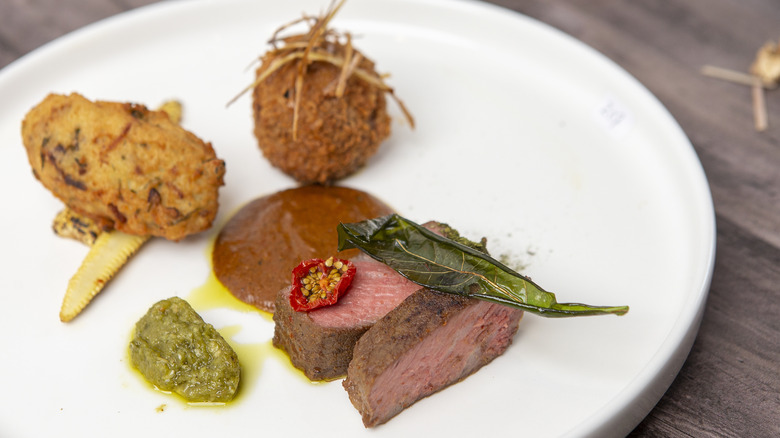
If you've ever ordered a meal at a fine dining restaurant and counted how many items are on your plate, chances are you'll find that odd numbers appear more often than evens do — five pieces of asparagus, a piece of steak and two garnishes, or three meatballs. These numerical choices are not random, according to our experts. "For smaller items like scallops, vegetables, or garnishes, odd numbers usually feel more natural and visually pleasing because they encourage your eye to move around the plate," says Jennifer Maune. Both Charlie and Reed Palmer agree on plating in odd numbers, too.
Using odd numbers on your plate can make it look more intentional than evens, thus making it look more expensive. However, even if you are using odd numbers, you should still plate logically. For example, once you get your numbers figured out, think about focal points and what fits best adjacent to one another. "I wouldn't consider grouping foods by color, but by what makes sense stylistically and how people eat visually. You eat with the eyes first," says Charlie Palmer.
9. Use the clock method
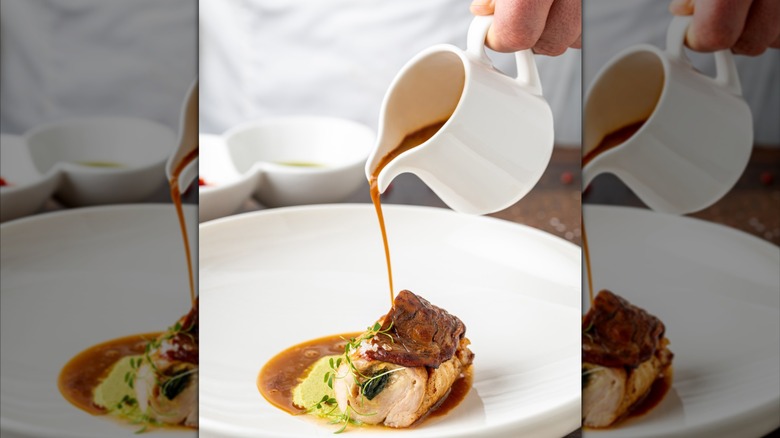
Once you have your odd-numbered plate components and garnishes prepared and are ready to go, it's time to start plating. One thing you need to do is look at a clock. You're not crunched for time (this isn't a scene out of "The Bear," after all); rather, you need to use the clock-face technique. This method divides the plate into a clock face. The focal point of your dish — often the protein — should face between 3 and 9 o'clock, making it slightly off-center. Starches are placed at 10 o'clock, while veggies come in at around 2 o'clock.
Following this method has its advantages. "The clock-face method is a wonderful place to start, especially for home cooks, because it naturally creates balance," Jennifer Maune says. "It's a helpful framework for understanding proportion and ensuring the plate doesn't feel crowded or uneven."
However, you shouldn't be confined to just this arrangement, as this can make your plate feel stiff — especially if you are serving multiple courses with the same plate arrangement. "As you become more comfortable, I encourage people to move away from rigid placement and instead think about movement across the plate," Maune says. You are also limited here if you are plating more than three elements, and if your protein, starches, and vegetables are all combined into one — like in this one-pot vegetable curry recipe.
10. Consider using height to your advantage
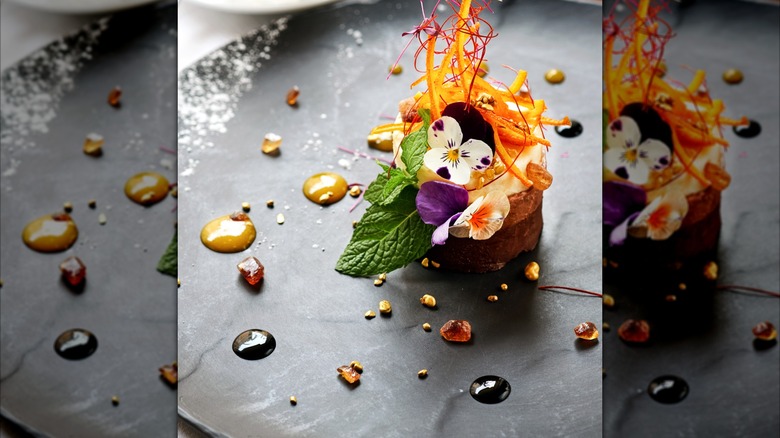
One way to make your plate look more refined? Build upwards, rather than outwards. This creates visual dimension on your plate, giving you a cleaner appearance and allowing you to add garnishes and sauces to your plate more readily. "Height adds dimension and creates visual excitement," Jennifer Maune says. "The key is to create just enough elevation to give the plate life without making it feel unstable or overdesigned."
Charlie Palmer says that he was one of the first chefs to serve tuna tartare in a mold. "It looks more abundant, and the presentation is simple, classic, and clean without trying too hard," he says. He advises that you can make your own mold at home, though it's cheap enough to buy one (or just repurpose a biscuit cutter). Jennifer Maune also offers some super simple suggestions, including leaning roasted asparagus on a protein, stacking vegetables on top of one another rather than spreading them across the plate, and adding garnishes to the top of your food rather than on the side. You can also design garnishes with height in mind; if you're trying to make a dessert that looks like it just walked out of a Michelin-starred kitchen, try some colorful, tall sugar-work or tempered chocolate.
11. Swap out a plain plate for a unique one
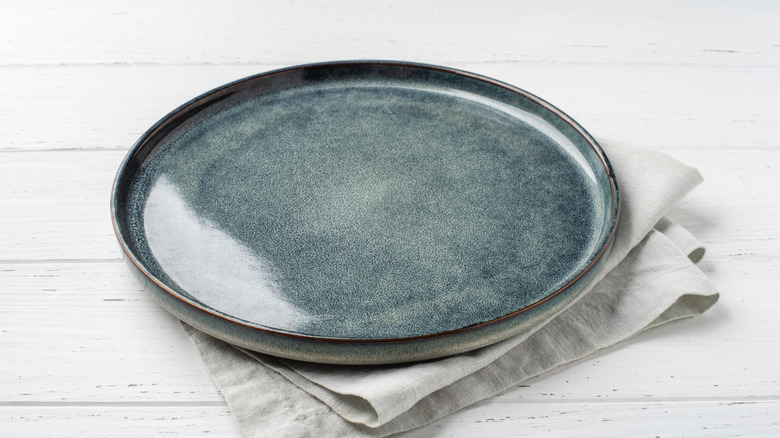
When trying to make a regular weeknight meal look refined, it's easy to think about how the food itself looks. However, your choice in plate plays a more important role in your overall dish than you might think. "The plate should frame the food, never compete with it," Jennifer Maune says. She recommends opting for simple, white porcelain to highlight the colors and textures on the plate. Although these shiny, simple whites have their place, so do textures and colored ones. Maune is partial to matte, which she says "feel beautiful and contemporary."
You don't have to blow your budget on fancy new plates either. Maune gets some of her best from Williams Sonoma, though she says that Walmart and Amazon may also be worth looking at. You should never overlook thrift stores, either. If you don't mind settling for singular plates or sets that have a few missing, you can end up finding some really great secondhand items that look great and still fall within your budget. "The most important thing is consistency, beautiful food deserves a beautiful canvas," Maune says.