

Ask Your Butcher To Cut Baby Back Ribs This Way For A New Take On The BBQ Fave
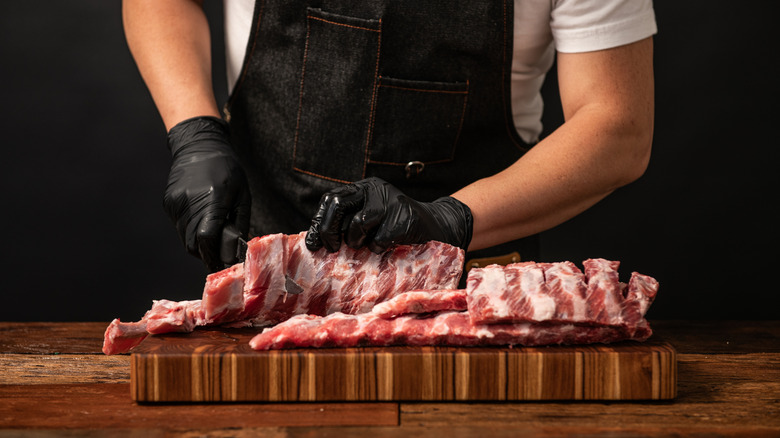
There are few things as satisfying, or as celebratory, as great, big racks of delicious baby back ribs. They signal carnivorous feasts with friends, festive cookouts, and good times. But there's another way to make and serve them than in the standard slab. You can ask your butcher to break your baby back ribs down into singles before you even leave the shop. In keeping with the convivial theme, these are even sometimes called — get this — party ribs.
These are also, to be clear, not the same as riblets, which are hacked in half lengthwise and then separated by the bone to create bite-sized minis that match their cutesy moniker. Party ribs are only separated into individual bones. This not only lets heat penetrate faster once you get cooking for a quicker finish versus the ribs' previously dense composition, but it also frees up more surface area for your favorite pork-enhancing herbs and spices, as well as 360-degree caramelization. They're also just more convenient to nibble at your next fete.
Tips for making party-style baby back ribs
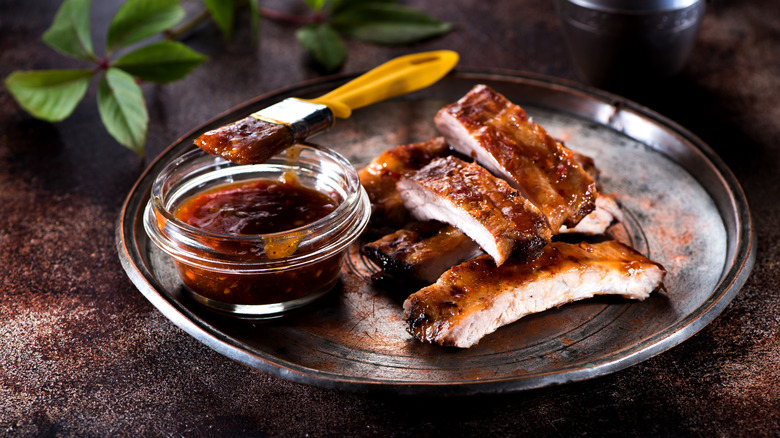
Your local meat merchant holds your invitation to party ribs. Ask them to break down the rack on-site for one less thing to do in your kitchen. These little extras are why it's worth buying from a bona fide butcher rather than larger grocers. You can easily put together a simple rub using the salt, pepper, paprika, garlic powder, and brown sugar you already have in the pantry, or buy chef-friendly, ready-made rubs whole hog. Give each rib a thorough coating in either case.
The grill is just as great for party ribs as it is for racks, and you can toss 'em on at 275 degrees Fahrenheit for about an hour and a half. Key to flavoring these baby backs is removing them to aluminum foil or a disposable barbecue pan so they can mingle in your favorite sauce before finishing them on the grill for another 30 minutes or so. You can also, of course, sauce up those bones and make party ribs in the oven in about an hour at 375 degrees Fahrenheit. Tinker with the time and temp to go as low and slow as you wish (or to expedite the process even further), but make sure the final product registers at an internal temperature of about 200 degrees Fahrenheit for best results.