

6 Foods You Should Avoid Reheating In The Microwave
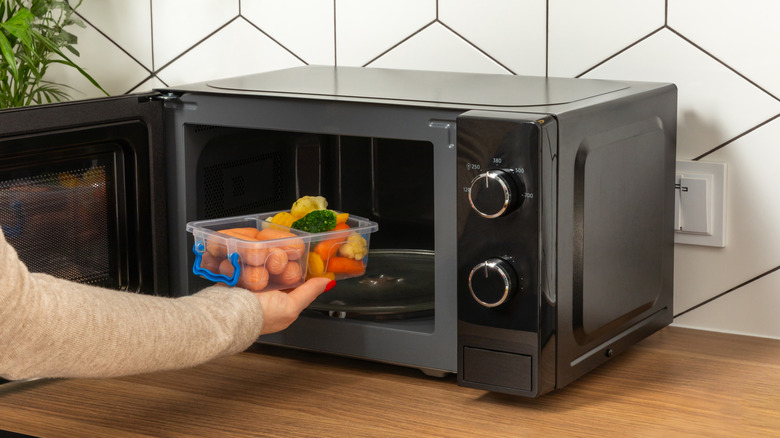
For many of us, the microwave is one of the most convenient kitchen tools ever invented. This magical box has the ability to thaw and heat our frozen dinners or pop our Orville Redenbacher in five minutes or less, and it can even melt peanut butter in a mere 30 seconds. But microwave ovens aren't perfect. You may already have discovered that they can fail you entirely when it comes to reheating leftovers, ruining the texture or flavor, leaving some spots cold and others scorching, or even causing some foods to explode. Suddenly, a machine designed to make life easier and more pleasant is doing the exact opposite.
To understand why microwaves can sometimes do their job so incorrectly, it helps to know a little about how they work. Essentially, when you push Start, a powerful vacuum tube called a magnetron sends electromagnetic (EM) waves through your appliance. They pulse around, bouncing off its walls and zipping right through your food. When they do this, the food's molecules vibrate, generating heat (and lots of it) – just not evenly. The way these EM waves oscillate, particularly when they pulse on top of one another, leads to some areas with lower electric field intensity, i.e., cold spots.
To get a decisive list of foods that don't take well at all to these dancing EM waves, we talked exclusively to four food science and culinary experts. We learned exactly what the microwave will turn soggy, rubbery, and tough. They also told us how to identify the kinds of foods guaranteed to go "boom," or which can potentially even make you sick. In some cases, they said, a different reheating method is better. Other times, with a few important extra steps, the microwave suffices.
Textured foods
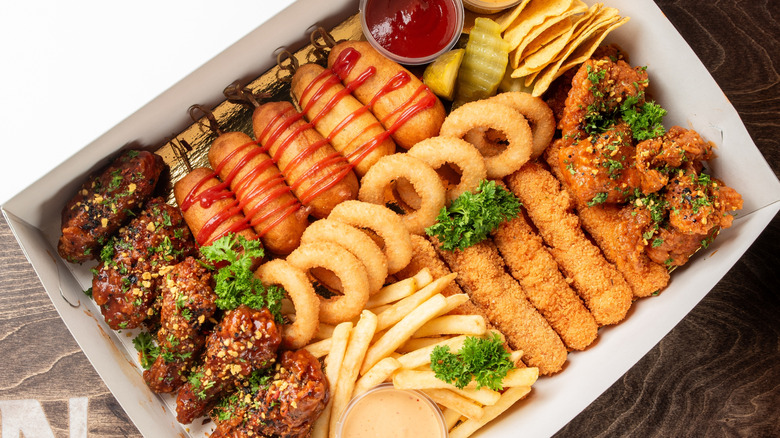
If you've ever tried reheating a once-crispy dish in the microwave only to have it come out soggy and sad, you've witnessed the machine's tendency to ruin french fries, corn dogs, nuggets, and anything else with texture to it. Bryan Quoc Le, the Founder and CEO of Mendocino Food Consulting, has a PhD in Food Science. He explained how fried and breaded foods are ruined by the microwave's ability to make molecules boiling-hot extremely fast. "This effectively builds steam in microscopic pockets in the food," he told us. "But that heat doesn't transfer evenly, and so the hot water and steam can easily dissolve and break down the surrounding walls of fried foods or bread, damaging the texture."
Melanie Underwood, founder of Nourish and Gather, feels that the microwave's tendency to turn crispiness into sogginess is one of the "most disappointing examples" of its limitations. She said, "Fried chicken loses that contrast between the crunchy coating and the juicy interior and becomes a soft coating with a rubbery inside — the opposite of what it was intended to be." Breaded foods aren't the only textured foods subject to this effect, she said; the same thing happens with roasted vegetables, which she reheats in a hot oven.
Jessica Rice, Senior Test Kitchen Editor at Budget Bytes, says that the air fryer is the absolute best way to reheat leftover french fries, onion rings, and other fried foods. " ... Revive them at 375 to 400 degrees Fahrenheit for three to five minutes or so," she said. "You could also warm them up on a sheet pan in the oven, but it won't be as crispy."
Baked goods

In the interests of reheating dinner rolls so they're as good as new, don't reach for that microwave door. The same goes for pizza, pastries, and other baked goods. Steam is again the culprit in this case. As the microwave rapidly boils the water in random areas throughout the bread or crust, the starch molecules dissolve, then reappear in thick clusters. As their temperature lowers, the texture pulls a fascinating — though frustrating — trick. "[Baked goods] can feel soft at first," said Melanie Underwood, "but as they cool down, starches recrystallize rapidly while the moisture evaporates, leaving them hard."
To reheat bread and unfrosted pastries without them turning rubbery, Jessica Rice suggests covering them in aluminum foil and popping them into an oven on low heat. For pizza, eating it cold is always a classic option, but she and Underwood both told us that reheating it on the stove in a lidded cast-iron skillet is effective. "Or," Rice added, "in an air fryer at 375 degrees Fahrenheit for a few minutes."
Animal proteins
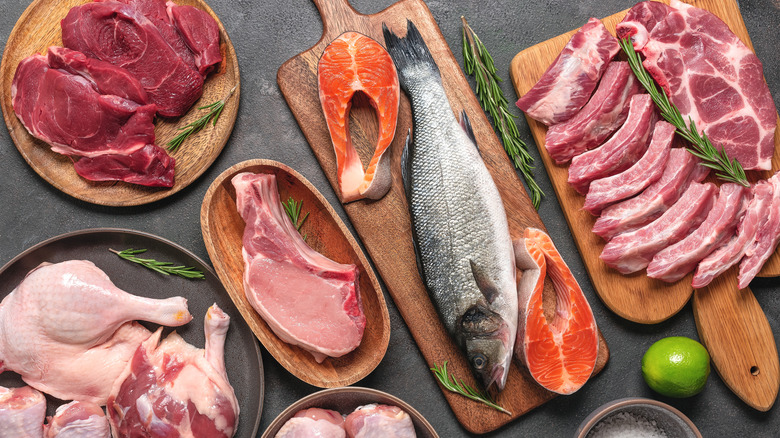
When it comes to reheating your leftover animal proteins, the microwave is not your friend. Jessica Gavin, M.S., Certified Food Scientist, Certified Culinary Scientist, and author of "Easy Culinary Science for Better Cooking," told us that it takes a mere minute or so for items like sliced steak, fish, or shrimp to overcook. She added, "Proteins in [these] foods ... continue to tighten during reheating, squeezing out moisture and making them seem drier or tougher."
Bryan Quoc Le told us that there's also a potential safety issue at hand, explaining, "Seafood that is microwaved can have cold spots that aren't thoroughly heated to the point to kill bacteria. This can result in some types of food poisoning if the bacteria have had a chance to grow during refrigeration." The Centers for Disease Control lists 165 degrees Fahrenheit as the temperature to hit when reheating leftovers — even seafood, which calls for an internal temp of only 145 degrees Fahrenheit during cooking. In other words, don't skimp on reheating your seafood, and use another method besides the microwave so you know for sure that it's safe to eat.
Instead of the microwave, Jessica Rice advised gently warming leftover seafood up on the stovetop. "This goes for eggs, too," she added, as scrambled eggs, omelets, and fried eggs turn rubbery in the microwave, and are generally better if cooked from scratch. Rice also has a foolproof way to reheat leftover steak, suggesting that, "if you must reheat it, do so on very low heat in the oven (275 degrees Fahrenheit)." Finish with a reverse sear in a hot pan, and you'll be good to enjoy your meal.
Foods with skins
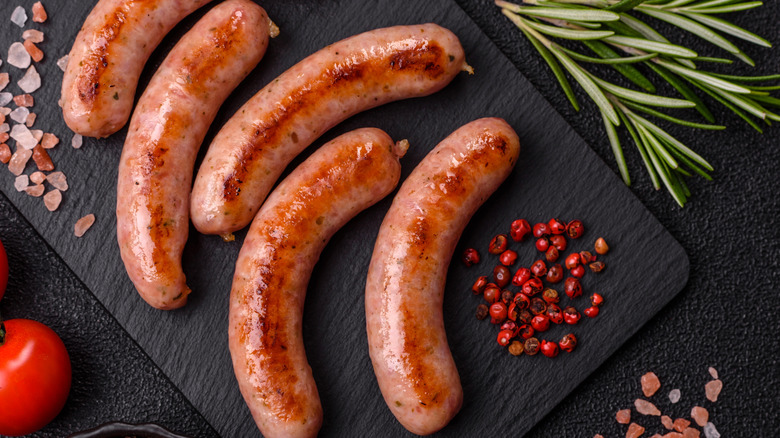
It's never great to hear a "boom" of any volume coming from inside your microwave (not counting popcorn), but this is almost guaranteed to happen if you're using it to reheat foods with permeable skins. Think hot dogs, sausages, and even cherry tomatoes. Jessica Gavin explained the mechanics behind this distressing process, saying, "Foods are more likely to burst in the microwave when they have a skin or peel that traps steam as the moisture inside heats up. As pressure builds, it needs a way to escape. If it can't, the food can suddenly rupture." Gavin offers an easy solution if you do want to microwave these items: pierce the skin or surface first. Jessica Rice agrees, explaining, "[This] gives the steam an escape route before pressure builds to a bursting point." If you don't want to pierce your sausages or hot dogs, you can always simmer them on the stovetop for around 10 minutes or steam them for about half that time. Et voila: you're ready for a leftover hot dog breakfast sandwich.
Some foods have "skins" that can't be slit or pierced, however, and will need different treatment. For instance, if you boiled up some eggs for breakfast and didn't have time to eat them, maybe just enjoy them cold. As Bryan Quoc Le told us, "Probably the worst food to reheat in the microwave is whole boiled eggs. They are just simply going to explode and make a mess." If cold, hard-boiled eggs don't appeal to you, you can always reheat them by covering them with boiling water and letting them sit for 10 minutes. It takes a little longer, but you won't end up with egg everywhere.
Leftover rice
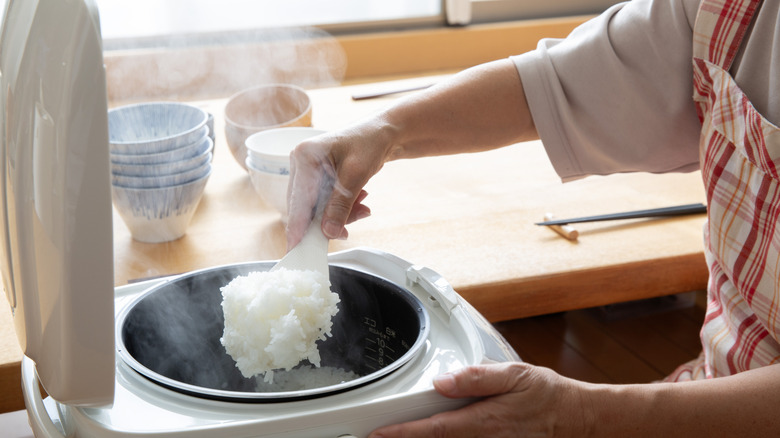
Storing and reheating leftover rice may seem like it should be a no-brainer (it's not as if it's shrimp, right?), but Jessica Rice expounded on the health risks involved with nuking this ubiquitous grain. The Budget Bytes Senior Test Kitchen Editor said, "I hate to break this news to social media meal preppers who I often see batch-cooking rice in large quantities for the week: It's actually considered a high-risk food." The danger with rice, she said, is that it can harbor Bacillus cereus, a common microorganism in soil. Cooking kills active bacteria in the rice, but the spores can survive. If the rice sits out too long before refrigerating, the spores can produce a heat-resistant toxin that the microwave (or any other reheating method) simply cannot kill. If you ingest enough of these spores, a nasty bout of food poisoning could be the result. Jessica Rice prefers to mitigate that risk by cooking rice fresh and eating it the same day.
If you absolutely must reheat it, take precautions before even reaching for that storage container. Cook rice thoroughly and cool it quickly – don't allow it to stay at room temperature for more than two hours. With those steps, you can actually use the microwave, as Jessica Gavin does, but it can leave you with dried-out rice rather than plump, moist kernels. To avoid this, Gavin breaks up the clumps, drizzles a little water over the rice, and covers the bowl to create steam. Thirty-second intervals on a high setting (stirring in between each interval) does the trick.
Dense or layered dishes
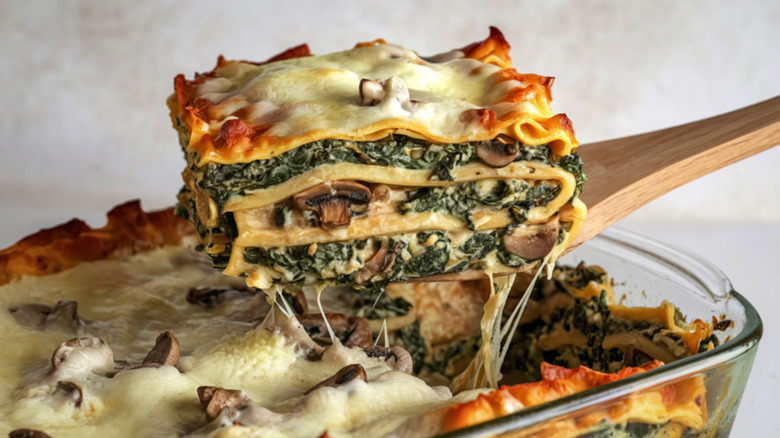
Anyone who has ever nuked a slab of lasagna or casserole can attest to a cruel twist of culinary fate: the center stays cold, while the outer edges get scorching hot and dry. Jessica Gavin has a smart tip for enjoying these dense or layered dishes in the days after they were cooked. "A good rule of thumb," she said, "is to reheat food using a method similar to how it was originally cooked. Ovens work well for casseroles and baked dishes." Sprinkle a little water over the leftovers, cover with foil, and bake at 325 to 350 degrees Fahrenheit until heated through. Lasagna can take around 45 minutes; casseroles, depending on their density, might be ready in about half that time.
Sauces, roux, stews, and soups also fall into this category. These foods come with their own hidden health risks. Jessica Rice, speaking from her experience of passing restaurant health inspections with flying colors, said, "When you add water to something, such as reconstituting dried beans, making a roux, or adding stock to a sauce, you raise the water activity in that finished dish, moving it into the danger zone for bacterial growth." The key is following food safety guidelines. Cool these foods quickly and reheat them to 165 degrees Fahrenheit. As for how, follow Jessica Gavin's "as you made it" guideline and use the stovetop to reheat soups and sauces. For thick roux- or starch-based ones, adding a little water to the bottom of the pan before adding the soup can help prevent scorching. Heat at medium-low, and stir frequently.