

9 Old-School Grocery Store Chains You Can Find In The South
Some of America's vintage grocery stores still operate in the South, serving generations of customers in an era dominated by large national chains. Over the years, grocery retail has evolved from small, locally supplied mom-and-pop markets to corporations managing global supply chains. While scaling up is a natural outcome of population growth, regionally rooted chains can carry deep cultural weight. Many grocery chains in the South have even served locals for over a century, with some outlasting competitors, ownership changes, and shifting consumer habits. But as national conglomerates continue to swallow up smaller players, it's getting harder to find legacy Southern supermarkets with distinct identities.
Old-school retail chains in the South can also offer a slower pace and a distinctive experience through unique products and merchandising. Whether working with small, local artisan suppliers, offering bilingual services, or slashing prices heavily, old-school markets in the South have developed their own approaches to retail. Here, we present our list of nine retro supermarkets founded below the Mason-Dixon, still going strong.
1. Publix
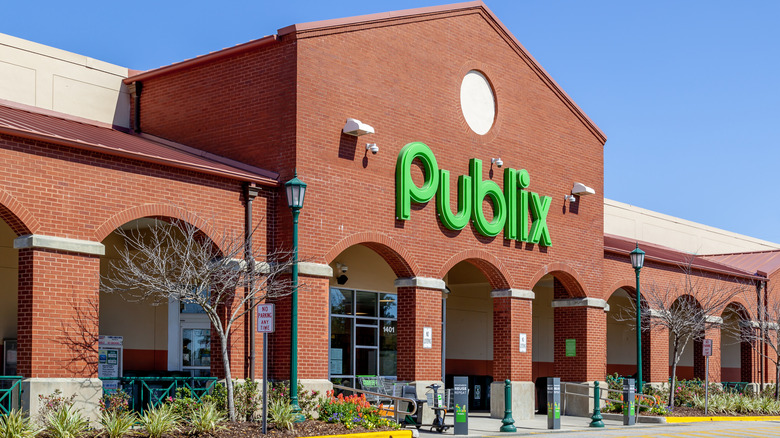
Publix is a Southern staple – a true heavyweight on our list, with $62.7 billion in revenue in 2025 — and a large regional presence. The company was founded by George W. Jenkins in Winter Haven, Florida, in 1930. It wasn't until the 1990s that the grocery store chain expanded beyond the Sunshine State, opening its first store in Savannah, Georgia, in 1991. Today, the store describes itself as the largest employee-owned company in the United States. It also claims to be one of the 10 largest-volume supermarket chains in the country, with 1,435 store locations spanning eight Southeastern states, including 893 in its home state of Florida.
Taking all the numbers into account, you have an enormous footprint, but Publix has always positioned itself on more than size. With a reputation for being clean, receiving multiple customer service awards, having an online cooking school, and even select locations that allow customers to sip on beer or wine while shopping, Publix has a lot going for it.
2. Food Lion
Food Lion is one of the more recognizable chains on this list, though it might not be familiar to our readers west of the Mississippi. Operating in the Southeast and Mid-Atlantic, it's also one of the older chains, at just shy of 70 years old. Founded and headquartered in Salisbury, North Carolina, the chain has grown into a giant over the years. Brothers Ralph and Clifford Ketner left Winn-Dixie — another Southern chain — to start Food Town, built around a low-cost model. Then, in 1983, the company changed its name to Food Lion. Currently, it operates more than 1,100 stores serving shoppers across 10 states. It also has more than 82,000 employees, illustrating the scale of its footprint in the grocery sector.
Still, Food Lion keeps its messaging grounded in the basics: affordable, fresh foods. But that doesn't mean limited curation, as the company offers more than 26,000 products on its shelves, ranging from fresh produce to grab-and-go snacks. It's also said to be spacious at some locations — something any shopper on a busy Saturday will relish. Food Lion may not have radically changed grocery retail, but its value focus serves a wide range of customers, from Delaware to Georgia.
3. Piggly Wiggly
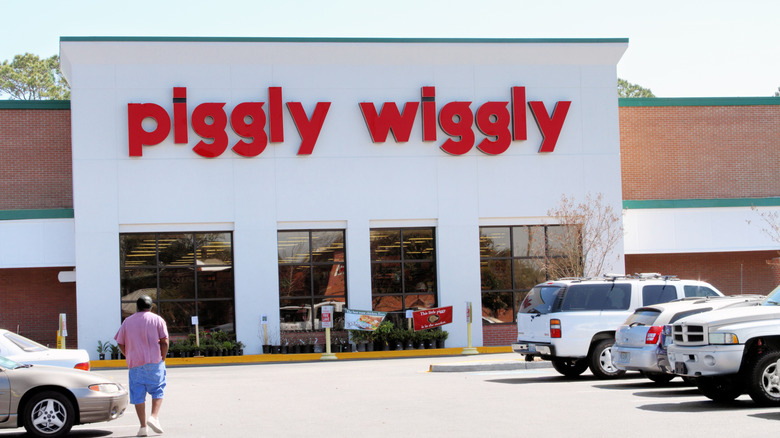
If the super cute name Piggly Wiggly doesn't elicit a smile, we don't know what will. This fun-named chain is the granddaddy of this roundup — truly the definition of old-school. It was founded in Memphis in 1916 by Clarence Saunders and was known as the country's first self-service grocery store. If this sounds funny or obvious, consider that, before this model, shoppers had to submit their lists of items to be fulfilled by staff, who then picked products for the orders.
This innovation and step towards modernization – letting customers gather their own goods from open retail shelves — changed how we shop for food. And while some shoppers dread a trip to the grocery store, others relish the act of cruising up and down the aisles, which was once a novel idea.
Today, Piggly Wiggly operates more than 500 stores across 18 states, though it's now headquartered in New Hampshire. But its Southern roots are undisputed, as are the ways Saunders helped usher in a modern, more accessible way to shop for groceries. That's an impressive legacy for an old-school supermarket.
4. Winn-Dixie
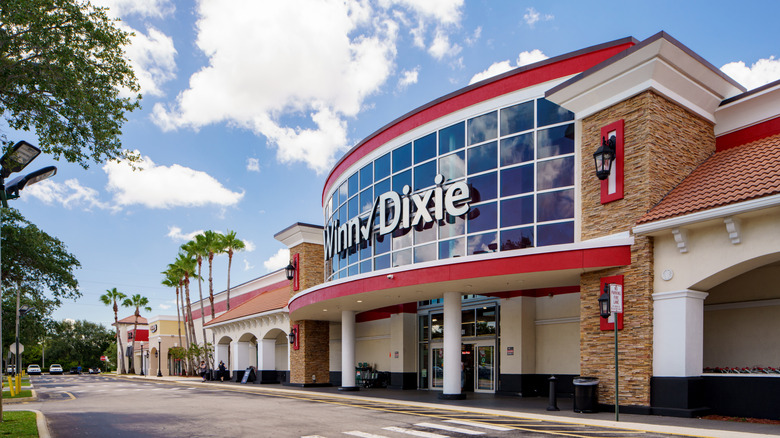
Founded in 1925, Winn-Dixie is the second-oldest grocery chain here. W.M. Davis and his sons helped build what would become one of the South's iconic grocery brands. Now headquartered in Jacksonville, it serves residents of Georgia and Florida.
In 2023, Aldi purchased hundreds of Winn-Dixie and Harvey's locations, some of which it then sold, and others of which Aldi is now turning into its own stores. With this in mind, the Winn-Dixie chain is smaller than it used to be, and is clearly entering a new chapter. But the company's 100-year retail legacy cannot be denied. More than a century after its founding, Winn-Dixie remains a familiar sight across parts of the South, as one of the region's quintessential old-school markets.
5. United Grocery Outlet
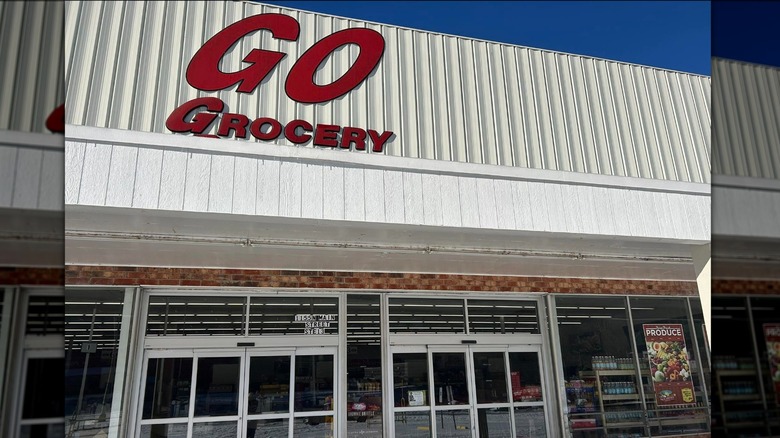
United Grocery Outlet has built a loyal following among bargain hunters in the South for its reliable selection of discounted goods. Based in Athens, Tennessee, this old school chain has been around since 1974. United Grocery Outlet is a smaller company with only 39 locations, mostly in Tennessee, as well as North Carolina and Georgia. To keep prices low, the chain sources products that are nearing their expiration date, are trial-runs, or has minor imperfections. For the consumer, this means an experience that rewards digging around for bargains, while recognizing that the merchandise might not be perfect, per se.
Looking past bruised bananas and dented cans could pay off. A few United Grocery Outlet shoppers were compelled to post about the chain on Reddit, with one claiming to have found exceptionally cheap imported salt and chicken breast, and another raving about finding a jar of black garlic there, which, if you're not familiar, is a really fun ingredient to play with. For shoppers on a tight budget, this old-school Southern chain could be worth exploring!
6. Ingles Markets
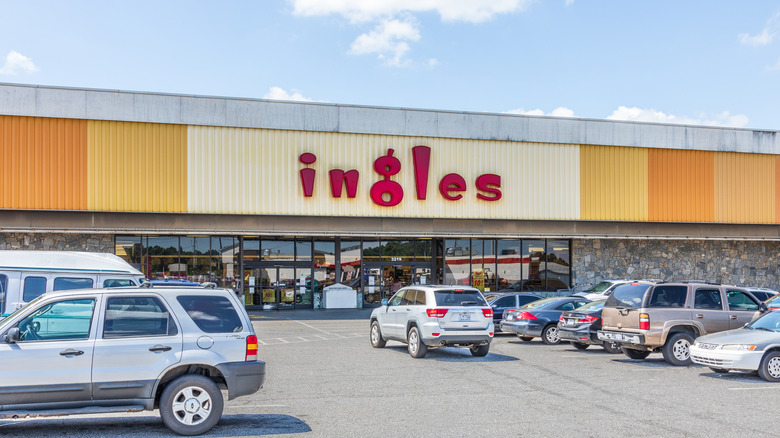
Ingles sits right in the middle of our list by store count, totaling approximately 200 stores across six Southeastern states. Operating for 63 years, it can certainly claim old-school status with an origin story involving a family, like many markets. Coming from three generations of grocers, the company started when Robert Ingle opened the first store in Asheville, North Carolina, in 1963. Its mission was to serve smaller towns and rural communities that bigger grocery companies were apparently overlooking. In the early days, to compete against rival chains, Ingle opted for longer hours on Sundays and holidays, with promotions and large merchandising build-outs to attract customers.
Today, Ingles operates in Georgia, Tennessee, Alabama, Virginia, South Carolina, and North Carolina. It generate $4 billion in annual sales, all through its own distribution network falling within 250 miles of its retail locations. And like many of these old-school Southern chains, Ingles, too, has an in-house private label brand, Laura Lynn, which it claims is "equal or superior" to nationally offered brands.
7. Fiesta Mart
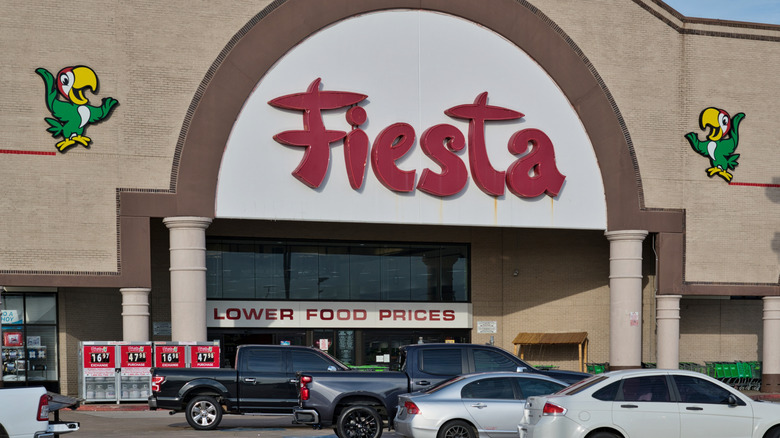
Fiesta Mart, like its competitor Piggly Wiggly, has a fun name for a grocery store. And the cartoon parrot company mascot, Pepe the Parrot, makes the lighthearted and cheeky branding all the more endearing. This old-school chain was founded in Texas in 1972 and is still kicking today, though on a smaller scale than other stores on our list. It's now owned by Chedraui USA, and has 59 stores in its portfolio, serving customers primarily in the Dallas-Fort Worth, Austin, and Houston metropolitan areas.
It positions itself as an inclusive value-oriented chain, even offering a "Fiesta-style atmosphere" for shoppers. Fun! The chain also offers bilingual flyers for both Spanish- and English-speaking shoppers to make things more accessible, and provides a diverse product assortment, including the usual aisle items along with many specialty products. With a strong emphasis on value and on serving local communities, Fiesta Mart stands out for its distinct, lighthearted identity.
8. Earth Fare
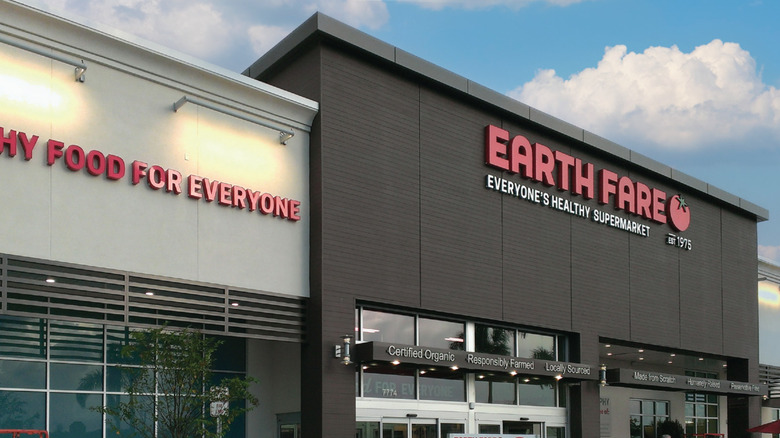
Earth Fare opened its flagship store in Asheville in 1975 and remains rooted there. The store distinguishes itself through a strict ingredient policy, pledging that the food on its shelves is free of hormones, antibiotics, artificial sweeteners, colors, and preservatives. This business model might appeal to shoppers seeking products that meet specific dietary and ingredient standards unavailable elsewhere in their area.
Earth Fare also aims to be transparent by providing information about many of its artisan suppliers in each state on its website. You can read up on the farms, spice companies, apiarists, and greenhouses in each state that comprise Earth Fare's sourcing network. This local focus and traceability are noteworthy, highlighting the abundance and variety of Southern suppliers. Sure, these mostly organic supermarkets might not be the cheapest, but Earth Fare's approach offers an alternative to that of many larger grocery chains.
9. The Fresh Market
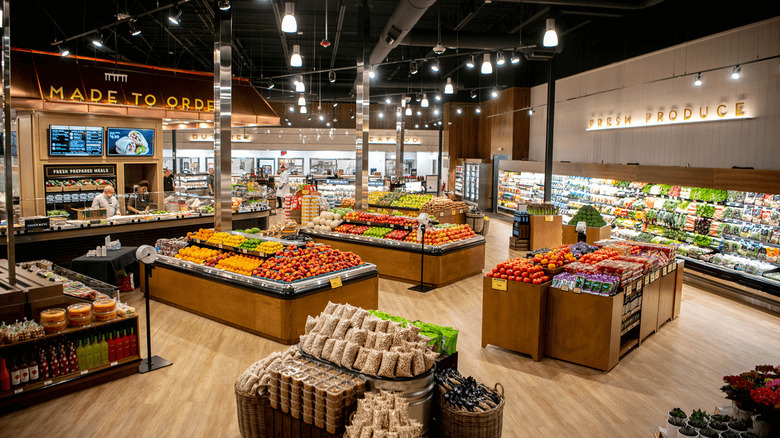
Unlike some of the chains here, Fresh Market has a presence that extends beyond the South, but its roots are very much Southern. The store got its start in Greensboro, North Carolina, in 1982, which makes it old enough to be considered old school. Founders Ray Berry and his wife Beverly were inspired by European markets after a trip overseas and sought to bring this style of grocery curation to American audiences. And like so many entrepreneurs, the couple began their foray into retail grocery with a bet involving their life savings. The risk paid off: Today, the company thrives with more than 166 locations across 22 states.
The small grocery store focuses on sourcing local meat and seafood, as well as in-season vegetables, with a focus on quality. Perhaps this type of curation helped the chain collect multiple USA Today Readers' Choice awards, which can't hurt sales. Fresh Market recalls competitors like Whole Foods and Earth Fare, with a product matrix that might not be the cheapest but definitely has its fans.