

You're Not Imagining It: Canned And Bottled Sodas Do Taste Different — Here's Why
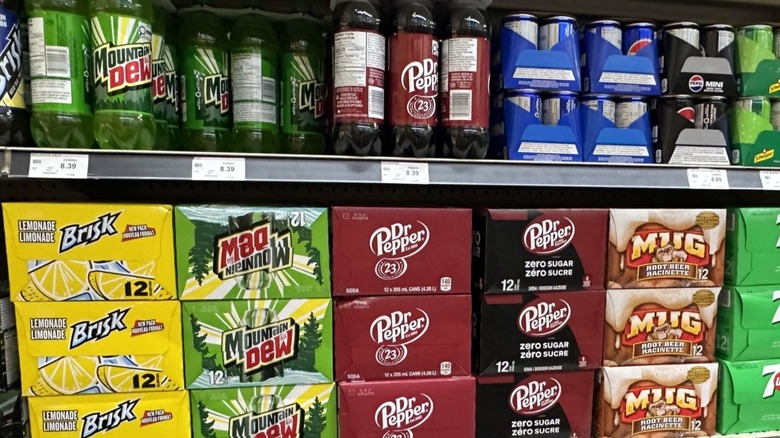
We all know that soda drinkers have strong allegiances. Whether you are Camp Coke or Team Pepsi or prefer to opt for a beloved American regional soda brand, customers certainly have thoughts about which drink reigns supreme. But within each of those domains, people have a lot of thoughts about whether their drink of choice tastes different based on its packaging — for example, Diet Coke drinkers often have very specific container preferences. And they're not imagining it. Sodas taste different based on the way they are packaged.
Since soda cans are made of aluminum, the cans are required to be coated with a very thin layer of polymer so the aluminum doesn't corrode when filled with acidic liquid. (You'll still have contact with aluminum when you raise the can's rim to your lips, so if you're a person who is sensitive to metal, you might taste a metallic tang that affects your drinking experience.) While the aluminum rim or polymer coating can slightly impact taste, what is more likely noticeable is that the soda's packaging method also affects the amount of carbon dioxide in the drink. While manufacturers' recipes are universal regardless of packaging, glass bottles and aluminum cans have a tighter structure that prevents carbon dioxide from easily escaping.
Plastic bottles, on the other hand, are more permeable and don't keep the liquid under as much pressure so the bubbles can more easily diffuse. A plastic bottle of Coke can lose up to 15% of its C02 within three months (via the podcast "Curiosity Daily"), and those C02 levels make an impact on flavor. Less carbonated soda has less of the "bite" and acidic edge that people associate with a great sip.
Other soda flavor factors
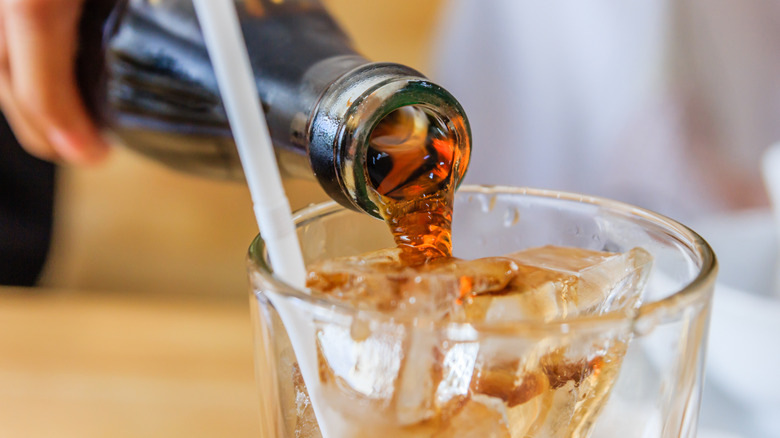
Beyond the packaging, soda temperature and storage can have a huge impact on taste. Although soda doesn't have to be refrigerated, the flavor will seem more crisp or even feel more refreshing when it's cold. This is because warmer temperatures can make the carbon dioxide less stable, making the soda feel less bubbly or causing it to become stale or flat more quickly. Cold drinks also dull the ability to register sweetness, so a warm soda may taste overly sweet. In addition, storing soda away from light no matter the packaging also helps it stay fresher for longer.
Some claim that how you drink your soda impacts the flavor too. This comes down to the feel of the opening of a can versus the mouth of a glass bottle, the perceived tactile pleasure of a glass bottle, whether it is served over ice (and the shape of that ice), or even if you use a straw. Further complicating matters, scientists have noted that some of a soda's flavor can be subjective and connected to how an individual merely expects a given soda to taste.
It's a whole other can of worms, but some soda aficionados swear that the "crispiest" soda comes straight from the fountain machines at restaurants and gas stations. That's because the flavored syrup, carbonated water, and carbon dioxide of fountain soda is mixed on-demand. This on-demand dispensing accounts for fluctuations in taste from soda fountain to soda fountain (both good and bad), which can be based on a variety of factors, including mixing ratios and how well the soda machine is maintained. For certainty about what you are going to get with each and every serving, you are still best served by reaching for your trusty soda can or bottle of choice.