

I Tried And Ranked 5 Varieties Of Gracias A Dios Mezcal
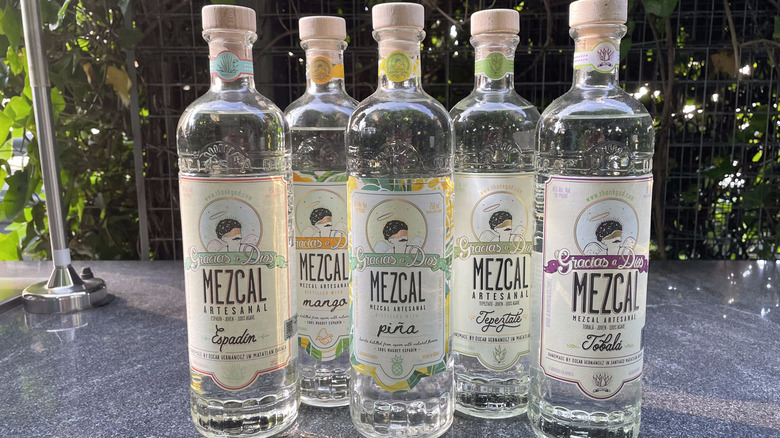
As someone who has always been a fan of smoky liquors such as bourbon and scotch, I knew I had found a new favorite spirit when I first discovered mezcal while traveling in Mexico over a decade ago. I had a rough breakup with tequila in my twenties (due to drinking too much bad tequila), so mezcal was what ushered me back into the agave family.
Mezcal has been covered extensively here at Chowhound, so we won't spend too much time defining it, other than to mention that while tequila and mezcal are similar, they are not the same. They are both made from agave, though tequila is made specifically from blue agave. The mezcal is traditionally made in an underground pit, which contributes to its traditional woody, smoky flavor profiles.
For this review, we're focusing on an Oaxacan mezcal company. Gracias a Dios means "Thank God," a common phrase from the owners' childhood, and started with a bar in Santiago de Querétaro, Mexico. All of the bottles reviewed here have an ABV of 45% and come from the distiller Oscar Hernandez, a fourth-generation mezcal master.
I was not previously familiar with this brand, despite my travels, so I was excited to sample the different varieties from this "100% Mexican" label. Read on for my impressions, and join me in raising a glass and saying salud to this complex spirit!
Some recommendations are based on first-hand impressions of promotional materials and products provided by the manufacturer.
5. Gracias a Dios Mezcal Mango
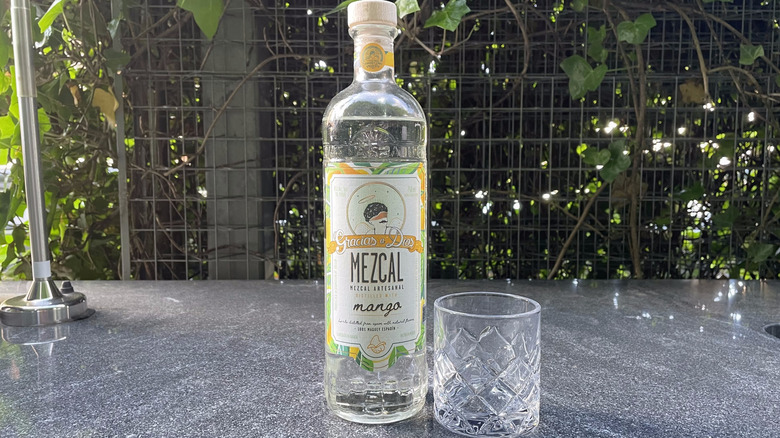
As a fan of mango (other than cutting it) and all things tropical fruit, I was excited to try this variety. It features double-distilled espadin, along with mangos from the coast of Oaxaca. The nose has a hint of sweetness, with a whiff of the fruity scent you'd expect, given the name. I definitely anticipated the mezcal would be sweeter than some of the others. However, this one has some bite!
To me, this doesn't taste like a sipping mezcal; it would be better served in a mixed cocktail like a mezcal negroni or a mango margarita. There's some herbaceousness, and it is not as heavy on the smoke. It didn't hit my palate as a smooth taste, which is not to say that I didn't enjoy it; however, I wouldn't spend time with it above the others, and I would mix it before drinking it straight.
As a mezcal drinker, I would still rather purchase this bottle at $39.99 than a cheaper tequila, but I have to admit I didn't enjoy it as much as the others. There may be some mango fanatics out there, however, who will disagree with me!
4. Gracias a Dios Mezcal Piña
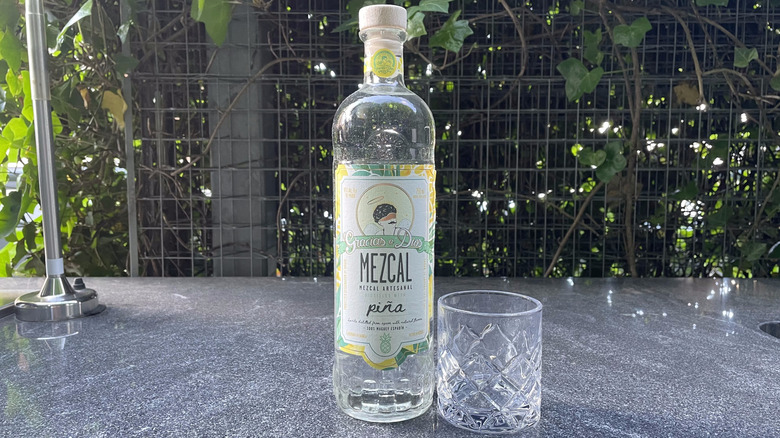
On a first whiff of the Piña in the bottle, I was almost unsure I opened the right vessel — the pineapple notes are that subtle. I appreciated, once again, that the mezcal would not taste syrupy or overly sweet, unlike some other infused spirits on the market. This variety was made from double-distilled espadin mezcal and pineapples from Oaxaca's Central Valley, and it smelled like just the right balance. I inhaled again and caught the aroma of something almost floral before taking a sip.
Once the piña hits your tongue, the pineapple flavor spreads throughout your mouth, with a pleasant sweet-and-sour profile that's not too overpowering. Similar to the mango, I don't know that I would spend much time drinking this on its own, although I think it might be interesting in a pineapple margarita, or just a mezcal with a splash of pineapple juice, or with a slice of pineapple on the rim.
3. Gracias a Dios Tobala
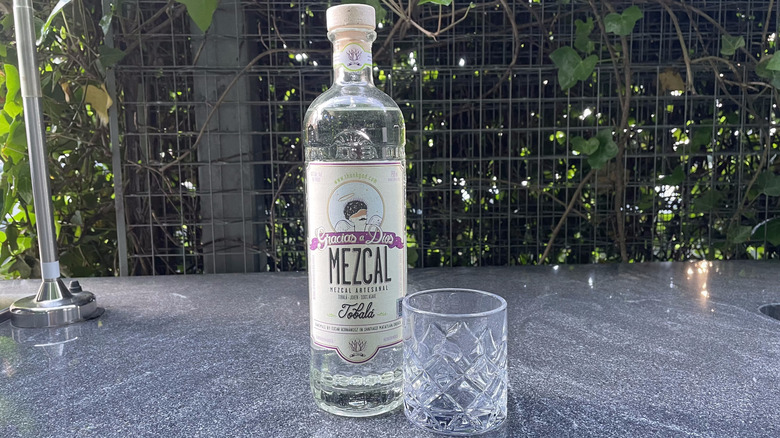
The Tobala is certainly one of the most expensive bottles in this group, coming in at $109.99. That price point is likely due to its longer distillation process, with wild agave aged for 10 to 13 years in Zoquitlán, Oaxaca. However, expensive doesn't necessarily mean best.
The Tobala, like the others, appears clear and is definitely herbaceous and peppery, almost grassy, with some citrus notes reminiscent of grapefruit. The Gracias a Dios tasting notes mention this blend will taste "sweet and savory," which makes sense, as there's a vanilla flavor upfront and a smokiness that hits on the back of the tongue. Personally, I found the Tobala not as smooth as some other mezcals (it is a bit more complex), but the taste lingers in the mouth and feels like an end-of-the-night sipper. (It actually tasted the closest to a scotch of these bottles.) I could see myself lingering over a pour of this at the end of a good date, or it might even be interesting on a patio with friends in an elevated Paloma.
2. Gracias a Dios Tepextate
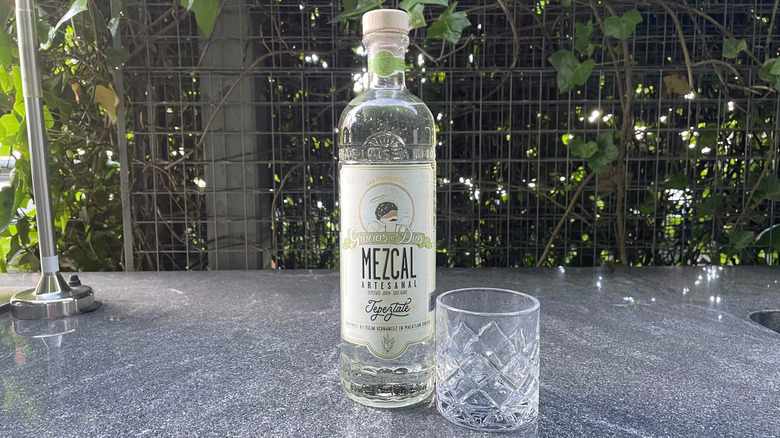
The other higher-end bottle in the group is the Tepextate, which rings up at $80.99. I will say that while the Tobala was more in the middle of the pack for me, the Tepextate had an extremely distinctive nose and finish that pushed it ahead. When I smelled it the first time, what I thought about was grilled vegetables — and then I read that green peppers are in fact one of the aromas noted as part of the spirit, along with celery and asparagus.
While I didn't get the rye bread flavoring that is also supposed to present itself, I did go in for more sips to try and figure out exactly what I was tasting. Again, to me, this is the most unique of the bunch, abandoning the pure smokiness in favor of something a bit more complex. It was smoother than the Tobala and tasted a bit like a salad in a glass (but less healthy). I'd stay away from mixing the Tepextate as it might be a bit too forward in a cocktail, but it certainly stands on its own. Because it's just a bit odd and has such a specific taste, I'm placing it second on this list, but if I were celebrating a special occasion, this might be the new go-to.
1. Gracias a Dios Espadin Mezcal
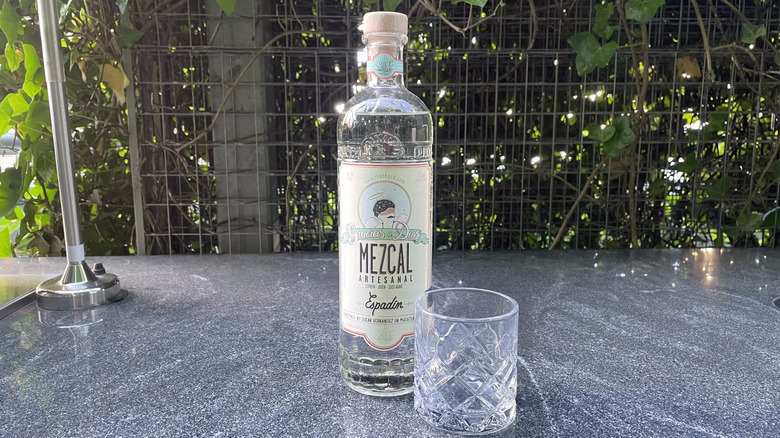
Sometimes, simple really is best! While not the priciest, it rings up at nearly the same rate as many other bottles at $40.99; the Espadin was my personal favorite mezcal in the Gracias a Dios family. To me, the Espadin tastes the most like an unfussy, traditional mezcal — the smoky notes are there without being overpowering, and the bite isn't so bitter that I can drink it straight without wincing.
This batch is made from double-distilled Mezcal from eight-year-old agave from Oaxaca. It has light notes of both lemony citrus and some herbaceous grass. The producers highlight a caramel and ginger finish, which was not as present for me, but I will say there's just the right hint of sweetness to balance out the more savory characteristics. While the producers recommend mixing this one into a cocktail, I will say I enjoyed it just the way it comes — straight out of the bottle. This is the all-around champion as it's the most versatile!
Methodology
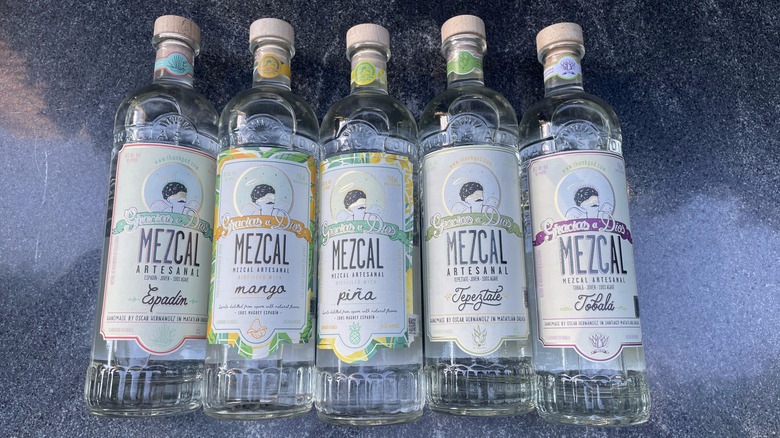
I spread my tastings out over about five days, tasting one Gracias a Dios mezcal per day, so I could enjoy each sip fresh without any lingering residue in my mouth or the drinking vessel. Generally I like to open the bottle, smell the fragrance within, then pour into a rocks glass.
Once in the cup, I took another whiff to see if the aroma was different, then took a small sip, swirled it in my mouth and drank it down, letting the flavors linger. I then added one ice cube to my glass, so that I could also sample the mezcal a bit chilled. I did not use any additional citrus garnish or salt or Tajín on the rim to keep the flavors as pure as possible, although I certainly would in the future!
As noted in most of the individual slides, these rankings are all partial to my own personal preferences — I generally prefer savory over sweet, and the smokier the better. Another consumer might have a totally different experience, and I'm excited to hear what others might think (and try the other varieties of Gracias a Dios in the future)! This is one brand I'll certainly return to.