

12 Times Trader Joe's Landed In A Lawsuit
I hate to besmirch Trader Joe's good name. I'm a die-hard fan, after all. Still, when you've been in business as long as the company has — since 1967, to be exact — you're bound to wind up in some sticky situations from time to time. I'm not thinking about the mildly annoying things about shopping at some locations, either, like the excessively busy parking lots where you have to be cutthroat to score a spot. I'm talking about the many times Trader Joe's has landed itself in lawsuits, some of which it initiated and others not so much.
Regardless of how the lawsuits originated and who filed them, mistakes are bound to happen. The long list of legal actions the company has faced is proof of that. So, how did Trader Joe's find itself in so many lawsuits, and what became of them? Were they dismissed? Was there a settlement to avoid official blame or extensive legal fees? Did anyone face serious legal or punitive consequences? Unfortunately for all parties involved, it's a little bit of column A and a little bit of column B. We need more details than that, though. So, if you are ready to learn about a handful of prominent lawsuits Trader Joe's has encountered over its many years in operation and their outcomes, just keep reading.
1. FACTA receipt class action settlement
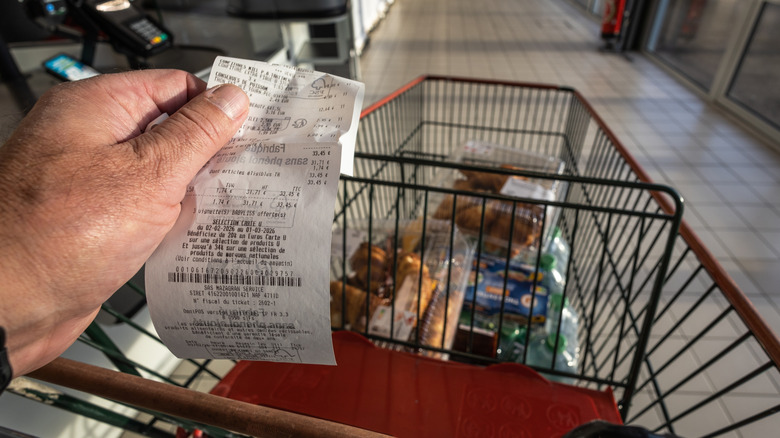
The latest Trader Joe's lawsuit that's all over the news right now is Keim v. Trader Joe's Company. The charges brought against TJ's revolve around accusations that the company violated the Fair and Accurate Credit Transactions Act (FACTA), leaving shoppers open to potential identity theft. How so? Well, according to the allegations, certain store locations printed the first six and the last four digits of people's credit and debit cards on receipts between March 5, 2019, and July 19, 2019.
While no fault was admitted by Trader Joe's, a settlement for this case was recently established. It allotted $7.4 million to compensate shoppers who used a debit card during the time in question. The expected settlement per affected consumer is $102.45, but this could change depending on how many people file a claim to receive compensation. Before you get too excited, though, settlement administrators have already reached out to all eligible claimants. So, if you were not notified, you didn't make the cut. Regardless, this is a major faux pas, and instead of potentially admitting fault or dragging out the case and accruing extensive legal fees, Trader Joe's opted to settle the case out of court.
2. Smucker's copyright lawsuit with Trader Joe's
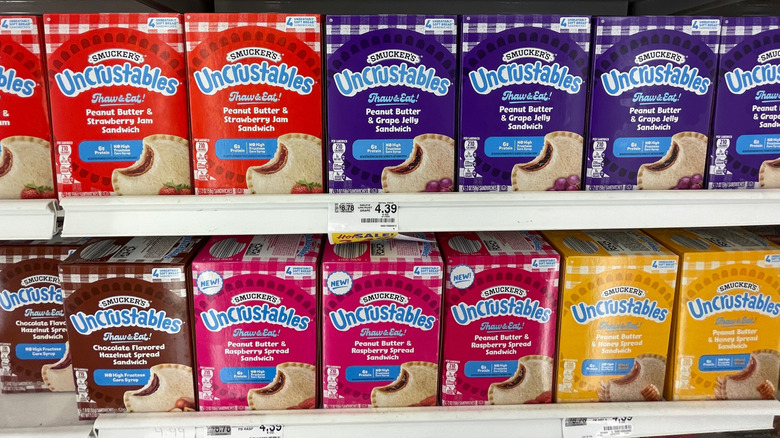
Kids and adults alike love Smucker's Uncrustables. We all love a good dupe, too. However, it seems Trader Joe's may have pushed the copyright limits a bit too far when it came to making its own version of crustless peanut butter and jelly sandwiches because Smucker's slapped them with a lawsuit over the matter in October of 2025.
While you can't copyright peanut butter jelly sandwiches as a whole, Smucker's claim against Trader Joe's points out quite a few extremely similar traits. First, Trader Joe's Crustless Peanut Butter & Strawberry Jam Sandwiches are round, just like Uncrustables. Secondly, the picture on the box of both products features a sandwich with a bite taken out of it. Third, both packages feature the same or at least eerily similar shade of blue. As a result, Smucker's claims that these details dilute its brand recognition and confuse consumers with its close mimicry. They may even lead them to believe that the two products are affiliated. Additionally, the company couldn't be pleased that Trader Joe's was selling its version for $1 less. Ouch.
If Smucker's comes out on top regarding this classic trademark lawsuit, it requests that Trader Joe's cease using similar packaging, destroy all remaining packaging, labels, and products, and fork over some cash, including any profits Trader Joe's made off of the product in question and legal fees.
3. Trader Joe's All Natural product labeling settlement

Next up on our list of lawsuits is Tamar Davis Larsen, et. al. v. Trader Joe's Co. First filed in 2011, and settled in 2014, it alleged that some products, like apple juice and cookies, were improperly labeled as "All Natural" or "100% Natural" when they did, in fact, contain artificial ingredients. While this isn't the end of the world for most consumers, the misleading labels allowed TJ's not only to sell its products to unsuspecting shoppers but to profit from them.
The products in question include Joe-Joe's Chocolate Vanilla Crème Cookies and Sandwich Crème Cookies, Trader Giotto's Fat-Free Ricotta cheese, Jumbo Cinnamon Rolls, Crescent Rolls, Buttermilk Biscuits, select jellies, and pressed apple juice sold since October, 2007. According to the lawsuit, "Those products contained artificial substances such as ascorbic acid, sodium acid pyrophosphate, vegetable mono- and diglycerides, cocoa processed with alkali, sodium citrate and xanthan gum" (via The National Trial Lawyers).
Interestingly enough, artificial flavors and colors are among Trader Joe's list of banned ingredients, at least when it comes to its proprietary products (so, basically the entire store). Even so, a $3.375 million settlement was reached to pay out claimants who purchased the products unsuspectingly and legal fees. With receipts, consumers were able to file claims for reimbursement on the products listed in the lawsuit. Without a receipt, shoppers were able to file a claim, but it maxed out at 10 products or $39.99, whichever was lower.
4. Trader Joe's trademark lawsuit against Pirate Joe's
Finally, it's time for a lawsuit that Trader Joe's initiated, not one brought against the company, and it's quite the tale... A man named Mike Hallatt saw an apparent demand for Trader Joe's in Vancouver, Canada, and since the store did not show any signs of opening one up in the region, he found a sneaky way to get the people what they wanted: Trader Joe's delectable products, of course. So, in 2012, he started buying them in bulk in Seattle, Washington, bringing them across the border, and selling them in his own store at inflated prices, which he humorously named Pirate Joe's.
For a while, Hallatt's plan worked pretty well, too. However, he was eventually banned from Trader Joe's for good. That didn't stop him, though. He started donning disguises, like a mustache and a wig, or dressing in drag to get the job done undetected. No joke. He also hired day laborers to help him plunder Trader Joe's goods under false pretenses. Regardless, Trader Joe's eventually filed a lawsuit against Pirate Joe's for copyright infringement and more, and while the case was initially thrown back to a lower court, a settlement was eventually reached before it actually went to trial. Too bad for all of the British Columbians who were fans, because Pirate Joe's eventually wound up closing its doors for good.
5. Mislabeled Trader Joe's Low Acid Dark French Roast Coffee lawsuit
Coffee is serious business. People choose their type of brew based on flavor, price, caffeine content, and acidity. So, whatever the label on a bag of beans says, it better be right. Otherwise, coffee-drinkers are bound to revolt. Proof of that can be seen in McIntosh v. Trader Joe's Company. Filed April 28, 2026, the class action lawsuit alleges that Trader Joe's Low Acid Dark French Roast Coffee has more acid and less caffeine than advertised. Uh-oh.
The lawsuit states that Trader Joe's Low Acid Dark French Roast Coffee is "'marginally' less acidic than regular coffee." More specifically, a typical cup of Joe has a pH range of 4.8 to 5.4, and TJ's product in question has a pH of 5.44 when prepared according to the instructions printed on the container. For those seeking to minimize acid intake for health reasons (tooth enamel preservation, avoiding acid reflux, etc.), this could pose a serious issue.
In addition to the acidity level potentially being misrepresented, the lawsuit also claims the process used to lower its acidity "stripped" the coffee of a significant amount of caffeine. In fact, it states that it contains less caffeine than other brands' half-caff products. Combine these two misrepresentations, and it seems like there is a pretty clear-cut case for false advertising. We'll just have to wait and see if the allegations stick, though, because the case is still pending.
6. Class action about ingredients in Trader Joe's Dark Chocolate Bars

Another class action lawsuit, Herd v. Trader Joe's Company, was filed on January 4, 2023, and this one will make all you chocolate lovers out there want to think twice. The legal action claims two of the grocery store's "dark chocolate bars contain dangerous levels of lead and cadmium". Yikes. According to two New Yorkers, the grocery store's failure to warn consumers about the presence of these heavy metals on the packaging of each product is grounds for a lawsuit.
Before you get too concerned, Herd v. Trader Joe's Company doesn't target all of the company's chocolate bars. It involves Trader Joe's Dark Chocolate 72% Cacao Bar and The Dark Chocolate Lover's Chocolate 85% Cacao Bar, specifically. While a small amount of lead and cadmium is allowed in products, both of these were found to contain a significant amount over the legal limit. Failing to alert consumers of this removes their agency to make informed decisions about their health.
No surprises here, but consuming large quantities of heavy metals isn't good for you. In fact, the lawsuit points out correlations between prolonged consumption of the two substances and the potential for seizures, anemia, kidney damage, and even cancer. You do you, but something tells me we should add both of the chocolate bars in question to the list of products to never buy at Trader Joe's, at least until this all gets sorted. Right?
7. Mislabeled Trader Joe's Organic Freezer Pops class action lawsuit
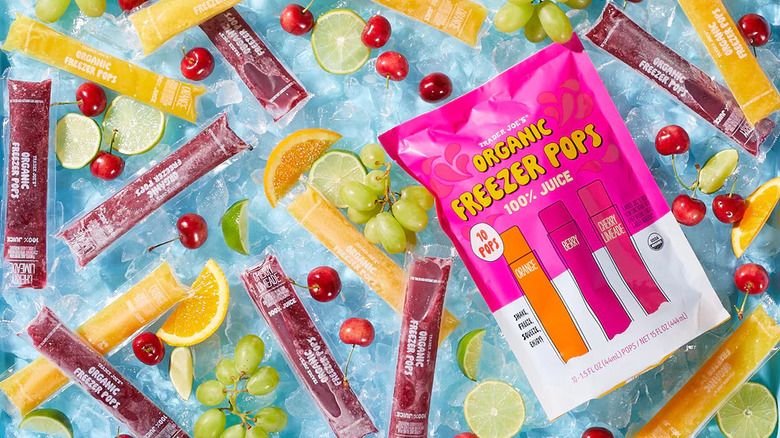
Mislabeling food products is a huge no-no. Not only can it mislead consumers and interfere with dietary restrictions and allergies, but it can also land a company in a lawsuit. Case in point: Palacios v. Trader Joe's Company. Filed November 4, 2025, it claims the grocer's self-branded Organic Freezer Pops are improperly labeled as "100% juice" when, in fact, they are mostly made from juice concentrate and a collection of non-juice ingredients, including vegetable juice, malic acid, and a thickening agent.
Considered a false advertising claim, the lawsuit states the packaging of Trader Joe's Organic Freezer Pops is highly misleading, as it proclaims on the front that it is made from "100% Juice." Admittedly, the other non-juice ingredients are listed in a small font on the side of the packaging, but the bold labeling on the front is enough to make many consumers forgo further inspection.
This is where it gets a bit tricky, though. As it turns out, the label "100 % Juice" isn't off the table entirely for a product such as this. However, it must be accompanied by a disclaimer that states it also contains added sweeteners, preservatives, or ingredients, none of which are present. Regardless of whether this minor detail is enough to turn you off or not, it's safe to say that the Organic Freezer Pops aren't going to be considered one of the hidden gems found in Trader Joe's freezer aisle any time soon.
8. Lawsuit alleges gluten-free label on Almost Everything Bagels is misleading
False advertising claims struck our beloved grocery store chain again on June 28, 2024, when a class action lawsuit, Starks v. Trader Joe's Company, was filed. The legal action alleges that TJ's Almost Everything Bagels, which are advertised as being gluten-free, actually contain "high levels of gluten".
As for the nitty-gritty details, according to ClassAction.org, "The 22-page Trader Joe's lawsuit shares that recent scientific testing found that the Gluten Free Almost Everything Bagels contain 269.8 parts per million (ppm) of gluten, 13 times the governmental limit for gluten-free foods and nearly 27 times the Gluten-Free Certification Organization limit." Okay, wow. If you or anyone you know has celiac or a gluten intolerance, you are already familiar with how serious an issue this can be. So, if true, a lawsuit pertaining to the matter seems to be right on the money.
Even if you are simply opting to enjoy gluten-free foods in an effort to be more health-conscious, the gluten-free label on Trader Joe's Almost Everything Bagels is wildly misleading and could easily influence you to purchase them. Either way, the presence of a gluten-free label is cause for concern. Time will tell how this lawsuit pans out for Trader Joe's, but for now, consider yourself warned.
9. Trader Joe's Ts & Js Sour Gummies class action lawsuit

Ah, mislabeling and false advertising. They have gotten Trader Joe's in a bind several times over the many years it has been operating. Another example of this is Wong v. Trader Joe's Company et al., filed on May 4, 2018. The class action claims Trader Joe's Ts & Js Sour Gummies are marketed as being all natural, but in actuality, they feature an "undisclosed artificial flavor." Not this again.
What is the mystery ingredient in Ts & Js Sour Gummies? Well, lab testing showed that a synthetic petrochemical called d-1 malic acid gives the gummies their flavor. Yeah, nothing about that sounds all natural. While that's not enough to turn people off who love a sour-tasting treat, the false advertising can manipulate people into making purchases they may not have made if the information were front and center on the packaging. In fact, California consumer protection law denotes that an artificial ingredient must be clearly labeled on both the ingredients list and the front of a food product's packaging. Since this wasn't done, the case is working its way through the California court system. If this makes you weary about buying Ts & Js Sour Gummies, the Sour Jelly Beans are one of Trader Joe's best snacks, so don't worry. You still have options.
10. Lawsuit over alleged inflation of the price for raw chicken
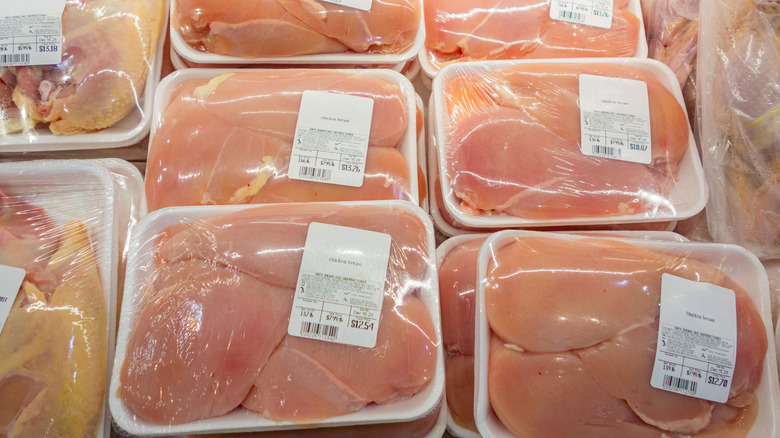
Jumping over to the meat department, Trader Joe's has also received backlash in the form of a class action lawsuit regarding how it weighs and prices its raw chicken. Filed on August 23, 2019, Webb v. Trader Joe's Company alleges consumers overpaid for the company's raw chicken — particularly the all-natural chicken breasts, thighs, and wings — because "excess retained water" accounted for a good portion of the weight advertised on the label.
The class action lawsuit also claims the excess liquid was disguised with superabsorbent pads underneath the chicken itself. To top it all off, the amount of retained liquid, which must be printed on the label, was misrepresented. While packaging says that Trader Joe's all-natural raw chicken breasts, thighs, and wings only have 5% retained water, they were found to have 9% on average, and some packages contained as much as 16%. Translation: It said there was significantly less, leading consumers to believe they were getting more chicken than they actually were. If the lawsuit pans out, the plaintiff wants the courts to order Trader Joe's to not only comply with California and FDA labeling standards but also relabel everything that doesn't and apologize through a marketing campaign.
11. Trader Joe's Cold-Pressed Juice processing lawsuit

Cold-pressed juice is known for its unique extraction process, which leads to it being incredibly fresh and full of nutrients. As such, people are willing to pay a premium price for it. However, if a particular bottle of juice is labeled cold-pressed and it isn't, it could get the company producing it in a bit of hot water. Just ask Trader Joe's.
On April 7, 2024, Cristia v. Trader Joe's Company was filed due to a misleading label on its "cold-pressed" juice. According to the lawsuit, the juice in question is actually more processed than people might believe. Interestingly enough, TJ's gave itself away, too. Albeit in a less noticeable way, but it says the juices undergo high-pressure processing (HPP) after extraction right on the products' label.
The secondary HPP may seem like a minor detail, but the legal action claims people were willing to pay a premium price because of the cold-pressed marker on the front of the bottle. It also alleges that the products have more in common with your average grocery store refrigerated juice than a true cold-pressed pick. The result? Inflated profits at the expense of our wallets. Ugh. I mean, would you have bought Trader Joe's juices or been willing to pay the higher price if it wasn't actually cold-pressed? Maybe not.
12. Class action over the amount of micro-organisms in Trader Joe's Advanced Strength Probiotic Supplements

Last but not least on our list of times Trader Joe's landed itself in a lawsuit is Bibey et al. v. Trader Joe's Company. Filed on October 3, 2025, the class action lawsuit claims Trader Joe's Advanced Strength Probiotic Supplements do not contain the high number of micro-organisms cited on the bottle. The packaging claims the capsules hold 30 billion colony-forming units (CFUs). However, after independent analytical testing, the legal action alleges that they only contain approximately 8.7 billion CFUs at most. I'm sure I don't have to tell you, but that's a massive difference.
Considering how probiotic supplements are bought and taken with digestive and immune health goals in mind, the serious discrepancy in CFUs is a major concern. Not only are consumers potentially not getting what they paid for, but they won't receive the benefits expected due to the lower CFU count. Umm, no thanks. As of a recent filing, there is no final outcome on this lawsuit yet. However, if it turns out the allegations are true, it aims to compensate consumers who purchased the product in New York and California. Until then... There are a handful of items every Trader Joe's newbie should try, but suffice it to say, the self-branded Advanced Strength Probiotic Supplements aren't one of them.