

Never Break This Rule At Conveyor Belt Sushi Restaurants
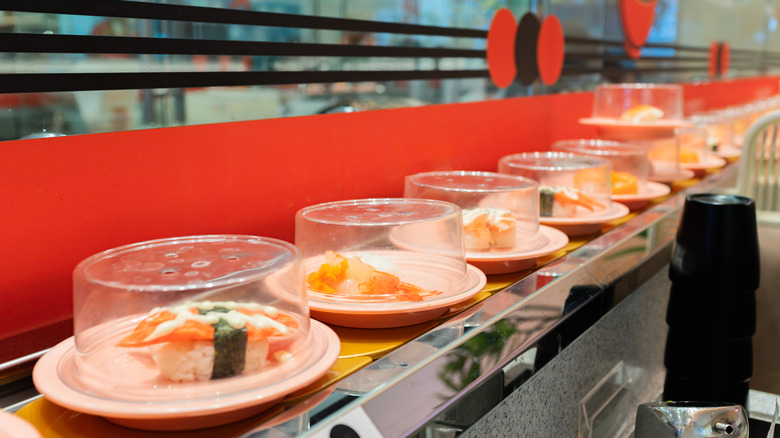
Restaurant etiquette differs around the world, and in Japan, some of it might catch foreigners by surprise, as they might not have even given certain customs a second thought back home. Specifically at conveyor belt sushi spots — or kaiten sushi — once you touch the plate on the conveyor belt, it's immediately considered yours and cannot be returned. Additionally, even when you're done with your plate, the conveyor belt is not the place to put it. Evidently, these customs are due to hygienic concerns.
Your first time at a conveyor belt sushi restaurant might feel overwhelming. There are a lot of choices passing by in front of you, which makes it tempting to grab every plate that catches your eye. While you can do this, make sure that you're completely set on eating each dish you claim, and that you don't plan on returning it. Ordering the wrong thing at the restaurant is a disappointing experience no matter where you're eating, so take some time to think about what you're really craving before you dive in. Generally, this rule applies to conveyor belt sushi restaurants whether or not they're in Japan.
More conveyor belt sushi etiquette
Not all plates at a kaiten sushi restaurant can be claimed by just anyone. Sometimes, a tray full of them will pass by, but it's actually a special order made by another customer. While different restaurants can have different ordering processes, many have a touchscreen tablet at each seat, where you can specifically order what you like. This includes common fish found on sushi menus and even seasonal favorites. It can arrive on a separate line on the conveyor belt, or it can also trigger a sound indicating that it's a special order when it arrives in front of your table (or whoever ordered it). When in doubt, you can always ask a staff member.
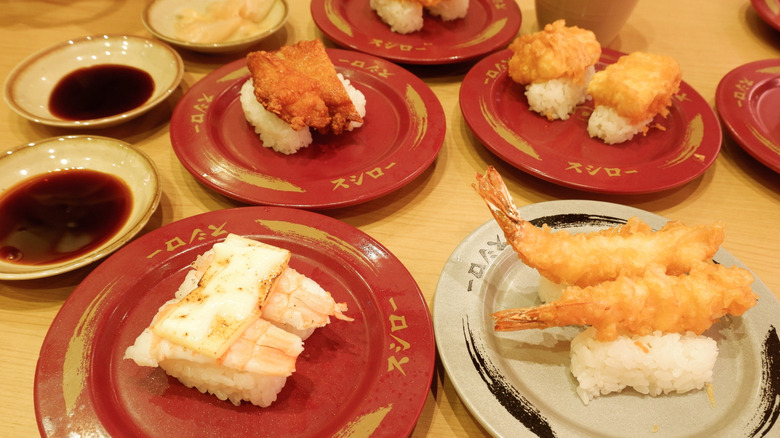
After dining, it's common practice to neatly stack your plates depending on their color, as that's how your bill is usually calculated. While an employee can easily do it for you, it's a Japanese custom to be considerate, so doing so can show respect for them. Even if a server does it for you, remember not to tip them — the practice is considered extremely rude in Japan. So, the least you can do is clean up after yourself, even if it's just arranging the plates into an orderly pile.