

For The Most Flavorful Burger Patties, Treat Them Like This Decadent Cut Of Meat
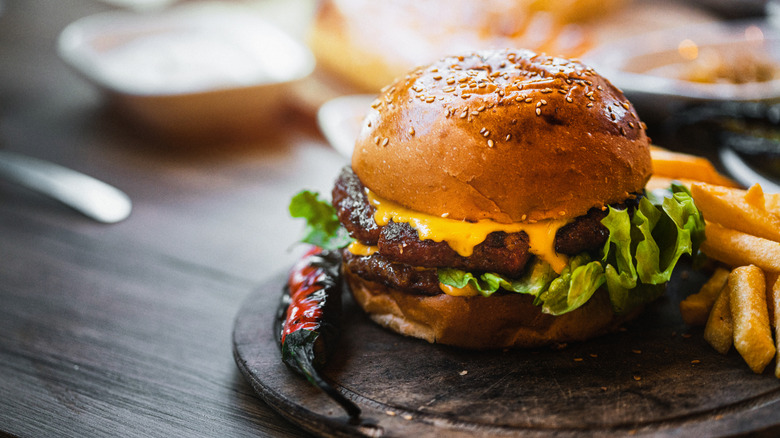
It's easy to let burger night fall into the "just" category of home cooking, which creeps up when you dismiss your hard work as "just" making this or that. You can delete this word, and its undermining weight, by preparing your burgers with the care you normally give to steak. After all, if you're already spending time and effort gently mixing ground beef to avoid toughness, forming perfect patties, and achieving your ideal internal temperature, you may as well go the extra mile.
Prioritizing the Mailliard reaction as you would for far more expensive cuts than you use for burger meat, such as T-bones and porterhouses, is a perfect place to start. See, plenty of folks obsess over the sizzling, browning, flavor enhancing chemical reaction to give steak its fragrant, satisfying crust, but they might not give it as much thought when whipping up a batch of burgers. However, you can activate the very same Maillard reaction that makes for a better steak by doing next to nothing to those patties. Just pat them dry to stave off steam (that moisture might otherwise arise when your patties hit a medium-high-heated skillet) and leave them alone on each side until they develop a tasty mahogany hue. It makes a big impact with little more than the restraint it takes to keep from flipping.
More ways to treat your burgers like steaks
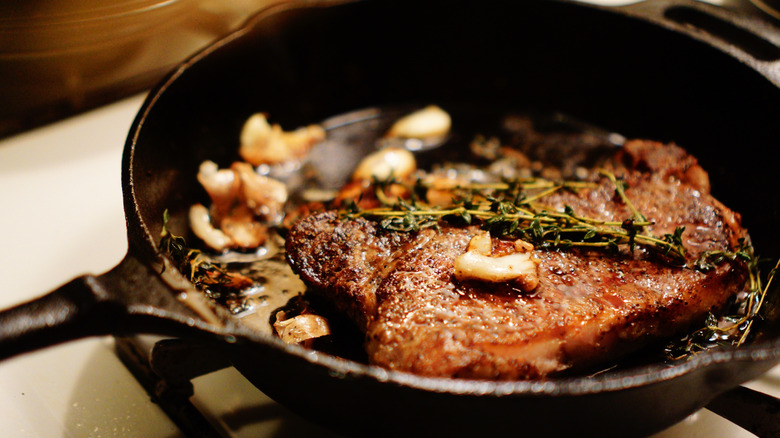
Letting the Maillard reaction properly brown your burgers like you would with steak is a big improvement, but not the only one. Think about all the things you do to create a great steak. A cast iron pan produces optimal steaks, for example. As luck would have it, burgers are better in cast iron, too. That's yet one more way to give 'em the elegant steak treatment.
You can also be as serious about burger seasonings as you are with steak's. Even simple salt and pepper can improve ground beef — regardless of where you fall in the debate on when to add them. You can also toss in the rosemary, thyme, and bay leaf Gordon Ramsay adds to his fillets to bring some of those aromatic notes to humble chuck. Their mere presence doesn't penetrate the meat, however; you need a liquid conduit. The butter baste you might give a steak is also an excellent way to transfer that herbaceous flavor into burgers.
Truly, the more steak preparations one considers, the more are revealed to also be excellent for burger making. That even comes down to gauging doneness: A properly applied meat thermometer is the best way to identify rare, medium, and well-done finishes, regardless of your protein's composition.