

For Burgers That Are Unbelievably Flavorful, Use This Science-Backed Temperature Tip
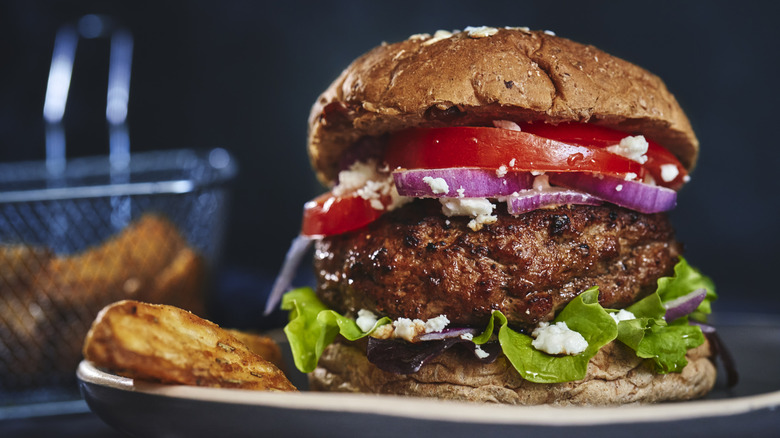
Imagine that you're presented with the perfect burger. For some, that will look like a delicious, double smash burger with an abundance of crispy, caramelized surface area. Others will envision one big, juicy patty with plenty of char. And the common denominator is a lovely, deep color that equates to plenty of flavor, whether you've put two and two together prior to this moment or not. That color and the tastes that it creates are both thanks to the Maillard reaction, a bit of culinary chemistry that browns your food and produces those savory, toasty flavors and fragrances in the process. The good news is that the Maillard reaction happens pretty naturally when your meat's natural amino acids and sugars hit a heat of at least 250 degrees Fahrenheit and stay there for long enough, provided you've mitigated excess moisture. The better news is that it takes minimal extra effort to ensure the Maillard reaction for better burgers, every time.
The Maillard reaction needs certain conditions to occur, but those conditions are few, and easily achieved. If you've got a heat source like a stovetop burner, a burger-optimized pan like a cast iron skillet, and ground beef, then you can easily activate the Maillard reaction absent any specialized tools or fancy, ancillary fats, spices, or seasonings. You will, however, want to give just a little extra consideration to how you handle your protein, and to break out an oft-forgotten secret ingredient called patience to keep the meat's heat consistent, activating this sensational bit of kitchen science.
Harnessing the Maillard reaction for the best burgers at home
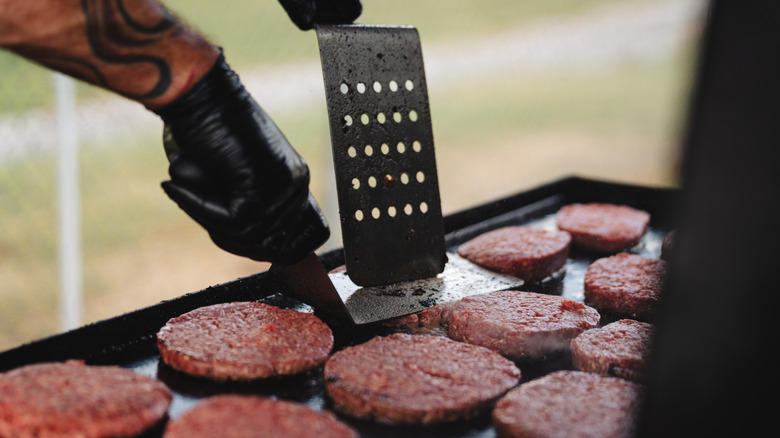
Provided it doesn't end with a water bath, you can use the burger recipe of your choice to achieve the Maillard reaction. Whether you season 'em with little more than salt and pepper, or you prefer to give your burgers an umami boost with something like fish sauce, you'll want to pat your patties dry before you even think about sizzling. Moisture, you see, creates steam, and steam stymies the Maillard reaction. So you'll want to use paper towels to wick away as much as you can before cooking. Although it has every appearance of moisture, a bit of oil in the pan is fine and even good for conducting heat to help the Maillard reaction along.
Now, most stovetop burner temperature controls offer little more detail than "high," "medium," and "low," with the obvious gradations in between. Medium-high heat is ideal for inch-thick burgers, and, as luck would have it, that will typically clock in at around 400-450 degrees Fahrenheit, which is solidly over your Maillard minimum. And this is where that patience comes in. You need to leave the meat on the heat long enough to actually let the Maillard reaction, you know, react. Let those patties sizzle for at least three minutes on the first side before you even peek underneath. Once you do lift an edge to look for browning, you might even want to give it another minute before you turn. Just like resisting the urge to overflip will keep your burgers intact, so, too, will it let that Maillard reaction do a lot of the perfect-burger-making work for you.