

8 Energy Drinks Controversies We'll Never Forget
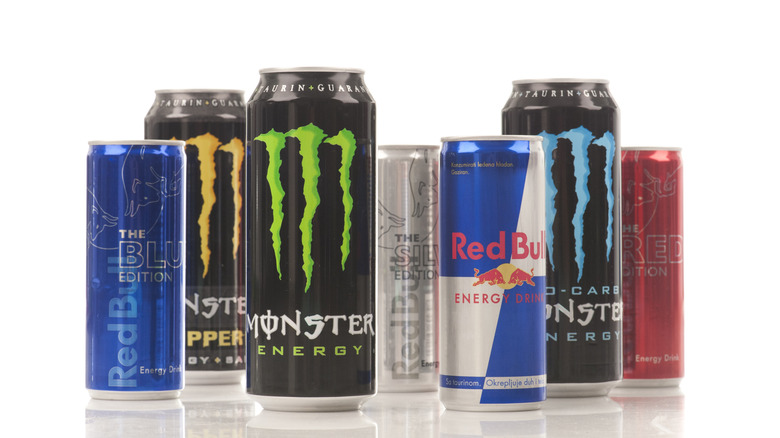
Are energy drinks safe? According to brands like Monster and Red Bull, they're safe for healthy adults who consume them in moderation. But scientific studies, such as one from 2023 in Nutrients, are less optimistic, pointing out the effects that long-term consumption of high amounts of caffeine can have on the heart and other body systems. The amount of caffeine in an energy drink often ranges from 80 milligrams in a can of Red Bull to the energy drink with the absolute most caffeine, Wired X344, with 344 milligrams.
This caffeine content is often a source of controversy. Most recently, 17-year-old Larissa Rodriguez passed away from heart failure. Her family claimed that her death was brought on by her frequent consumption of Alani Nu energy drinks, which have 200 milligrams of caffeine per can, and also claimed that the brand unethically markets to kids and teens.
However, caffeine content isn't the only reason energy drink brands have faced controversy over the years. Many have gone to court over things like false advertising, containing harmful ingredients, and even invasion of privacy. Keep reading as we look back at the energy drink controversies we're not going to forget any time soon.
1. Red Bull doesn't give you wings
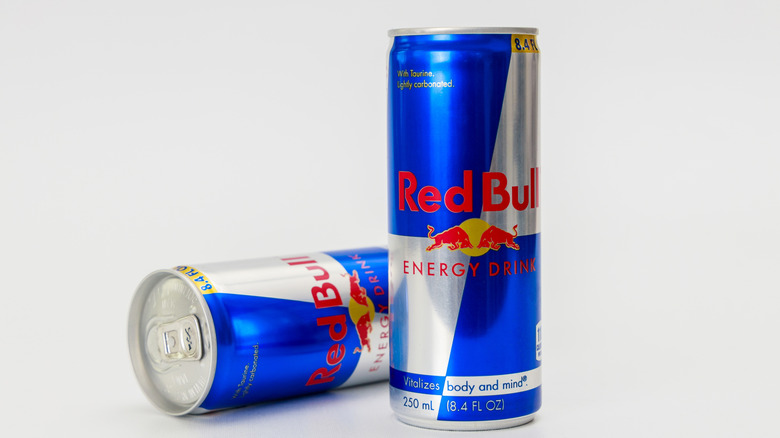
Red Bull is basically the OG energy drink in the Western world. Modern energy drinks started in Japan in the 1960s, and an Austrian businessman developed Red Bull based on them in the 1980s. Red Bull made its way to America in 1997, and by 2001, it had sold its billionth can. Rockstar and Monster launched their own drinks not long after this, but Red Bull has always remained iconic for both being the original and its "Red Bull gives you wings" slogan.
Now, of course, this was just a slogan; no one really believes they'll grow wings after drinking a Red Bull. But when a class action lawsuit was filed in 2014 alleging false advertising, the narrative became "someone is suing because Red Bull didn't give them wings." Much like the McDonald's hot coffee lawsuit (one of the worst mistakes in McDonald's history), the media narrative was much different than the actual facts of the case. The suit was for false advertising, true, but it had nothing to do with wings. Instead, the suit alleged that Red Bull advertised its product as having performance-enhancing benefits and being superior to its competitors, despite no evidence or proof to substantiate those claims. Red Bull ended up settling the class-action suit for $13 million and revised its marketing to remove the controversial claims.
2. Travis Barker sued Rockstar for unlawfully using his image
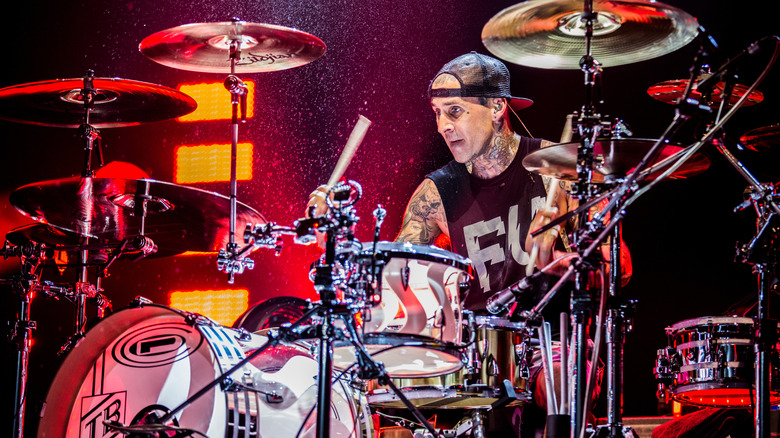
If you're a millennial, you know Travis Barker as the drummer for pop-punk band Blink-182. Previously Mr. Kourtney Kardashian, he later married Shanna Moakler. After his 2008 divorce from Moakler, he was constantly in the tabloids for his partying and high-profile relationships, so no one was really surprised when Rockstar put a picture of him holding one of its drinks on its website. The problem? The brand didn't have the drummer's permission.
Barker was definitely not "feeling this," and sued the brand, claiming invasion of privacy and that they misappropriated his likeness -– not "small things." Rockstar settled with Barker for an unspecified amount just a few months later, but it was likely a pricey lesson for the brand: Just because you name your drink after the lifestyle doesn't mean you're entitled to a free pass at "the rock show."
3. Monster has settled multiple wrongful death lawsuits over the years
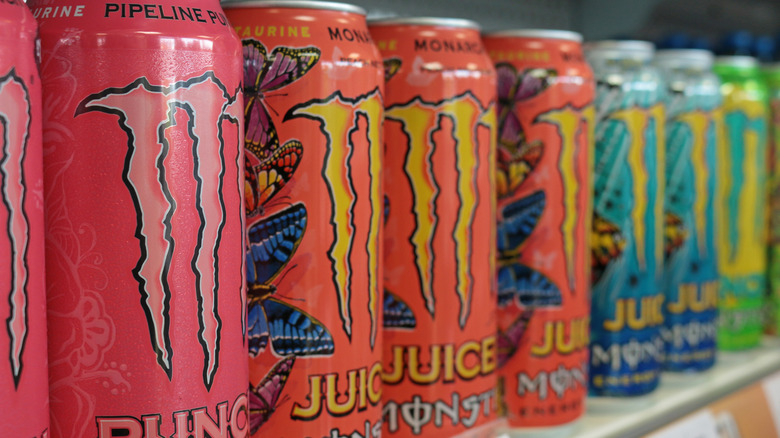
Monster is known for offering a variety of flavor options, including several discontinued flavors that probably won't be returning, but it's also made headlines for wrongful death lawsuits. In 2012, the parents of Anais Fournier sued the company –- the 14-year-old passed away from cardiac arrhythmia due to caffeine toxicity after drinking two Monster energy drinks in one day, the effects may have been exacerbated by a heart condition Fournier had, called mitral valve prolapse.
The following year, the company was sued again by the mother of Alex Morris. Morris was 19 when he passed away from a heart attack, which his mother attributed to his drinking two energy drinks a day.
These are just a few of the lawsuits brought against Monster for wrongful death or serious injury. While the brand sometimes chooses to settle, like in the Anais Fournier case, it maintains that its drinks are safe in moderation. The question, much like in the Alani case, then becomes: Where does corporate responsibility end and consumer responsibility begin? Based on the Alani case, these are questions we're still trying to find the answers to.
4. Bang's Super Creatine energy drinks contained false promises
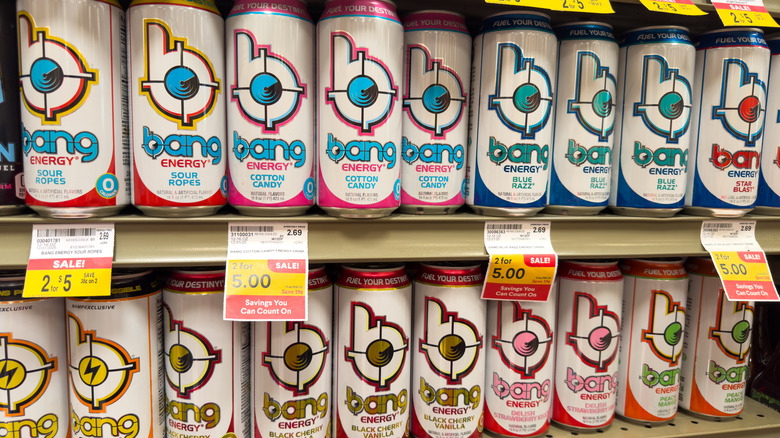
Like Red Bull, Bang has also faced a false advertising lawsuit. However, in this case, it wasn't a class-action brought on by frustrated customers –- it was sued by Monster in 2022. The products in question were drinks labeled as having "super creatine." Creatine is a substance that helps provide energy to your muscles. Bang and its founder, Jack Owoc, claimed that the creatine in its drinks was more effective at reaching the brain than other forms, and that it could even cure conditions like Alzheimer's and Parkinson's. The only problem? Monster claimed the drink didn't actually contain creatine.
The jury agreed with Monster in the $293 million case, and Bang was required to remove the "Super Creatine" label from its drinks. This was one of many hits to the brand; it also lost lawsuits to Sony and the Prince estate for unauthorized music use and lost its pending Pepsi deal. Owoc stepped down from his role, and Bang's parent company, Vital Pharmaceuticals, filed for bankruptcy. You can still find Bang on shelves pretty easily, but it doesn't have nearly the hold on the market it had before the lawsuit.
5. Monster was also sued for marketing to children
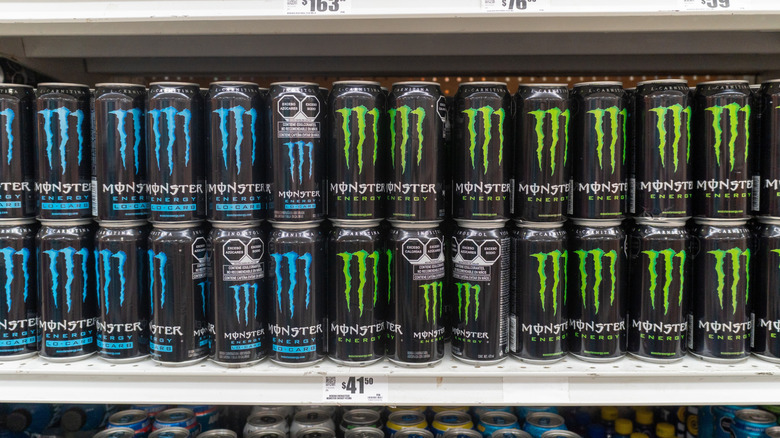
Around the same time Monster was dealing with the Anais Fournier and Alex Morris lawsuits, it was hit with another, this time regarding the brand's marketing. In 2013, San Francisco City Attorney Dennis Herrera filed a lawsuit against the brand, claiming the beverage manufacturer targeted children in its advertising.
The whole situation was a major mess. It started when Herrera's office began investigating Monster in late 2012, and at first, it seemed like the two parties might be able to work together. Instead, Monster filed its own lawsuit against Herrera, which was ultimately dismissed by the judge. Herrera's lawsuit against Monster, however, alleged that the brand released advertising campaigns that seemed geared towards children despite its products containing high levels of caffeine. That, paired with advertisements that featured children, as well as Monster's name being associated with youth sporting event sponsorships, led the brand to settle, though details of the agreement were not made public. It's hard to say if the suit made any real difference; with the Alani lawsuit also claiming the brand markets to kids, it's clear this is still an issue when it comes to energy drinks.
6. Panera had to recall its Charged Lemonade
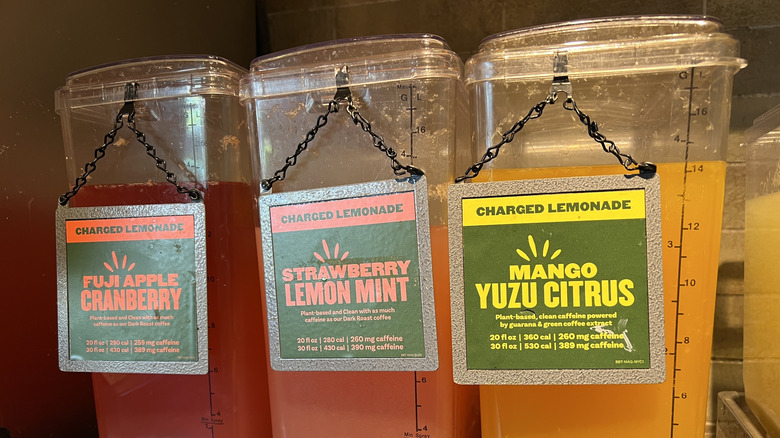
Panera's Charged Lemonade is a little different than other energy drinks on this list because it wasn't sold in cans at the grocery store or gas station -– you could only get this caffeinated drink at Panera restaurants. The company had to remove the drinks from its menu after two deaths, that of a 21-year-old woman and a 46-year-old man. A regular 20-ounce Charged Lemonade contained between 155 and 178 milligrams of caffeine, while a large had up to 302 milligrams of caffeine, depending on the flavor.
There seems to be two issues at play here. The first is that customers didn't realize exactly how much caffeine was in these drinks. Initially, while Panera marketed the drinks as having natural caffeine, it never actually specified the caffeine amount. The second problem is that the drinks were available in self-serve dispensers right next to the other, non-caffeinated options. That means it would be incredibly easy for someone to accidentally fill their cup with the caffeinated drink, and even if they wanted a caffeinated option, they likely wouldn't expect such a high amount of caffeine in a lemonade. Today, Panera still offers a caffeinated fruity drink on the menu, but these Energy Refreshers are clearly labeled and have only a fraction of the caffeine that the Charged Lemonades had.
7. Celsius does have preservatives, actually
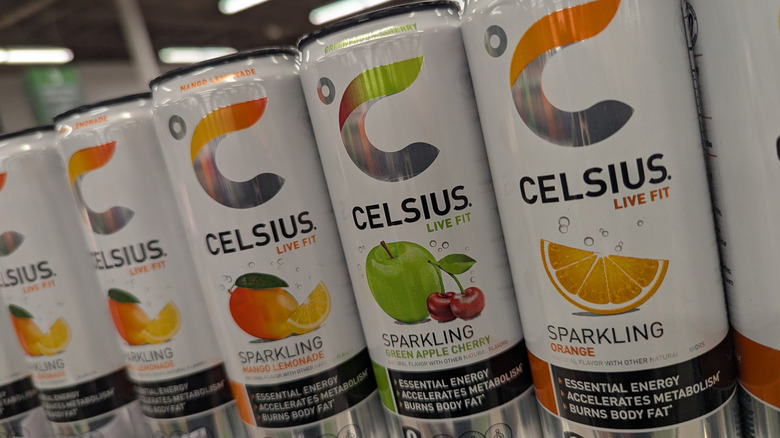
Celsius has always seemed like the trendier younger sister of drinks like Rockstar and Monster. While the latter two have a more frat-boy vibe, Celsius is more fitness-focused. It often comes in a slimmer, cleaner-looking can with a picture of fruit, and is available in tons of flavors, most of them fruity (check out our favorite Celsius flavors!). For a while, it was also advertised as having no preservatives. Unfortunately, that wasn't exactly true.
In 2023, a class action lawsuit was brought against the company for false advertising. The lawsuit claimed that, though the drink labels said there were no preservatives, the drinks actually contained citric acid, a known preservative. However, the brand claimed that the citric acid wasn't being used as a preservative, but as a flavor enhancer. Regardless, Celsius opted to settle the class-action with a settlement fund of $7.8 million, and its website now specifies that the drinks contain no artificial preservatives. This came on the heels of Celsius losing a multi-million dollar lawsuit brought by Flo Rida, who had sued the company for breach of contract, making it a particularly rough year legally for the energy drink brand.
8. Forever chemicals and too much caffeine were found in Prime
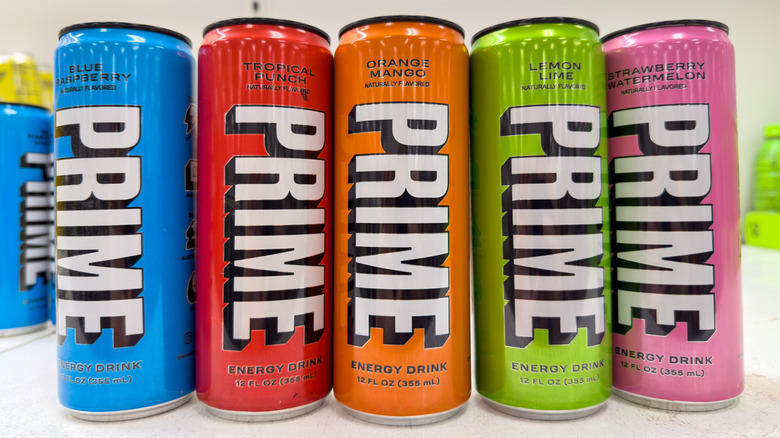
You have to admit that launching a brand of energy and sports drinks was incredibly on-brand for brothers Jake and Logan Paul. Now, the YouTubers are no strangers to controversy, especially Jake; one of his earliest involved an objectively insensitive video showing a suicide victim in Japan's Aokigahara forest. While Prime is more Logan's project, it still couldn't escape the controversies that have followed the pair.
The brand launched in 2022 and basically went viral. There are two primary lines of Prime: Prime Hydration, which is a sports drink akin to Gatorade or Powerade, and Prime Energy, a caffeinated energy drink, and both have been marred in scandal. The first happened in 2023, when a class action lawsuit was filed after the discovery that the grape flavor contained high levels of PFAS, one of the major forever chemicals found in kitchens. The other emerged in 2024, when consumers claimed that the energy drinks contained more caffeine than stated –- 215 to 225 milligrams instead of 200. Both cases are currently pending, but may have had an effect on the brand's popularity, since, after the initial hype, sales have plummeted.