

The Sam's Club Meat Department Perk You Won't Find At Costco
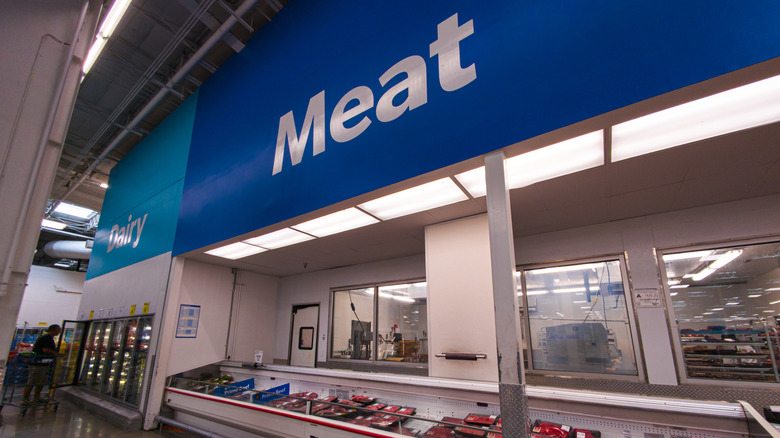
With all the big-box retail chains that a person can patronize, the stores can all start to blend together. One might remember, for example, that Costco business centers can have better beef deals than its warehouse locations, and that Whole Foods will debone and even season or marinate your protein, while forgetting whether Trader Joe's can even break down meat. Unlike Costco, Sam's Club is actually particularly adept at approximating your neighborhood butcher.
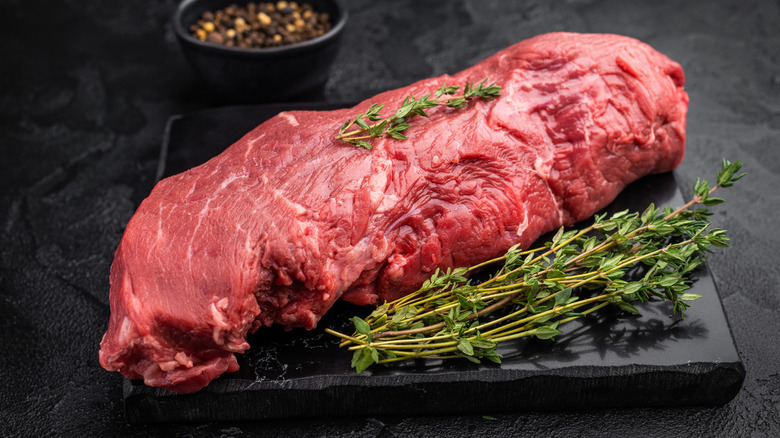
While Costco certainly trades in quantity, you can't reliably expect it to create the bespoke cuts that you can more readily request at Sam's Club. Exceptions are known to arise, but specialized butchery just isn't a part of Costco's business plan. Sam's club, on the other hand, will more consistently be able to cut a steak to your preferred thickness. You can snag something like a whole beef tenderloin and ask Sam's Club's protein professionals slice it into individual chops that you can freeze for later use, or grill up all at once for a carnivore's feast. Like a lot of bulk buys, this will typically be a little cheaper than scanning individual chops at the register, plus it should save you a few shopping trips in the long run.
One more meaty Sam's Club butcher perk, and measuring up your steaks and chops
Most Sam's Club members are likely already adept at the art of bulk shopping, so the idea of having those big slabs of pork or cattle winnowed down is probably nothing new. But they can also do even more. If you're picking up a nicely marbled chuck for your pot roast, for example, Sam's Club personnel can trim away any less desirable external fat before you even get it in your cart. Like Costco's occasional leniency, this too has been known to vary slightly from location to location, so approach the butcher counter hoping for the best, while keeping your expectations flexible.
You also might not want to get too creative when you're having those pork loins or tenderloins broken down. Sliced too thick or too thin, your preparation's liable to go sideways. Your pork loin should fall in the 1-inch to 1 ½-inch thickness range. You might also want to keep the flavorfully fattier tenderloin slices on the higher end of that range. Beef tenderloin is a particularly brilliant slab to bring to the butcher not only for the convenience, but because they'll be able to tap their expertise to deftly identify the precious chateaubriand and filet mignon within. Then you just have to make sure you know how to cook them.