

Should You Be Peeling Asparagus? Here's When It's Actually Worth It
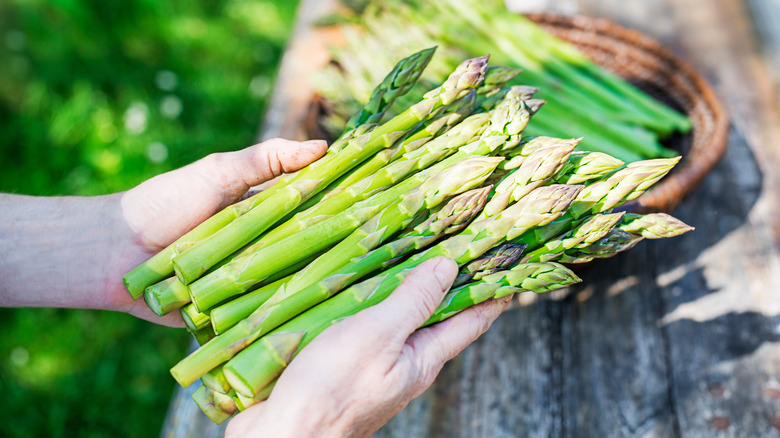
Asparagus is one of those veggies that just doesn't have casual fans. Those who hate it truly loathe it, while those who enjoy it may be borderline obsessed. Not that we can blame them, as perfectly roasted spears take on a deliciously sharp, nutty quality that's only enhanced when you season your asparagus with flavorful spices. However, there are quite a few factors to consider when attempting to achieve the perfect char for deliciously tender results.
One of the most common mistakes you can make when roasting asparagus is peeling it when you don't really need to, or skipping that step when it's actually crucial. While some claim you should definitely do one or the other 100% of the time, the truth is that it's a judgment call based on the spears themselves. Skinny asparagus generally doesn't need to be peeled because it's usually already pretty tender, and there's not really much to remove. You're more likely to end up shredding slender spears than actually peeling them.
Thicker, heartier spears often have a tough, woody outer coating that remains fibrous even after it has been cooked. Peeling it away reveals the tender layers underneath, exposing them to direct heat so they can cook properly. Knowing this, it may seem like choosing skinny spears is a good way to save time, but this could be the reason your oven-roasted asparagus turns soggy. Spending a few extra minutes with a veggie peeler is worth it for tastier results.
Peeling your asparagus spears properly
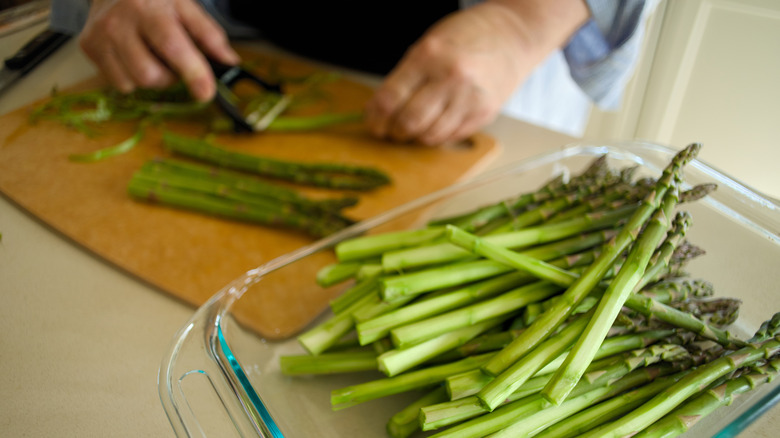
Once you've picked the freshest asparagus possible at the grocery store and washed it thoroughly, it's time to trim up those spears. While the snap method (bending each spear until it snaps in half naturally) is common for removing the woodiest parts, this method has been debunked as wasteful, since the asparagus usually snaps where the stalk is thinnest, not where it's least fibrous. Instead, it's better to trim away the pale ends with a sharp knife and peel each spear starting about halfway down.
You'll want to peel each stalk individually, holding it gently against a cutting board as you peel away very thin layers with a nice, sharp veggie peeler. After one or two passes, you'll notice the flesh is a slightly paler green than the outer layers. This indicates you've removed the tough parts and can move to the next section. It's okay if your spears turn out square or have multiple flat sides — that'll just make the asparagus easier to skewer for grilling or make it less likely that they'll roll away from you when seasoning them in the pan.
With that said, it's easy to understand why peeling is Julia Child's tip for tender asparagus every time. Since the point of peeling thick, tough asparagus is to make it softer and pleasant to eat, keep this in mind when cooking it as well. Those tender insides won't need very long to warm through, so test your asparagus frequently and plate it as soon as it's the perfect texture.