

The Pot Roast Mistake Leading Your Meat To Dry Out In An Instant
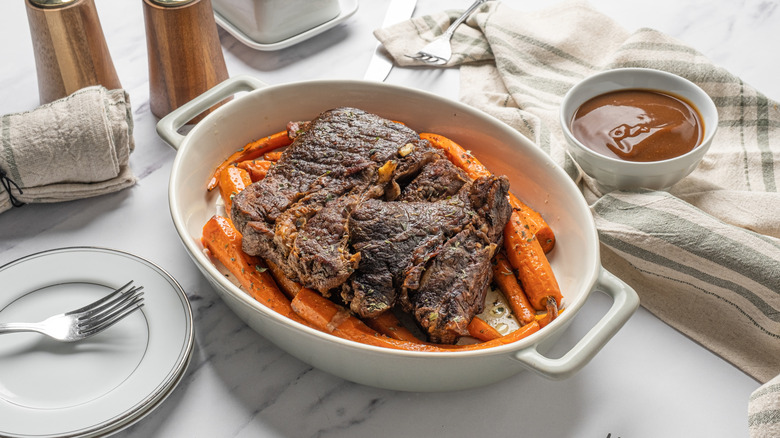
For something that mostly just roasts in a pot, there are tons of ways to make a better — or worse! — pot roast. An excellent pot roast requires a good hunk of chuck, a smattering of complementary seasonings, and plenty of time to braise. And there are also oodles of dastardly pot roast mistakes that can send the whole thing sideways. Skip the critical protein-browning step, for example, and you're leaving tons of flavor off the table. Forget to deglaze the pan's fond, and you're relegating even more tasty bits to the swirly depths of your kitchen sink. And even when all seems said and done, there is still one more step to ensure a peak pot roast: let it rest.
Yes, just like you'd do with a smaller cut like a steak, your pot roast needs to rest after its long cook time, too. After several hours in the oven, not to mention the requisite prep, you'll probably be ready to get carving, but you'll lose crucial moisture if you slice too soon. Fortunately, this step is probably one of the more passive ones you'll take all day. After removing your roast from the oven or stovetop burner, you can either place the whole pot on a heat-safe surface to settle or arrange the dish's meat and vegetables on a serving platter and simply let it be. It is literally the least you can do to ensure a superior pot roast.
Why resting guards against dryness
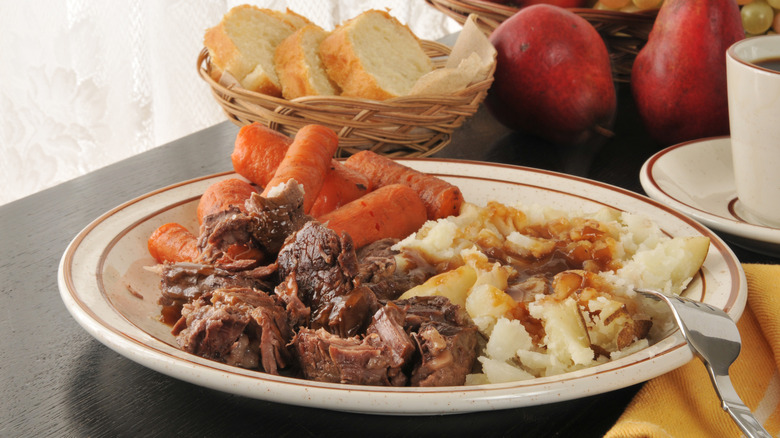
Once you pop your pot roast out of the oven or take it off the heat, give it some space. Taste-test any sides a final time before plating; toss together a quick salad; text an ex; just do anything but cut into the meat, at least for a few minutes. Some liquid may have evaporated during cooking (especially if you've roasted it in the oven uncovered); the heat forces moisture away from the muscle fibers. But its interior will still be decently juicy. Slice into it right away, and you'll risk losing more moisture than if you wait at least 10 minutes for those juices to reabsorb into the roast.
As with many home cooking matters, resting your roast can be a surprisingly divisive practice. Some will say that it just doesn't make a difference and varies from roast to roast. A more marbled chuck cut, like the kind favored for cheesy French onion pot roast, for example, will simply turn out juicier than something leaner like eye of round, thanks to the extra fat, and that will remain the case whether you rest it or not. But resting isn't going to hurt the quality of your roast unless you're the kind of person who demands that it be served immediately, piping hot. It'll still be plenty warm after a brief interlude. And, in our estimation, juicier, too.