

Yogurt Vs. Kefir: What's The Difference?
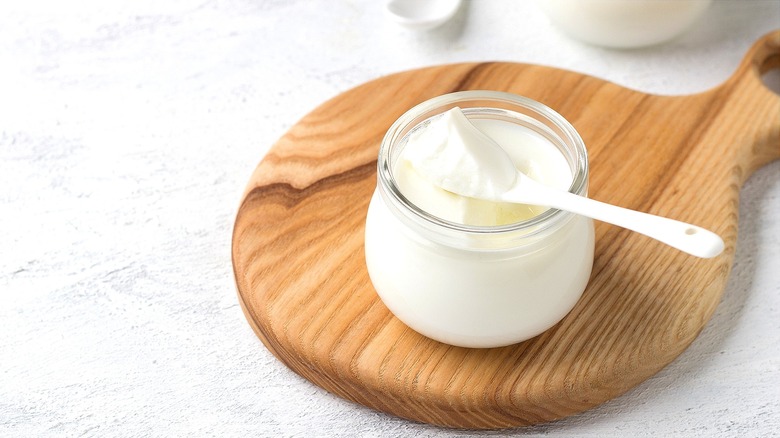
If you eat yogurt on the regular, you may often wonder how kefir compares. Considering both products are stocked near one another at most major supermarkets, besides being a drinkable yogurt alternative, what actually sets kefir apart from the creamy, scoopable snack you know and love? For starters, kefir is a drinkable milk-based product that's often enjoyed straight from the bottle. Loaded with probiotics and live active cultures, kefir has a tangy flavor and mild effervescence.
While yogurt is also full of probiotics, it's milder in taste and comes in many varieties. There are many types of yogurt, including traditional, Greek, skyr, and drinkable varieties. Typically eaten with a spoon, yogurt is used in many cooking and eating applications. While both products are milk-based, fermented, and rich in nutrients, yogurt and kefir have completely different origins.
Yogurt is used all over the world and originated in Western Asia and the Middle East, and kefir is rumored to have a more mystical beginning. Used thousands of years ago by people in the Caucasus Mountains and nomadic tribes, kefir grains were once considered magical "seeds of the prophet" since they made milk safer to consume over extended periods of time. These health-promoting grains have consistently been used in various ways all around the world. For instance, prepared kefir has been consumed as both a medicinal aid and elixir of longevity for centuries.
How are yogurt and kefir made?

Even though yogurt and kefir are both fermented milk products, how they're produced makes them inherently different foods. While yogurt is usually made by adding cultured bacteria to heated milk, kefir is made by combining milk with kefir grains, which are actually symbiotic cultures of bacteria and yeast. Kefir grains naturally break down milk's lactose into lactic acid over a 24-hour period at room temperature. Conversely, yogurt is made by adding specific strands of bacteria into milk which then ferments, once heated, between 4 and 12 hours. Since kefir is fermented for a longer period of time, it is often considered to have equal or more nutritional benefits than yogurt.
Specifically, when it comes to high-probiotic foods that aren't yogurt, kefir is one of the best options. While yogurt may have up to six probiotic strains, kefir has close to 50, which promotes optimal gut health. Also, due to specific enzymes in kefir grains, kefir may be consumed by those who are lactose intolerant. Additionally, the combination of bacteria and yeast in kefir may reduce inflammation in the body, introduce more strains of healthy bacteria in the gut, and promote healthy blood glucose levels.
How are yogurt and kefir most commonly consumed?

Fortunately, both yogurt and kefir can be enjoyed in many different ways. Since you can buy ample varieties of yogurt that range in thickness and flavor, incorporating this food into your daily meals couldn't be easier. For example, plain Greek yogurt, which is regular yogurt with most of the whey strained out, is a hearty breakfast option. Enjoy some in a bowl topped with berries and granola, or whip some into a smoothie with frozen bananas and orange juice. Not just Greek, but other varieties of yogurt can also be incorporated into savory dishes for a creamy, high-protein boost. Due to its scoopable appeal and somewhat tangy flavor, you can also use yogurt to upgrade your next cake or fresh batch of blueberry scones.
Conversely, since kefir has a tangier flavor and is strictly pourable, most people enjoy it straight from the bottle. However, there are some creative ways to incorporate more kefir into your daily diet. For instance, use plain kefir instead of milk in your almond chai chia pudding recipe. You can also use kefir to create a tangy meat marinade or herb-based salad dressing. In terms of their nutritional differences, both yogurt and kefir are quite similar, but kefir has slightly more protein and less sugar than yogurt per serving. Ultimately, both products are rich in probiotics and easy to enjoy at any time.