

How To Quickly Decode Chicken Labels
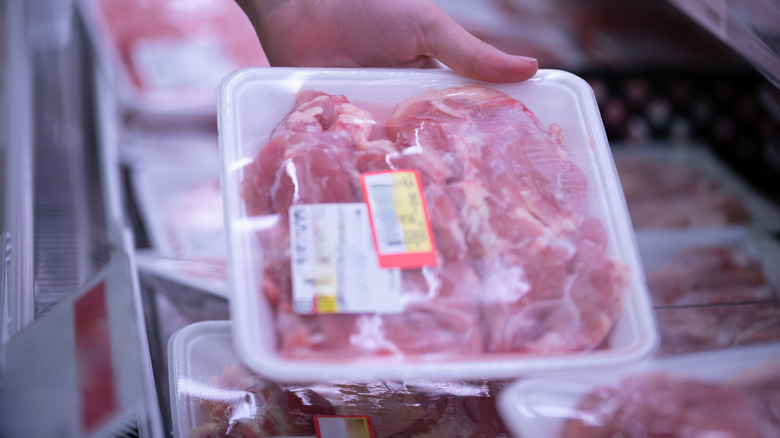
If chicken is a regular part of your meal prepping, it might be worth decoding your chicken labels so you can stay on top of your nutrition and dietary needs, or to make an informed decision based on animal welfare. When you're in a rush doing your grocery store run, decoding your chicken labels might understandably feel like the last thing on your mind. So we cut out some of the stress and confusion from the process to make your shopping experience easier (i.e. more time to get home and chef up something special).
Chicken-lovers might already be clued up on a few shopping tips for picking the best chicken at the grocery store or knowing why it pays to buy and cook a whole chicken but reading food labels levels up (and maybe speeds up) your shopping experience. While not all of the labels make a huge difference, others indicate the quality of your chicken. Whether you're looking for an organic chicken or one that is air-chilled, decoding the label and understanding what it means can make a huge difference.
An organic label tells you about the chickens' life and diet

With organic food becoming increasingly popular, selecting an organic chicken may align with the rest of your shopping tendencies or goals. The United States Department of Agriculture (USDA) establishes the regulations for the organic label, including standards for how chicken is raised and treated, and its National Organic Program (NOP) oversees those standards.
Understanding what the organic label means in the food world may or may not guide your weekly shop. When you come across an organic label on chicken, this means it has never been fed antibiotics in its lifetime, has been able to live a free-range existence, and has only ever tucked into organic feed.
An organically raised chicken means the quality of the pasture is carefully monitored and treated without industrial pesticides and synthetic fertilizers. Chickens must also have access to outdoors and sunlight, as well as meet welfare standards for wellbeing and slaughtering. GMO feed is prohibited, and hormones and antibiotics are not used unless chickens are sick. Organic chicken also differs from non-organic counterparts by possibly offering more nutrients and healthier balance of omega-3 and omega-6 fatty acids, so noting the label might be worth it if this is your goal.
USDA grading refers to the chicken's characteristics
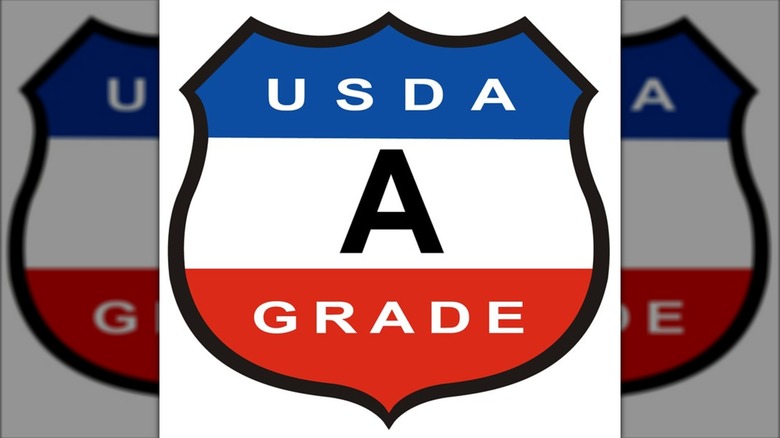
The USDA closely monitors and carries out inspections to check the state of ready-to-cook chickens before they end up in grocery store refrigerators. The grading system ranges from A to C, with A being the top standard and C being the lowest. The most important thing to take note of is the grading labels are definition-related standards. Grading allows customers to know the chicken has met certain physical requirements, such as signs of deformities, leg, breast, and thigh sizes, flesh development, defeathering, and skin covering.
Per the USDA, Grade A chickens are free of deformities, are plump and well-fleshed, providing plenty of meat to be sold for food, and have been properly cleaned, alongside other physical markers making the chicken good to go. You'll likely only see Grade A chicken in your grocery store, but all grades are edible. Grade B or C chickens may have some defects but are usually found chopped, ground, or processed into other products.
Air-chilled on the label is a green flag for chicken
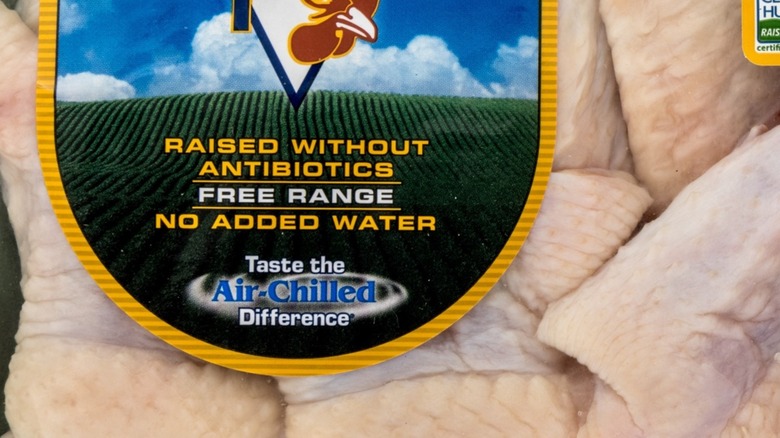
When you come across the air-chilled label on your chicken, it signifies you're getting quality chicken. In order to properly process poultry and have it ready for sale, it needs to be cooled down to prevent the spread of bacteria. Typically, the process involves plunging chicken in ice-cold water, but air-chilling is an alternative method where chicken passes repeatedly through chambers of purified cold air for just over three hours. It's so impactful that it earns its own label on chicken packaging.
Cooking methods and condiment tricks can easily give you crispy chicken, but buying air-chilled chicken might be the simplest way to ensure your chicken skin comes out extra-crispy. Because the cold-plunge method results in chicken retaining extra water, air-chilled chicken means a dryer, but more natural, bird. Avoiding this excess moisture also helps to prevent against the spread of bacteria through cross contamination since many chickens are dunked in the same water. Other benefits include allowing chicken to keep its natural juices and tenderness without being diluted in flavor. Air-chilled also means zero water leaking from the chicken (yep, that's the pinkish liquid you sometimes find in chicken packaging) and it's environmentally friendly, saving more water than the cold plunge method.
Antibiotic-free indicates chicken contains no antibiotic residue
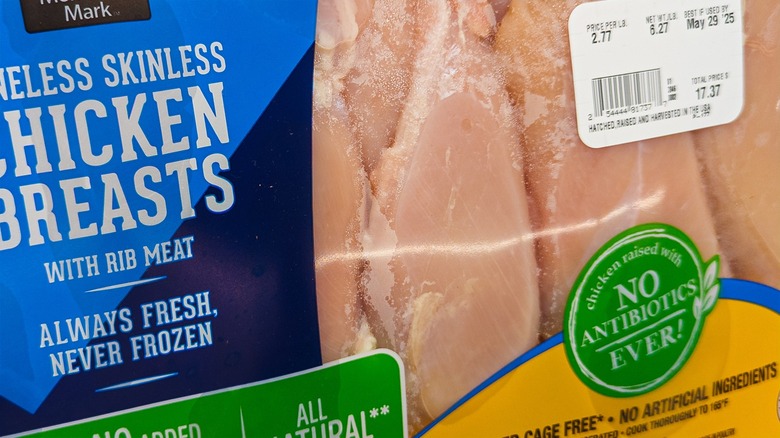
The USDA regulates antibiotics used in livestock, and federal law dictates meat can't make it to supermarket shelves if it contains any residual antibiotics. Antibiotics are often fed to conventional factory farm chickens to promote rapid growth and prevent the spread of serious infections, such as coccidiosis, a disease of the animal's intestinal tract. However, farmers who opt for the antibiotic-free process use alternative measures, like vaccines and natural gut-supporting products, to keep chickens healthy. Antibiotic-free labels on your chicken indicate no antibiotics were used in the chicken's lifetime (except for illness), whether through their food, water, or by injection.
Even with labelling, further measures are being considered and tested by the USDA to ensure meat remains as safe as possible, including tighter standards and testing. Generally, the USDA measures the amount of antibiotic residue in chickens that may have medically needed antibiotics to ensure no residue exists in the poultry before being sold. According to the American Veterinary Medical Association, an FSIS 2022 study found residual antibiotics in 20% of cattle meat labeled as antibiotic free. Despite this, it may be worth taking time to ensure the label states antibiotic-free the next time you pick out some of the best rotisserie chickens at the grocery store.